The Daily Cups a Standard Bernedoodle Needs
One of the biggest head-scratchers for new Bernedoodle parents, especially those with a standard-sized pup, is figuring out just how much food to put in their bowl each day. It's a journey filled with concerns about healthy growth, maintaining a good weight, and sometimes, the sheer volume of kibble these magnificent dogs can put away. This guide will walk you through understanding your standard Bernedoodle's daily caloric needs, deciphering food labels, and creating a feeding strategy that keeps your furry friend thriving.
Understanding Your Standard Bernedoodle's Nutritional Needs
Bringing home a standard Bernedoodle means you've signed up for a dog that will eventually be a large, powerful companion. Their nutritional journey is crucial, especially during those formative months, because improper feeding can have long-lasting effects on their skeletal health and overall well-being. It’s not just about filling a bowl; it’s about providing the right fuel for their unique genetic blueprint.
The Growth Spurt and Its Demands
Let's face it, Bernedoodle puppies grow like weeds! One day you have a fluffy little floof, and the next, they're nearly big enough to steal food right off your kitchen counter. This rapid growth, inherited largely from their Bernese Mountain Dog side, is incredible to witness but also incredibly demanding on their bodies. Their bones, joints, and muscles are developing at an astonishing rate. This is why proper nutrition during puppyhood isn't just important—it's absolutely critical.
During this period, Bernedoodles need a diet specifically formulated for large breed puppies. This isn't marketing fluff; these diets are carefully balanced to promote slow, steady growth rather than explosive gains. Why slow? Because too much rapid growth can put undue stress on developing joints, potentially leading to issues like elbow or hip dysplasia down the line. We want strong, healthy bones and cartilage, and that means a diet with controlled calcium and phosphorus levels. Think of it like building a sturdy house: you don't rush the foundation. You can read more about this in Growing a Standard Bernedoodle Slowly on Purpose. A diet rich in high-quality protein supports muscle development without adding excess calories that contribute to unhealthy weight gain.
Activity Levels and Metabolic Rates
Once your Bernedoodle is past their primary growth phases and into adulthood, their daily food needs shift. No longer are they funneling massive amounts of energy into growing taller; now it's about maintaining their body, fueling their daily adventures, and keeping those beautiful coats healthy. But not all adult Bernedoodles are created equal when it comes to activity.
Consider the energetic Bernedoodle that spends hours romping in the park, accompanying you on long hikes, or even participating in dog sports like The Draft Dog Work a Bernedoodle Can Still Do. This dog burns significantly more calories than a Bernedoodle whose primary daily exercise is a leisurely stroll around the block and extensive couch-cuddling. An active Bernedoodle will naturally require more food to sustain their energy levels and maintain their weight. On the flip side, a more sedentary Bernedoodle, perhaps one who prefers to be a cozy indoor companion, will need fewer calories to avoid becoming overweight. Their individual metabolism also plays a role—some dogs are just naturally more efficient at utilizing calories, while others burn through them faster. This is why a "one-size-fits-all" approach simply doesn't work.
Decoding Dog Food Labels: How to Calculate Portions
The back of a dog food bag can feel like reading a foreign language, full of percentages and cryptic feeding charts. It's easy to feel overwhelmed, but understanding these labels is key to ensuring your Bernedoodle gets exactly what they need, not too much and not too little.
The Pitfalls of "Cups Per Day" Guidelines
Most dog food bags provide a generic feeding guideline based on your dog's weight. It might say something like, "For a 70-pound dog, feed 3-4 cups per day." While these guidelines are a starting point, they are just that—a guideline, not a commandment written in stone. The biggest pitfall is that "a cup" of one brand's kibble might be vastly different in caloric density than "a cup" of another brand's. One brand could pack 400 calories into a cup, while another might only have 300. If you blindly follow the "cups per day" advice without considering the caloric content (measured in kcal/cup or kcal/kg), you could be significantly over or underfeeding your Bernedoodle.
Think about it: if your Bernedoodle needs 1800 calories a day, and your current food has 450 kcal/cup, they need 4 cups. But if you switch to a food with only 300 kcal/cup, suddenly they need 6 cups to get the same energy! This is a common source of accidental weight gain or loss, and it’s why delving a little deeper into the label is so important. When you're looking at food options, especially from online retailers like Chewy or Amazon, make sure you're comparing the "metabolizable energy" (ME) listed on the packaging.
Factors Influencing Daily Caloric Intake
Determining the exact number of daily cups for your standard Bernedoodle involves a bit of detective work and considering several variables. It's like a personalized recipe, tailored to their unique circumstances.
- Age: As mentioned, puppies have much higher caloric needs per pound of body weight for growth, but it's important not to overdo it. How Many Meals a Bernedoodle Puppy Needs Daily and When a Bernedoodle Switches to Adult Food delve deeper into these transitional phases. Senior Bernedoodles, as they slow down, will likely need fewer calories to avoid weight gain, even if they're still What Changes in a Bernedoodle After Eight.
- Weight: This is the most obvious factor. A 70-pound Bernedoodle needs less than a 90-pound one, naturally. But it's not just their current weight; it's their ideal weight. If your Bernedoodle is currently overweight, your vet might recommend feeding for their target weight rather than their current one.
- Activity Level: We touched on this, but it cannot be overstated. A dog that's running, playing, and training daily will need significantly more fuel than a laid-back companion.
- Neuter Status: Spaying or neutering can reduce a dog's metabolic rate, often leading to a tendency to gain weight if their food intake isn't adjusted. This is a common pitfall many owners encounter.
- Climate: Dogs living in colder climates might burn more calories just to stay warm, while those in very hot climates might be less active and thus need less food. Keep in mind Why a Black Tri Bernedoodle Overheats and how that impacts activity in summer.
- Individual Metabolism: Just like people, dogs have different metabolisms. Some dogs are simply "easy keepers" who gain weight on less food, while others seem to be bottomless pits and stay lean.
- Treats and Chews: This is a big one! Those delicious treats, dental chews, and training rewards all contain calories. If you're generous with treats, you need to account for them in their daily food allowance. Aim for treats to make up no more than 10% of their daily calories. Neglecting this often leads to accidental weight gain.
Here's a simplified table illustrating how various factors might influence a Bernedoodle's estimated daily caloric needs. Remember, these are estimates, and your vet is always the best resource for precise figures.
| Factor | Impact on Caloric Needs | Example Adjustment (Relative) |
|---|---|---|
| Age: Puppy (active) | High, for rapid growth | +20-50% over adult maintenance |
| Age: Adult (active) | Moderate to High | +10-20% over baseline |
| Age: Adult (sedentary) | Baseline to Moderate | Baseline |
| Age: Senior (sedentary) | Lower, due to decreased activity | -10-20% from baseline |
| Neutered/Spayed | Often lower metabolism | -10% from baseline |
| Intact | Often higher metabolism | Baseline to +5% |
| High Activity (working/sporting) | Significantly higher | +30-50% or more |
| Low Activity (couch potato) | Lower | -10-20% from baseline |
| Cold Climate | Higher, for warmth | +5-10% |
| Hot Climate | Potentially lower (less activity) | -5% to baseline |
| Underweight | Needs more calories to gain | +10-20% |
| Overweight | Needs fewer calories to lose | -10-20% |
Practical Feeding Strategies for Your Standard Bernedoodle
Once you've wrapped your head around the nutritional needs and the factors influencing caloric intake, it's time to put that knowledge into practice. This is where the rubber meets the road, ensuring your standard Bernedoodle is happy, healthy, and perfectly fed.
The Importance of Regular Weight Monitoring
You are your Bernedoodle's first line of defense against unhealthy weight. Regular monitoring isn't just about stepping on a scale (which can be tricky with a big dog!), but also about physically assessing their body condition. This is far more important than a number on the scale because it tells you if they are actually at a healthy weight for their build.
Here's how you can do a quick body condition check:
- Feel for Ribs: Gently run your hands along your Bernedoodle's sides. You should be able to feel their ribs easily, like feeling the knuckles on the back of your hand, but they shouldn't be visibly protruding. If you can't feel them without pressing, they might be carrying too much weight. If they're sharply visible, they might be too thin.
- Check the Waistline: When you look at your Bernedoodle from above, you should see a discernible waistline tucking in slightly behind their ribs. If they look like a straight block from chest to tail, they're likely overweight.
- Abdominal Tuck: When viewed from the side, their abdomen should tuck up slightly after their rib cage, not sag down.
Adjusting their food based on these observations is key. If they're gaining too much weight, subtly reduce their portions (and scrutinize those treats!). If they're looking a bit too lean, gently increase their food. Small, consistent adjustments are always better than drastic changes. This continuous vigilance is vital for Keeping a Bernedoodle's Weight Down over their lifetime.
Choosing the Right Food Type and Brand
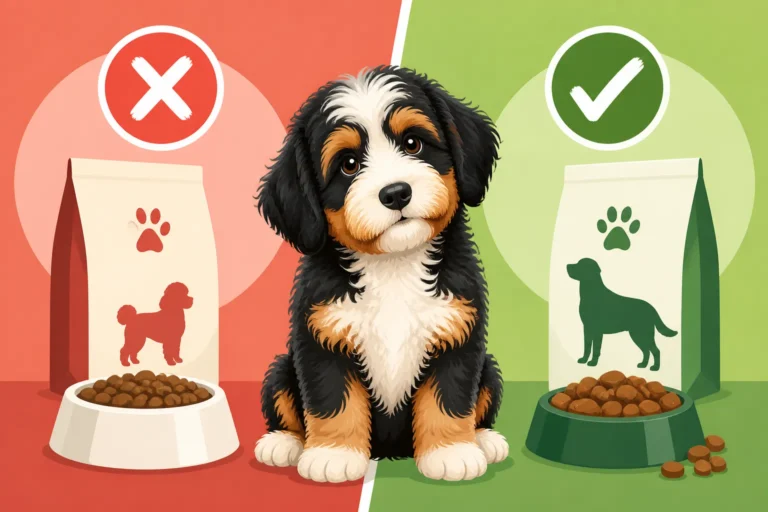
The dog food market is absolutely saturated, and it can be dizzying trying to pick the "best" one. For a standard Bernedoodle, particularly during their growth phase, Large Breed Puppy Food for a Standard Bernedoodle is generally recommended. These formulas are designed to support their unique developmental needs. Once they reach adulthood, a high-quality large breed adult formula is usually a good choice.
When it comes to the type of food, you have options:
- Kibble: The most common and often most convenient option. Look for high-quality kibble with a named meat source as the first ingredient, and appropriate fat/protein levels for a large breed. Many Bernedoodle owners find great options through online retailers like Chewy, which offers a vast selection and often home delivery.
- Wet Food: Can be a good supplement or mixed with kibble for palatability. It generally has higher moisture content but is often less calorically dense than kibble.
- Fresh/Human-Grade Food: Companies like Ollie deliver pre-portioned, freshly cooked meals right to your door. These can be excellent for palatability and nutrient absorption, but they are often a more significant investment.
- Raw Food: Some owners opt for a raw diet. This approach requires careful research and often veterinary guidance to ensure it's balanced and safely prepared, especially for large breeds.
No matter the brand or type, the focus should be on a complete and balanced diet, appropriate for their life stage, and something your Bernedoodle thrives on. Don't be afraid to read reviews, discuss options with your vet, and check out product details on sites like Amazon to compare ingredients and customer experiences. Remember, the "best" food is the one your Bernedoodle does well on, with a healthy coat, good energy, and firm stools.
Meal Frequency and Routine
How often should your standard Bernedoodle eat? This changes as they grow and can also be influenced by health considerations.
- Puppies: For young Bernedoodle puppies (8-16 weeks), three or even four meals a day are often recommended. Their tiny tummies can't handle large volumes, and frequent meals help stabilize blood sugar and energy levels. As they get a bit older, typically around 4-6 months, you can usually transition to two meals a day. Always follow your breeder's and vet's specific advice on How Many Meals a Bernedoodle Puppy Needs Daily.
- Adults: Most adult standard Bernedoodles do best on two meals a day. This helps manage hunger, spreads out caloric intake, and can be a crucial strategy in preventing bloat. The deep chest of a standard Bernedoodle, inherited from the Bernese, makes them inherently more susceptible to Gastric Dilatation-Volvulus (GDV), or bloat. Feeding smaller, more frequent meals can help reduce this risk. You can learn more about this serious condition in Bloat in a Standard Bernedoodle's Deep Chest.
Consistency is key. Feed your Bernedoodle at roughly the same times each day. This helps regulate their digestion and sets a clear routine, which many dogs appreciate. If your Bernedoodle is an eager eater who Whether a Bernedoodle Inhales Its Food, consider using a slow feeder bowl to make mealtime last longer and reduce gulping air, another potential bloat risk factor. As for bowl height, Whether Bowl Height Matters for a Deep Chested Bernedoodle is a topic worth discussing with your vet, as advice on this has evolved.
When to Consult Your Veterinarian
Even with all the best intentions and careful planning, sometimes your Bernedoodle's nutritional needs require professional input. Your veterinarian is an invaluable partner in managing your dog's health, and they can provide tailored advice that accounts for your Bernedoodle's individual health profile, lifestyle, and genetics.
Signs Your Bernedoodle Might Be Under or Overfed
It's not always obvious when your Bernedoodle isn't getting the right amount of food, especially under their magnificent, thick coat. However, there are subtle (and not-so-subtle) signs to watch for:
-
Underfed Signs:
- Visible Ribs/Spine/Hip Bones: If you can clearly see these bones without feeling for them, it's a strong indicator.
- Lethargy or Low Energy: While some Bernedoodles are naturally calm, a noticeable drop in energy, especially coupled with other signs, could mean they're not getting enough fuel.
- Poor Coat Condition: A dull, dry, or excessively shedding coat can sometimes point to nutritional deficiencies.
- Frequent Hunger Cues: While Bernedoodles are often food-motivated, constant begging or scavenging might mean their current portions aren't sufficient.
- Stool Changes: Very small, dry stools can sometimes indicate insufficient food intake.
-
Overfed Signs:
- Difficulty Feeling Ribs: If you have to press hard to feel their ribs, they're likely carrying too much weight.
- Loss of Waistline/No Abdominal Tuck: The "straight block" appearance from above and a sagging belly from the side are classic signs.
- Reluctance to Exercise: While large, Bernedoodles still need The Exercise a Standard Bernedoodle Needs Daily. If they're unusually hesitant to move or seem to tire quickly, excess weight could be a factor.
- Heavy Panting: Even in mild conditions, an overweight Bernedoodle might pant excessively due to the extra strain on their body.
- Joint Issues: Hips on a Ninety Pound Bernedoodle and Elbow Dysplasia in a Growing Bernedoodle are concerns for the breed, and excess weight significantly exacerbates these problems. Whether Overfeeding a Bernedoodle Puppy Damages Its Joints highlights the long-term impact of early overfeeding.
If you notice any of these persistent signs, it's time for a vet check-up. They can rule out underlying medical conditions and provide a professional assessment of your Bernedoodle's ideal weight and dietary needs.
Addressing Specific Health Concerns
Beyond general maintenance, your Bernedoodle might develop specific health conditions that require dietary adjustments. This is another area where veterinary guidance is paramount.
- Weight Management for Joint Health: Given the breed's predisposition to joint issues, maintaining an ideal weight is perhaps the single most important thing you can do for their long-term comfort. If your Bernedoodle has been diagnosed with arthritis, hip, or elbow dysplasia, your vet might recommend a specific weight loss plan or a food formulated with joint support supplements like glucosamine and chondroitin.
- Allergies or Sensitivities: If your Bernedoodle experiences chronic itching, ear infections, or digestive upset, they might have food sensitivities. Your vet can help you navigate an elimination diet or recommend novel protein or hydrolyzed protein diets.
- Digestive Issues: For Bernedoodles prone to sensitive stomachs, chronic diarrhea, or constipation, your vet might suggest specific probiotic supplements or a diet higher in fiber.
- Other Medical Conditions: Conditions like thyroid disease (Hypothyroidism From the Bernese Side of a Bernedoodle), kidney disease, or diabetes all have specific dietary requirements that only a vet can accurately prescribe.
Never hesitate to discuss your Bernedoodle's diet with your veterinarian. They have the expertise to assess your dog's overall health, consider any pre-existing conditions, and provide a personalized feeding plan that supports their best life. They can help you calculate exact caloric needs, suggest appropriate food brands, and monitor progress, ensuring your standard Bernedoodle gets the right daily cups to thrive.
Disclaimer
This article is for general informational purposes only and does not constitute professional advice. Laws, prices and regulations vary by location and change over time. Consult a qualified professional for guidance on your specific situation.