Whether a Mini Bernedoodle Needs Large Breed Formula
It’s a common moment for many new Mini Bernedoodle parents: you’re standing in the pet food aisle, eyes glazing over with all the options, and then you spot the "large breed puppy formula." Your little fluffball is going to be a Mini, not a giant Bernese, so why would they need that kind of food? It's a genuinely confusing dilemma, and making the wrong choice can actually impact your sweet pup's long-term health. This guide is here to walk you through the nuances of feeding your Mini Bernedoodle, helping you confidently select the right diet for healthy growth without unnecessary worry.
Understanding Mini Bernedoodle Growth and Development
Bringing home a Mini Bernedoodle puppy is a joyous occasion, filled with tiny paws, soft fur, and endless energy. But amidst the cuddles and playtime, there’s the very real consideration of how best to support their rapid growth and development. It’s not just about filling their belly; it’s about providing the precise building blocks for a healthy adult life.
What Defines a "Mini" Bernedoodle?
First off, let's clarify what we mean by "Mini" Bernedoodle. These delightful dogs are a cross between a Bernese Mountain Dog and a Miniature Poodle, and their size can vary quite a bit. Generally, a Mini Bernedoodle is expected to mature to a weight between 25 and 50 pounds. This is a pretty significant range, and it's a key factor when considering their nutritional needs. They're certainly not the towering 70- to 90-pound giants that standard Bernedoodles become, nor are they the tiny, delicate toy breeds. They occupy that wonderfully versatile middle ground.
The influence of both parent breeds is evident in their size. The Miniature Poodle brings down the overall scale from the Bernese Mountain Dog, but the Bernese genetics still contribute to a sturdy bone structure and often a surprisingly quick growth rate in puppyhood. This combination is what makes their dietary requirements a unique puzzle. You're essentially dealing with a dog that has some large breed genetics but won't reach a giant size, which means we need to think carefully about how their body develops.
The Stages of Puppyhood and Adolescent Growth
All puppies go through incredible transformations in their first year, and Mini Bernedoodles are no exception. The most rapid growth spurt typically occurs within the first six to eight months of their lives. During this time, your puppy seems to change almost daily, gaining inches and pounds at an astonishing rate. This isn't just about getting bigger; it's about the fundamental development of their entire skeletal system.
Think about it: their bones are lengthening, their joints are forming, and the intricate cartilage that cushions those joints is maturing. This entire process is incredibly delicate. Providing the right balance of nutrients during this critical window is absolutely paramount. If their growth is too fast, or if they receive too much of certain nutrients, it can put undue stress on these developing structures, potentially leading to long-term orthopedic problems. This is why you'll often hear discussions about The Five Minute Rule on a Bernedoodle Puppy's Walks – it's all about protecting those vulnerable, growing joints.
After this initial rapid growth, your Mini Bernedoodle will continue to mature, though at a slower pace. They might reach most of their adult height relatively early, but they'll continue to fill out, gaining muscle mass and refining their adult physique well into their adolescent period, often until 12-18 months of age. Understanding these distinct phases of growth helps us appreciate why specific dietary choices, especially in puppyhood, are so crucial for their future health and mobility.
The Nuances of Large Breed Puppy Formulas
Now, let's delve into why these "large breed" formulas even exist and what makes them different from regular puppy food. It's not just a marketing gimmick; these diets are scientifically formulated to address very specific developmental challenges.
Why Large Breed Formulas Exist
Large and giant breed puppies, like Great Danes, German Shepherds, or, indeed, the Bernese Mountain Dog, have unique needs. Their bodies grow incredibly quickly, and this rapid growth, if not carefully managed, can predispose them to a host of orthopedic issues later in life. We're talking about painful conditions like hip dysplasia, elbow dysplasia, and other skeletal disorders. The primary goal of large breed puppy formulas is to promote a slower, more controlled growth rate, thereby minimizing the risk of these developmental bone and joint diseases.
The key differences in these formulas often lie in their mineral and calorie content. Compared to standard puppy foods, large breed puppy formulas typically have slightly lower levels of calcium, phosphorus, and fat. This isn't to say these nutrients aren't important; they absolutely are. It's about ensuring the right balance to prevent excessive growth spurts. Too much calcium, for instance, can interfere with normal bone development, leading to skeletal abnormalities. This is precisely why discussions around Why Calcium Levels Matter for a Growing Bernedoodle are so vital for owners of larger doodles. By carefully managing these levels, these specialized diets aim to give large breed puppies the best possible foundation for strong, healthy joints that will support their substantial adult size.
The Risks of Inappropriate Nutrition for Growing Dogs
If a large breed puppy is fed a standard puppy food, the consequences can be significant and long-lasting. Standard puppy foods are often more calorie-dense and contain higher levels of calcium and phosphorus, designed for smaller breeds that grow quickly but don't put as much stress on their developing joints. For a rapidly growing larger dog, this can be problematic.
The increased calories can lead to accelerated growth, pushing bones and joints to develop too quickly without adequate time for proper maturation. This rapid growth puts immense strain on the soft cartilage and developing bone plates. Conditions like Osteochondritis Dissecans (OCD), where cartilage fails to develop properly and can detach, and Panosteitis, or "growing pains," are more common in large breed puppies that experience uncontrolled growth. Similarly, excess calcium can disrupt the delicate balance of bone mineralization, leading to skeletal deformities or worsening existing predispositions to conditions like hip and elbow dysplasia.
Even if your puppy doesn't immediately show signs of lameness or discomfort, the damage can be cumulative and become apparent later in life as arthritis or other chronic joint issues. It's a silent threat during those crucial puppy months. This is why breeders and veterinarians often emphasize controlled growth and specifically formulated diets to prevent problems down the road. It’s an investment in your dog's future comfort and mobility, avoiding potential pain and costly treatments. Understanding Whether Overfeeding a Bernedoodle Puppy Damages Its Joints highlights the critical need for careful dietary management.
Is a Mini Bernedoodle a "Large Breed" When It Comes to Food?
This is where the confusion really sets in for Mini Bernedoodle owners. They're not enormous, but they're not tiny either. So, how do we classify them when it comes to diet?
Defining "Large Breed" in the Context of Dog Food
When dog food manufacturers label a formula as "large breed," they generally have a specific adult weight in mind. Most commonly, this classification applies to dogs that are expected to weigh 50 pounds or more as adults. This threshold is important because it’s the point at which the risks associated with rapid growth and joint stress become significantly elevated.
Now, consider your Mini Bernedoodle. As we discussed, they typically fall into the 25 to 50-pound range. This means that many Mini Bernedoodles will indeed land squarely in that grey area, or even slightly above the 50-pound mark for larger minis. It's not a clear-cut "yes" or "no" answer, which is precisely why it's such a common question. The presence of the Bernese Mountain Dog, a true large breed, in their lineage cannot be ignored. Even if the Poodle side brings down the overall size, the genetic predisposition for rapid growth and certain joint issues still lurks in the background. It means we have to be thoughtful, rather than just assuming they're "medium" and moving on.
When a Mini Bernedoodle Might Benefit from Large Breed Formula
Given the flexible definition, when might a Mini Bernedoodle genuinely benefit from a large breed puppy formula? The answer largely depends on your specific puppy's projected adult size and their individual growth trajectory.
If your Mini Bernedoodle puppy is on the larger end of the spectrum – let's say they're expected to be 40 to 50 pounds or even a bit more – then a large breed formula is a strong consideration. These puppies, while not giant, still have a substantial amount of growing to do, and the controlled nutrient levels in large breed formulas can offer a protective buffer against joint issues. Think about a puppy from a larger Miniature Poodle parent and a standard-sized Bernese, or perhaps a larger F1b Mini Bernedoodle (where one parent is a Mini Bernedoodle and the other is a Poodle, often resulting in more Poodle characteristics, but size can still vary). These pups might have more of that Bernese growth rate encoded in their genes.
It's also crucial to observe your puppy's growth rate. If they seem to be growing exceptionally fast, gaining weight and height very rapidly, this is another indicator that a large breed formula could be beneficial, regardless of their exact anticipated adult weight within the mini range. The emphasis is on controlled growth. The Bernese side is known for its rapid development, and even in a scaled-down Mini, this characteristic can be present. If you're ever in doubt, or if your puppy is showing any signs of discomfort or unusual gait, a conversation with your veterinarian is always the best course of action. They can assess your individual puppy's needs and help you make an informed decision.
Making the Right Dietary Choice for Your Mini Bernedoodle
Navigating the world of dog food can feel overwhelming, but with a bit of knowledge and careful consideration, you can confidently choose the best diet for your Mini Bernedoodle. It's about being informed and attentive to your individual dog's needs.
Reading the Labels: What to Look For
When you're sifting through options on Chewy or browsing brands on Amazon, it's essential to become a savvy label reader. Don't just look at the enticing pictures or marketing claims. Focus on the nutritional analysis.
Here's what to prioritize:
- Calcium Levels: This is perhaps the most critical nutrient for large and rapidly growing puppies. For large breed puppy formulas, you typically want to see calcium levels between 0.9% and 1.5% on a dry matter basis. Anything significantly higher than this for a dog projected to be 30+ pounds could be problematic. Remember, too much calcium can be just as detrimental as too little. Why Calcium Levels Matter for a Growing Bernedoodle covers this in more detail.
- Phosphorus Levels: This mineral works hand-in-hand with calcium, so its levels should also be carefully balanced.
- Protein and Fat Content: While puppies need adequate protein and fat for energy and muscle development, excessive levels can contribute to overly rapid growth. Large breed puppy formulas often have slightly moderated protein and fat content compared to standard puppy formulas, aiming for steady, rather than explosive, growth.
- AAFCO Statement: Look for the AAFCO (Association of American Feed Control Officials) statement on the label. It should clearly state that the food is "formulated to meet the nutritional levels established by the AAFCO Dog Food Nutrient Profiles for growth of large size dogs" (if that's the path you choose) or "for growth/all life stages" for a standard puppy food. This indicates the food is complete and balanced.
Reputable brands that conduct extensive research and feeding trials are always a good bet. While considering a fresh food option like Ollie is great, for kibble, sticking to established brands with transparent sourcing and formulation practices gives you peace of mind.
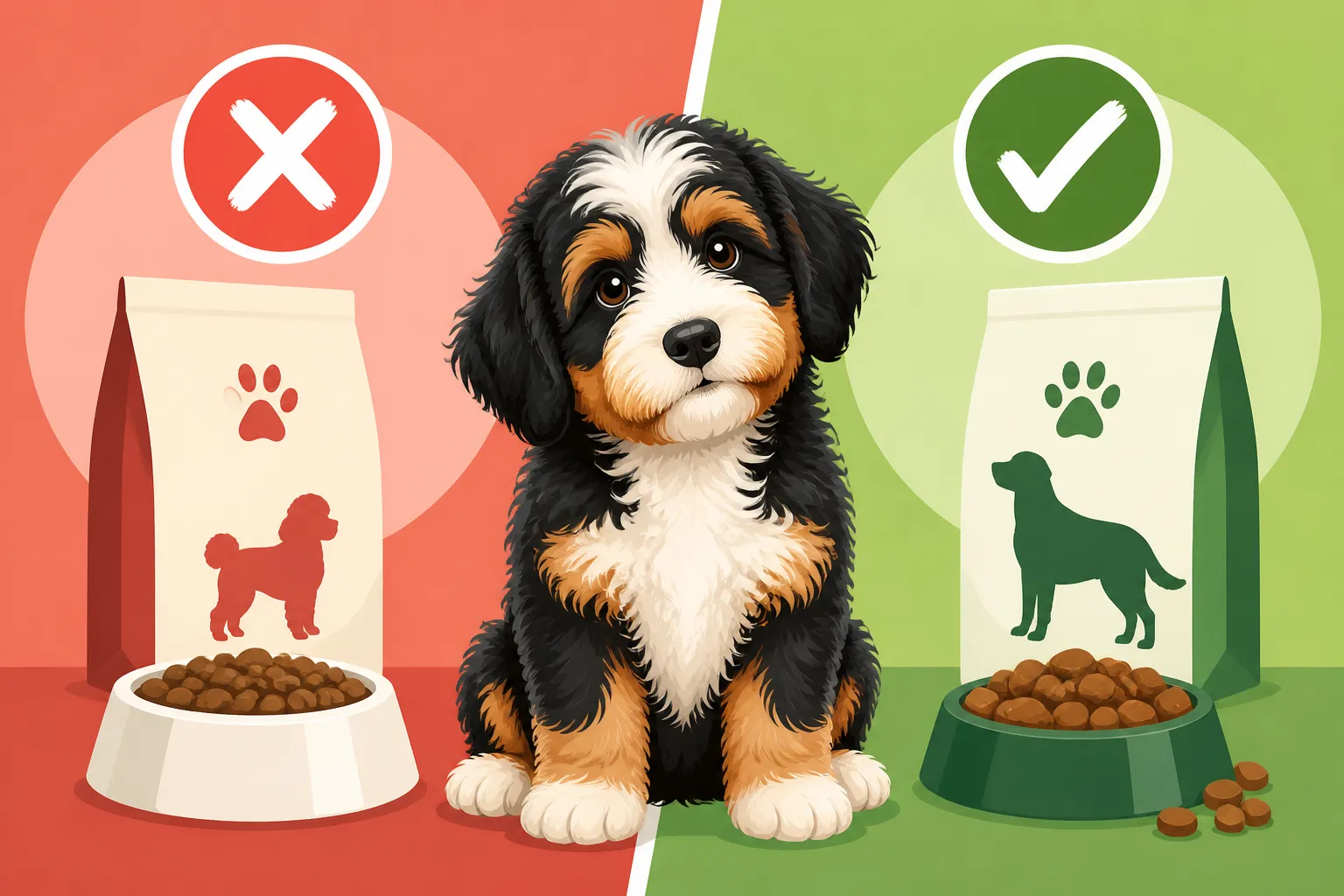
Here's a quick comparison of what you might see:
| Factor | Standard Puppy Food | Large Breed Puppy Food |
|---|---|---|
| Target Adult Weight | Generally under 50-70 lbs | Generally 50 lbs and above |
| Calcium Levels | Higher (can be 1.2-2.5% dry matter) | Controlled Lower (typically 0.9-1.5% dry matter) |
| Phosphorus Levels | Higher | Controlled Lower |
| Calorie Density | Higher | Often slightly lower to promote slow growth |
| Fat Content | Higher | Controlled lower |
| Growth Rate Impact | Can accelerate growth, stress joints | Promotes slow, steady growth, protecting joints |
| Bernedoodle Size | Tiny/Smaller Mini Bernedoodle (<30 lbs) | Larger Mini Bernedoodle (30-50+ lbs) |
Considering the Individual Puppy
Every puppy is an individual, and while general guidelines are helpful, your Mini Bernedoodle's specific needs might vary.
- Growth Trajectory: Pay close attention to how quickly your puppy is growing. Is your vet commenting on their rapid weight gain? Are they growing taller and filling out at an exceptional pace? If so, leaning towards a large breed formula might be prudent. Conversely, if your Mini is smaller and growing at a more moderate pace, a high-quality standard puppy food might be perfectly suitable.
- Parental Size: This can offer valuable clues. What did the parents weigh? If both parents were on the smaller end of their respective Mini Poodle and Bernese ranges, your pup might stay smaller. If the Bernese parent was particularly large, or the Poodle was a larger miniature, your Mini Bernedoodle might tend towards the higher end of the Mini scale.
- Energy Levels: A highly active puppy will naturally burn more calories than a more sedate one. While calorie intake needs to be sufficient for energy, the primary focus for growing puppies, especially those with Bernese lineage, should still be controlled growth rather than maximizing weight gain.
- Your Veterinarian's Advice: Ultimately, your vet is your best resource. They can assess your puppy's physical condition, monitor their growth curve, and provide tailored recommendations. Don't hesitate to bring the food bags with you to appointments for their expert opinion.
Remember to consider practicalities like How Many Meals a Bernedoodle Puppy Needs Daily and How Much a Mini Bernedoodle Eats Daily as you plan your feeding schedule. It's not just what you feed, but how much and when that matters.
Transitioning to Adult Food
The transition from puppy food to adult food is another milestone in your Bernedoodle's life. Generally, large breed puppies tend to stay on puppy food longer than smaller breeds, often until they are 12 to 18 months old, to ensure their slower growth is fully supported.
For a Mini Bernedoodle, given their intermediate size, the timing might fall somewhere in between. A smaller Mini might be ready for adult food around 10-12 months, while a larger Mini Bernedoodle, especially one that has been growing rapidly, might benefit from staying on puppy food until 14-16 months. The key is to watch for signs that their intense growth period has largely subsided and consult your vet. They can help you determine The Age a Bernedoodle Switches to Adult Food based on your dog's individual development.
When you do make the switch, do it gradually over 7-10 days. Start by mixing a small amount of the new adult food with their current puppy food, slowly increasing the proportion of adult food each day while decreasing the puppy food. This helps prevent gastrointestinal upset and allows your dog's digestive system to adjust. Maintaining a healthy weight throughout adulthood is also crucial; be mindful of Keeping a Bernedoodle's Weight Down to support long-term joint health and overall well-being. And as they mature, you might also be looking into things like Whether Grain Free Diets Threaten a Bernedoodle's Heart or Whether Omega Oils Help a Bernedoodle's Coat Density for ongoing health. The journey of feeding your Bernedoodle is a continuous one, adapting as they grow and their needs evolve.
Disclaimer
This article is for general informational purposes only and does not constitute professional advice. Laws, prices and regulations vary by location and change over time. Consult a qualified professional for guidance on your specific situation.