Whether Ramps Help a Bernedoodle’s Joints
The constant worry about our beloved Bernedoodles' joint health is a heavy burden for many owners. We want to do everything we can to give them long, comfortable lives, and watching them bound off the couch or leap from the car can trigger a pang of anxiety. This guide will explore whether incorporating ramps into your Bernedoodle's daily life can genuinely help protect their precious joints, offering practical insights and actionable steps to reduce wear and tear.
Understanding Bernedoodle Joint Vulnerabilities
It's no secret that large and giant breed dogs, and even some smaller ones, can be prone to joint issues. With a Bernedoodle, you're essentially getting a wonderful mix of two breeds, the Bernese Mountain Dog and the Poodle, each with their own genetic predispositions. This beautiful blend, while bringing so many desirable traits, also means we need to be extra vigilant about their structural health.
The Genetic Predisposition from Both Sides
Both the Bernese Mountain Dog and the Poodle, the parent breeds of your Bernedoodle, carry certain genetic predispositions to joint conditions. From the Bernese side, we often see concerns like hip and elbow dysplasia, which are abnormal formations of the hip and elbow joints, respectively. These conditions can range from mild discomfort to severe lameness. The sheer size and rapid growth of a standard Bernedoodle, much like a Bernese, can exacerbate these underlying issues if not managed carefully. Even if a Bernedoodle doesn't inherit full-blown dysplasia, the joint structure might still be less than perfect, making them more susceptible to injury over time. It’s why responsible breeders screen diligently, but even then, nature can surprise us. You can read more about specific concerns in articles like Hips on a Ninety Pound Bernedoodle and Elbow Dysplasia in a Growing Bernedoodle.
The Poodle side, while generally known for being a healthier breed in some aspects, also has its own set of joint challenges. Luxating patellas (slipping kneecaps), while more common in smaller Poodles and thus smaller Bernedoodles, can still occur. Additionally, conditions like Legg-Calvé-Perthes disease, though rarer, can also be a concern. Both breeds contribute to the genetic mosaic of your Bernedoodle, meaning that careful management of their joint health is paramount from puppyhood right through their senior years. This also extends to neurological conditions like Degenerative Myelopathy Both Bernedoodle Parents Can Carry, which, while not a joint issue itself, can lead to mobility challenges that ramps can help alleviate.
The Impact of Size and Growth on Joints
Bernedoodles, especially the standard and even mini varieties, grow incredibly fast. Their bones and joints are developing at an astonishing rate, laying the foundation for a lifetime of movement. During this critical growth phase, any excessive stress or impact can interfere with proper joint formation, leading to problems later on. Imagine a young sapling trying to grow perfectly straight while heavy weights are constantly dropped on its developing branches – it’s a recipe for crooked growth and weakness.
For a Bernedoodle puppy, every jump, every hard landing, every scramble up and down stairs puts significant pressure on soft, still-forming cartilage and ligaments. This is why many vets and experienced breeders advocate for what's known as "slow growth," where diet and exercise are carefully controlled to prevent excessive weight gain and high-impact activities during puppyhood. Overfeeding and over-exercising a growing Bernedoodle can increase their risk for developmental orthopedic diseases. It's not just about managing calorie intake as discussed in Growing a Standard Bernedoodle Slowly on Purpose, but also about being mindful of their physical activities. Limiting strenuous exercise and high-impact movements, particularly on hard surfaces, is crucial during this delicate phase.
Everyday Stressors That Add Up
Our daily lives often involve activities that, while seemingly innocuous, can put cumulative stress on a Bernedoodle's joints. Repeatedly jumping off furniture, leaping out of a car, or even navigating a flight of stairs multiple times a day can create micro-traumas over years. Each time a heavy Bernedoodle lands, there’s a jolt that reverberates through their joints, particularly the elbows, hips, and knees. Over time, this repetitive impact contributes to the breakdown of cartilage and the development or worsening of conditions like arthritis.
Consider a Bernedoodle that enthusiastically greets you at the door, jumping up. Or the one that loves to hop onto your bed every night. These small actions, compounded daily, can silently contribute to joint degradation. The effort required to stop a ninety-pound dog from jumping or to physically lift them into a vehicle can be immense, leading many owners to just let their dogs do it. This is where ramps can step in as a game-changer, providing a low-impact alternative that protects their joints without requiring superhuman strength from you. It's about recognizing these subtle stressors and providing an easier, safer path.
How Ramps Protect Your Bernedoodle's Joints
Using ramps might seem like a small change, but it can have a profound positive impact on your Bernedoodle's long-term joint health. It's a proactive measure that mitigates the daily wear and tear that leads to pain and mobility issues down the road.
Reducing Impact and Strain
The fundamental benefit of a ramp is that it eliminates the jarring impact associated with jumping or the repetitive stress of climbing and descending stairs. When a Bernedoodle jumps from a height, like a bed or a car, the force of gravity combined with their weight puts immense pressure on their joints upon landing. This force isn't just absorbed by their paws; it travels up through their legs, hips, and spine. Over months and years, this constant concussive force contributes to the erosion of cartilage, inflammation, and the progression of degenerative joint disease.
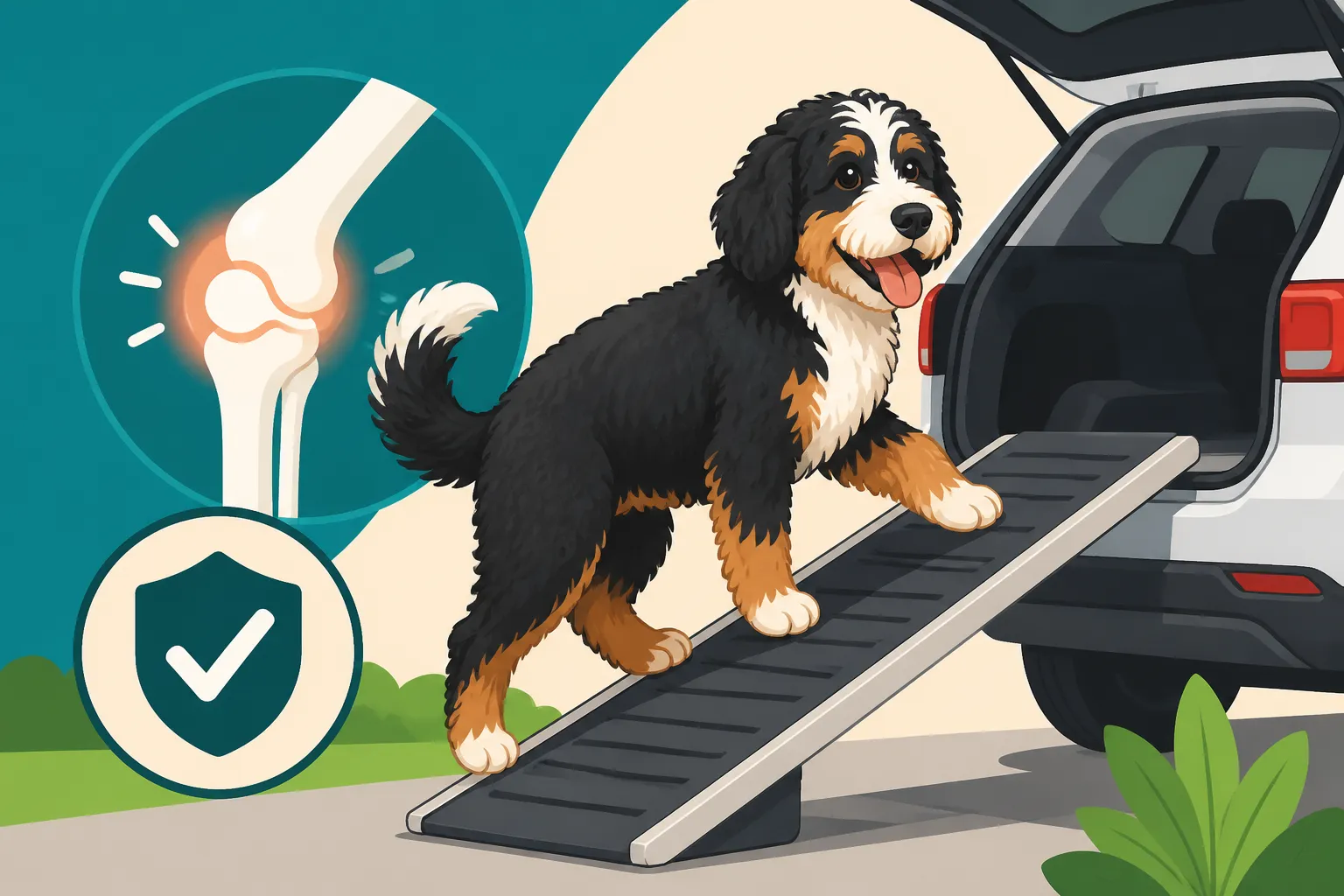
A ramp, by providing a gradual incline, allows your Bernedoodle to walk up and down smoothly, distributing their weight evenly and minimizing the sudden shock to their skeletal system. Instead of a high-impact jump, they engage their muscles in a controlled, low-impact manner, which is much kinder to their ligaments, tendons, and cartilage. This is especially vital for a breed already prone to issues like hip and elbow dysplasia, as it reduces the exacerbation of these conditions. It's like replacing a series of small, sharp hammer blows with a gentle, continuous push – the difference for their joints is immense and cumulative.
Preventing Acute Injuries
Beyond the long-term wear and tear, ramps also play a crucial role in preventing acute injuries. A misstep, a slip on a smooth surface after a jump, or an awkward landing can lead to immediate and painful injuries. Imagine your Bernedoodle jumping off the sofa and landing imperfectly, twisting a knee or straining a back muscle. For a heavy dog, even a seemingly minor stumble can result in serious damage, such as a torn cruciate ligament. These types of injuries often require expensive surgery, long recovery times, and can significantly impact their quality of life. Many Bernedoodle owners dread the possibility of sudden lameness or the diagnosis of something like Torn Cruciates in a Heavy Bernedoodle.
Ramps provide a stable, predictable surface, drastically reducing the risk of such accidents. When they use a ramp, their movement is controlled, reducing the likelihood of slips, falls, or awkward landings that can lead to ligament tears, sprains, or even fractures. This is true whether it's getting into a vehicle, onto a grooming table, or simply accessing their favorite sleeping spot. By offering a safe pathway, you're not just preventing gradual damage but also safeguarding them against sudden, debilitating injuries that can severely impact their well-being and your wallet.
Supporting Senior and Recovering Dogs
While prevention is key, ramps are also indispensable tools for Bernedoodles who are already dealing with mobility challenges. As our beloved Bernedoodles age, arthritis and other age-related joint conditions are almost inevitable. An older dog with stiff joints or weakened muscles will find jumping or navigating stairs painful and difficult, sometimes even impossible. A ramp provides them with the independence to access their favorite spots – be it the car for a vet visit or their beloved bed – without pain or struggle. It allows them to maintain a sense of normalcy and dignity, which is so important in their golden years. For insights into caring for an older dog, you might find Supporting an Old Bernedoodle That Cannot Rise particularly helpful.
Similarly, if your Bernedoodle is recovering from surgery, an injury, or dealing with a chronic condition, ramps are essential for a smooth and safe recovery process. They minimize the stress on healing tissues, prevent re-injury, and allow for controlled movement as they regain strength. A dog recuperating from Managing Arthritis in an Old Bernedoodle, for example, needs every advantage to avoid further strain. It also makes your life easier as an owner, preventing the need to lift a heavy, potentially painful dog, which can be difficult for both of you. Ramps truly extend their comfort and independence, making life better for everyone in the household.
Choosing the Right Ramp for Your Bernedoodle
Once you're convinced about the benefits of ramps, the next step is selecting the right one. With so many options available, it can feel a little overwhelming, but focusing on your Bernedoodle's size, your specific needs, and safety features will guide you to the perfect choice.
Key Features to Look For
When shopping for a ramp for your Bernedoodle, there are several critical features to consider to ensure it's safe, effective, and durable enough for a large, active dog.
- Material and Durability: Look for ramps made from sturdy, high-quality materials like heavy-duty plastic, aluminum, or strong wood. Given a standard Bernedoodle can weigh upwards of 90 pounds, the ramp needs to support their full weight without flexing or feeling unstable. A flimsy ramp can be scary for a dog and could lead to falls.
- Length and Incline: This is crucial. A longer ramp will naturally have a gentler incline, making it easier and safer for your Bernedoodle to use, especially for those with existing joint issues. A steep incline can be almost as challenging as jumping. For car ramps, measure the height from the ground to your vehicle's entry point and choose a ramp that provides a comfortable slope.
- Surface Grip: The ramp's surface must provide excellent traction to prevent slips and falls. Look for anti-slip coatings, sandpaper-like textures, or raised treads. Smooth plastic or bare wood can be treacherous, especially if wet or if your dog has worn paw pads. This non-slip surface is non-negotiable for their safety.
- Portability and Storage: If you plan to use the ramp for car travel or moving it between different locations (like from the couch to the bed), portability is key. Many ramps fold in half or telescope for easy storage in a car trunk or closet. Consider the ramp's weight if you'll be lifting it frequently.
- Width: Ensure the ramp is wide enough for your Bernedoodle to comfortably walk on without feeling constrained or like they might fall off the side. A wider ramp generally feels more secure to a dog.
Different Types of Ramps for Different Needs
Not all ramps are created equal, and what works for getting into a car might not be suitable for the couch. Thinking about where and how your Bernedoodle needs help will guide your selection.
- Car Ramps: These are typically longer and designed to bridge the gap and height difference between the ground and your vehicle's cargo area or backseat. They often feature telescoping or folding designs for easy storage. Brands available on sites like Chewy or Amazon offer a wide range of car ramps in different lengths and weight capacities. They are essential for preventing injuries from jumping in and out of cars, especially as Bernedoodles are prone to hip and elbow issues.
- Couch and Bed Ramps: These ramps are usually shorter with a less steep incline, designed for indoor use to help your Bernedoodle access furniture without jumping. They can be made of wood, plastic, or even upholstered to blend with home decor. Some are fixed, while others are foldable for easy movement between rooms. These are great for protecting joints from daily minor impacts, particularly important for puppies and senior dogs.
- Stair Ramps: Less common, but some ramps are designed to cover a few steps, creating a gentler incline for dogs who struggle with stairs. These are usually custom-built or more heavy-duty than a standard indoor ramp.
- Outdoor Ramps: For decks, patios, or even gentle slopes in the yard, outdoor ramps need to be weather-resistant and have excellent traction, even when wet.
Here's a quick comparison of common ramp types:
| Ramp Type | Primary Use | Typical Length | Key Features | Best For |
|---|---|---|---|---|
| Car Ramp | Vehicles (SUV, truck, van) | 4-7 feet | Foldable/telescoping, high traction, durable | Preventing car entry/exit jumps, travel |
| Couch/Bed Ramp | Furniture (sofa, bed) | 2-5 feet | Gentler incline, may be upholstered, lighter | Daily furniture access, indoor joint protection |
| Portable Ramp | Multi-purpose (stairs, car, vet) | Varies, often 3-6 feet | Lightweight, highly portable, good grip | Versatile use, quick trips, smaller lifting needs |
Training Your Bernedoodle to Use a Ramp
Even the best ramp is useless if your Bernedoodle won't use it! Introducing a ramp takes patience, positive reinforcement, and sometimes, a little creativity.
Start by placing the ramp on a flat, stable surface, not attached to anything, and let your dog explore it. Encourage them with praise and high-value treats (perhaps some delicious Ollie treats!). Walk across the ramp yourself if it’s sturdy enough, or guide them gently with a leash. The goal is to make it a positive, non-threatening experience. Don't force them; that can create an aversion.
Once they're comfortable walking on the flat ramp, introduce it to a low height, like a single step or the edge of a curb. Again, lots of praise and treats. Gradually increase the height, always ensuring the ramp is stable and secure. Practice in short, positive sessions, building their confidence. Some dogs take to it immediately, while others might need a few weeks of consistent, gentle encouragement. Make it a routine – every time they need to get in the car or on the bed, the ramp comes out. Consistency is key to forming a new, healthy habit.
Beyond Ramps: A Holistic Approach to Joint Health
While ramps are an excellent tool for protecting your Bernedoodle's joints, they are just one piece of a larger puzzle. A truly comprehensive approach involves combining physical aids with careful management of diet, exercise, and proactive veterinary care.
Controlled Exercise and Weight Management
One of the single most impactful things you can do for your Bernedoodle's joint health is to maintain a healthy weight and provide appropriate, controlled exercise. Every extra pound your dog carries puts additional stress on their joints, accelerating wear and tear and exacerbating any existing conditions like arthritis or dysplasia. Just imagine carrying an extra 10-15 pounds around all day yourself – it would take a toll! It’s really a critical factor, as highlighted in articles like Keeping a Bernedoodle's Weight Down and Whether an Overweight Bernedoodle Loses Years.
Focus on low-impact activities like swimming, leash walks on soft surfaces (grass or dirt trails), and gentle play. Avoid excessive running, jumping, or sudden stops and starts, especially during their growth phase. For puppies, adhere to guidelines like the "five-minute rule" (five minutes of exercise per month of age, twice a day), as discussed in The Five Minute Rule on a Bernedoodle Puppy's Walks. As they mature, customize their exercise routine to their individual needs and abilities, always prioritizing controlled, joint-friendly movement. Regular, moderate exercise also helps maintain strong muscles, which in turn support and stabilize their joints.
Nutritional Support and Supplements
What goes into your Bernedoodle's bowl plays a huge role in their overall health, including their joints. A high-quality diet provides the necessary building blocks for healthy tissues and can help manage inflammation. When feeding a large breed like a Bernedoodle, especially during puppyhood, it's vital to choose a food formulated for large breeds that supports slow, steady growth. This helps prevent rapid growth spurts that can stress developing joints.
Beyond a balanced diet, many Bernedoodle owners choose to incorporate joint supplements. Common ingredients to look for include glucosamine, chondroitin, MSM, and Omega-3 fatty acids (like fish oil). Glucosamine and chondroitin are often used to support cartilage health and production, while MSM is thought to help with pain and inflammation. Omega-3s are powerful anti-inflammatories. Discuss with your vet which supplements might be beneficial for your Bernedoodle, considering their age, activity level, and any existing joint concerns. You might explore Whether Joint Supplements Help a Bernedoodle for more details, or specifically Whether a Bernedoodle Needs Glucosamine From a Year Old to guide your timing. Brands like Chewy or Amazon offer a wide array of options, but always prioritize vet recommendations.
Regular Vet Check-ups and Early Intervention
Proactive veterinary care is indispensable for maintaining your Bernedoodle's joint health. Regular check-ups allow your vet to monitor their mobility, gait, and overall physical condition. They can identify subtle signs of joint discomfort or developing issues long before they become severe problems. Early detection is key, as it opens the door to early intervention, which can often slow the progression of degenerative diseases and improve your dog's quality of life. The importance of routine checks is clearly laid out in The Screening a Bernedoodle Should Have Yearly.
Your vet can recommend various strategies, from medication and physical therapy to specialized diets and activity modifications. They might suggest periodic X-rays to assess hip and elbow health, especially if your Bernedoodle shows any signs of lameness or discomfort. Don't wait until your dog is overtly limping or struggling to get up. Subtle changes in activity level, reluctance to jump, or a slight stiffness after rest can all be indicators that it's time for a vet visit. Being proactive and working closely with your veterinary team ensures your Bernedoodle receives the best possible care throughout their life, allowing them to enjoy their days with as much comfort and joy as possible.
Disclaimer
This article is for general informational purposes only and does not constitute professional advice. Laws, prices and regulations vary by location and change over time. Consult a qualified professional for guidance on your specific situation.