The Slicker and Rake a Bernedoodle Needs
Oh, the glorious, fluffy Bernedoodle coat! It's one of the main reasons we fall head over heels for these wonderful dogs, but let's be honest, it can also be the bane of an owner's existence. The seemingly endless battle against mats and tangles can feel like a full-time job. This guide is here to help you arm yourself with the right tools – specifically, the slicker brush and the undercoat rake – and the knowledge to keep your Bernedoodle's coat looking its best, without turning grooming into a wrestling match.
Understanding the Bernedoodle Coat: A Battle of Textures
Before we dive into the tools, it's crucial to truly understand what you're up against. The Bernedoodle's coat is a unique blend, inheriting traits from both the thick, double-coated Bernese Mountain Dog and the curly, single-coated Poodle. This genetic lottery means every Bernedoodle's coat can be a little different, and each type presents its own set of challenges.
The Many Faces of a Bernedoodle Coat
You might have heard terms like "wavy," "curly," or even "straight" when breeders talk about Bernedoodle coats. Each type dictates the kind of care it needs. The wavy coat is probably the most common, offering that classic "doodle" look. It's often soft and flowing but is a notorious mat magnet. Those beautiful waves can easily tangle into knots, especially where friction occurs. Then there's the curly coat, which leans more towards the Poodle side. This dense, tight curl is often considered the most "hypoallergenic" and least shedding, but it requires diligent brushing to prevent mats from forming deep within the curls, close to the skin. If left untended, these mats can quickly become felted, causing skin irritation and pain. Finally, you might encounter a straight coat, which is less common but does happen. This coat type tends to shed more, much like a Bernese, and while it might seem easier to manage, it can still knot and gather debris if not brushed regularly. Regardless of the exact texture, the sheer volume and density of a Bernedoodle's coat mean regular, thorough grooming is not just aesthetic, it's a health imperative.
Why Mats Are the Enemy and Where They Hide
Mats aren't just an unsightly nuisance; they are a serious welfare issue for your Bernedoodle. They can pull on the skin, causing pain, irritation, and even skin infections if moisture gets trapped underneath. In severe cases, mats can restrict movement, impair circulation, and hide parasites or injuries. And trust me, once they start, they multiply faster than you can say "slicker brush."
Knowing your enemy means knowing its favorite hiding spots. These are the areas where friction is highest or where the coat is naturally thicker and more prone to tangling:
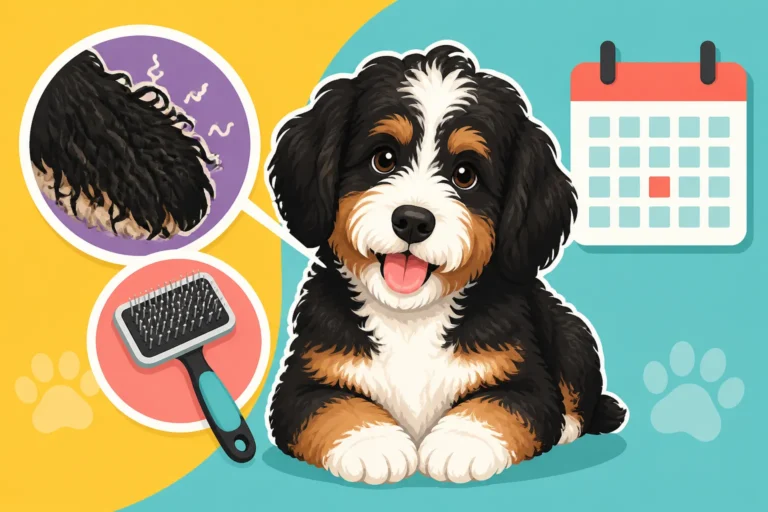
- Behind the ears: This is often ground zero for mats. Every head tilt, every scratch, every bit of ear movement creates friction, weaving the fine hairs into tight knots. You'll often find little felted patches here that can grow surprisingly fast. It’s why focusing extra attention here during brushing is so important. You can also find mats The Mat That Forms Where a Bernedoodle's Ear Folds which are especially tricky.
- Armpits: Another high-friction zone. As your Bernedoodle walks, runs, and plays, the skin in the armpits rubs against itself, forming dense mats that can be incredibly uncomfortable. Imagine wearing a shirt with a seam constantly digging into your armpit – that's what a mat feels like.
- Groin and britches (the fluffy fur on the hindquarters): This area collects everything – dirt, burrs, leaves – and is constantly rubbed by movement and sitting. The soft, dense fur here is a prime target for mats that can spread quickly.
- Under the collar or harness: The constant rubbing of everyday wear creates a perfect environment for mats to form, especially if the collar isn't removed regularly for thorough brushing.
- Paws and between the toes: These areas can collect debris and form painful mats that affect your dog's gait.
- Tail base: The tail swings and moves constantly, causing friction and often leading to mats where it meets the body.
Early detection and prevention are key. Ignoring a small mat won't make it go away; it will only grow bigger and tighter, eventually requiring professional dematting or, in extreme cases, shaving down.
Your Essential Grooming Arsenal: The Slicker Brush
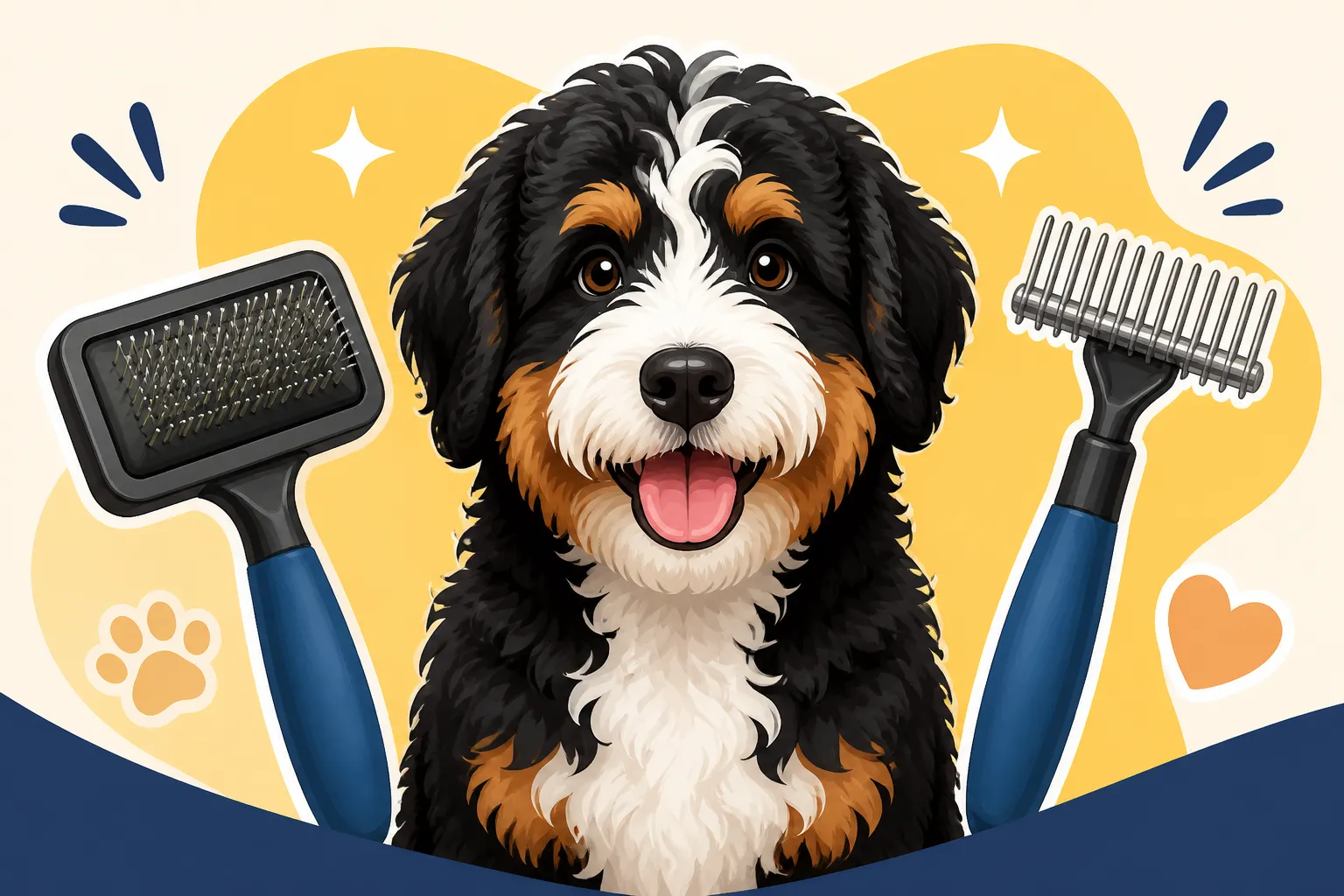
If you have a Bernedoodle, a slicker brush isn't just a suggestion; it's a daily necessity. This is your primary weapon against tangles and the foundation of your grooming routine.
What a Slicker Brush Does for a Bernedoodle
A slicker brush is characterized by its wide head covered with numerous fine, short wires that are bent at an angle. These wires effectively reach down into the coat, separating individual hairs and pulling out loose fur and minor tangles. For a Bernedoodle, it serves several critical purposes:
- Detangling: The primary function. The bent pins gently pull apart knots and prevent small tangles from becoming giant, impenetrable mats. It's designed to glide through the coat, working on surface tangles as well as those lurking deeper.
- Removing Loose Undercoat: Even Bernedoodles that don't "shed" in the traditional sense still lose hair, especially their soft undercoat. If this dead hair isn't removed, it quickly becomes entangled with the live hair, forming dense mats. The slicker brush helps extract this trapped undercoat, which is vital for maintaining a healthy, breathable coat and skin.
- Distributing Natural Oils: Regular brushing with a slicker brush helps spread your dog's natural skin oils throughout their coat. This contributes to a healthier, shinier coat and can reduce dryness and flakiness.
- Stimulating Circulation: The gentle massage of the brush pins on the skin can promote blood flow, which is beneficial for skin health.
- Preparing for Further Grooming: A good slicker brush session is the first step before bathing or using other grooming tools. You never want to bathe a matted dog, as water only tightens mats, making them nearly impossible to remove without shaving.
Choosing the Right Slicker Brush
Not all slicker brushes are created equal, and choosing the right one can make a significant difference in your grooming experience and your Bernedoodle's comfort.
- Size Matters: For a standard Bernedoodle, you'll want a large slicker brush with a generously sized head. A small brush will simply take too long and frustrate both you and your dog. For a Mini or Tiny Bernedoodle, a medium-sized brush might be more appropriate, allowing you to maneuver around smaller body parts.
- Pin Type and Hardness: Slicker brushes come with different pin densities and levels of firmness. For a thick, dense Bernedoodle coat, a brush with firm, densely packed pins is usually most effective at reaching through the layers. However, ensure the pins have rounded tips to prevent scratching your dog's skin. Some brushes offer softer pins, which might be better for puppies or dogs with very sensitive skin, but they may not be as effective on stubborn mats.
- Handle Comfort: You'll be spending a lot of time holding this tool, so a comfortable, ergonomic handle is a must. Look for handles with a non-slip grip that fits well in your hand to prevent fatigue.
- Quality and Durability: Invest in a good quality slicker brush. Cheap brushes often have pins that bend easily or handles that break. Brands like Chris Christensen, ActiVet, or Andis are often recommended by professional groomers for their durability and effectiveness on thick coats. You can find a wide variety of options and read reviews on trusted online retailers like Chewy or Amazon to help you make an informed decision. Look for brushes specifically designed for large, thick, or curly coats.
Mastering the Slicker: Technique for Success
Effective slicker brushing isn't just about dragging the brush over the coat. It requires a specific technique to ensure you're getting all the way to the skin without causing discomfort. This is where "line brushing" comes in, and it's absolutely crucial for a Bernedoodle.
- Start with a Clean, Dry Dog (Ideally): While you can use a slicker brush for maintenance between baths, for a thorough detangling session, it's best if the coat is clean and completely dry. Remember, water tightens mats!
- Section the Coat: Don't try to brush the entire dog at once. Part the hair horizontally or vertically, revealing a small section of skin. You can use clips to hold back the unbrushed hair. This allows you to work systematically and ensures you don't miss any spots.
- Line Brushing Technique: Hold the brush so the pins are almost parallel to the skin. Start at the bottom of a leg or flank and brush upwards or outwards against the grain of the hair, gently lifting the hair. Then, brush downwards or with the grain. The key is to see the skin after each stroke. If you can't see the skin, you're not getting deep enough.
- Work in Small Strokes: Use short, gentle strokes. Don't press too hard, as the pins can scratch the skin. If you encounter a tangle, don't yank. Instead, gently pick at the edges of the mat with the very tips of the slicker brush, working it loose gradually. You may need to use a detangling spray for stubborn spots.
- Be Thorough: Work your way across the entire section, then move to the next section. Pay extra attention to those high-traffic areas we discussed earlier: behind the ears, armpits, britches, and under the collar. This methodical approach is key to Line Brushing a Bernedoodle to the Skin.
- Praise and Treats: Make grooming a positive experience. Reward your Bernedoodle with praise and treats throughout the session, especially when they are calm and cooperative. Short, frequent sessions are often more effective than long, arduous ones.
The Secret Weapon: The Undercoat Rake
While a slicker brush is your primary tool, an undercoat rake is the unsung hero for a Bernedoodle's dense, often double-layered coat. Many owners skip this step, thinking their slicker is enough, but they're often leaving a lot of trouble behind.
Why a Rake is Non-Negotiable for Double Coats
The Bernese Mountain Dog parent contributes a very dense double coat to the Bernedoodle mix, consisting of a softer, insulating undercoat and a coarser outer coat. Even if your Bernedoodle's coat leans more Poodle-like with curls, they can still have a surprisingly thick undercoat that traps dead hair. A slicker brush, especially if not used with perfect technique, might only skim the surface or manage the top layer of tangles. It often struggles to penetrate deep into the dense undercoat where mats truly begin.
This is where the undercoat rake shines. Designed with longer, widely spaced teeth, it's specifically engineered to reach through the topcoat and pull out loose, dead undercoat that a slicker brush might miss. Removing this trapped undercoat is vital for several reasons:
- Prevents Deep Matting: The primary reason. Dead undercoat, if not removed, will tangle with itself and the longer guard hairs, forming dense, painful mats right at the skin level. These mats can be incredibly difficult to remove and often necessitate shaving.
- Improves Air Circulation: A thick, impacted undercoat prevents air from circulating close to the skin. This can lead to overheating in warmer weather and can create a moist environment perfect for skin infections. By removing excess undercoat, you help your Bernedoodle regulate their body temperature more effectively and maintain healthier skin.
- Reduces Shedding (Even in "Non-Shedders"): While Bernedoodles are often advertised as low-shedding, they still shed. Removing the dead undercoat means less hair shed around your home. For those with more Bernese-like coats, this is particularly impactful. Many owners are surprised by how much hair comes out with a rake, even from their "non-shedding" doodle. It really highlights Why the Undercoat Is What Mats on a Bernedoodle.
- Enhances Coat Health: A healthy coat is one that is free of dead hair and tangles. The rake helps maintain the integrity of the coat, allowing natural oils to distribute better and promoting overall coat vitality.
Selecting the Perfect Rake for Your Bernedoodle
Just like slicker brushes, undercoat rakes come in various designs. Choosing the right one is about matching it to your Bernedoodle's specific coat density and texture.
- Tooth Length: For a Bernedoodle, you'll generally need a rake with fairly long teeth (1-1.5 inches) to penetrate their thick coat all the way to the skin. Shorter teeth won't be effective.
- Tooth Spacing: The spacing between the teeth is also important. Wider spacing is good for thicker, coarser coats or for initially breaking up larger areas. Closer spacing can be used for finer coats or for more detailed work after the bulk of the undercoat has been removed. Many owners find a rake with medium-to-wide spacing to be a good starting point for a Bernedoodle.
- Rounded Tips: Always ensure the teeth have blunt, rounded tips to prevent scratching or irritating your dog's skin. Sharp teeth can cause discomfort and even injury.
- Handle Comfort: Again, an ergonomic, comfortable handle is essential for ease of use during longer grooming sessions.
- Type of Rake: There are different styles, such as single-row or double-row rakes. Single-row rakes are often preferred for their ability to glide through dense coats without pulling too much at once. Some rakes also have rotating pins, which can further reduce pulling and tangling. Research different types and look for popular, highly-rated options on platforms like Amazon. Reading reviews from other Bernedoodle owners can be incredibly insightful.
How to Effectively Use an Undercoat Rake
Using an undercoat rake requires a gentle touch and careful technique. It's not a tool to be used aggressively.
- Ensure the Coat is Free of Surface Mats: Before you even think about using an undercoat rake, ensure your Bernedoodle's coat has been thoroughly brushed with a slicker brush and is free of any large, surface-level mats. The rake is designed for undercoat, not for untangling matted clumps. Trying to pull a rake through a matted coat will be painful for your dog and ineffective.
- Work in Small Sections: Similar to slicker brushing, section off your Bernedoodle's coat.
- Gentle Strokes, Parallel to Skin: Hold the rake almost parallel to your dog's skin and use light, long strokes in the direction of hair growth. Do not press down or dig the rake into the skin. The goal is to gently lift and pull out the loose undercoat.
- Listen and Observe: Pay close attention to your dog's reaction. If they flinch or show discomfort, you might be pulling too hard, or there might be a mat you missed. Stop and investigate with your fingers or a slicker brush.
- Focus on Dense Areas: Concentrate your efforts on the areas where undercoat tends to accumulate most, such as the neck, chest, back, and britches.
- Alternate with Slicker: After raking a section, follow up with your slicker brush and a wide-toothed comb to ensure all loose hair is gone and there are no new tangles. This combo is often the most effective.
- Frequency: The frequency of using an undercoat rake depends on your Bernedoodle's coat type and the season. During shedding season (which can be somewhat year-round for Bernedoodles), you might use it weekly. For maintenance, every two to four weeks might suffice.
Beyond the Basics: Supplementary Tools & Routine
While the slicker brush and undercoat rake are your mainstays, a few other tools and a solid routine will round out your Bernedoodle grooming kit and keep that coat in tip-top shape.
Other Tools to Consider and Why
Having a few additional items on hand can make your grooming sessions more efficient and effective:
- Wide-toothed Comb: This is your final check. After brushing and raking a section, run a wide-toothed metal comb through the hair. If the comb glides through smoothly from root to tip, you've done your job! If it snags, you've missed a mat or a tangle that needs further attention with your slicker brush. A comb is indispensable for checking behind the ears, in the armpits, and under the tail.
- Dematter or Mat Splitter: For those stubborn, small mats that seem to appear out of nowhere, a dematter or mat splitter can be a lifesaver. These tools have sharp, inwardly curved blades designed to cut through a mat rather than pulling it. Use these with extreme caution! They are very sharp and can easily cut your dog's skin if not used correctly. Always place your fingers between the mat and the skin to protect your Bernedoodle. For large, felted mats, it's always safer to consult a professional groomer.
- Blunt-nosed Scissors: Useful for carefully trimming small bits of hair around the eyes or sanitary areas. Again, extreme caution is needed.
- Detangling Spray: A good quality detangling spray can make brushing through tangles much easier and more comfortable for your dog, reducing static and preventing breakage.
- Force Dryer: While an investment, a force dryer (a powerful, motor-driven blower) is invaluable for drying a Bernedoodle after a bath. It blasts water out of the coat, significantly reducing drying time and, crucially, helping to straighten the hair and prevent mats from forming as it dries. This is a game-changer for anyone bathing their Bernedoodle at home.
Establishing a Consistent Grooming Routine
Consistency is paramount when it comes to Bernedoodle grooming. Neglecting the coat for even a few days can lead to a matting nightmare.
- Frequency: For most Bernedoodles, especially those with wavy or curly coats, daily or every-other-day brushing is ideal. Yes, you read that right – daily! This prevents small tangles from becoming big mats. For Bernedoodles with straighter or less dense coats, you might get away with 2-3 times a week. However, during coat change (typically between 6-18 months of age when the puppy fluff gives way to the adult coat), daily brushing is non-negotiable as this is when matting explodes. Regular brushing helps with How Often a Bernedoodle Should Be Brushed to avoid painful matting. You'll soon see The Weekly Hours a Standard Bernedoodle's Coat Takes can be substantial but is worth it for their comfort and health.
- Make it Positive: Start grooming early in puppyhood and make it a positive experience. Associate brushing with treats, praise, and gentle handling. Short, frequent sessions are better than infrequent, marathon struggles.
- Full Body Checks: Beyond just brushing, get into the habit of running your hands over your Bernedoodle's entire body every few days. Feel for any lumps, bumps, or hidden mats. This also helps you bond with your dog and familiarizes you with their normal body condition.
The Professional Touch: When to Call the Groomer
Even with the best home grooming routine and tools, professional grooming is usually a necessity for a Bernedoodle. Their coats are simply too demanding for most owners to manage entirely on their own, especially for proper trims and shaves.
- Regular Professional Grooms: Most Bernedoodles benefit from professional grooming every 6-8 weeks. A professional groomer has specialized tools, training, and experience to handle complex coats. They can perform full haircuts, sanitary trims, nail trims, and thorough de-shedding. Don't underestimate the challenge of Building a Bernedoodle Up to a Three Hour Groom at home!
- Dealing with Mats: If your Bernedoodle develops severe matting that you can't safely remove at home, a professional groomer is your best friend. They can often demat if it's not too severe, or they can safely shave down a matted coat, which is often the kindest solution. Attempting to cut out large mats at home can result in accidental cuts to the skin.
- Specialty Clips: A professional groomer can give your Bernedoodle a comfortable and practical clip, especially for warmer weather. For instance, The Clip a Bernedoodle Owner Should Ask For in July might be a shorter, cooler style that helps prevent overheating and reduces matting potential during the most active months. They can also advise on maintaining different coat lengths and styles.
| Tool | Primary Function | Best for Bernedoodle Coat Type | Frequency of Use (Home) | Key Benefit |
|---|---|---|---|---|
| Slicker Brush | Detangling, removing loose surface hair, oil distribution | All (wavy, curly, straight) | Daily / Every other day | Primary defense against tangles and mats |
| Undercoat Rake | Removing dead undercoat, preventing deep mats | Wavy, curly, dense double coats | Weekly – Bi-weekly (as needed) | Prevents skin-level matting, improves air flow |
| Wide-toothed Comb | Final check for tangles, precise detangling | All | After brushing/raking | Ensures thoroughness, finds hidden mats |
| Dematter/Mat Splitter | Carefully cutting through small, tight mats | All (use with extreme caution) | Rarely, as needed | Last resort for small mats, avoid if possible |
Disclaimer
This article is for general informational purposes only and does not constitute professional advice. Laws, prices and regulations vary by location and change over time. Consult a qualified professional for guidance on your specific situation.