Why the Undercoat Is What Mats on a Bernedoodle
Many Bernedoodle owners find themselves in a constant battle against mats, feeling like they just brushed their furry friend only to find new tangles forming moments later. It's a frustrating, often painful cycle for both you and your dog, and it leaves many wondering why these seemingly innocent bundles of fluff turn into stubborn, felted patches. This guide will dive deep into the specific structure of your Bernedoodle's coat, explaining exactly why the undercoat is the primary culprit behind those infuriating mats, and what you can do about it.
Understanding the Bernedoodle Coat: More Than Meets the Eye
When you first fell in love with your Bernedoodle, whether it was their goofy grin or that teddy-bear soft coat, you probably didn't anticipate the grooming saga ahead. What many people don't realize is that the Bernedoodle's coat, particularly the wavy or curly varieties, is a complex blend designed for warmth and protection, and it's this very design that makes it a mat magnet. It’s not just one type of hair; it's a multi-layered marvel that requires a specific approach to care.
The Double Trouble: Bernese and Poodle Influence
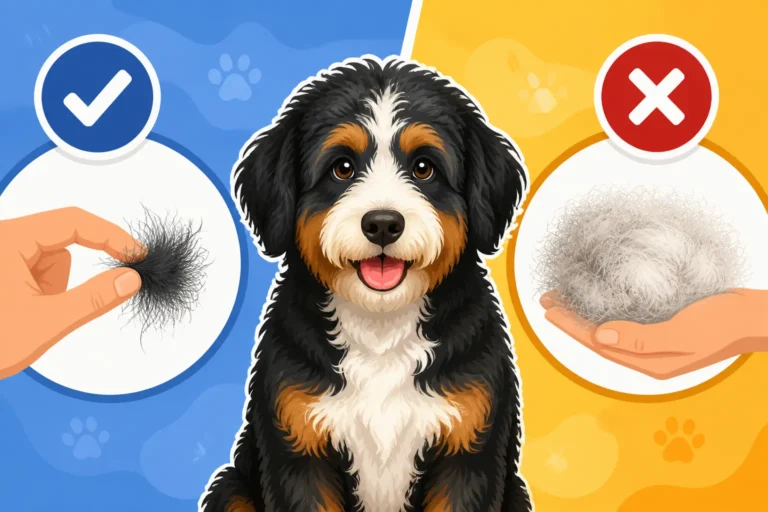
Your Bernedoodle inherits its coat characteristics from two distinct breeds: the Bernese Mountain Dog and the Poodle. The Bernese Mountain Dog is known for its thick, luxurious double coat, consisting of a coarser outer coat and a dense, insulating undercoat. This undercoat is designed to keep them warm in the frosty Swiss Alps, providing incredible insulation against cold and moisture. Meanwhile, the Poodle contributes a single, dense, curly coat that grows continuously and sheds minimally, meaning dead hair doesn't fall out easily but instead gets caught in the surrounding live hair.
When these two coat types combine, you often get The Coat a Bernedoodle Gets From Two Heavy Coated Parents – a fantastic, often non-shedding (or low-shedding) coat that can range from straight to wavy to tightly curled. The challenge arises because even the "non-shedding" Poodle side still produces dead hair, and the Bernese side can contribute a more pronounced undercoat, especially in an F1 generation. This means you have a continuously growing, often curly outer coat mixed with potentially dense, fine undercoat hairs, creating the perfect storm for tangles.
Identifying the Undercoat: What It Feels and Looks Like
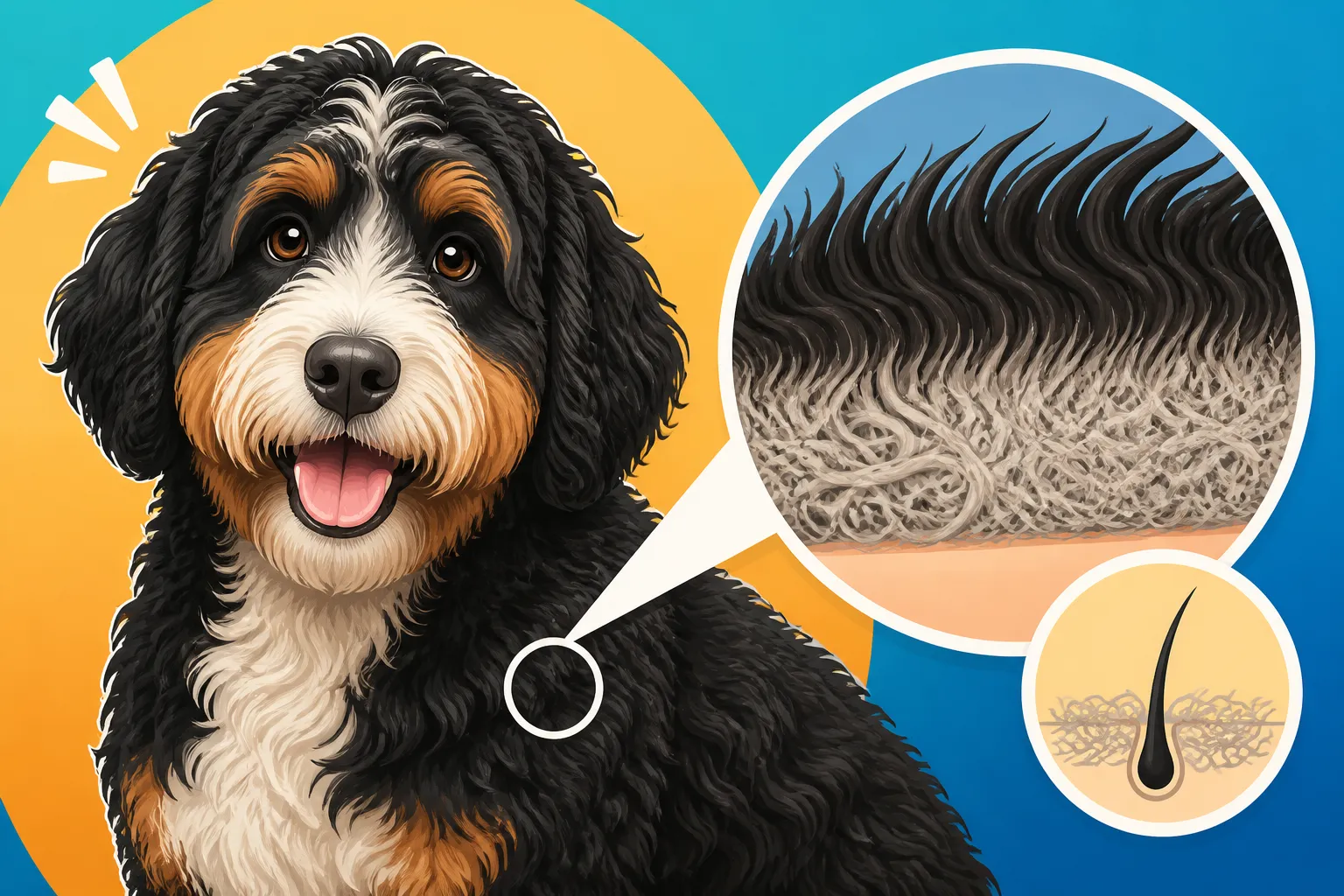
So, how do you even tell what an undercoat is on a dog that has a seemingly uniform curly coat? It's not always as obvious as on a purebred Bernese, where you can easily see and feel the difference between the long, straight outer guard hairs and the soft, fluffy undercoat beneath. On a Bernedoodle, especially one with a very curly coat like The Curly Coat Bernedoodle and Its Upkeep, the undercoat can be finer, softer, and often denser than the outer, more resilient guard hairs.
To truly identify it, you need to get your fingers deep into the coat, right down to the skin. Part the hair and look for the fuzzier, often lighter-colored hair closest to the skin. This softer, downy layer is the undercoat. When you run a comb through it, you might notice that the undercoat feels thicker and more resistant, almost like cotton wool, compared to the more silky or springy feel of the outer curls. It's this fine, soft texture and its density that make it so prone to grabbing onto shed hairs and forming mats.
The Purpose of the Undercoat: Warmth and Protection
While it might be the bane of your grooming routine, the undercoat serves a vital biological purpose for dogs in general. Its primary function is insulation – trapping a layer of air close to the dog's body to keep them warm in cold weather and, surprisingly, to help regulate body temperature in heat by preventing direct sunlight from reaching the skin. It also offers a layer of protection for the skin against environmental elements.
For a Bernedoodle, particularly those with a strong Bernese influence, this undercoat is a legacy of their mountain dog heritage. Even if your Bernedoodle spends most of its time on your couch, that undercoat is still there, dutifully growing and shedding. The problem isn't the undercoat itself; it's the combination of its presence with the Poodle's continuously growing, non-shedding outer coat. This unique mix prevents those shed undercoat hairs from falling free, instead trapping them within the live outer coat, where they begin their journey to becoming a mat.
The Undercoat's Role in Matting: A Deep Dive
Understanding that the undercoat mats is one thing, but knowing how it happens can empower you to prevent it. It's a combination of the hair's structure, natural shedding cycles, and external factors that transform soft fluff into dense, stubborn knots.
How Undercoat Hairs Entangle: The Root of the Problem
Imagine tiny, microscopic hooks and loops on each strand of hair. The Bernedoodle's undercoat hairs are generally much finer and have more of these "hooks" than the coarser outer guard hairs. When these fine hairs shed, they don't simply fall out onto your floor like they would on a true shedding dog. Instead, they get caught by the surrounding live hair, especially if that live hair is wavy or curly, as is often the case with a Bernedoodle. These shed hairs then intertwine and tangle with each other and with the live coat.
This entanglement is exacerbated by friction. Every time your Bernedoodle lies down, rubs against furniture, or even just moves, these loose hairs are pushed closer together, weaving themselves into a tighter, more solid mass. Once a few hairs start to tangle, they act like a net, catching even more loose hair and accumulating dirt, skin oils, and debris. This creates a snowball effect, quickly turning a small knot into a full-blown mat that pulls at the skin and becomes incredibly difficult to remove.
Seasonal Changes and "Coat Blows"
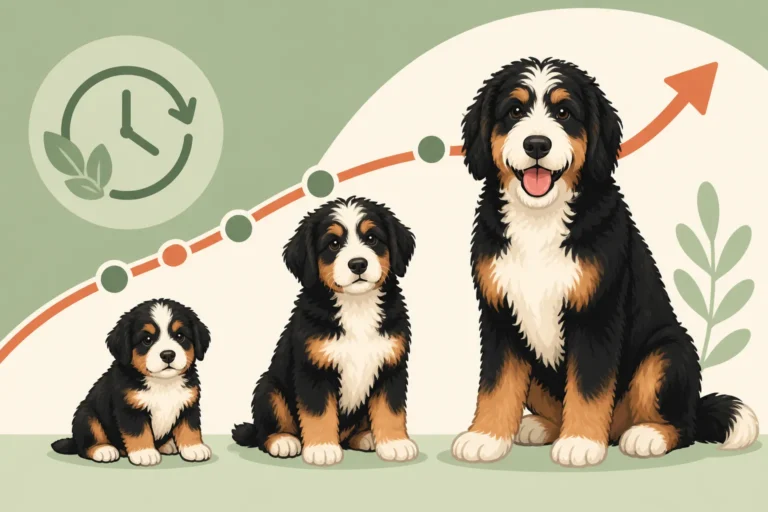
Just like their Bernese ancestors, many Bernedoodles experience seasonal "coat blows," although it might not be as dramatic as a purebred Bernese. A coat blow is when a dog sheds a large amount of its undercoat to prepare for a change in season – thinning out for summer or growing a thicker coat for winter. While the Poodle side might lessen the visible shedding, the undercoat is still turning over. This period, especially in spring and fall, is when The Month a Bernedoodle Puppy Starts Matting Daily becomes critically important for owners of young Bernedoodles, and daily vigilance is needed for adults.
During a coat blow, the sheer volume of dead undercoat hair trapped within the live, continuously growing outer coat can be astounding. If not thoroughly brushed out every single day, these shed hairs will quickly felt together, creating mats that are incredibly close to the skin and can spread rapidly. This is why you might feel like your grooming efforts are suddenly inadequate during certain times of the year, even if your routine hasn't changed. The dog's biology is simply producing more loose hair for you to contend with.
Moisture, Friction, and Neglect: Accelerating Mat Formation
Mats don't just happen overnight; they are often a cumulative result of several factors. Moisture is a huge accelerant. If your Bernedoodle gets wet – from a bath, rain, or swimming – and isn't thoroughly brushed and dried to the skin, those wet undercoat hairs will clump together as they dry, creating instant felt. Imagine trying to comb through wet cotton wool; it's almost impossible without causing damage.
Friction, as mentioned, is another major player. Areas where your dog experiences a lot of rubbing, like behind the ears, in the armpits, under the collar, and on the inner thighs (Mats in a Bernedoodle's Armpits and Britches), are notorious mat hotspots. These are the places where the coat is constantly compressed and rubbed, encouraging those fine undercoat hairs to knot together. Finally, neglect, even for just a few days, can turn a manageable tangle into a severe mat. Life gets busy, we all know that, but skipping even a few brushing sessions can have compounding effects on a Bernedoodle's coat, especially during peak shedding times.
Preventing Undercoat Matting: Your Daily Battle Plan
Let's be real, preventing mats on a Bernedoodle is a commitment, not a one-and-done task. But with the right tools and techniques, you can keep your beloved companion comfortable and looking their best. It's about being proactive and consistent, making grooming a regular part of your routine.
The Right Tools for the Job: Brushes and Combs
You can't fight a battle without the right weaponry, and for Bernedoodle mat prevention, that means investing in quality grooming tools. Forget those flimsy wire brushes or cheap plastic combs – they won't cut it. You'll primarily need two essential tools: a good quality slicker brush and a sturdy metal comb. The slicker brush should have fine, bent wire bristles that can penetrate through the topcoat and reach the undercoat. Brands like Chris Christensen (often found on Chewy or Amazon) are highly rated for their ability to get deep without scratching the skin.
Alongside your slicker, a long-toothed metal comb with both wide and narrow teeth is absolutely crucial. This comb is your "mat detector" and "finisher." After brushing with the slicker, you use the comb to ensure you've gotten all the way to the skin and that no tangles remain. It's often said that if a metal comb can't glide smoothly through the coat from root to tip, you haven't truly brushed out that section. A dematting rake can also be useful for very dense coats, but it must be used with extreme caution to avoid cutting the skin. Don't forget a good conditioning spray to help the brush glide and reduce static.
Mastering the Line Brushing Technique
Line brushing is the single most effective technique for preventing undercoat mats in a Bernedoodle, and it's something every owner should learn. It's not just running a brush over the top of the coat; it's a systematic approach to ensure you get all the way down to the skin. To line brush, you effectively create a "part" in the coat and brush section by section.
Start by laying your Bernedoodle on their side or having them stand comfortably. Using one hand, hold a section of their hair up, exposing a line of skin. With your other hand, take your slicker brush and brush down from that line of skin, working your way through the hair that's hanging down. Once that section is thoroughly brushed, move your hand a little further down, exposing a new line of skin, and repeat the process. You're essentially working in small strips, ensuring that every inch of coat from root to tip is brushed. Follow up each section with your metal comb to confirm there are no tangles. This meticulous process ensures that shed undercoat hairs are removed before they can bond with the live coat. This technique is often described in detail when learning Line Brushing a Bernedoodle to the Skin.
Regular Grooming Appointments: A Non-Negotiable Necessity
Even with diligent home grooming, professional grooming appointments are an absolute necessity for a Bernedoodle. Their unique coat simply requires more than most owners can provide on their own. A professional groomer has specialized tools, techniques, and experience to handle the nuances of a Bernedoodle's coat, from thorough bathing and drying to skilled clipping that maintains coat health and prevents mats. Most Bernedoodles require professional grooming every 6-8 weeks, sometimes more frequently for those with very dense or curly coats.
Think of it this way: your Bernedoodle's coat is an investment, and regular professional care is how you protect that investment. These appointments are not just about aesthetics; they are crucial for your dog's health and comfort. Groomers can tackle areas that are hard for you to reach, identify potential skin issues hiding under the coat, and prevent severe matting that could otherwise lead to painful and expensive shaves. Understanding The Seventy to Hundred Fifty Dollar Bernedoodle Groom and factoring in Six Hundred to Twelve Hundred a Year Grooming a Bernedoodle is an essential part of responsible Bernedoodle ownership.
When Matting Takes Over: Professional Help and Beyond
Despite your best efforts, sometimes mats happen. Maybe life got in the way, or your dog found a mud puddle you didn't anticipate. It's important to know when to escalate your efforts and seek professional help, not just for the sake of their coat, but for your Bernedoodle's well-being.
Assessing the Severity: When DIY Isn't Enough
A small, loose tangle might be something you can gently work out at home with a bit of detangling spray and a comb. However, once a mat becomes dense, pulls at the skin, or forms a solid "pelt" close to the body, attempting to remove it yourself can be incredibly painful for your dog and risks injuring their delicate skin. Pulling at a mat causes significant discomfort, and trying to cut them out with scissors is extremely dangerous, as it's very easy to accidentally cut the skin beneath, which can be thin and stretched by the mat.
The general rule of thumb is: if you can't easily slide a metal comb between the mat and the skin without significant tugging, it's time to call a professional groomer. Don't feel guilty; it happens. The most important thing is to prioritize your dog's comfort and safety. Groomers are equipped to handle matted coats with specialized tools and techniques that minimize stress and pain for your dog, or to make the difficult but necessary decision to humanely shave the dog down.
The Pain and Health Risks of Severe Matting
Severe matting isn't just an aesthetic issue; it's a serious health concern that can cause considerable pain and suffering for your Bernedoodle. Mats pull tightly on the skin, leading to chronic discomfort, bruising, and even tearing of the skin. They can restrict blood flow and movement, making it painful for your dog to walk, lie down, or even play. Underneath those dense mats, the skin cannot breathe, creating a moist, warm environment that is a breeding ground for bacteria, yeast, and parasites. This often leads to painful skin infections, hot spots, and unpleasant odors.
Furthermore, severe mats can hide other problems. Embedded collars, debris, or even insect infestations can go unnoticed until the mats are removed. In extreme cases, mats can restrict circulation to limbs or digits, potentially leading to swelling and nerve damage. It's a truly uncomfortable and unhealthy situation for any dog, highlighting why prevention is so critical and why addressing mats promptly is vital for their overall health.
The Groomer's Role: Dematting vs. Shaving Down
When you take a matted Bernedoodle to a professional groomer, they will assess the severity of the matting. Their goal is always to prioritize the dog's comfort and safety. For minor, loose mats, a groomer might attempt to carefully demat the coat using special tools and conditioning sprays. This is a time-consuming and labor-intensive process, and it's why What a Matted Bernedoodle Costs to Shave can be significantly higher than a regular groom, if dematting is even possible.
However, if the matting is severe, extensive, or too close to the skin, a responsible groomer will likely recommend shaving the dog down completely. This is not done lightly; it's a humane decision to alleviate pain and prevent further skin problems. They will use clippers to get underneath the mats, essentially removing the matted coat in a safe and efficient manner. While it might be a shock to see your fluffy Bernedoodle in a very short clip, it's often the kindest thing to do. Be aware that some groomers may refuse a severely matted dog if they believe the process would be too traumatic or risky, in which case they may refer you to a veterinary groomer. Sometimes, Whether a Groomer Will Turn Away a Matted Bernedoodle is a real possibility, emphasizing the importance of staying on top of grooming.
Disclaimer
This article is for general informational purposes only and does not constitute professional advice. Laws, prices and regulations vary by location and change over time. Consult a qualified professional for guidance on your specific situation.