Why a Black Tri Bernedoodle Overheats
The sight of a beautiful Black Tri Bernedoodle enjoying a sunny day can be absolutely heartwarming, but for many owners, it's also a source of constant worry. We want our furry companions to be comfortable, yet the reality is that a black tri-color Bernedoodle faces unique challenges when the mercury rises, often struggling with heat far more than their lighter-coated or purebred Poodle counterparts. This comprehensive guide will illuminate why these gorgeous dogs are prone to overheating and, crucially, equip you with practical, empathetic strategies to keep your beloved companion cool, safe, and happy, even when the weather isn't cooperating.
Understanding the Bernedoodle's Innate Heat Challenges
It's easy to look at a Bernedoodle and see the best of both worlds – the majestic beauty of a Bernese Mountain Dog blended with the intelligence and coat qualities of a Poodle. However, when it comes to heat tolerance, the Bernese side often contributes more significantly than many anticipate, creating a baseline challenge that's exacerbated by a dark coat.
The Bernese Mountain Dog's Northern Heritage
Let's be honest, the Bernese Mountain Dog isn't exactly built for scorching summers. Hailing from the chilly, mountainous regions of Switzerland, these dogs were originally bred for draft work, herding, and guarding livestock in cold alpine conditions. Their thick, luxurious double coat is a marvel of natural insulation, designed to keep them warm in freezing temperatures. It features a dense, woolly undercoat for thermal regulation and a longer, coarser outer coat that repels snow and moisture.
This incredible coat, while stunning, acts like a heavy winter jacket year-round. It's incredibly efficient at trapping heat in when the weather is cold. The challenge, of course, is that the same mechanism works in reverse during warm weather, making it very difficult for the dog to dissipate body heat. They're just not physiologically equipped for extended periods in the sun or high ambient temperatures.
When you bring a Bernedoodle into your life, you're essentially signing up for some of this Bernese thermal legacy. Even if your Bernedoodle's coat leans more Poodle-like, the underlying genetic programming for a heavy coat and a predisposition for cooler climates often remains. This means that from day one, your Bernedoodle has a head start on feeling the heat compared to many other breeds, a factor that becomes even more critical for those with darker coats.
The Poodle's Thermal Regulation
Now, the Poodle side of the Bernedoodle equation does offer a different perspective. Poodles have a single layer coat that is curly, dense, and continually growing, but it's not the heavy double-layer insulation of the Bernese. Historically, Poodles were water retrievers, and their unique coat was often clipped in specific ways (like the classic "poodle clip") to protect joints and vital organs while allowing for efficient movement and drying after swimming. This coat, when properly maintained and kept at a reasonable length, allows for better airflow and heat dissipation than a Bernese coat.
However, the "Bernedoodle coat" is a genetic lottery, falling anywhere on a spectrum from straight and shedding (more Bernese-like) to tightly curly and non-shedding (more Poodle-like), with the most common being a wavy fleece coat. While many Bernedoodle owners hope for the low-shedding, more heat-friendly Poodle coat, it's not a guarantee. Even a wavy or curly coat, if it's very dense and thick, can still trap a significant amount of heat.
So, while the Poodle influence brings the potential for a more manageable coat in warm weather, many Bernedoodles, especially those with thicker or denser coats inherited from the Bernese side, still struggle. You might have a dog with a Poodle-like curl that also has a considerable amount of undercoat, creating a plush, insulating layer that works against them in the summer. It’s this combination of genetics that sets the stage for heat intolerance, a stage then dramatically illuminated by the choice of coat color.
The Specific Impact of a Black Tri Coat on Heat Absorption
Beyond the general genetic predispositions, the specific coloration of a black tri Bernedoodle plays a significant, often underestimated, role in their struggle with high temperatures. It's not just about aesthetics; it's about physics.
Dark Colors and Solar Radiation
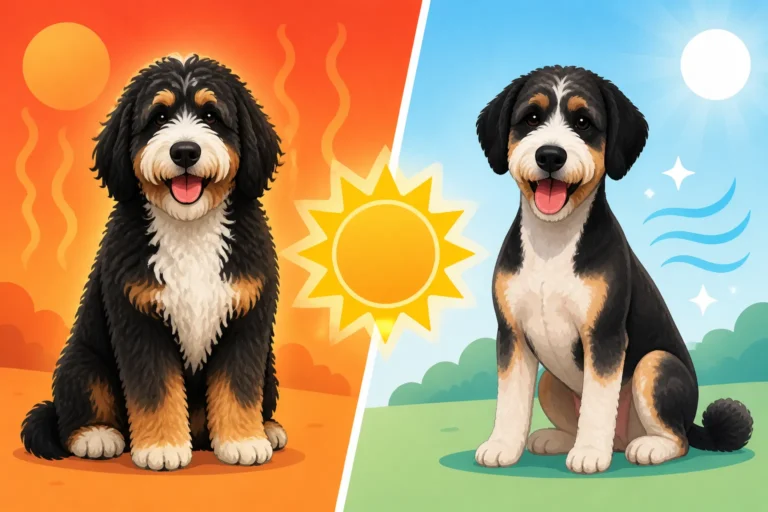
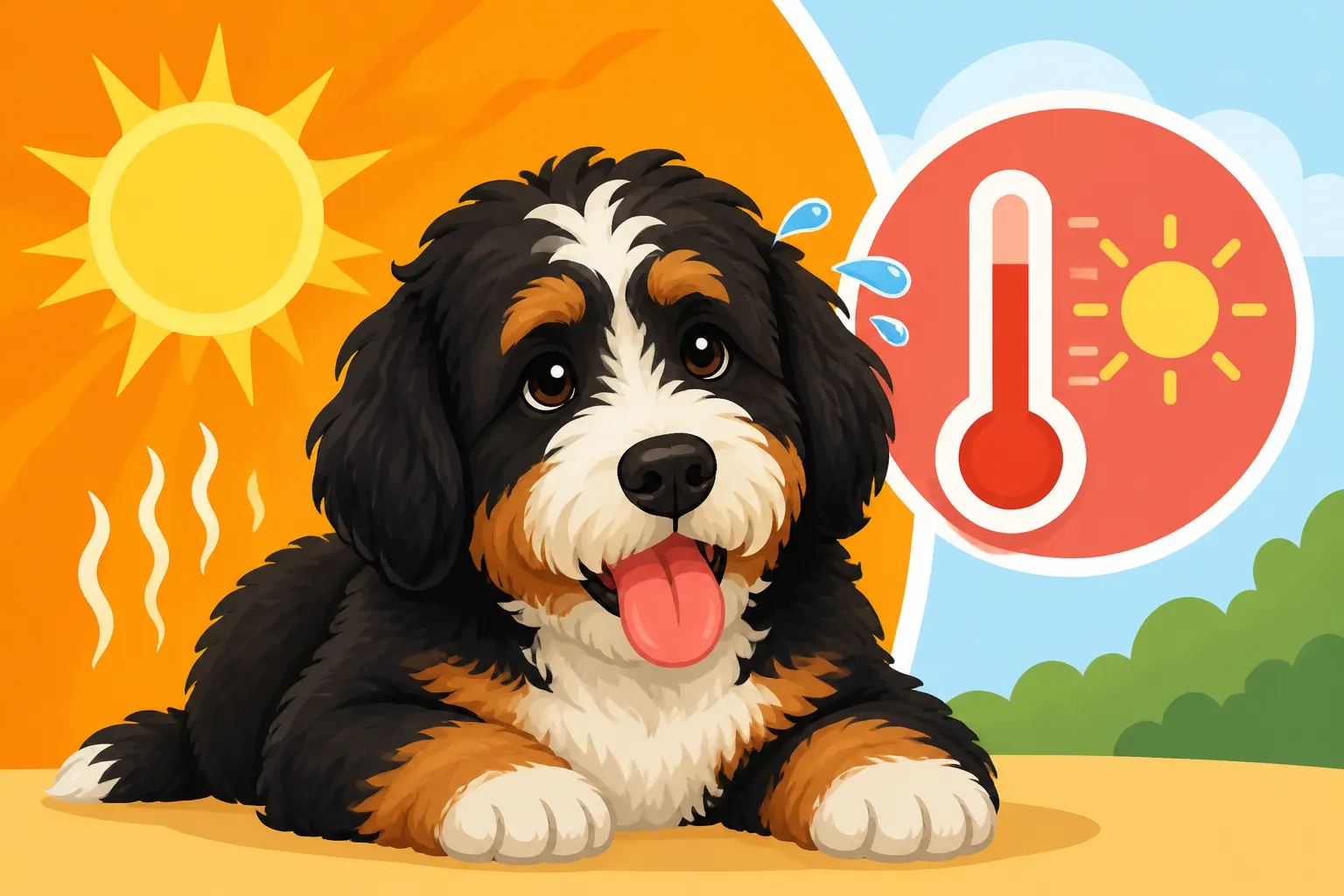
Think about wearing a black t-shirt on a sunny day versus a white one. You immediately feel the difference, right? The same principle applies with even greater intensity to a black tri Bernedoodle. Dark colors, particularly black, absorb a much higher percentage of solar radiation compared to lighter colors. This absorbed energy is converted into heat, which then directly raises the dog's surface and internal body temperature. It's essentially like having a built-in solar panel on their back, constantly drawing in heat from the sun.
This isn't just a slight difference; it can be quite dramatic. On a bright, sunny day, the surface temperature of a black-coated dog can be several degrees Fahrenheit higher than that of a white-coated dog, even in the same ambient conditions. For a dog that already has a dense coat and a genetic inclination for cooler climates, this added heat load from solar absorption becomes a critical factor. Their body is working harder just to maintain a normal temperature before any exercise or activity even begins.
Consider a beautiful Black Tri Bernedoodle lounging in a sunbeam. While it might look peaceful, their black fur is actively soaking up every bit of warmth from those rays, pushing their core temperature up. This cumulative effect means they reach their overheating threshold much faster, and with less physical exertion, than a Bernedoodle with a lighter coat. It’s a silent, constant battle against the sun that many owners don't fully appreciate until they see their dog struggling. If you own a dark-coated Bernedoodle, understanding Whether a Black Bernedoodle Absorbs More Heat is truly vital for their well-being.
Trapped Heat Within the Dense Coat
A Bernedoodle's coat is typically described as wavy or curly, and often quite dense. This density, combined with the dark coloration, creates a formidable barrier against heat dissipation. Not only is the black outer coat absorbing solar radiation, but the very structure of the coat then traps that heat close to the dog's body. Air circulation, which is crucial for evaporative cooling (the primary way dogs cool down through panting), is significantly impeded.
Imagine trying to cool off while wearing a heavy, dark blanket. Even if there's a breeze, it can't easily penetrate to your skin. A Bernedoodle's thick, dense coat works similarly. The layers of fur, especially if they're not regularly brushed and free of mats, create an insulating layer that prevents cooler air from reaching the skin and warmer air from escaping efficiently. This means the heat absorbed by the black fur doesn't just sit on the surface; it gets conducted inward and trapped, making the dog feel even hotter.
This phenomenon becomes particularly challenging in humid conditions, where evaporative cooling through panting is already less effective. The combination of a dark, heat-absorbing outer layer and a dense, heat-trapping inner layer puts black tri Bernedoodles at a distinct disadvantage. Owners often find themselves battling both external heat from the sun and internal heat trapped by the coat, demanding a proactive and thoughtful approach to their dog's care.
Grooming Strategies to Mitigate Heat Risk
Grooming is far more than just aesthetics for a Bernedoodle, especially a black tri-color. It's a critical component of their health management, directly impacting their ability to regulate body temperature.
The Double-Edged Sword of Shaving
When summer hits, it’s a natural instinct to think about shaving down your heavily coated Bernedoodle. "They must be hot in all that fur!" you might exclaim. And yes, a long, thick coat certainly doesn't help in the heat. A shorter clip can absolutely provide relief by allowing more airflow and reducing the sheer volume of insulating fur. Many Bernedoodle owners opt for a shorter "summer cut" for this very reason, and it can make a noticeable difference in their dog's comfort.
However, shaving a Bernedoodle too short, especially down to the skin, can actually backfire. A dog's coat, even a thick one, provides some level of protection from the sun's harsh UV rays. Shaving too close can expose their sensitive skin to sunburn, which can be painful and lead to other skin issues or even increase the risk of skin cancer. Moreover, some double-coated breeds, if shaved improperly, can experience "clipper alopecia" or damage to the coat follicles, leading to patchy regrowth or changes in coat texture. For a Bernedoodle, whose coat type can be unpredictable, this is a genuine concern. Whether a Shaved Bernedoodle Sunburns is a real consideration that many owners overlook in their desire to cool their pup.
The key is finding a "happy medium." Instead of shaving down to the skin, consider asking your groomer for a longer puppy cut or a practical summer clip, leaving at least an inch or two of fur. This length still provides a buffer against sunburn while significantly reducing the insulating bulk. It's about thinning and shortening the coat responsibly, not removing it entirely. Discussing this with a professional groomer who understands Bernedoodle coats is always a good idea to ensure your dog gets the relief they need without compromising their skin health.
Regular Brushing and Dematting for Airflow
Even if you opt for a shorter summer clip, consistent brushing and dematting are absolutely non-negotiable for a Bernedoodle, particularly one with a dense, dark coat. A matted coat is the enemy of airflow. When fur becomes matted, it clumps together, creating solid patches that trap heat and moisture against the skin. This not only makes your dog incredibly uncomfortable but also creates a breeding ground for skin infections and hot spots, especially during warmer months.
Line brushing is the technique you'll want to master. This involves systematically brushing through the coat, section by section, starting from the bottom and working your way up, ensuring you get right down to the skin. This removes loose undercoat, prevents mats from forming, and allows air to circulate freely close to the body, which is essential for cooling. Think of it as aerating their personal insulation layer. Without this regular maintenance, even a moderately short coat can become a dense, heat-trapping mess in a surprisingly short amount of time.
For a standard Bernedoodle, especially with a thick, black coat, you might find yourself needing to dedicate significant time to brushing. Many owners report spending The Weekly Hours a Standard Bernedoodle's Coat Takes to keep it pristine and healthy. A good quality slicker brush and a metal comb (to check for mats you might have missed) are your best friends. Making this a routine, ideally daily or every other day, will not only keep your Bernedoodle more comfortable in the heat but also make professional grooming appointments less stressful and more affordable, as groomers won't have to spend extra time dematting.
Environmental Management for Hot Weather
Beyond coat care, proactive environmental management is paramount for black tri Bernedoodles. You can't change their genetics or their coat color, but you can control their surroundings to prevent dangerous overheating.
Timing Walks and Outdoor Activities
This is perhaps one of the most straightforward yet impactful strategies for any dog prone to overheating, and it's doubly important for a black tri Bernedoodle. The middle of the day, typically between 10 AM and 4 PM, is when the sun's rays are strongest and temperatures are at their peak. For a dog that absorbs heat so readily, venturing out during these hours can quickly become dangerous.
Instead, shift your Bernedoodle's exercise schedule to the cooler parts of the day. Early morning walks, before the sun has had a chance to really heat things up, are ideal. Similarly, late evening walks, after the sun has set and the pavement has had a chance to cool down, are a much safer bet. Even on cooler days, if the sun is bright, those black coats will still absorb radiation. Always check the pavement with the back of your hand; if it's too hot for your hand for five seconds, it's too hot for your dog's paws. The Temperature a Bernedoodle Should Not Be Walked In isn't just a suggestion; it's a safety guideline.
Beyond simply timing, consider the intensity and duration of outdoor activities. A leisurely stroll in the shade is far different from a vigorous game of fetch in direct sunlight. Limit strenuous exercise, especially if your Bernedoodle is normally high-energy. On really hot days, it might be best to skip outdoor exercise altogether and opt for indoor mental stimulation or short, shaded potty breaks. Remember, a dog doesn't always know its own limits when it comes to having fun, so it's up to you to be the responsible guardian and cut activities short if you see any signs of distress.
Creating a Cool Indoor Environment
While outdoor precautions are essential, the reality is that a black tri Bernedoodle living in a warm climate often needs a cool indoor sanctuary for the majority of the day. Air conditioning is not a luxury for these dogs; it's a necessity, especially if you live in regions where summer temperatures consistently soar above 80-85°F (27-29°C) or if humidity is high.
Keep your home comfortably cool, even when you're not there. If you're concerned about energy costs, consider setting the thermostat higher but still within a safe range, or ensure one room is air-conditioned and accessible to your dog. Fans can help circulate air, but they aren't sufficient on their own when ambient temperatures are high, as dogs don't cool through sweating like humans do. Their primary cooling mechanism (panting) relies on cooler air to facilitate evaporation.
Beyond AC, creating specific cool zones within your home can be incredibly helpful. Many dogs gravitate towards tile or concrete floors, which are naturally cooler than carpets. Consider setting up a designated spot with a cooling mat (which contains gel that stays cool or activates with pressure) or a raised cot that allows air to flow underneath. Making sure they have access to a cool, quiet place where they can retreat and rest is crucial for their well-being during warm weather. Whether a Bernedoodle Needs the House Air Conditioned becomes less a question of comfort and more one of safety in many parts of the country.
Hydration and Cooling Aids
Proper hydration is perhaps the simplest yet most effective defense against overheating, and supplementing it with targeted cooling aids can offer significant relief to your black tri Bernedoodle.
Ensuring Constant Access to Fresh Water
A dog's primary way of cooling down is through panting, which works by evaporating moisture from their tongue and respiratory tract. This process requires a constant supply of water. If your Bernedoodle becomes dehydrated, their ability to cool themselves effectively is severely compromised, putting them at a much higher risk of overheating. Therefore, ensuring constant access to fresh, cool water is absolutely paramount, especially in warm weather.
Always have multiple water bowls available throughout your home, filled with fresh, clean water. Consider adding a few ice cubes to their water bowl to keep it cooler for longer, which can also make it more appealing to drink. For some Bernedoodles, a large ceramic or stainless steel bowl might be preferable as they tend to stay cooler than plastic. During walks or any outdoor activity, always carry a portable water bottle and a collapsible bowl. Even short strolls can lead to dehydration if water isn't readily available.
Monitoring your dog's water intake is also a good habit. If they seem hesitant to drink, you can try adding a splash of low-sodium broth to their water to entice them. Some owners even offer frozen treats like ice cubes made from diluted broth or water with a few blueberries to encourage hydration in a fun way. Remember, a well-hydrated dog is a dog better equipped to handle warmer temperatures.
Utilizing Cooling Vests, Bandanas, and Pools
Sometimes, environmental controls and timing aren't quite enough, and that's where targeted cooling aids come in handy. There's a wide array of products designed to help dogs stay cool, and for a black tri Bernedoodle, these can be incredibly beneficial.
Cooling vests and bandanas work by using evaporative cooling. You soak them in water, wring them out, and then place them on your dog. As the water evaporates, it draws heat away from the dog's body. These can be particularly effective on walks or during short periods outdoors. Ensure they fit properly and don't restrict movement. Whether a Cooling Vest Works on a Bernedoodle often depends on proper use and ensuring it stays damp.
Many Bernedoodles also enjoy water, a fantastic natural cooling method. A small kiddie pool filled with a few inches of water can provide immense relief in the backyard. It allows them to splash, lie down, and cool their paws and belly – critical areas for heat dissipation. Supervised sprinkler play or a gentle spray with a hose can also be a fun and effective way to lower their body temperature. Just make sure the water isn't icy cold, which can shock their system, and always provide a non-slip surface if playing on concrete. Learning Whether a Kiddie Pool Helps a Bernedoodle is a game-changer for many owners, providing safe and engaging relief.
These tools aren't magic bullets, but when used in conjunction with other heat management strategies, they can significantly enhance your Bernedoodle's comfort and safety. Always supervise your dog when using these aids and ensure they aren't becoming overly reliant on them instead of seeking cooler environments.
Recognizing and Responding to Overheating
Knowing why your black tri Bernedoodle is prone to overheating is step one. Step two is being able to identify the signs that they are, in fact, getting too hot, and knowing exactly what to do when that happens. Heatstroke is a severe and potentially fatal condition, so rapid response is critical.
Early Warning Signs of Heat Stress
It's crucial to distinguish between normal panting and panting that indicates distress. Normal panting is usually rhythmic and controlled, helping your dog cool down. However, if your Bernedoodle's panting becomes excessive, rapid, and labored, almost frantic-sounding, that's a red flag. Their breaths might be shallow and quick, and their tongue might appear wider or longer than usual. Signs a Bernedoodle Is Overheating also include other physical cues that are vital to recognize.
Beyond panting, keep an eye out for other subtle and overt signs. Their gums might appear a brighter, brick-red color initially, and then turn pale or bluish as their condition worsens. Excessive drooling, thick ropey saliva, or foamy saliva around the mouth are also indicators. Their eyes might seem glazed or unfocused, and their movements might become clumsy or uncoordinated. You might also notice lethargy, weakness, or a reluctance to move, even when normally playful. If you gently touch their ears or paw pads, they might feel unusually hot.
Behavioral changes are also key. A dog experiencing heat stress might actively seek out shade, try to lie down in cool spots, or even refuse to continue walking or playing. If you notice any of these signs, even mild ones, it's time to take immediate action. Don't wait for them to progress to more severe symptoms like vomiting, diarrhea, seizures, or collapsing, as these indicate a critical emergency.
Immediate Actions for a Suspected Overheated Dog
If you suspect your black tri Bernedoodle is overheating, don't panic, but act swiftly. First and foremost, immediately move your dog to the coolest possible environment. This might be an air-conditioned car, a shaded spot, or indoors on a tile floor. The goal is to get them out of direct heat exposure as quickly as possible.
Next, begin to cool them down. Apply cool (not ice-cold) water to their body, focusing on areas with less fur like the belly, paw pads, and inner thighs. You can use wet towels, a hose on a gentle setting, or even sponge them down. It’s important not to use ice water, as it can cause their blood vessels to constrict, trapping heat inside their body and potentially leading to shock. Continuously wet and re-wet the towels or areas as the water evaporates and warms. Use a fan, if available, to aid in evaporative cooling. While cooling them, offer small amounts of fresh, cool water to drink, but don't force it.
Crucially, as soon as you start the cooling process, call your veterinarian or the nearest emergency animal hospital. Heatstroke is a medical emergency that requires professional attention, even if your dog seems to be recovering. They might need intravenous fluids, medication, and close monitoring to prevent organ damage. Having pet insurance, like a plan from Healthy Paws, can truly be a lifesaver in these unexpected, urgent situations, allowing you to focus on your dog's care without immediate financial stress. Your vet will advise you on the best course of action and what to do on the way to the clinic. Remember, early intervention significantly improves the outcome for dogs suffering from heat stress.
Long-Term Considerations for Black Tri Bernedoodles in Warm Climates
While managing acute heat risk is vital, owners of black tri Bernedoodles, especially those in warmer regions, also need to consider the long-term implications for their dog's well-being. This might involve re-evaluating living arrangements and lifestyle choices.
Assessing Suitability for Climate
This is a tough conversation, but it's an important one: is a black tri Bernedoodle truly suited for year-round life in extremely hot climates? If you live in a region like Florida, Texas, or Arizona, where summer temperatures regularly reach into the 90s (30s Celsius) and beyond, with high humidity, you are facing an uphill battle to keep your dog comfortable and safe. Whether a Bernedoodle Should Live in Texas or Florida is a question that requires serious reflection on your commitment to your dog's well-being.
It’s not just about avoiding walks during the hottest part of the day; it's about the ambient temperature in your yard, the heat radiating off pavement even at night, and the constant strain on their system. While air conditioning inside is a must, it doesn't solve the problem of potty breaks, short periods of supervised outdoor play, or accidental escapes. The truth is, these dogs thrive in cooler environments, and asking them to constantly adapt to extreme heat is a significant, ongoing challenge.
Owners in warm climates must be incredibly diligent, often foregoing many outdoor activities that other breeds might enjoy. This means a lifelong commitment to being hyper-vigilant, often sacrificing personal outdoor preferences for the sake of your dog's health. It's an ethical consideration, weighing the dog's natural needs against geographical realities. For many, it means adjusting expectations and embracing indoor activities, doggy daycare with AC, or even considering relocation if the heat becomes unmanageable for their beloved companion.
Diet and Exercise Adjustments
Maintaining an ideal weight is always important for a dog's overall health, but for a black tri Bernedoodle prone to overheating, it becomes even more critical. An overweight dog carries extra insulation (fat), which makes it even harder for them to dissipate heat. This puts additional strain on their cardiovascular system, increasing their risk of heatstroke and other health complications. Regularly assess your Bernedoodle's body condition – you should be able to feel their ribs without pressing hard, and they should have a visible waist. If your Bernedoodle is carrying a few extra pounds, prioritizing Getting Weight Off an Overweight Bernedoodle should be a high priority, especially before summer.
Their exercise routine also needs careful and constant adjustment. As your Bernedoodle ages, or if they develop joint issues (common in larger breeds), their heat tolerance might decrease even further. What was manageable at two years old might be too much at eight. Always be flexible with their exercise, adapting it not just to the day's temperature but also to their individual energy levels and health status. Opt for swimming in a dog-friendly pool (if they enjoy it and it's safe) as a low-impact, high-cooling form of exercise.
Consider their diet as well. While kibble is a staple for many, ensuring they receive high-quality, easily digestible food helps maintain overall health, which indirectly supports their ability to handle stress like heat. Some owners find that adding a little extra moisture to their food, or offering hydrating treats like cucumber or watermelon (in moderation, without seeds), can subtly contribute to their overall hydration levels. Every little bit helps when you're working to keep a dark-coated, thick-furred dog cool in a warm world.
Disclaimer
Please remember that this information is intended for educational purposes only and should not be considered a substitute for professional veterinary advice. Always consult with a qualified veterinarian for any health concerns or before making any decisions about your pet's health or treatment.