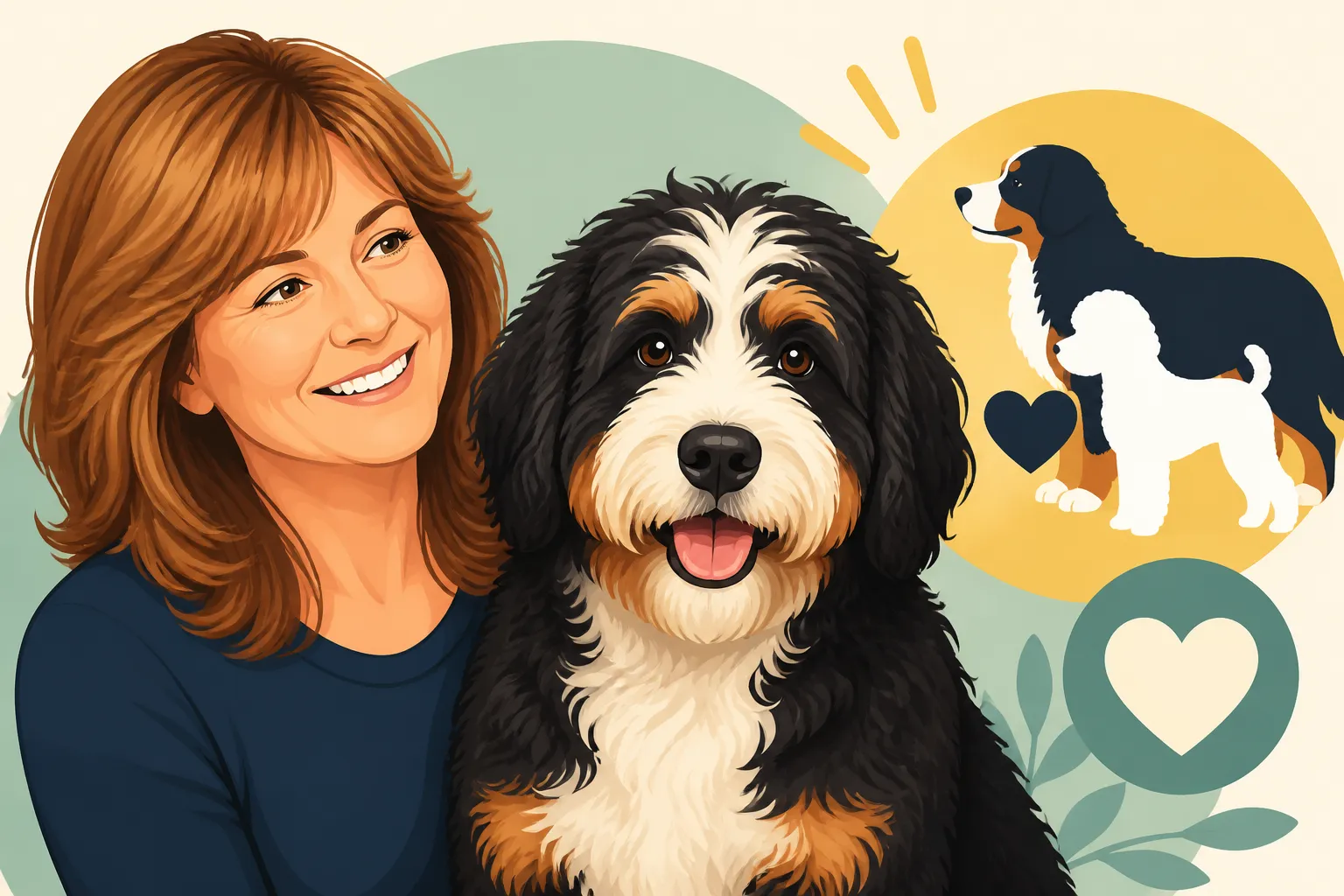
Why Sherry Rupke Bred the First Bernedoodle
The heartbreaking reality for many Bernese Mountain Dog lovers is that these magnificent, gentle giants often leave us far too soon. Their incredible temperaments and stunning looks are often overshadowed by tragically short lifespans and a predisposition to serious health issues. This guide explores the visionary quest of Sherry Rupke, who, faced with this sorrowful truth, embarked on a mission to create a healthier, longer-lived companion by introducing the Poodle into the Bernese bloodline, ultimately giving us the beloved Bernedoodle.
The Bernese Mountain Dog's Enduring Appeal and Heartbreaking Reality
For generations, the Bernese Mountain Dog has captured hearts with its striking tricolor coat, calm demeanor, and affectionate nature. These dogs are more than just pets; they are steadfast companions, gentle with children, and famously devoted to their families. However, beneath their beautiful exterior and sweet disposition lies a genetic vulnerability that has caused immense pain for countless owners.
The Gentle Giant's Allure
There’s something truly special about a Bernese Mountain Dog. Their sheer presence, combined with their soulful eyes and that iconic "Bernese lean," makes them unforgettable. They possess a calm confidence, a gentle giant quality that draws people in. Owners often describe them as "velcro dogs" because of their desire to be constantly near their human companions, soaking up every bit of affection offered. They are patient, good-natured, and often surprisingly playful despite their large size. Imagine a big, fluffy teddy bear that loves to cuddle and is always happy to see you; that's the Bernese experience for many. Their strong desire to please and their intelligence also make them quite trainable, though they can have a stubborn streak that adds to their charm. They fit seamlessly into family life, becoming cherished members rather than just pets.
The Shadow of a Short Lifespan
Despite their many wonderful qualities, the Bernese Mountain Dog faces a severe challenge: a heartbreakingly short average lifespan. While many breeds enjoy well over a decade with their families, the typical Bernese often lives only 7 to 8 years, leaving a gaping hole in their owners' hearts far too soon. The primary culprit behind this diminished lifespan is an alarming predisposition to various forms of cancer, including the particularly aggressive histiocytic sarcoma. It's a devastating reality for owners who invest their love and time into these dogs, only to find their time together cut tragically short. The Seven Years a Bernese Lives and the Twelve a Bernedoodle Might really puts this into perspective. This pervasive health issue wasn't just a sad statistic; it was a deeply personal experience for many Bernese breeders and owners who repeatedly watched beloved dogs succumb to illness prematurely. This recurring heartbreak became a powerful catalyst for change, driving dedicated individuals like Sherry Rupke to seek a healthier future for a breed they adored. The constant threat of illness cast a long shadow over the joy of owning a Bernese, a shadow that many felt compelled to try and lift.
The Quest for a Healthier Companion: A Breeder's Vision
Sherry Rupke, the founder of SwissRidge Kennels, was one such dedicated individual. Having bred Bernese Mountain Dogs for years, she deeply understood their wonderful attributes but also intimately experienced the pain of their health struggles. Witnessing the premature loss of beloved Bernese, both her own and those of her clients, fueled a powerful desire to find a solution. Her vision wasn't to replace the Bernese, but to create a companion with the heart and beauty of the Bernese, combined with the enhanced vitality and longevity of another breed.
Sherry Rupke's Insight
Sherry Rupke's journey began with a profound respect for the Bernese Mountain Dog. She adored their calm nature, their loyalty, and their striking appearance, but the constant battle with diseases, especially cancer, was a burden too heavy to ignore. It wasn't just about extending life; it was about improving the quality of that life, both for the dogs and for the families who loved them. The idea of crossing the Bernese with another breed was a bold one, especially given the traditional purebred focus of the dog world. However, for Sherry, the welfare of the dogs and the happiness of their future families took precedence over convention. This led to her pivotal decision, culminating in The 2003 Litter That Started the Bernedoodle at SwissRidge Kennels. She sought to retain the gentle, affectionate qualities of the Bernese while mitigating some of their most prevalent genetic weaknesses.
The Hybrid Vigor Hypothesis
The driving principle behind Sherry's decision to crossbreed was the concept of "hybrid vigor," also known as heterosis. In simple terms, hybrid vigor suggests that when two unrelated purebred lines are crossed, the offspring often benefit from increased genetic diversity, leading to improved health, fertility, and vigor compared to either parent breed. This isn't just wishful thinking; it's a well-documented biological phenomenon. By introducing the robust genetics of another breed, the hope was to dilute the genetic predispositions to certain diseases that had become prevalent in the Bernese gene pool due to generations of breeding within a relatively closed population. The goal was a dog that not only had a better chance at avoiding the common ailments of its Bernese parent but also boasted a generally stronger constitution. Whether a Bernedoodle Beats Its Bernese Parent's Lifespan directly addresses this core motivation, showing that the intent was a clear and measurable improvement in health outcomes. This wasn't about creating a "designer dog" for trends, but about a sincere, scientifically-informed effort to enhance canine well-being.
Choosing the Poodle: The Perfect Genetic Partner
Once the decision was made to pursue a crossbreed, the critical next step was to select the right partner for the Bernese. This wasn't a choice to be made lightly; the chosen breed needed to complement the Bernese in temperament, contribute positively to health and longevity, and ideally, offer a desirable coat trait. After careful consideration, the Standard Poodle emerged as the ideal candidate.
Intelligence and Longevity
The Poodle brings a wealth of desirable traits to the Bernedoodle mix. Foremost among them, and a key driver for Sherry Rupke, is the Poodle's significantly longer lifespan. Standard Poodles typically live for 10 to 18 years, a stark contrast to the Bernese Mountain Dog's average of 7-8 years. This infusion of longevity was paramount to addressing the primary concern of Bernese owners. Beyond just lifespan, Poodles are also known for being generally robust dogs with fewer breed-specific health issues that are debilitating across the board, although they do have their own genetic predispositions. Furthermore, Poodles are renowned for their exceptional intelligence and trainability. They consistently rank among the smartest dog breeds, making them quick learners and highly adaptable companions. This intelligence, combined with the Bernese's desire to please, promised a Bernedoodle that would be not only healthy but also a joy to train and live with. Why a Poodle Was Chosen for the Cross delves deeper into these specific advantages that made the Poodle such a compelling choice for the cross.
The Non-Shedding Appeal
Another highly attractive characteristic of the Poodle, and a significant bonus for many families, is its distinctive coat. Poodles have a single layer of hair that is curly and continuously growing, much like human hair. This type of coat sheds minimally, if at all, which is a massive relief for people who suffer from dog allergies or simply prefer less fur around the house. The Bernese Mountain Dog, with its thick double coat, is a notorious shedder, especially during seasonal "coat blows." By introducing the Poodle's genetics, Sherry Rupke aimed to produce offspring that would inherit at least some of this low-shedding quality. While not every Bernedoodle is 100% non-shedding, especially in the first generation (F1), the vast majority inherit a wavy or curly coat that significantly reduces the amount of loose hair compared to a purebred Bernese. This aspect dramatically expanded the potential pool of families who could comfortably welcome a large, affectionate dog into their homes, including those who previously thought they couldn't due to allergies. The reduced shedding also translates to less clean-up for owners, a welcome practical benefit for anyone sharing their living space with a canine companion.
Crafting the Bernedoodle: The Early Generations and Their Traits
The creation of the Bernedoodle wasn't a one-and-done event; it was a careful process of selecting parent dogs and observing the resulting litters. The first generation, known as F1 Bernedoodles, provided the foundational understanding of how these two distinct breeds would combine. Each puppy in these early litters was a testament to the genetic lottery, showcasing a fascinating blend of traits from both the Bernese and the Poodle.
The F1 Generation's Foundation
The term "F1 Bernedoodle" refers to the first filial generation, meaning a direct cross between a purebred Bernese Mountain Dog and a purebred Poodle. This initial cross is often considered the purest form of hybrid vigor, as the genetic diversity is at its maximum. In these litters, you truly see the full spectrum of possibilities when two distinct breeds combine. Some puppies might lean more heavily towards the Bernese in appearance and temperament, while others might display stronger Poodle characteristics. It's a fascinating experiment in genetics, and it's where the vision for the Bernedoodle truly started to take shape. Breeders carefully observed these first litters, noting coat types, sizes, temperaments, and overall health to guide their future breeding decisions. This foundational generation was crucial in understanding the predictability and variability of the cross, and in determining if the goals of health and temperament were truly being met. Without these initial F1 crosses, the Bernedoodle as we know it today simply wouldn't exist.
Predicting Size and Appearance
One of the most exciting, yet sometimes unpredictable, aspects of breeding the early Bernedoodle generations was predicting how the puppies would turn out in terms of size and appearance. While a Standard Poodle was often used with a Bernese to produce a "Standard" Bernedoodle, there could still be quite a range within a single litter. Some might inherit more of the Bernese's sturdy, heavy build, while others might take on the leaner, more athletic Poodle physique. The coat was another area of fascinating variability. Some F1 Bernedoodles might have a shaggy, slightly wavy coat, while others could have tighter curls or even a straighter coat that sheds more, closer to the Bernese. Breeders learned to assess coat type in puppies to give future owners an idea of what to expect regarding grooming needs and shedding. Predicting the adult weight and height of a Bernedoodle puppy involves considering the size of both parents and the general trends seen in previous litters, but there's always an element of surprise. This variability, however, also meant that each Bernedoodle puppy was unique, offering a wonderful array of choices for families looking for a specific look or feel in their new companion.
Beyond Longevity: Desired Bernedoodle Temperament and Trainability
While the primary motivation for creating the Bernedoodle was to improve health and increase lifespan, Sherry Rupke and other responsible breeders also had clear goals for the new crossbreed's temperament and trainability. It wasn't enough to simply create a healthier dog; it needed to be a dog that was a joy to live with, embodying the best characteristics of both parent breeds.
The Best of Both Worlds
The ideal Bernedoodle temperament is often described as a delightful blend of the Bernese Mountain Dog's calm, loyal, and affectionate nature with the Poodle's intelligence, playfulness, and eagerness to please. Imagine a dog that is devoted to its family, gentle with children, and loves a good cuddle on the couch, but also possesses a sharp mind that makes training enjoyable and engaging. This combination results in a highly adaptable dog that can thrive in various family environments. They are typically social butterflies, getting along well with other pets and strangers, thanks to the inherent friendliness of both parent breeds. While individual personalities will always vary, the aim was to create a balanced dog that is neither overly shy nor excessively boisterous, finding that sweet spot of an even-keeled, loving companion. Many owners report their Bernedoodles are wonderfully goofy and playful, bringing a lot of joy and laughter into their homes, all while retaining that steadfast loyalty that makes the Bernese so cherished. What a Bernedoodle Keeps of the Bernese Temperament highlights just how much of that foundational disposition carries through to the cross.
Trainability and Sociability
The infusion of Poodle intelligence significantly boosts the Bernedoodle's trainability. Poodles are known for their quick wit and ability to pick up new commands and tricks with remarkable speed. When combined with the Bernese's inherent desire to please its human companions, you get a dog that is generally eager to learn and responsive to positive reinforcement. This combination makes them excellent candidates for obedience training, agility, or even therapy work. They thrive on mental stimulation, so incorporating training games and puzzles, easily found on sites like Chewy, is a fantastic way to keep their clever minds engaged.
Furthermore, both parent breeds contribute to the Bernedoodle's natural sociability. Bernese Mountain Dogs are known for being gentle and tolerant, especially with children, while Poodles are generally outgoing and friendly. This mix often results in a Bernedoodle that is well-adjusted and enjoys meeting new people and other dogs, provided they receive proper socialization from a young age. Early exposure to various sights, sounds, people, and experiences is crucial for any puppy, but for a Bernedoodle, it helps cement their already strong foundation for being a confident and friendly companion throughout their lives. Their inherent desire to be part of the family also makes them excellent candidates for integrating into busy households, though they do benefit from consistent routines and clear boundaries during their formative years.
The Coat Conundrum: Managing Shedding and Allergies
One of the most frequently asked questions about any "Doodle" breed revolves around its coat: will it shed, and will it be hypoallergenic? These were significant considerations for Sherry Rupke when conceptualizing the Bernedoodle, aiming to make this wonderful companion accessible to a wider range of families, especially those with allergy concerns.
The Reality of "Hypoallergenic"
It's important to clarify a common misconception: no dog breed is truly 100% "hypoallergenic." The term typically refers to breeds that are less likely to trigger allergic reactions in sensitive individuals due to reduced shedding. Allergies are usually caused by dander (dead skin cells), saliva, and urine proteins, not just the hair itself. However, dogs that shed less tend to release less dander into the environment, making them more tolerable for many allergy sufferers. The Poodle, with its non-shedding, curly coat, greatly reduces the amount of dander and hair distributed around the home.
The goal with the Bernedoodle was to leverage this Poodle trait to create a dog with significantly reduced shedding compared to the heavy-shedding Bernese Mountain Dog. While an F1 Bernedoodle (50% Bernese, 50% Poodle) can still have some variability in shedding depending on which parent's coat genes are more dominant, later generations (F1b, F2, etc.) are often bred specifically to maximize the Poodle coat, further minimizing shedding. For families where allergies are a concern, even a reduction in shedding can make a profound difference, allowing them to experience the joy of dog ownership without constant allergic reactions.
Grooming Needs and Coat Types
While reduced shedding is a major benefit, it comes with a trade-off: increased grooming needs. The very same qualities that make the Poodle's coat low-shedding also make it prone to matting if not properly maintained. Bernedoodles can have various coat types, often categorized as:
- Wavy Coat: This is arguably the most common and often sought-after Bernedoodle coat, a delightful blend that lies somewhere between the straight Bernese coat and the curly Poodle coat. It gives them that classic "teddy bear" look and typically sheds minimally, requiring regular brushing. The Wavy Coat Most Bernedoodles Carry is a fantastic resource if you're trying to identify this specific type.
- Curly Coat: More like the Poodle's coat, this type is the least likely to shed and is often the best choice for severe allergy sufferers. However, it requires the most diligent grooming to prevent mats, often needing professional clipping every 6-8 weeks.
- Straight/Flat Coat: This coat type is less common and tends to shed more, similar to a Bernese, making it less ideal for allergy sufferers. It still benefits from regular brushing to keep it healthy.
Regardless of the coat type, Bernedoodles require consistent grooming. Daily or every-other-day brushing is often necessary, especially during the coat change from puppy fluff to adult coat, to prevent painful mats. Professional grooming appointments are essential every 6-12 weeks, depending on the coat type and desired length. Neglecting grooming can lead to severe matting, which can cause skin infections and require a full shave-down, which is stressful for the dog and costly for the owner. Stocking up on good quality brushes, combs, and detangling sprays from retailers like Chewy is a non-negotiable part of Bernedoodle ownership.
| Coat Type | Shedding Level | Grooming Frequency (Home) | Professional Grooming | Allergy Friendliness |
|---|---|---|---|---|
| Wavy | Low | Every 1-2 days | Every 8-12 weeks | Moderate |
| Curly | Very Low/None | Daily | Every 6-8 weeks | High |
| Straight/Flat | Moderate | Every 2-3 days | Every 10-14 weeks | Low |
The Legacy and Evolution of the Bernedoodle: From Vision to Global Phenomenon
What started as a breeder's heartfelt quest to improve the health and longevity of a beloved breed quickly evolved into a worldwide phenomenon. The Bernedoodle, born out of a specific need, soon captured the hearts of families across continents, solidifying its place as one of the most popular designer dog breeds.
Spreading Popularity
Sherry Rupke's initial efforts at SwissRidge Kennels, starting with that pivotal 2003 litter, laid the groundwork for the Bernedoodle's rise. Word quickly spread among dog enthusiasts and families seeking a healthy, intelligent, and affectionate companion. The combination of the Bernese's gentle nature and striking looks with the Poodle's intelligence, trainability, and low-shedding coat proved to be irresistible. As more people experienced the joy of owning a Bernedoodle, demand soared. Reputable breeders began to emerge, many tracing their foundational lines back to those original Canadian dogs. The breed's popularity expanded beyond North America, reaching Europe, Australia, and beyond. This widespread adoption is a testament to the success of Sherry Rupke's initial vision; the Bernedoodle truly delivered on its promise of a wonderful family dog with improved health prospects. The enthusiasm for the breed continues to grow, driven by glowing testimonials from owners who cherish their quirky, loyal, and endlessly loving Bernedoodles. It's truly incredible how a single idea, born from compassion, can have such a far-reaching impact.
Ongoing Health Considerations and Responsible Breeding
While the Bernedoodle was explicitly bred to mitigate some of the severe health issues prevalent in the Bernese Mountain Dog, it's crucial to understand that crossbreeding isn't a magic bullet. Bernedoodles can still inherit health conditions common to both parent breeds. This means that responsible breeding practices remain paramount for the long-term health and well-being of the breed.
Breeders should rigorously health test their parent dogs for conditions such as hip and elbow dysplasia, which can be an issue in larger breeds like both the Bernese and the Poodle. Elbow Dysplasia in a Growing Bernedoodle and Hips on a Ninety Pound Bernedoodle are serious concerns. They should also screen for eye conditions, cardiac issues, and genetic diseases like Von Willebrand's disease and degenerative myelopathy. Degenerative Myelopathy Both Bernedoodle Parents Can Carry is particularly important given its presence in both Bernese and Poodle lines. A responsible breeder will be transparent about these tests and provide documentation for both parent dogs. They understand that while hybrid vigor can reduce the incidence of certain conditions, it doesn't eliminate the possibility if the genetic predispositions are still present in the parent lines. As the breed continues to evolve, the commitment to ethical and thorough health screening is the best way to honor Sherry Rupke's original vision for a healthier, happier companion. Future owners should always seek breeders who prioritize these health clearances, ensuring they are bringing home a puppy with the best possible start in life.
Understanding the Commitment: What Owning a Bernedoodle Entails
Bringing a Bernedoodle into your home is a decision that requires careful thought and a genuine understanding of the commitment involved. While they are undoubtedly wonderful companions, they are also large, intelligent, and often energetic dogs with specific needs that prospective owners must be prepared to meet.
Time, Training, and Enrichment
Bernedoodles, particularly Standard Bernedoodles, are large dogs that require a significant investment of time and energy. They thrive on companionship and are not content to be left alone for extended periods. Their intelligence, inherited from the Poodle, means they need mental stimulation as much as physical exercise. Daily walks, playtime, and engaging training sessions are essential to keep them happy and well-behaved. They benefit greatly from consistent training, especially during their puppy and adolescent phases. Early socialization is crucial to ensure they grow into well-adjusted adults, comfortable in various situations and around different people and animals. Without adequate mental and physical outlets, a bored Bernedoodle can easily become a destructive one, channeling their intelligence into less desirable activities like chewing furniture or excessive barking. Enrolling in puppy classes, continuing with advanced obedience, and even exploring dog sports like The Draft Dog Work a Bernedoodle Can Still Do can provide excellent enrichment. They want to be involved in family life, and denying them that engagement can lead to behavioral issues down the road.
The Financial and Emotional Investment
Beyond the time commitment, owning a Bernedoodle is also a significant financial and emotional investment. The initial cost of a puppy from a reputable, health-tested breeder can be substantial, reflecting the extensive health clearances and care given to the parent dogs and puppies. However, the upfront cost is just the beginning. Bernedoodles, especially the larger varieties, require high-quality food in generous quantities. Their extensive grooming needs mean regular appointments with professional groomers, or a considerable investment in home grooming tools and the time to use them. For high-quality, trusted supplies for grooming or feeding, many owners turn to retailers like Chewy for convenience and selection.
Furthermore, veterinary care, including routine check-ups, vaccinations, and potential emergency care, must be factored in. While bred for better health, no dog is immune to illness or injury. Investing in pet insurance is a wise consideration for many Bernedoodle owners to help manage unexpected veterinary bills. Emotionally, a Bernedoodle will capture your heart and become an integral part of your family. The joy and companionship they provide are immeasurable, but they will also rely on you for their every need, from basic care to emotional support. Understanding and embracing this comprehensive commitment is key to a long, happy, and fulfilling life with your Bernedoodle. They give so much love, and they deserve nothing less than a devoted, well-prepared owner in return.
Disclaimer
This article is for general informational purposes only and does not constitute professional advice. Laws, prices and regulations vary by location and change over time. Consult a qualified professional for guidance on your specific situation.