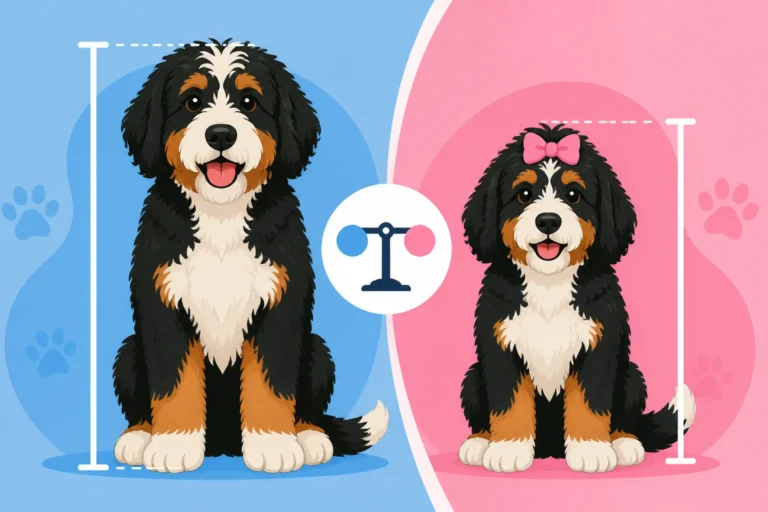
Whether a Micro Bernedoodle Is a Marketing Term
It can be incredibly confusing when you're searching for your perfect Bernedoodle puppy, only to encounter a dizzying array of size descriptions. Beyond the standard, mini, and tiny, you might stumble upon terms like "micro Bernedoodle" and wonder if it's a legitimate size classification or just a clever marketing tactic. This guide aims to clear up that confusion, exploring the realities behind these extra-small labels and what they truly mean for a potential owner.
Understanding Bernedoodle Size Classifications
When we talk about Bernedoodles, most reputable breeders operate within a few established size categories. These aren't arbitrary; they relate to the size of the Poodle parent used in the cross and the general expectation of the adult dog's weight and height. It's easy to get swept up in the adorable thought of a truly tiny Bernedoodle, but it's important to understand the foundation first.
The Official Bernedoodle Sizes: Standard, Mini, and Tiny
Traditionally, Bernedoodles are categorized into three main sizes, primarily based on their expected adult weight. This helps set a realistic expectation for families considering bringing one of these wonderful dogs into their lives.
-
Standard Bernedoodle: These are the big, cuddly giants we often picture. They typically weigh anywhere from 70 to 90 pounds, sometimes even more, and stand over 23 inches tall at the shoulder. They're bred from a Standard Poodle and a Bernese Mountain Dog. Their size means they need a good amount of space and a family prepared for a large dog. The Three Bernedoodle Sizes and What Sets Them goes into more detail about these differences.
-
Mini Bernedoodle: Stepping down in size, the Mini Bernedoodle usually results from crossing a Miniature Poodle with a Bernese Mountain Dog. Their adult weight can range from 25 to 50 pounds, with a height between 18 to 22 inches. These are often a popular choice for families who love the Bernedoodle temperament but need a more manageable size for their living situation.
-
Tiny Bernedoodle: This is where things start to get smaller, typically bred from a Toy Poodle and a Bernese Mountain Dog, or sometimes through multiple generations to achieve a smaller size. A Tiny Bernedoodle generally weighs between 10 to 24 pounds and stands 12 to 17 inches tall. They offer a more compact version of the breed, suitable for apartment living or owners who prefer a smaller companion. For more on what to expect, check out How Small a Tiny Bernedoodle Stays.
These three classifications are generally accepted and provide a good framework for understanding what kind of dog you're getting. Anything beyond these, especially when involving smaller weights, warrants a closer look.
The Appeal of Smaller Bernedoodles
There's no denying the appeal of a smaller dog. They often fit better into diverse living situations, from city apartments to homes with less yard space. A smaller dog might also be easier to travel with, and let's be honest, those tiny puppy phases last a little longer when they don't grow into a giant overnight. For many, the idea of a Bernedoodle, with its intelligent Poodle brain and affectionate Bernese heart, combined with a truly diminutive size, sounds like the best of all worlds.
However, this desire for tinier companions has sometimes led to the introduction of new, less standardized terms. While a smaller Bernedoodle can certainly be wonderful, it's crucial to approach these "extra-small" labels with a healthy dose of skepticism to ensure you're making an informed decision about your future furry family member. The allure of novelty can sometimes overshadow practical considerations regarding health and realistic adult size.
Decoding the "Micro Bernedoodle" Label
When you see a breeder advertising a "micro Bernedoodle," your first thought might be, "Wow, even smaller than a Tiny Bernedoodle? Amazing!" But before you get too excited, it's essential to understand that "micro Bernedoodle" isn't a recognized or standardized size classification within the breeding community. It's often a term used to highlight puppies on the absolute smallest end of the Tiny Bernedoodle spectrum, or in some cases, a marketing ploy to create a sense of exclusivity or extreme rarity.
Where Does "Micro" Come From?
The term "micro" has gained popularity in the world of designer dogs, typically applied to breeds like teacup Yorkies or micro Poodles. It implies a dog that is significantly smaller than even the smallest recognized size category. For Bernedoodles, this usually means a puppy that is expected to mature to under 10 pounds. While a Tiny Bernedoodle might weigh as little as 10 pounds, a "micro" designation often suggests something even more miniature.
The motivation behind using such a term is often rooted in market demand. Smaller dogs can command higher prices due to their perceived rarity and desirability. Why Downsizing Raises a Bernedoodle's Price details how price is often influenced by size. Breeders might use "micro" to distinguish their smallest puppies and attract buyers specifically looking for the absolute tiniest companion. It's a way to stand out in a crowded market, but it doesn't necessarily indicate a distinct genetic lineage or a carefully established breeding program for that specific size.
The Practical Implications of a "Micro" Size
While undeniably cute, the practical implications of a "micro" Bernedoodle can be significant. First and foremost, dogs that are exceptionally small, particularly those under 10 pounds, can be more fragile. Their bones are delicate, and they are more prone to injury from falls, rough play, or even accidental stepping. This means owners must be extra vigilant in their care, often treating them more like an infant than a robust puppy.
Furthermore, extremely small dogs can sometimes face specific health challenges. Issues like hypoglycemia (low blood sugar), especially as puppies, can be more prevalent. Dental problems, collapsing tracheas, and patellar luxation (slipping kneecaps) are also concerns that can sometimes be exacerbated in very tiny breeds. While Whether a Tiny Bernedoodle Is Fragile covers some aspects, a "micro" dog takes this fragility to another level. It's vital to discuss these potential health risks thoroughly with any breeder using the "micro" label.
The Role of Marketing in Bernedoodle Naming Conventions
Let's be honest, names matter. In the bustling world of designer dog breeds, appealing names can make a huge difference in how a particular type of dog is perceived and sought after. When it comes to Bernedoodles, breeders are often trying to capture the hearts and imaginations of potential owners, and sometimes, that means using descriptive terms that lean more into marketing than strict classification.
Attracting Buyers with Novelty
The term "micro Bernedoodle" is a prime example of a marketing term designed to capture attention. In a market where Bernedoodles are increasingly popular, offering something "micro" creates a perception of novelty and exclusivity. It suggests a rare, special variant that might be harder to find, thus making it more desirable to some buyers. This isn't unique to Bernedoodles; you see it across many popular crossbreeds where variations in size, color, and coat type are given catchy, non-standard names to appeal to specific tastes.
A breeder might genuinely have a litter with a few exceptionally small puppies, and "micro" simply becomes their way of accurately describing those puppies to potential owners. However, it's also important to consider if the term is being used to justify a higher price point. What a Tiny Bernedoodle Sells For already highlights how smaller sizes often command a premium, and adding "micro" can amplify that effect, regardless of whether it represents a distinct and healthy lineage. Always remember that a fancy name doesn't automatically translate to a healthier or better-bred dog.
Setting Expectations for Lifespan and Health
One of the significant benefits of the Bernedoodle cross was the hope for improved health and lifespan compared to the purebred Bernese Mountain Dog. While many Bernedoodles do enjoy longer lives, especially the Mini and Tiny varieties, introducing "micro" sizes can complicate these expectations. When dogs are bred specifically for extreme smallness, it can sometimes prioritize size over robust health.
A responsible breeder, regardless of the size they're aiming for, will always prioritize health and temperament. They'll conduct thorough health screenings on the parent dogs for conditions common to both Bernese Mountain Dogs and Poodles, such as hip and elbow dysplasia, eye conditions, and certain genetic diseases. When considering a "micro" Bernedoodle, it becomes even more critical to ask about the health history of the parent dogs, particularly their size and any health issues related to their stature. The concern is whether the pursuit of extreme smallness might inadvertently introduce new health vulnerabilities or amplify existing ones. It's not just about getting a cute puppy, but about bringing home a healthy companion that can thrive for many years.
What to Ask Your Breeder About Size Guarantees
When considering any Bernedoodle, but especially one marketed as "micro," having a thorough conversation with your breeder is paramount. A responsible breeder will be transparent about their breeding practices, the health of their parent dogs, and what you can realistically expect in terms of your puppy's adult size and health. Don't be afraid to ask tough questions – it's an investment for the next decade-plus of your life.
Predicting Adult Size Accurately
Predicting the exact adult size of a Bernedoodle, particularly a mixed breed, can be a challenge. While breeders can make educated guesses based on the size of the parents and previous litters, there's always a degree of variability. This is even more true when you're talking about dogs at the extreme ends of the size spectrum. For a "micro" Bernedoodle, the breeder should be able to provide clear information on the size of both the Poodle and Bernese parents, as well as any ancestral Poodles in the lineage if multiple generations are involved.
Ask for growth charts or pictures of adult dogs from previous litters from the same parent pairing or similar lines. While paw size can sometimes give a rough indication, it's far from a definitive measure. A reliable breeder will also be honest about the possibility that your "micro" puppy might still end up larger than expected, potentially falling into the lower end of the Tiny Bernedoodle category. Understand that nature sometimes has its own plans, and Whether a Bernedoodle Outgrows Its Size Class is a valid concern. Good breeders will also be very upfront about Predicting What a Bernedoodle Puppy Will Weigh and not make outlandish claims.
Health Considerations for Exceptionally Small Dogs
The health of your puppy should always be the top priority, even above chasing a specific size. Exceptionally small dogs can be more susceptible to certain health issues. It's crucial to discuss these potential concerns with your breeder. Ask specifically about:
- Hypoglycemia: Especially in very young puppies, low blood sugar can be a serious issue for tiny dogs. Inquire about the breeder's feeding schedule and how they monitor for this.
- Patellar Luxation: This condition, where the kneecap slips out of place, can be more common in smaller breeds. Ask if the parent Poodles have been screened for this.
- Dental Health: Smaller jaws can sometimes lead to overcrowding of teeth, making them more prone to dental disease.
- Fragility and Injury Risk: Discuss how to best protect a very small puppy from accidental injury in a busy household.
A reputable breeder will be proactive in discussing these potential issues and will have health clearances for their breeding dogs. These clearances, which should include evaluations for hips, elbows, and eyes, are vital regardless of the size, but perhaps even more so when breeding for extreme smallness. Don't hesitate to ask for copies of these certifications. The Five Clearances a Bernedoodle Breeder Should Have is a good resource to understand what documentation to look for. Brands like Chewy often carry a variety of supplements and specific small-breed dog food formulas that cater to some of these needs, but prevention through good breeding is always the first line of defense. Remember, the goal is a healthy, happy companion, not just the smallest one.
| Bernedoodle Size Term | General Weight Range (Adult) | Typical Poodle Parent | Common Usage | Primary Concern for Buyers |
|---|---|---|---|---|
| Standard Bernedoodle | 70-90+ pounds | Standard Poodle | Standardized | Space, energy, large dog needs |
| Mini Bernedoodle | 25-50 pounds | Miniature Poodle | Standardized | Manageable size vs. temperament |
| Tiny Bernedoodle | 10-24 pounds | Toy Poodle | Standardized | Health for small size, fragility |
| Micro Bernedoodle | Under 10 pounds (often) | Toy Poodle | Marketing Term | Extreme fragility, potential health risks |
Ultimately, while the term "micro Bernedoodle" certainly sounds endearing and exclusive, it's generally a marketing term rather than an official, universally recognized size classification. It often refers to a Tiny Bernedoodle on the smallest end of the spectrum, sometimes pushing the boundaries of what is considered healthy or practical for the breed. Your best bet is always to seek out transparent, ethical breeders who prioritize health, temperament, and realistic expectations over trendy labels.
Disclaimer
This article is for general informational purposes only and does not constitute professional advice. Laws, prices and regulations vary by location and change over time. Consult a qualified professional for guidance on your specific situation.