How Rare a Traditional Tri Bernedoodle Is
It’s a common dream for aspiring Bernedoodle owners: you’ve seen those stunning photos of a dog with crisp black, rust, and white markings, and now nothing else will do. You might be scrolling through countless breeder websites or Instagram feeds, only to find that the truly classic "traditional tri-color" Bernedoodle seems incredibly difficult to pin down. Many people feel a bit frustrated trying to understand why this specific look is so elusive, especially when other color patterns seem more readily available. This guide will dive deep into the world of Bernedoodle genetics and breeding to explain just how rare a traditional tri Bernedoodle truly is, and what that means for your search.
What Exactly is a Traditional Tri-Color Bernedoodle?
When people speak of a "traditional tri-color" Bernedoodle, they often have a very specific image in mind: a dog that mirrors the classic markings of a Bernese Mountain Dog. This isn't just about having three colors; it's about where those colors are placed and how distinctly they appear. It’s the quintessential Bernese look, translated onto the Poodle mix.
The Distinctive Markings
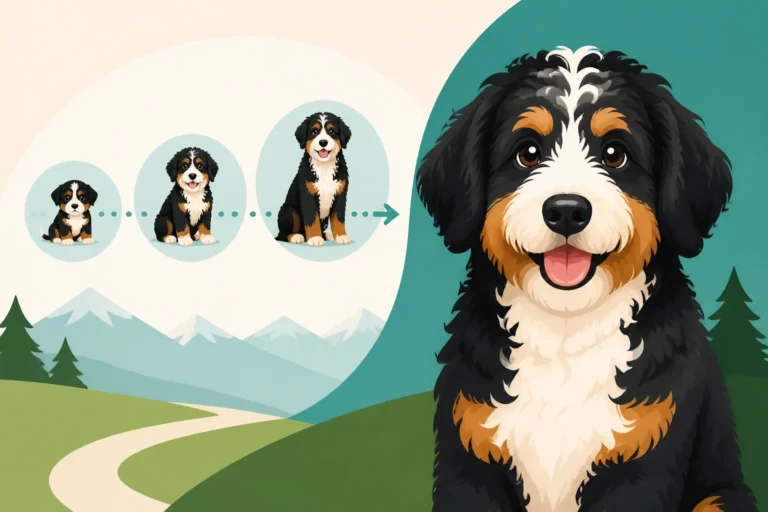
A truly traditional tri-color Bernedoodle features a deep black base coat, often with a brilliant sheen. Complementing this black are clear, rich rust or tan points. These rust markings typically appear on specific areas: above the eyes (like "eyebrows"), on the cheeks, inside the ears, on the chest (often in two distinct patches), on all four legs, and underneath the tail. Finally, the white markings complete the tri-color pattern. This white usually forms a blaze up the face, often extending to a full white muzzle, a white chest that can extend into a "collar" around the neck, and white on the paws and tip of the tail. The contrast between these three colors – black, rust, and white – is what creates that striking, highly sought-after appearance. It’s those crisp, clean lines and rich pigment that really make a traditional tri stand out. These are The Tri Color Markings People Buy a Bernedoodle For.
Differentiating from Other Tri-Color Patterns
It’s easy to get confused by the various "tri-color" descriptors out there, and breeders sometimes use them loosely. A traditional tri is distinct from patterns like phantom, sable tri, or even merle tri.
- Phantom: A phantom Bernedoodle will have the black base coat and the rust or tan points in the same locations as a traditional tri, but it lacks the white markings. So, it's essentially a black and tan dog. While beautiful, it doesn't have that signature white blaze or chest that many associate with the Bernese look.
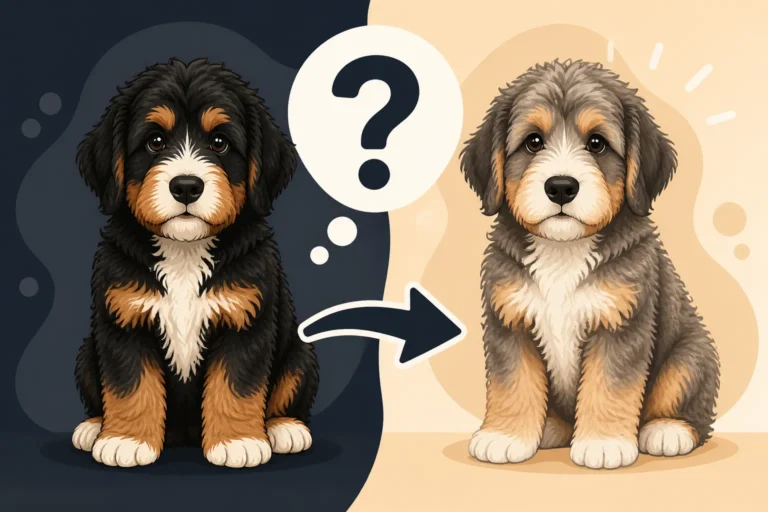
- Sable Tri: A sable tri Bernedoodle also has three colors, but the "black" areas are actually sable, meaning the individual hairs are banded with multiple colors, typically darker at the tip and lighter at the base, giving a shaded or grizzled appearance. The white and rust points might still be present, but the overall black base is softened and appears less solid. Sometimes, what starts as a striking sable puppy can fade into a much lighter, less defined color as an adult, which can be a surprise for owners expecting a traditional tri. You might see What a Sable Bernedoodle Looks Like and realize it's quite different.
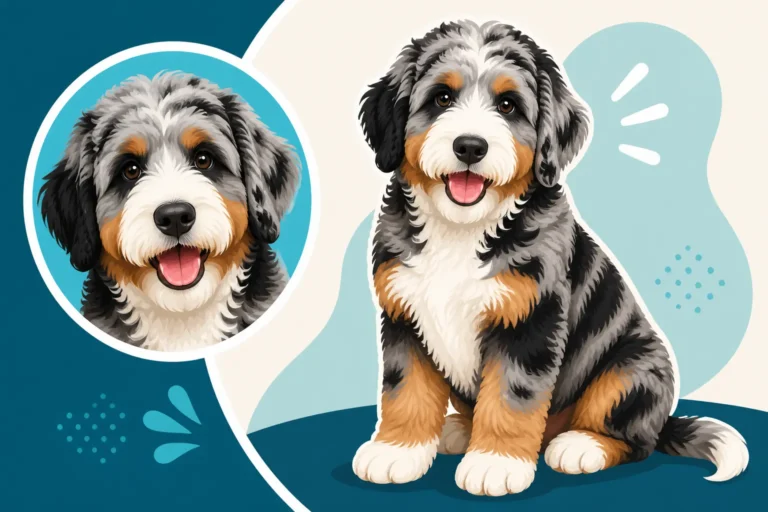
- Merle Tri: Merle is a completely different genetic modifier that creates patches of diluted color, often with striking blue eyes. A merle tri Bernedoodle would have black, rust, and white, but the black areas would be mottled or marbled with shades of grey. While visually stunning, merle patterns are genetically complex and come with their own set of considerations, particularly regarding health when bred improperly. What a Merle Bernedoodle Looks Like is a very different aesthetic and genetic profile.
The distinction is crucial for prospective owners. If your heart is set on that classic Bernese-style tri-color, you need to be specific in your communication with breeders and understand exactly what genetic pattern they are describing.
The Genetics Behind the Tri-Color Coat
Understanding why a traditional tri-color Bernedoodle is less common really comes down to genetics. It's not as simple as mixing two colorful dogs and hoping for the best. The interplay of specific genes from both the Bernese Mountain Dog and the Poodle creates a fascinating, and sometimes frustrating, puzzle for breeders. This is all about The Genetics Behind a Bernedoodle's Tri Markings.
The Bernese Mountain Dog's Influence
The Bernese Mountain Dog, or BMD, is almost exclusively tri-color. Their distinct pattern is controlled by a specific combination of genes that dictate black, tan (rust), and white markings. They carry the necessary alleles for these three colors to express themselves in that characteristic pattern. For example, they carry genes that ensure a solid black base coat, as well as genes for the tan points and for the specific white "Irish spotting" pattern that gives them their blaze, collar, and chest markings. Without these specific genetic combinations, a Bernese wouldn't look like a Bernese.
The Poodle's Genetic Contribution
Poodles, on the other hand, come in a vast array of solid colors (black, white, brown, apricot, red, etc.) and also in patterns like phantom and parti (which is a different kind of white spotting). What's less common, or even absent, in purebred Poodles is the traditional tri-color pattern as seen in a Bernese. Poodles can carry the genes for tan points (making them phantom), and they can carry genes for white spotting (making them parti). However, the specific combination that produces the Bernese-style white blaze and collar in conjunction with tan points is not standard in the Poodle breed lines. Most Poodles used in Bernedoodle breeding are solid, or sometimes phantom, and their genetic contribution often dilutes or modifies the Bernese's strong tri-color expression.
The Complexity of "Tri" in a Crossbreed
When you cross a Bernese Mountain Dog with a Poodle to create an F1 Bernedoodle (50% Bernese, 50% Poodle), the genetic lottery begins. The Poodle parent often contributes genes that don't perfectly align with the Bernese's tri-color pattern. For instance, a solid-colored Poodle might carry genes that suppress white markings, or change the intensity of the tan points. This means that even if a Poodle carries the "tan point" gene, the expression of it might not be as clear or vibrant as in a purebred Bernese, and the specific white markings can be highly variable or absent.
This is why Whether an F1 Bernedoodle Can Be Tri Color is a question with a nuanced answer. Yes, an F1 Bernedoodle can be tri-color, but the chances of getting that perfectly traditional Bernese-like tri-color pattern are actually lower than many assume. You might get a phantom (black and tan without white), or a bi-color with white markings but no tan points, or a tri-color where the white is minimal or asymmetrical, not quite the crisp, balanced pattern you're imagining. It often takes subsequent generations (F1b, F2, Multigen) with careful breeding decisions to consistently produce truly traditional tri-color puppies, and even then, it's not a guarantee. Whether an F1b Bernedoodle Loses the Markings is a relevant concern here, as breeding back to a Poodle (F1b) can sometimes strengthen Poodle traits, including solid colors or different spotting patterns, making the traditional tri even more challenging to achieve.
Why True Traditional Tri Bernedoodles Are Less Common
The rarity of the traditional tri-color Bernedoodle isn't just a genetic accident; it's also influenced by breeding practices, market demand, and the ethical considerations that good breeders uphold.
The Role of Breeding Programs and Parental Genes
For a breeder to consistently produce traditional tri-color Bernedoodles, they need to select parent dogs with the specific genetic markers that will express this complex pattern. This means carefully choosing Poodles that carry the right genes for tan points and that are known to pass on desirable coat patterns, and pairing them with Bernese Mountain Dogs with excellent tri-color genetics. This kind of selective breeding requires extensive knowledge of canine genetics, careful record-keeping, and sometimes, a bit of luck.
Many breeders might prioritize other traits, such as health clearances, temperament, or even simply the non-shedding aspect, over the exact color pattern. If they're using a solid-colored Poodle, for instance, even if it's an exceptional dog in all other respects, the likelihood of producing traditional tri-color puppies decreases significantly. Furthermore, Whether Two Tri Parents Guarantee a Tri Bernedoodle is not a straightforward "yes." Genetics are always a roll of the dice to some extent, and even two tri-color parents might carry recessive genes that could result in other color patterns. This complexity means that truly traditional tri-color Bernedoodles are often the result of very deliberate and specific breeding choices, making them naturally less common.
Demand vs. Supply in Desirable Colors
The traditional tri-color is undeniably one of the most desired Bernedoodle coat patterns. This high demand, coupled with the difficulty in consistently producing them, creates a classic supply-and-demand imbalance. When something is in high demand and short supply, it naturally becomes rarer and often carries a higher price tag. This can sometimes lead less scrupulous breeders to advertise "tri-color" puppies that don't quite fit the traditional definition, relying on buyers' unfamiliarity with the nuances of coat patterns. It's critical for buyers to educate themselves and understand the distinctions. While colors are beautiful, it's important to remember Whether Color Should Change What You Pay for a Bernedoodle significantly, especially if it means compromising on health or temperament from a reputable breeder.
Ethical Breeding and Genetic Health Considerations
Reputable breeders prioritize the health and temperament of their dogs above all else. This means performing extensive health testing on parent dogs for common Bernese and Poodle ailments, such as hip and elbow dysplasia, eye conditions, and genetic diseases like Von Willebrand's disease and degenerative myelopathy. You'd want to be sure you're Asking a Breeder About Cancer in the Bernese Line for example, as the Bernese are prone to certain cancers. A good breeder also considers temperament to ensure the puppies are well-socialized and have a balanced disposition.
Sometimes, the perfect genetic combination for a traditional tri-color might not align with the best health and temperament pairings. An ethical breeder will always choose health and temperament over color. This means they won't simply breed two dogs just because they produce tri-colors if those dogs have known health issues or temperament concerns. This commitment to ethical breeding further limits the number of truly healthy, well-tempered, and traditional tri-color Bernedoodles available. When researching, always look for breeders who transparently share The Five Clearances a Bernedoodle Breeder Should Have.
Finding a Traditional Tri Bernedoodle: What to Expect
So, if your heart is set on that gorgeous traditional tri-color Bernedoodle, what should you expect during your search? It’s not impossible, but it requires patience, thorough research, and a clear understanding of the commitment involved.
The Waitlist and Price Factor
Because of their rarity and high demand, traditional tri-color Bernedoodles typically command a premium price and often involve a longer waitlist. You might find yourself waiting anywhere from several months to over a year for a puppy from a reputable breeder who consistently produces this color pattern. Don't be surprised if the price is significantly higher than for a solid black or bi-color Bernedoodle. This reflects the breeder's investment in genetic testing, careful selection of parent dogs, and the simple economics of supply and demand. Be prepared to pay a deposit, and understand What a Bernedoodle Deposit Costs and the breeder's policies around it.
Here’s a general idea of how rarity and demand might influence the journey:
| Trait Type | Availability | Typical Wait Time | Price Range (Relative) | Key Considerations |
|---|---|---|---|---|
| Solid Color | More Common | Shorter (0-3 months) | Lower | Easier to find, still beautiful |
| Bi-color | Common | Moderate (1-6 months) | Mid-range | Often black/white, less demand than tri |
| Phantom | Less Common | Moderate (3-9 months) | Mid to High | Distinctive, but lacks white blaze/collar |
| Sable Tri | Variable | Moderate (3-9 months) | Mid to High | Can fade, looks different as an adult |
| Traditional Tri | Quite Rare | Long (6-18+ months) | Highest | Most sought after, classic Bernese look, hard to produce |
| Merle Tri | Variable (specific) | Moderate (3-12 months) | High | Controversial for breeding, unique look |
Note: Availability, wait times, and price are generalizations and can vary greatly by breeder, location, and individual litter.
Vetting Breeders for Authenticity
When looking for a traditional tri, it's absolutely crucial to vet breeders thoroughly. Unfortunately, the popularity of the Bernedoodle has led to an increase in less ethical breeding practices. Look for breeders who:
- Prioritize Health Testing: They should openly share health clearances for both parent dogs (hips, elbows, eyes, genetic panels like vWD, DM). Don't just take their word for it; ask to see official documentation.
- Emphasize Temperament and Socialization: A good breeder focuses on raising well-adjusted puppies, not just pretty ones. They should be able to tell you about the parents' temperaments and their socialization protocols for the puppies.
- Are Transparent About Genetics: They should understand and be able to explain the genetics behind their breeding choices, especially regarding color. They should be honest about the likelihood of producing certain colors and patterns.
- Show You Parent Dogs: Ask to see photos and videos, or even meet, the actual parent dogs. This can give you a better idea of what to expect in terms of size, coat, and general appearance.
- Have a Solid Contract and Guarantee: A reputable breeder will have a comprehensive contract that outlines health guarantees, return policies, and expectations for the buyer.
- Don't Over-Promise Color: Be wary of breeders who guarantee a "perfect" traditional tri-color in every litter. Genetics are complex, and even the best breeders will acknowledge some variability.
Don't rush the process. If a breeder seems too eager to sell, doesn't provide health clearances, or has multiple litters constantly available, it's a red flag. Patience and diligence are key to finding a healthy, well-bred Bernedoodle, regardless of color.
Alternative Tri-Color Options
If the wait for a traditional tri-color is too long or the price too prohibitive, don't despair! There are many other beautiful Bernedoodles out there. Consider:
- Phantom Bernedoodles: These black and tan beauties are still incredibly striking and possess many of the Bernedoodle's wonderful qualities. What a Phantom Bernedoodle Looks Like can be quite captivating on its own.
- Sable Tri-Color Bernedoodles: While the pattern may soften over time, sable tri puppies are adorable and grow into unique-looking adults. Understanding What a Sable Bernedoodle Looks Like can help you appreciate their charm.
- Bi-color Bernedoodles with White: Many Bernedoodles are bi-color (usually black and white) and have beautiful white markings that can mimic the Bernese blaze and chest, even without the rust points. These are often easier to find.
- Adult or Rescue Bernedoodles: Sometimes, you can find adult Bernedoodles in rescues or through rehoming situations, and occasionally, a traditional tri-color might become available. While their history might be unknown, rescuing can be an incredibly rewarding experience, and these dogs often come already house-trained and past the puppy stage. Sites like Chewy also often have resources or partnerships with rescues that might help in your search.
Ultimately, while the traditional tri-color Bernedoodle is undeniably stunning and quite rare to find in its most perfect expression, the true joy of a Bernedoodle comes from their wonderful temperament, intelligence, and affectionate nature. Focus on finding a healthy, well-socialized puppy from an ethical breeder, and you'll have a fantastic companion, no matter their exact coat pattern. After all, a dog's personality and health outweigh their color any day.
Disclaimer
This article is for general informational purposes only and does not constitute professional advice. Laws, prices and regulations vary by location and change over time. Consult a qualified professional for guidance on your specific situation.