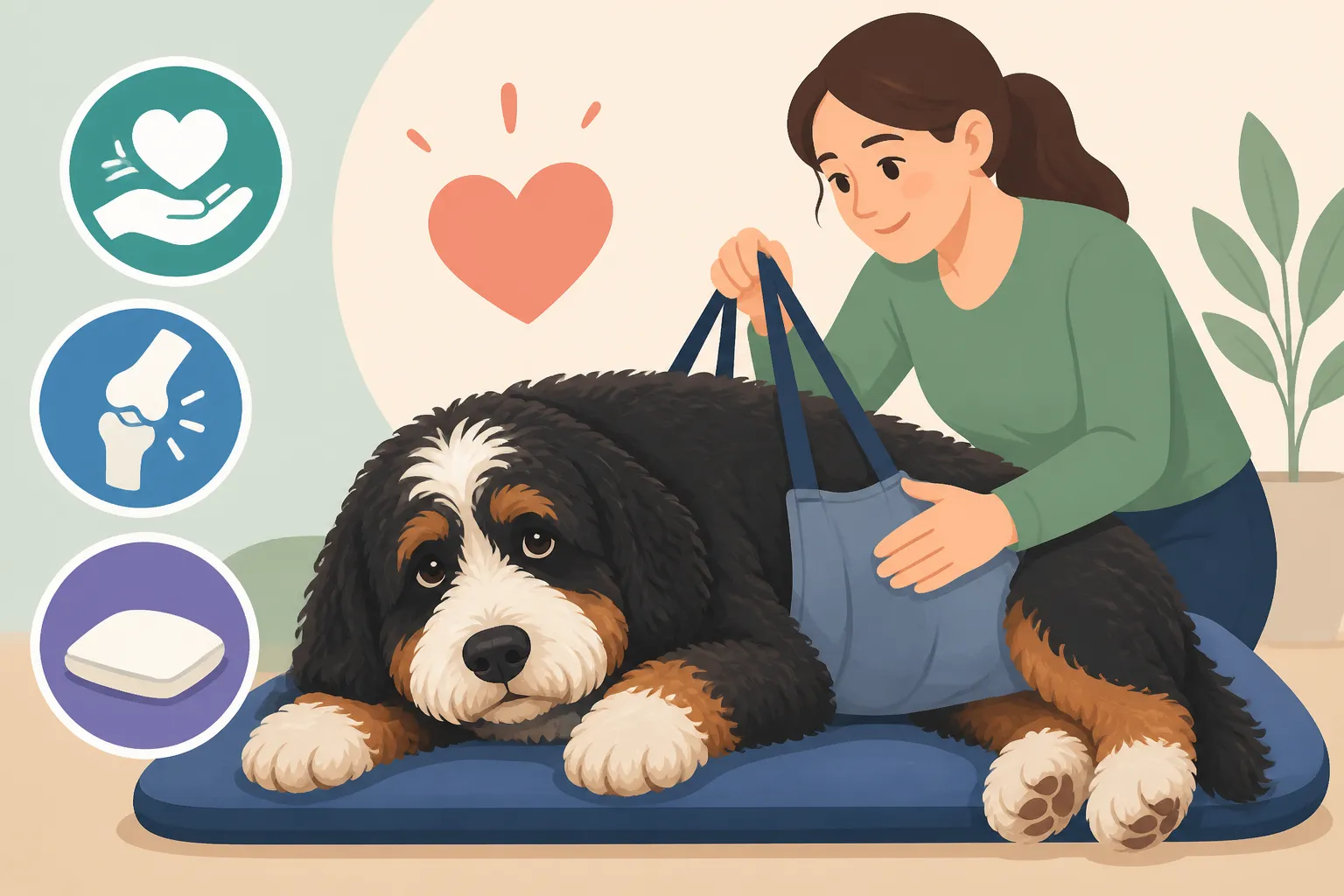
Supporting an Old Bernedoodle That Cannot Rise
Watching your beloved Bernedoodle, once a bundle of boundless energy, struggle to simply push themselves up from a cozy nap can be absolutely heartbreaking. It’s a stark reminder that time marches on, even for our furry family members, and seeing them lose their independence is incredibly tough. This guide is here to walk you through the realities of supporting an aging Bernedoodle who can no longer rise easily, offering practical tips, helpful tools, and a heaping dose of empathy for both you and your cherished companion.
Understanding Why Your Old Bernedoodle Struggles to Rise
As Bernedoodles age, especially the larger standard sizes that often weigh in at 70-90 pounds, their bodies undergo significant changes. What was once effortless becomes a monumental task, often due to a combination of factors affecting their joints, muscles, and neurological system. It’s not just one thing, but usually a symphony of age-related wear and tear that leads to these struggles.
The Impact of Arthritis and Joint Disease
One of the most common culprits behind mobility issues in senior Bernedoodles is arthritis. This degenerative joint disease is essentially the gradual breakdown of cartilage cushioning the joints, leading to bone-on-bone friction, inflammation, and pain. Imagine having a persistent ache in your knees or hips every time you try to stand up – that’s often what your senior Bernedoodle is experiencing. Given their larger size, Bernedoodles are particularly susceptible to conditions like hip and elbow dysplasia, which can predispose them to early-onset arthritis or worsen existing age-related changes. Even if they had good clearances as puppies, years of weight-bearing take their toll. You might notice them favoring a leg, moving stiffly, or being reluctant to jump into the car or onto the couch. Addressing Arthritis in a Bernedoodle at Eight is crucial for their comfort and mobility as they advance in years.
This discomfort can make the act of rising incredibly painful and discouraging. They might try to push up with their front legs, only for their hindquarters to wobble and collapse. Or they might hesitate, trying to find the "least painful" way to get leverage. It's not a lack of willingness, but a physical limitation causing them distress. Understanding this pain is the first step in providing effective support, and often requires a veterinary assessment to identify the specific joints affected and the severity of the condition.
Neurological Conditions Affecting Hindlimb Function
Beyond joint pain, neurological conditions can severely impair a Bernedoodle’s ability to coordinate their movements and bear weight. Degenerative Myelopathy (DM) is a particularly devastating disease that affects the spinal cord, leading to progressive weakness and paralysis, primarily in the hind limbs. It's often compared to ALS in humans. While not every Bernedoodle will get DM, it's a condition seen in both parent breeds (especially the Bernese Mountain Dog side) and can manifest as difficulty walking, stumbling, dragging paws, and eventually, the inability to rise. Even if a Bernedoodle is a carrier, it’s worth noting that Degenerative Myelopathy Both Bernedoodle Parents Can Carry can impact generations.
Other neurological issues, such as intervertebral disc disease (IVDD) where discs in the spine bulge or rupture, can also cause sudden or gradual weakness, pain, and an inability to stand. These conditions require careful diagnosis by a veterinarian, often involving imaging like X-rays or MRI, to differentiate them from joint problems and ensure the most appropriate treatment plan is put in place. The signs can be subtle at first, perhaps just a slight sway in their hindquarters or an uncharacteristic reluctance to go for a walk, but they progress, making standing and walking increasingly challenging. Understanding What Degenerative Myelopathy Looks Like in a Bernedoodle can help you identify symptoms early.
Muscle Weakness and Atrophy
When a Bernedoodle experiences pain or weakness from arthritis or neurological issues, they naturally become less active. This reduced movement, while seemingly a coping mechanism, can quickly lead to a vicious cycle of muscle atrophy. Muscles that aren't used regularly begin to waste away, becoming weaker and making the act of rising even harder. It's like a cascade effect: pain leads to inactivity, inactivity leads to muscle loss, and muscle loss exacerbates the difficulty in moving, leading to more pain and less activity.
This muscle weakness is particularly noticeable in the hindquarters and core strength, which are essential for pushing up from a lying position. You might notice their hind legs looking thinner, or a general loss of muscle tone. Even if the primary issue is joint pain, building and maintaining muscle mass is vital for supporting those compromised joints and enabling better mobility. Gentle, consistent exercise and targeted physical therapy can play a huge role in slowing down this muscle wasting and keeping them as strong as possible for as long as possible.
Practical Solutions and Tools for Helping Your Bernedoodle Rise
When your senior Bernedoodle starts to struggle, the good news is that there are many practical ways you can lend a helping hand. From simple adjustments to specialized equipment, these tools and techniques can make a world of difference in their daily life and your peace of mind.
Mobility Aids and Lifting Harnesses
One of the most immediate and impactful interventions you can make is introducing a mobility aid, specifically a lifting harness. These aren't just for dogs with permanent paralysis; they're incredibly useful for providing support to dogs who just need a little boost to get their footing. Full-body harnesses, like those from brands such as Ruffwear or Help 'Em Up, offer support to both the front and rear, distributing weight evenly and allowing you to gently lift your Bernedoodle without straining your back or putting undue pressure on their joints. Some even have handles positioned strategically for easy lifting.
For dogs with primary hindlimb weakness, a rear-support harness or sling can be a game-changer. These fit around their hindquarters, allowing you to lift their back end and help them stand, go up stairs, or get into the car. The key is to find one that is comfortable, well-padded, and fits properly to avoid chafing or discomfort. Practicing with the harness when your dog is still relatively mobile can make the transition smoother when they truly need it. It’s important to remember that these aren't just for temporary use; they can become part of your daily routine, offering consistent assistance.
Gentle Lifting Techniques for Safety
Even with a harness, knowing how to lift your Bernedoodle safely is paramount, not just for their comfort, but for your own back! For smaller Bernedoodles, you might be able to scoop them up, supporting their chest and hindquarters. But for standard Bernedoodles that can weigh upwards of 90 pounds, a proper technique with a harness is essential. Always bend at your knees, not your back, and use your legs to do the lifting. Ensure your Bernedoodle’s spine remains straight and supported.
When helping them rise, try to encourage them to use their own muscles as much as possible, providing just enough assistance to overcome the initial inertia. If using a sling or harness, apply gentle, upward pressure as they attempt to stand, guiding their legs into position if needed. It’s often a coordinated effort: a "1, 2, 3, up!" verbal cue can help them anticipate your lift. For very large or heavy Bernedoodles, or those with significant mobility loss, a two-person lift might be necessary, with one person supporting the front and the other the rear, ideally using a full-body harness. Remember, consistent communication and gentle movements will help your dog feel secure and less anxious during these assists.
Targeted Physical Therapy and Exercise
It might seem counterintuitive to talk about exercise when your Bernedoodle can barely rise, but appropriate physical therapy and controlled movement are crucial for maintaining muscle mass, joint flexibility, and overall well-being. This isn't about long walks or strenuous activity; it's about targeted exercises designed to strengthen weakened areas without causing pain or further injury. A certified canine rehabilitation therapist can be an invaluable resource, creating a personalized program for your Bernedoodle.
This could include passive range-of-motion exercises, where you gently move their limbs through their natural range; slow, controlled walks on soft surfaces; or even hydrotherapy, where the buoyancy of water reduces stress on joints while allowing for muscle work. Even simple standing exercises, where you help them maintain a standing position for a few seconds at a time, can help build core and hindlimb strength. The goal is to keep them as active and strong as their condition allows, helping them to preserve their remaining mobility and make the act of rising a little less daunting. Small, consistent efforts make a big difference, even for an old Bernedoodle whose energy levels are declining. Consider incorporating gentle activities as part of their daily routine to continue Exercise for a Bernedoodle with Arthritis.
Creating a Supportive Environment for Your Aging Bernedoodle
Making your home senior-dog-friendly isn't just about convenience; it's about comfort, safety, and preserving your Bernedoodle's dignity. Simple environmental modifications can significantly reduce the physical challenges they face daily.
Comfortable and Accessible Bedding
As a Bernedoodle ages and struggles with mobility, getting comfortable and staying comfortable becomes a top priority. Hard floors offer no cushioning for aching joints, and even plush carpet can be difficult to navigate or rise from if it lacks firm support. Investing in a high-quality orthopedic dog bed is non-negotiable for a senior Bernedoodle. These beds feature dense, supportive foam that conforms to their body, relieving pressure points and providing excellent insulation from cold floors. Brands like Big Barker or K9 Ballistics offer large, durable options specifically designed for big breeds.
Place these beds in easily accessible, low-traffic areas where your Bernedoodle feels secure and can rest undisturbed. Having multiple beds around the house means they don’t have to struggle to get to their favorite spot. Ensure the bed is also easy for them to get out of – a bed that's too soft or too high might make rising even harder. The right bed isn't just a luxury; it's a therapeutic tool that directly impacts their quality of rest and, by extension, their ability to rise and move with less pain. For more ideas, see Beds That Support a Heavy Old Bernedoodle.
Non-Slip Flooring and Footwear
Slippery floors are a major hazard for any dog with mobility issues, but especially for large Bernedoodles trying to gain purchase with weak or arthritic legs. Hardwood, tile, and laminate floors can feel like ice rinks to them, leading to falls, further injury, and a significant loss of confidence. Even if your dog isn't falling, the constant struggle to gain traction exhausts them and makes rising much harder.
The solution is to create as many non-slip pathways as possible. Runners, yoga mats, or inexpensive area rugs can transform hazardous zones into safe routes. Pay particular attention to areas where they eat, sleep, and go outside. For stairways, carpet runners or non-slip treads are essential. If covering all hard floors isn't feasible, consider paw-gripping socks or non-slip booties. These can provide excellent traction directly on their paws, giving them the grip they need to stand, walk, and prevent splaying. Regularly trimming the hair between their paw pads also helps improve traction. Don't underestimate how much Rugs Help an Older Bernedoodle navigate your home.
Ramps and Specialized Stairs
Once your Bernedoodle struggles to get into the car, onto the couch, or up a few steps, ramps become indispensable. Jumping down from even a moderate height can cause significant impact and pain to compromised joints. Ramps eliminate this impact, providing a gentle incline that allows them to access elevated surfaces independently, or with minimal assistance. Look for sturdy, non-slip ramps that are wide enough for your Bernedoodle and have a gentle slope. A steep ramp will still be too challenging.
For internal stairs, if your Bernedoodle can still manage them with help, consider specialized pet stairs that offer wider, deeper steps than human stairs, making ascent and descent less strenuous. However, if stairs become impossible, strategic placement of dog beds downstairs or restricting access to upper floors might be necessary. It’s all about removing barriers and reducing the strain on their body, allowing them to conserve energy for basic movements and daily activities.
Managing Pain and Maintaining Quality of Life
Beyond physical aids and environmental changes, truly supporting an old Bernedoodle that cannot rise involves proactive pain management and a holistic approach to their overall well-being. This is where your veterinarian becomes an indispensable partner.
Veterinary Care and Medication Protocols
Regular veterinary check-ups are paramount for aging Bernedoodles. Your vet can accurately diagnose the underlying causes of their mobility issues, such as arthritis, hip and elbow dysplasia, or neurological conditions, and tailor a pain management plan. This often involves a combination of medications, primarily Non-Steroidal Anti-Inflammatory Drugs (NSAIDs), which reduce inflammation and pain in the joints. These medications, like carprofen or meloxicam, can dramatically improve comfort and mobility, making the act of rising less painful. However, they need to be prescribed and monitored by a vet due to potential side effects.
Your vet might also recommend other pain relievers, such as gabapentin for neuropathic pain or amantadine, and even newer injectable medications like Librela, which specifically targets nerve growth factor associated with osteoarthritis pain. Joint supplements containing glucosamine, chondroitin, and MSM can also be beneficial, helping to support joint health and slow cartilage degradation. These are often long-term investments in your dog's comfort, and having pet insurance from providers like Healthy Paws can certainly help manage the ongoing costs of these crucial medications and treatments. It's a proactive step that can offer peace of mind when facing chronic conditions.
Nutrition and Weight Management
Maintaining a healthy weight is absolutely critical for an aging Bernedoodle, especially one with mobility issues. Every extra pound puts immense additional stress on already compromised joints, exacerbating pain and making it exponentially harder to rise. Your veterinarian can help you determine the ideal weight for your Bernedoodle and recommend a specialized senior or weight-management diet. These diets are often lower in calories but still provide essential nutrients, and sometimes include added joint-support ingredients.
Feeding smaller, more frequent meals can also aid digestion and metabolism. Beyond dry kibble, consider incorporating healthy, low-calorie treats and avoiding table scraps. The goal isn't to starve them, but to ensure they receive optimal nutrition without excess calories. Regular, gentle exercise, even just short, slow walks (with your help, if needed), combined with portion control, will be your most powerful tools in keeping their weight in check and, in turn, improving their comfort and mobility. Don't overlook the impact of diet in Keeping a Standard Bernedoodle Sound Past Ten.
Maintaining Dignity and Emotional Well-being
Beyond the physical challenges, struggling with mobility can take a significant toll on a Bernedoodle’s emotional well-being. They might become frustrated, anxious, or even depressed if they can no longer participate in activities they once loved. It's crucial to acknowledge these emotional changes and ensure they still feel loved, valued, and connected to their family.
Continue to engage them in gentle play, even if it's just a game of "find the treat" on the floor or a quiet cuddle session. Provide mental stimulation through puzzle toys, scent games, or gentle training sessions. Maintaining a routine can also provide comfort and predictability. Your calm, patient presence and unwavering affection are perhaps the most vital forms of support you can offer. Help them in and out of the house for potty breaks, ensuring they have easy access. Remember, while their body may be failing them, their spirit remains, and fostering that connection through continued interaction and comfort will ensure their golden years are as happy and fulfilling as possible. It's tough seeing the changes, but helping them feel loved and safe is paramount when your Bernedoodle reaches What Changes in a Bernedoodle After Eight. Many find that a comprehensive pet insurance plan, such as those offered by Healthy Paws, allows them to pursue advanced treatments and therapies without the added stress of financial strain, further contributing to their dog's well-being.
Final Thoughts on Supporting Your Senior Bernedoodle
Watching your majestic Bernedoodle begin to slow down and struggle with basic movements like rising is an emotional journey for any pet parent. It forces us to confront the passage of time and the inevitable changes that come with age. But it's also an opportunity to demonstrate the depth of our love and commitment. By understanding the common reasons behind their mobility struggles, implementing practical aids and environmental modifications, and working closely with your veterinarian on pain management, you can dramatically improve your Bernedoodle's comfort and quality of life in their senior years.
Remember, patience and empathy are your greatest assets. Every day with your beloved companion is a gift, and by actively supporting them through these challenges, you're not just prolonging their life, but enriching it. And don't forget, for those unexpected vet visits and ongoing treatments, having robust pet insurance like Healthy Paws can be a real lifesaver, allowing you to focus on your Bernedoodle's care rather than worrying about the bills. You've been their world, and now, more than ever, they need you to be their rock.
| Mobility Aid Type | Best For | Pros | Cons |
|---|---|---|---|
| Rear Lifting Sling | Hindlimb weakness, temporary support | Inexpensive, easy to put on/take off, portable | Less stable for full weight, requires user to bend |
| Full-Body Harness (e.g., Help 'Em Up) | General weakness, moderate to severe mobility issues, stairs, car entry | Excellent support, distributed weight, user-friendly handles, can stay on all day | More expensive, can be bulky, may require practice to fit correctly |
| Paw Grips/Socks/Booties | Slippery floors, mild instability, splaying | Improves traction directly, prevents paw injuries, relatively inexpensive | Can fall off, some dogs dislike wearing them, requires regular maintenance (cleaning) |
| Ramps | Accessing elevated surfaces (car, bed, couch), short flights of stairs | Reduces joint impact, promotes independence, safer than lifting | Can be bulky, requires space, some dogs need training to use |
| Orthopedic Dog Bed | Arthritis, joint pain, muscle stiffness, post-exercise recovery | Superior comfort, pressure relief, better sleep quality | Can be expensive, large sizes take up space |
| Wheelchair/Cart | Paralysis or severe hindlimb weakness with good front limb function | Allows independent mobility, exercise, and mental stimulation | Expensive, requires custom fitting, can be challenging to navigate in tight spaces |
Disclaimer
The information provided in this article is for general informational purposes only and is not intended as a substitute for professional veterinary advice. Always consult with a qualified veterinarian for any health concerns or before making any decisions related to your Bernedoodle's medical care or treatment plan.