Cooling Mats, Vests and Water for a Bernedoodle
Anyone who shares their life with a Bernedoodle knows the sheer joy and companionship these fluffy giants bring. But come summer, or even just a warm afternoon, that beautiful, thick coat that makes them so endearing can become a serious liability. Keeping your big, shaggy friend comfortable and safe when the temperatures rise is a constant worry, and navigating the world of cooling products can feel overwhelming. This guide is here to walk you through the various ways to help your Bernedoodle beat the heat, focusing on practical tools like cooling mats, vests, and smart hydration strategies.
Why Bernedoodles Need Extra Cooling Care
It’s not just about their floofy good looks; there are real physiological reasons why Bernedoodles, especially the standard sizes, struggle so much when the mercury climbs. Understanding these factors is the first step in truly protecting your beloved companion.
The Double Whammy of Coat and Size
Let's face it, Bernedoodles are built for colder climates. Their Bernese Mountain Dog lineage blesses them with a dense double coat, often with a thick undercoat, designed to insulate against freezing temperatures. While the Poodle side can sometimes lighten that coat and reduce shedding, many Bernedoodles still retain a significant amount of this insulating fur. This coat traps body heat, making it incredibly difficult for them to cool down naturally. Imagine wearing a heavy wool coat in July – that's often what it feels like for them. Their sheer size also plays a role; larger dogs have a smaller surface area to volume ratio compared to smaller breeds, meaning they can't dissipate heat as efficiently through their skin. This is why you often see them panting so heavily, trying to exchange warm air for cooler air.
Moreover, if your Bernedoodle has a darker coat, like a black tri Bernedoodle or a solid black one, they absorb even more radiant heat from the sun. Think about how hot a dark car gets compared to a light-colored one on a sunny day. The sun beats down on their dark fur, turning them into little heat sponges. This isn't just uncomfortable; it rapidly raises their core body temperature to dangerous levels. Why a Black Tri Bernedoodle Overheats explains more about this specific challenge.
The Hidden Risks of Heat for Bernedoodles
Beyond simple discomfort, overheating poses serious health risks for Bernedoodles. Their deep chests, a trait from their Bernese heritage, while predisposing them to issues like bloat, don't necessarily help with heat regulation. They are particularly susceptible to heat exhaustion and, more dangerously, heatstroke. Heatstroke is an emergency situation where a dog's body temperature rises to a critical level, leading to organ damage and even death if not addressed immediately.
The signs of heat stress can sometimes be subtle at first, like excessive panting, drooling, and seeking shade. But they can quickly escalate to weakness, staggering, vomiting, diarrhea, and collapse. This is why proactive cooling measures are so vital. Waiting until your Bernedoodle is clearly distressed is already waiting too long. Familiarize yourself with Signs a Bernedoodle Is Overheating to be prepared. Factors like humidity can also greatly exacerbate the problem, as it makes it harder for dogs to cool down through panting.
Cooling Mats: A Ground-Level Solution
One of the most straightforward and effective ways to offer immediate relief to an overheating Bernedoodle is through a cooling mat. These clever inventions provide a cool spot for your dog to lie on, drawing heat away from their body through conduction.
Understanding Different Types of Cooling Mats
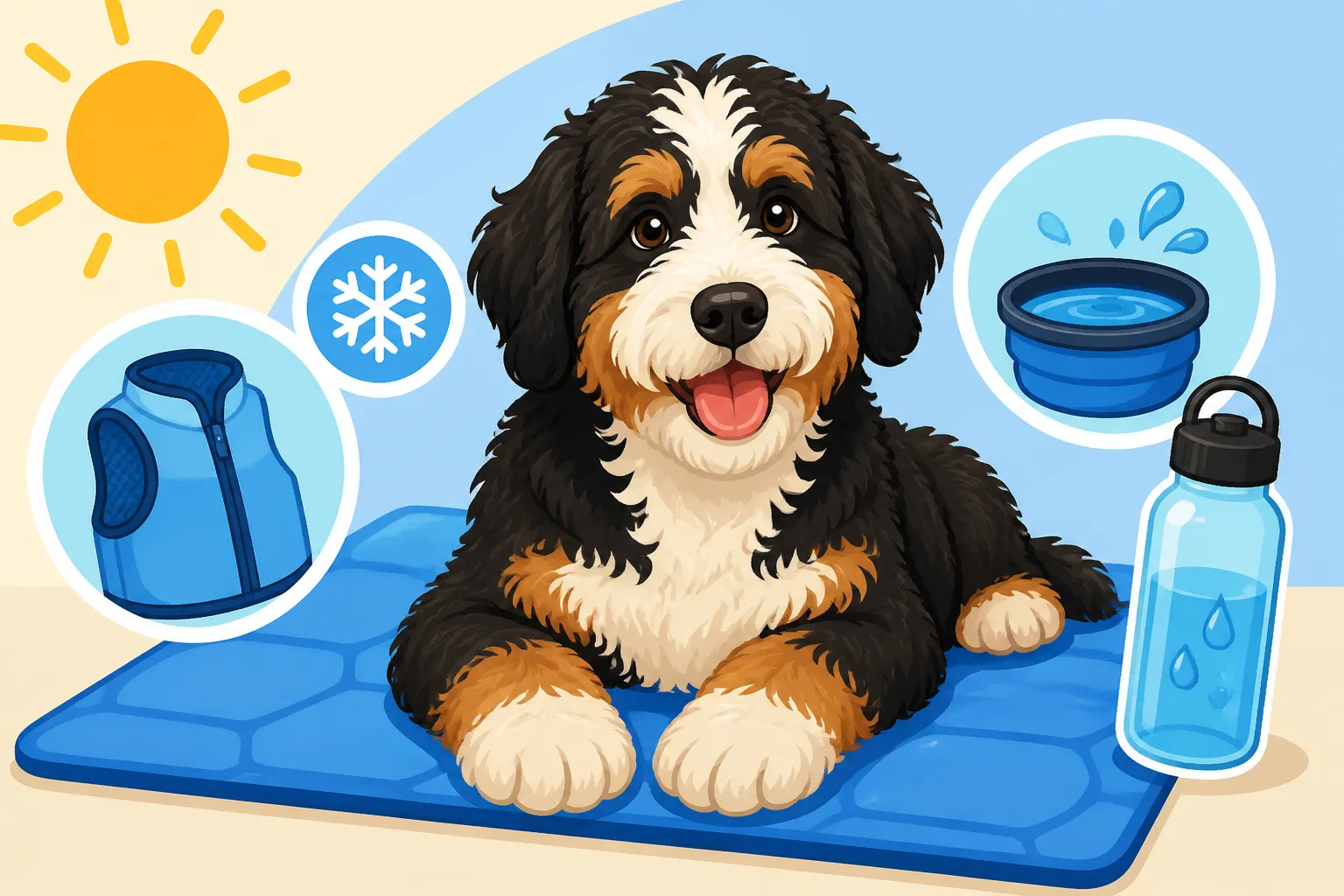
Cooling mats typically come in two main varieties: gel-filled and water-filled. Gel-filled mats contain a non-toxic gel that reacts to pressure, activating a cooling sensation when your dog lies down on it. These are often self-cooling and don't require refrigeration or water, making them incredibly convenient. They maintain their coolness for several hours and recharge relatively quickly once the dog moves off. Brands widely available on platforms like Amazon and Chewy offer a range of sizes to accommodate even the largest Bernedoodles.
Water-filled mats, on the other hand, require you to add water to a chamber inside the mat. Some designs also benefit from refrigeration for an extra chill. While they might require a bit more setup, they can often provide a very deep and consistent coolness. However, you'll want to ensure the mat is sturdy and puncture-resistant, especially if your Bernedoodle is a chewer or a digger. When browsing options on Chewy, always check reviews for durability and comfort.
Best Practices for Using Cooling Mats Effectively
Introducing a cooling mat to your Bernedoodle should be done positively. Place it in a favorite resting spot, perhaps near their bed or in a shady corner. You can encourage them to use it with treats or praise. For larger Bernedoodles, ensure the mat is substantial enough to cover their entire body, allowing for maximum contact and heat transfer. A small mat will only cool a portion of them and won't be as effective.
Regular cleaning is also important, especially if your Bernedoodle is a drooler or enjoys muddy paws. Most mats have a wipe-clean surface. Always follow the manufacturer's instructions for care to ensure longevity and optimal performance. While a cooling mat offers fantastic localized relief, it shouldn't be the only tool in your arsenal, especially on truly hot days. Think of it as a crucial part of a multi-faceted cooling strategy.
Cooling Vests and Bandanas: Wearable Relief
Sometimes, your Bernedoodle needs to be cool on the go, or perhaps they're not a fan of lying still on a mat. That's where cooling vests and bandanas come into play, providing portable and active cooling for their adventures.
How Cooling Vests Work to Disperse Heat
Cooling vests for dogs work on the principle of evaporative cooling. They are typically made from special fabrics that you soak in water, wring out, and then place on your dog. As the water evaporates from the vest, it draws heat away from your dog's body, helping to lower their core temperature. Some vests are designed with multiple layers, holding water in a reservoir that slowly releases moisture, extending the cooling effect. Others might incorporate gel packs, similar to those found in human cooling gear, which can be frozen or chilled before insertion into the vest.
The key areas these vests target are the chest and back, where major blood vessels are close to the surface, allowing for efficient heat exchange. This targeted cooling can make a significant difference, especially for a large, heavily coated dog like a Bernedoodle. When considering vests on Amazon, look for adjustable straps to ensure a snug, comfortable fit without restricting movement. A poorly fitting vest won't be as effective and could even cause chafing.
Choosing and Using Cooling Vests and Bandanas Safely
When selecting a cooling vest or bandana, fit is paramount. It should be snug enough to make good contact with your Bernedoodle's fur, but not so tight that it restricts breathing or movement. Measure your dog carefully according to the product's sizing chart. For bandanas, ensure they aren't too tight around the neck, which could be a choking hazard.
Always monitor your Bernedoodle when they are wearing a cooling vest, especially during prolonged use. The vest will need to be re-wet as it dries out to continue providing its cooling benefits. On extremely hot days, even with a vest, it's critical to limit outdoor exposure and avoid walking your Bernedoodle during the hottest parts of the day. Remember, these are aids, not magic cloaks that make them immune to heat. Whether a Bernedoodle Should Be Walked in Summer provides more context on safe exercise in warm weather.
The Unsung Hero: Hydration and Water Strategies
No matter what cooling products you use, nothing is more fundamental to heat safety than ensuring your Bernedoodle is adequately hydrated. Water helps regulate internal body temperature and prevents dehydration, which can quickly turn dangerous.
Making Water More Appealing and Accessible
It sounds simple, right? Just put down a bowl of water. But for a Bernedoodle, especially one who tends to be a bit picky or easily distracted, you might need to get creative. Start by offering multiple water bowls in different locations around the house and yard. Some dogs prefer ceramic or stainless steel bowls over plastic. Keep the water fresh and cool; lukewarm water is far less appealing. Adding a few ice cubes to their water bowl can make a huge difference, especially on a sweltering day. You can even try specialized cooling bowls, often found on Chewy, that have a reservoir to keep water cool for longer periods.
Consider bringing a portable water bottle and collapsible bowl for walks and outings. This is non-negotiable, particularly if you have a [Standard Bernedoodle that weighs ninety pounds]. Access to water shouldn't just be available; it should be enticing. Some Bernedoodles enjoy playing with a gentle spray from a hose or a kiddie pool, which can also encourage them to drink more as they cool down.
Advanced Hydration: Electrolytes and Frozen Treats
Sometimes plain water isn't enough, or your Bernedoodle needs a little extra encouragement. For very active dogs or those who have been out in the heat (even briefly), adding canine-specific electrolyte supplements to their water can help replenish essential minerals lost through panting and sweating. Always check with your vet before introducing new supplements, but these can be beneficial in moderation.
Frozen treats are another fantastic way to increase hydration and provide a cooling snack. You can make 'pupsicles' by freezing diluted chicken broth, pureed fruits (like banana or apple, ensure they are dog-safe), or even just plain water with a few berries in an ice cube tray. Cooling a Bernedoodle Down Safely delves into other safe cooling methods. These aren't just tasty; they help cool them from the inside out. Remember, moderation is key with treats, especially for Bernedoodles prone to weight gain.
Building a Bernedoodle Summer Safety Plan
Keeping your Bernedoodle safe and happy through warmer months requires a comprehensive approach, integrating various strategies and always being vigilant. It's about more than just one product; it's a lifestyle adjustment.
Combining Cooling Methods for Maximum Effect
The best approach is often a multi-layered one. Imagine a hot summer day: your Bernedoodle starts their morning walk in a cooling vest, ensuring their core temperature remains regulated. Once back inside, they settle onto a comfortable cooling mat. Throughout the day, fresh, iced water is readily available from multiple bowls. If they spend time in a yard, a shady spot with a sprinkler or kiddie pool (supervised, of course!) can offer additional relief.
| Cooling Aid | Primary Mechanism | Best Use Case | Pros | Cons |
|---|---|---|---|---|
| Cooling Mat | Conduction | Resting indoors, crates, travel | Passive, convenient, provides a cool spot | Stationary, may not appeal to all dogs, can be punctured |
| Cooling Vest | Evaporative Cooling | Walks, outdoor activities, active cooling | Portable, active, targets core body heat | Requires re-wetting, can be bulky, fit-dependent |
| Cooling Bandana | Evaporative Cooling | Short outings, mild heat, quick relief | Lightweight, easy to use, less intrusive | Limited cooling area, shorter duration |
| Iced Water/Treats | Internal Cooling | Any time, especially during/after activity | Essential hydration, internal cooling | Too much ice can upset stomach, messy |
| Kiddie Pool/Sprinkler | Conduction & Evaporation | Outdoor play, active cooling, fun | Great for active dogs, full body cooling | Requires outdoor space, supervision needed |
This combination of strategies addresses different aspects of cooling, from passive resting to active outdoor play. Think about the Temperature a Bernedoodle Should Not Be Walked In and plan activities accordingly, usually early morning or late evening.
Recognizing and Responding to Heat Stress
Even with the best precautions, accidents can happen, or the weather can turn unexpectedly. Knowing the signs of heatstroke and how to respond immediately can be life-saving. Early signs include heavy panting, excessive drooling, lethargy, and a bright red tongue. As it progresses, you might see weakness, stumbling, vomiting, diarrhea, confusion, and even seizures. This is a medical emergency.
If you suspect heatstroke, act quickly. Get your Bernedoodle out of the heat immediately and into the coolest environment possible, preferably an air-conditioned space. Apply cool (not ice cold) water to their body, especially their belly, armpits, and groin. You can use wet towels or a fan to aid evaporation. Offer small amounts of cool water if they are conscious and able to drink. Critically, transport them to the nearest emergency veterinary clinic, calling ahead if possible to let them know you're coming. Time is of the essence. Don't assume they'll recover on their own; immediate professional help is crucial. Remember to always consult your vet for specific advice on managing your Bernedoodle's health, particularly in extreme weather conditions.
Disclaimer
This article is for general informational purposes only and does not constitute professional advice. Laws, prices and regulations vary by location and change over time. Consult a qualified professional for guidance on your specific situation.