Whether Road Salt Hurts a Bernedoodle’s Feet
Winter walks can be a magical experience with your beloved Bernedoodle, full of snowy romps and crisp air. But for many of us, the joy is often mixed with a nagging worry: the harsh reality of road salt. That glittering white stuff scattered on sidewalks and roads might make surfaces safer for humans, but it can wreak absolute havoc on your Bernedoodle's delicate paw pads, leading to pain, injury, and even illness. This guide is here to walk you through exactly why road salt is such a menace and, more importantly, how you can keep your furry friend's feet safe and comfortable all winter long.
The Hidden Dangers of Winter Road Salt for Your Bernedoodle's Paws
It's easy to think of road salt as just… salt. But the truth is, the de-icing agents used on our streets are often a cocktail of chemicals, and they are anything but benign for canine paws. Your Bernedoodle, with their generally plush coat and often sensitive skin, is particularly vulnerable to these irritants.
Chemical Irritation and Burns
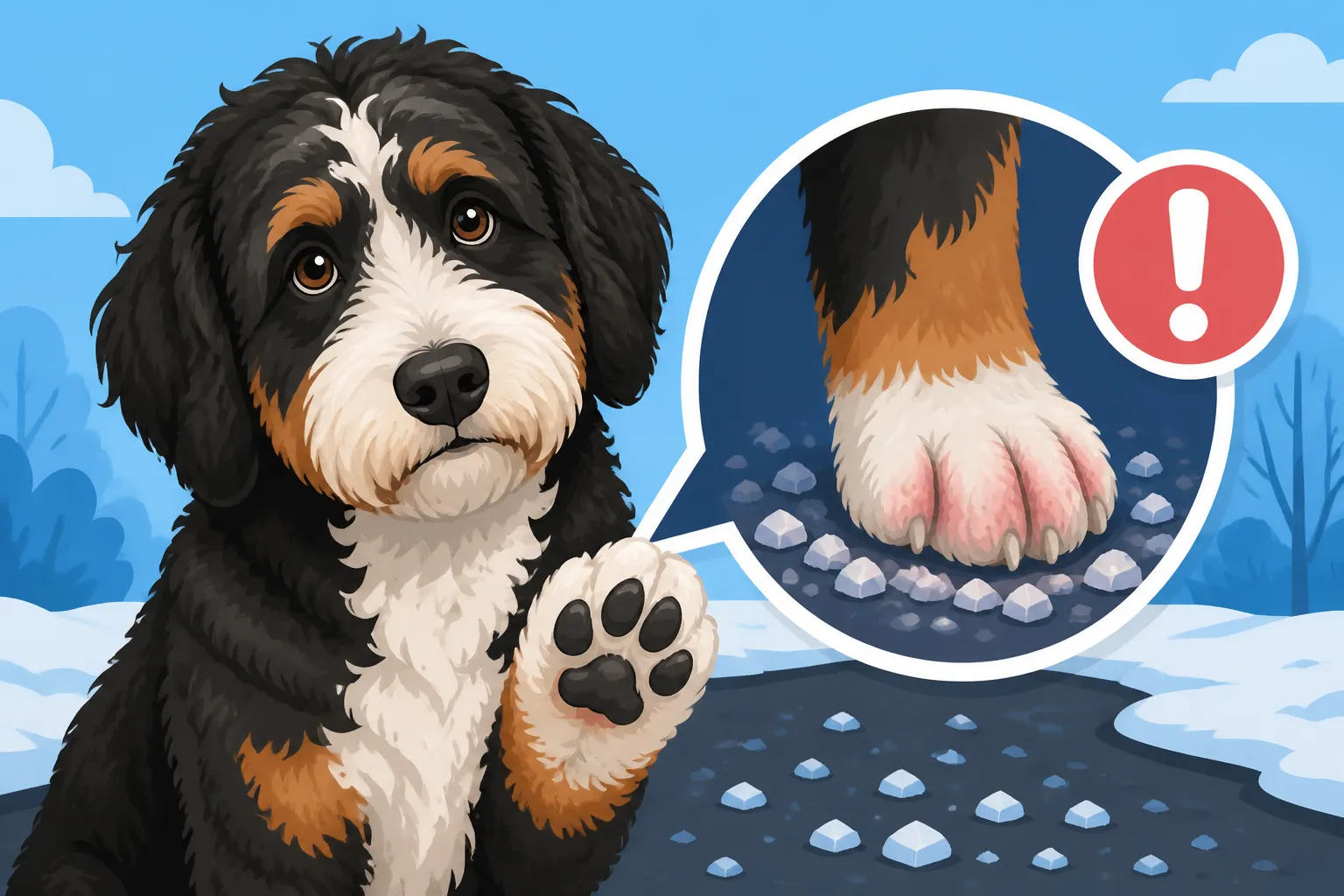
The primary ingredients in most road salts are variations of chloride: sodium chloride (common table salt), calcium chloride, and magnesium chloride. While they differ slightly in how they work and at what temperatures, their effect on dog paws is uniformly unwelcome. These chemicals are highly corrosive and dehydrating. Imagine walking barefoot on a surface covered in a harsh cleaner; that's akin to what your Bernedoodle's paw pads experience. The salts draw moisture out of the skin, leading to extreme dryness. Over time, this dryness can escalate into redness, inflammation, and even painful chemical burns.
For a Bernedoodle, whose paws are designed for traction and sensing the ground, this irritation isn't just uncomfortable; it can be excruciating. They might start limping, refusing to walk, or constantly licking their paws in distress. If you live in an area where these chemicals are heavily applied, even a short walk can be enough to cause significant irritation. Whether a Bernedoodle Should Be Walked in Summer covers different seasonal challenges, but winter brings its own unique set of hazards like these.
Dehydration and Cracking
Beyond immediate burns, the dehydrating properties of road salt are a silent but persistent threat. Bernedoodle paw pads, while tough, rely on a certain level of moisture and elasticity to remain healthy. When repeatedly exposed to de-icing salts, this natural moisture is stripped away. The pads become dry, stiff, and brittle, much like human skin that's been exposed to harsh winter winds without protection.
Once the paw pads start to dry out, they become prone to cracking. These aren't just superficial cracks; they can be deep, painful fissures that expose sensitive tissues underneath. Each step then becomes a source of agony, and the open wounds are an invitation for bacteria and fungi to set up shop, leading to secondary infections. It's a vicious cycle that can quickly make your Bernedoodle miserable and require veterinary intervention. Keeping an eye on their paws is just as important as managing their coat, which can be quite a task, as discussed in The Weekly Hours a Standard Bernedoodle's Coat Takes.
The Sneaky Threat of Ingestion
Perhaps the most insidious danger of road salt isn't just what it does to the outside of your Bernedoodle's paws, but what happens when they try to "fix" the problem themselves. Dogs instinctively lick their paws when they feel discomfort or irritation. After a walk on salted pavements, their paws will be coated in those de-icing chemicals. When your Bernedoodle starts licking, they're ingesting a dose of those same corrosive compounds.
Ingesting road salt can lead to a range of digestive issues, from mild stomach upset, vomiting, and diarrhea, to more severe problems like electrolyte imbalances, kidney damage, and even sodium poisoning in extreme cases. Symptoms of salt ingestion can include excessive thirst, lethargy, muscle tremors, and in severe instances, seizures. It’s a terrifying prospect that underscores the importance of a rigorous post-walk paw care routine.
Proactive Paw Protection: Keeping Your Bernedoodle Safe from Salt
Prevention truly is the best medicine when it comes to protecting your Bernedoodle's paws from road salt. With their hearty Bernese Mountain Dog genes, many Bernedoodles love the snow, but even thick coats can't protect delicate paw pads. Building a routine and investing in the right tools can make all the difference.
The Mighty Dog Bootie
If you want the absolute best defense against road salt, dog booties are your go-to. Think of them as tiny, durable shoes for your Bernedoodle. They create a physical barrier between your dog's paws and the harsh chemicals, snow, and ice. This not only prevents chemical burns and dryness but also helps prevent ice balls from forming between their paw pads, a common winter nuisance discussed in Ice Balls in a Bernedoodle's Feathering.
Choosing the right booties can be a bit of an adventure. You'll need to measure your Bernedoodle's paws carefully and consider their size – a standard Bernedoodle, which can weigh up to ninety pounds, needs a robust, well-fitting bootie. Look for options with good grip, durable soles, and adjustable straps to ensure they stay on during walks. Brands offering a wide range of sizes and styles can be found easily on platforms like Amazon or Chewy. Introducing booties takes patience. Start with short periods inside, reward heavily, and gradually extend the wear time. Don't be surprised if your Bernedoodle does a funny high-step dance at first – it's all part of the process!
Creating a Barrier with Paw Waxes and Balms
If booties aren't a practical option for every outing, or if your Bernedoodle simply won't tolerate them, paw waxes and balms offer a fantastic alternative. These products are designed to create a protective, invisible barrier on the paw pads. They typically contain natural waxes and oils that moisturize the pads while repelling salt, ice, and other irritants.
Applying a paw balm is quick and easy. Simply rub a generous amount onto each paw pad before heading out for a walk, making sure to get in between the toes. This protective layer helps prevent moisture loss, reduces friction, and minimizes the direct contact of salt with the skin. While not as foolproof as booties, they offer a significant level of protection for lighter salt exposure or shorter walks. Many excellent paw balms are available at pet supply stores or online through retailers like Chewy and Amazon, often made with dog-safe ingredients so you don't have to worry too much about accidental ingestion.
The Essential Post-Walk Ritual
No matter what other protective measures you take, a thorough post-walk paw cleaning is non-negotiable during winter. This simple step is your last line of defense against ingested salt and lingering irritation. As soon as you come back inside, make it a habit to clean your Bernedoodle's paws immediately.
A shallow bowl of warm water is usually sufficient. Dip each paw in, gently swish it around to dissolve and rinse off any salt or chemical residue, and then towel dry thoroughly. Pay special attention to the areas between the paw pads. Some owners find a dedicated paw washer cup, often sold on Amazon, incredibly helpful for this task, as it contains bristles that effectively clean between toes. For a big Bernedoodle, you might want to consider doing this in a mudroom or by the door to prevent tracking salty water through the house. The goal is to remove all traces of salt before your Bernedoodle has a chance to lick their paws.
| Protection Method | Pros | Cons | Best For |
|---|---|---|---|
| Dog Booties | Excellent physical barrier, prevents ingestion, protects from ice balls | Can be difficult to fit, some dogs resist, may be bulky | Heavily salted areas, long walks, highly sensitive paws |
| Paw Waxes/Balms | Easy to apply, natural feel, moisturizes, good moisture barrier | Needs frequent reapplication, less protection than booties, can get messy | Moderate salt exposure, quick outings, mild irritation, moisturizing |
| Post-Walk Rinse | Immediate removal of irritants, simple, affordable | Only effective after exposure, requires consistency, no preventative barrier | All walks (essential follow-up), crucial for all protection methods |
Addressing Affected Paws: What to Do When Road Salt Takes Its Toll
Even with the best intentions and preventative measures, sometimes road salt manages to get the better of your Bernedoodle's paws. Knowing how to spot the signs of irritation and what steps to take can alleviate discomfort and prevent more serious complications.
Spotting the Signs of Trouble
Your Bernedoodle can't tell you in words that their paws hurt, but they'll definitely communicate it through their behavior. Be vigilant for any of these tell-tale signs:
- Excessive licking or chewing of paws: This is often the first and most obvious indicator of discomfort. Your Bernedoodle will try to soothe or clean the irritated area.
- Limping or reluctance to walk: If walking is painful, they'll show it by favoring a paw or simply refusing to move.
- Redness or inflammation: Inspect their paw pads closely. Are they redder than usual, swollen, or inflamed?
- Cracked or dry paw pads: Look for visible cracks, peeling skin, or extreme dryness.
- Bleeding: In severe cases, deep cracks or burns can lead to bleeding.
- Holding up a paw: They might lift a paw off the ground while standing or sitting, trying to keep it from contact.
- Pain on touch: If they yelp or pull away when you gently touch their paw, it's a clear sign of pain.
Don't ignore these signs. A Bernedoodle, being a stoic breed sometimes, might try to tough it out, but persistent licking can quickly worsen the problem, potentially leading to hot spots. Hot Spots Under a Bernedoodle's Thick Coat highlights how quickly skin irritation can escalate.
Immediate Relief and Cleaning
If you notice any signs of irritation after a walk, prompt action is key.
- Rinse thoroughly: The very first step is to rinse your Bernedoodle's paws with lukewarm water. Use a gentle stream and ensure you get between all the toes and pads. This helps to wash away any remaining salt particles that might be aggravating the skin.
- Gentle cleansing: If there's visible dirt or grime along with the salt, you can use a mild, dog-specific shampoo to gently clean the paws. Avoid harsh soaps or anything perfumed, as these can further irritate sensitive skin. Rinse thoroughly until no suds remain.
- Pat dry: Use a clean, soft towel to pat the paws completely dry. Moisture trapped between the toes can lead to yeast or bacterial infections, so thorough drying is essential.
- Apply a soothing balm: Once dry, you can apply a healing paw balm or a thin layer of petroleum jelly (if it's non-toxic for dogs) to help soothe and moisturize the irritated skin. This can also act as a temporary barrier against further licking.
- Prevent licking: To allow the balm to work and prevent your Bernedoodle from ingesting any product or further irritating the area, you might need to use an Elizabethan collar (cone) or protective bootie for a short period.
When to Call the Vet
While many minor irritations can be managed at home, there are times when a veterinary visit is absolutely necessary. Don't hesitate to contact your vet if you observe any of the following:
- Deep cracks or bleeding: These wounds require professional assessment to prevent infection and promote proper healing.
- Signs of infection: Pus, foul odor, severe swelling, or persistent redness could indicate a bacterial or fungal infection that needs antibiotics or antifungal treatment.
- Severe limping or inability to bear weight: This suggests significant pain or injury that needs medical attention.
- Blisters or chemical burns: These can be very painful and may require specific medical dressings or topical treatments.
- Symptoms of salt poisoning: If your Bernedoodle is vomiting repeatedly, showing extreme lethargy, muscle tremors, or staggering, seek emergency veterinary care immediately.
- Lack of improvement: If home care doesn't bring improvement within a day or two, it's time to consult a professional.
Just as you would monitor them for signs of joint discomfort as they age, as explored in Managing Arthritis in an Old Bernedoodle, keeping a close watch on their paws for subtle changes is vital for their overall comfort and health.
General Paw Care: Building Resilience for All Seasons
While road salt is a specific winter threat, maintaining good paw health year-round can build resilience and make your Bernedoodle less susceptible to seasonal challenges. A little routine care goes a long way.
Regular Paw Maintenance
Beyond the specific concerns of road salt, consistent paw maintenance is crucial for a Bernedoodle's overall comfort.
- Trimming paw hair: The long, thick coat that Bernedoodles inherit can grow quite long between their paw pads. This excess hair traps moisture, dirt, debris, and, yes, even road salt. It can also become matted, pull on the skin, and make it difficult for your dog to get good traction. Regularly trimming this hair flush with the paw pads is essential. This can be done with blunt-nosed scissors or a small clipper. If you're unsure how to do this safely, your groomer can easily take care of it during their regular appointments. Trimming Between a Bernedoodle's Pads provides a deeper dive into this important task.
- Nail care: Overgrown nails can throw off your Bernedoodle's gait, putting undue stress on their paw joints and even leading to pain and lameness. Long nails are also more prone to tearing, which can be incredibly painful. Regular nail trims, ideally every 3-4 weeks, are important. This is especially true for Bernedoodles with black nails, where it can be harder to see the quick. Cutting Black Nails on a Bernedoodle offers specific advice on this. If you hear their nails clicking on the floor, it's time for a trim!
- Regular inspections: Make it a habit to check your Bernedoodle's paws at least weekly, more often in winter. Look for anything unusual: cuts, scrapes, redness, swelling, foreign objects (like thorns or burrs), or signs of irritation. Early detection means faster treatment and less discomfort for your dog.
Indoor Environment: Protecting Paws After Outdoor Exposure
Your home environment can also play a role in paw health, particularly after exposure to harsh outdoor elements.
- Clean indoor surfaces: After a walk where road salt was present, even if you rinsed their paws, it's possible some residue might transfer to your indoor floors. Keeping your floors clean can prevent any remaining irritants from causing problems if your Bernedoodle happens to lie down or rub their paws on the floor later.
- Comfortable resting spots: Ensure your Bernedoodle has soft, comfortable bedding to rest on. If their paws are sore or tender, a plush bed can provide relief. For older Bernedoodles or those prone to joint issues, orthopedic beds are a fantastic investment to support their body and prevent pressure points on their paws and joints.
- Humidify dry indoor air: Winter air, especially with indoor heating, can be very dry. This dry air can further dehydrate your Bernedoodle's skin and paw pads. Using a humidifier in your home can help add moisture to the air, which in turn helps keep their skin and paws hydrated and less prone to cracking. This subtle care can make a big difference in preventing dry, brittle paw pads.
By taking these proactive and responsive steps, you can ensure your Bernedoodle's paws remain healthy and happy, allowing them to enjoy all the joys of winter without the painful side effects of road salt.
Disclaimer
This article is for general informational purposes only and does not constitute professional advice. Laws, prices and regulations vary by location and change over time. Consult a qualified professional for guidance on your specific situation.