Whether Any Bernedoodle Is Truly Non Shedding
One of the most common hopes (and sometimes, outright demands!) when looking for a Bernedoodle is that they’ll be "non-shedding." It’s a lovely dream, isn't it? The reality, though, is a bit more nuanced and can lead to a lot of frustration if you're expecting a completely hair-free home. This guide will dive deep into the truth about Bernedoodle coats, shedding, and what you can truly expect when you bring one of these wonderful dogs into your life.
The Dream vs. The Reality of a "Non-Shedding" Bernedoodle
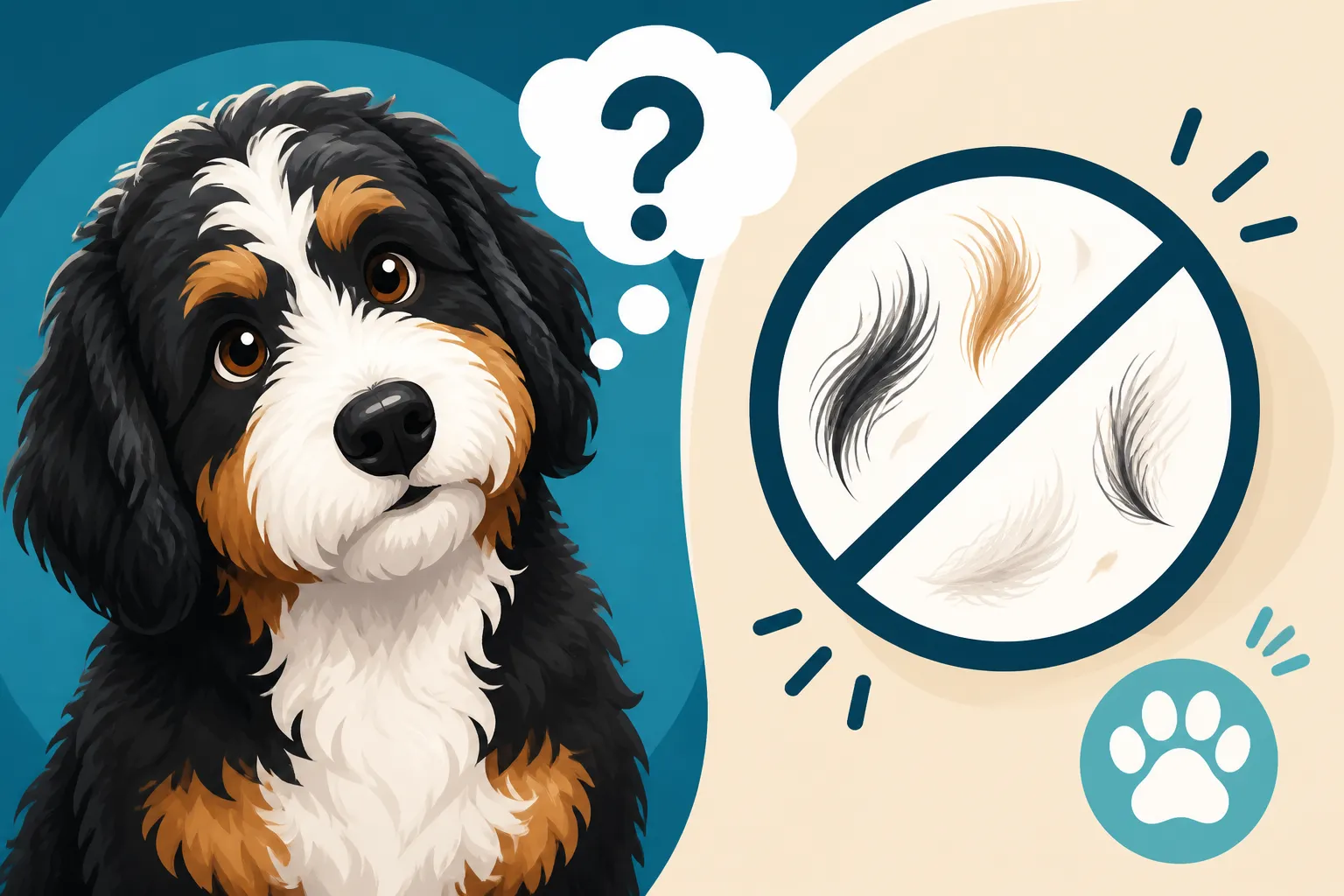
When people talk about Bernedoodles being "non-shedding," they're often envisioning a Poodle-like coat that simply doesn't leave tumbleweeds of hair floating through the house or clinging to every piece of furniture. It's an understandable desire, especially for those with allergies or simply a preference for less cleanup. However, it's important to understand the genetic blend that creates a Bernedoodle's coat, and why the term "non-shedding" is almost always a misnomer, even for the most Poodle-dominant Bernedoodle.
Understanding the Poodle's Influence on Shedding
Let's start with the Poodle, the parent breed often credited with the "non-shedding" trait. Poodles technically do shed, but their hair growth cycle is quite different from many other breeds. Instead of shedding their hair frequently, Poodles have a continuous hair growth cycle, much like human hair. When a Poodle's hair does fall out, it usually gets caught in the surrounding curly coat rather than falling onto your floor or clothes. This is why Poodles require such diligent and regular grooming; if that shed hair isn't brushed out, it quickly forms mats.
For allergy sufferers, this trapped hair is a huge benefit because it means less dander (tiny flakes of skin) is released into the environment. It's the dander, along with saliva and urine proteins, that usually triggers allergic reactions, not the hair itself. So, while a Poodle might be "hypoallergenic" for many people, it’s not because they don't shed at all, but because their shedding mechanism minimizes allergen dispersal. Many Bernedoodle hopefuls latch onto this Poodle characteristic, imagining a world where their big, fluffy companion leaves no trace behind.
The Bernese Mountain Dog's Contribution to the Coat
Now, let's look at the other side of the equation: the magnificent Bernese Mountain Dog. The Bernese is famous for its thick, luxurious double coat. This coat consists of a longer, slightly wavy or straight outer coat and a dense, woolly undercoat. This kind of coat is built for cold mountain climates, providing insulation and protection. And let me tell you, it sheds. A lot.
Bernese Mountain Dogs are known for their seasonal "coat blow," where they shed profusely as they transition between seasons. Even outside of these major shedding periods, they are consistent shedders, leaving their beautiful, fluffy hair wherever they go. That undercoat is constantly turning over, pushing out old hair to make way for new. If you've ever owned a Bernese, you know that vacuuming becomes a daily ritual, and lint rollers are your best friend. The thought of combining this heavy-shedding coat with a Poodle's low-shedding coat immediately signals that a truly "non-shedding" outcome is highly unlikely.
Hybrid Vigor and Coat Unpredictability
The magic (and sometimes the frustration!) of a hybrid breed like the Bernedoodle is in the genetic lottery. You're combining two distinct genetic blueprints, and the outcome isn't always a perfect 50/50 split or a guarantee of the "best" traits from each parent. This is where the concept of "hybrid vigor" comes in – the idea that a crossbreed can be healthier or more robust than its purebred parents. While this can be true for health traits, when it comes to coat, it often means unpredictability.
Breeders aim to create specific coat types by carefully selecting parents, often using different generations (F1, F1b, F2, etc.) to lean more heavily towards the Poodle's shedding characteristics. An F1 Bernedoodle (50% Bernese, 50% Poodle) can have a wide range of coats, from nearly straight and heavy shedding to wavy with moderate shedding, or even curly with minimal shedding. An F1b Bernedoodle, which is typically 75% Poodle and 25% Bernese (an F1 Bernedoodle bred back to a Poodle), is often touted as the "most non-shedding" because of the increased Poodle genetics. However, even with this genetic tilt, there's no 100% guarantee. Individual puppies within the same litter can have vastly different coats, making the search for a truly non-shedding Bernedoodle a bit of a gamble.
Decoding Bernedoodle Coat Types and Their Shedding Potential
When you're looking at Bernedoodle puppies, you'll hear a lot of terms thrown around about coat types. Understanding these terms is crucial to setting realistic expectations about shedding. No matter what a breeder tells you, or what you hope for, it’s about managing shed hair, not eliminating it entirely. Every dog with hair grows new hair and sheds old hair; it's just how that shedding manifests that differs.
Wavy Coats: The Most Common Blend
The wavy coat is perhaps the most iconic and sought-after Bernedoodle coat type, and for good reason! It’s what most people picture when they think of a Bernedoodle – that soft, flowing, often shaggy look that’s just begging to be snuggled. This coat is typically a delightful blend of both parent breeds, presenting a wavy texture that can range from loose waves to more defined curls.
While a wavy coat generally sheds less than a purebred Bernese, it absolutely still sheds. The shed hair, much like with a Poodle, tends to get caught within the waves rather than falling directly to the floor. This is a double-edged sword: less visible hair around the house, but a much higher propensity for matting if not groomed diligently. Owners often describe the shedding as manageable, not overwhelming, but they certainly aren't "non-shedding." Regular brushing is non-negotiable to prevent painful mats from forming. If you’re preparing for your new pup, learning about The Wavy Coat Most Bernedoodles Carry will give you a good head start on what to expect for grooming and texture.
Curly Coats: Closest to the Poodle, but Still Not a Guarantee
If your primary goal is minimal shedding, a curly-coated Bernedoodle is usually your best bet. This coat type most closely resembles the Poodle's tight curls and dense texture. On these dogs, any shed hair is almost completely trapped within the coat, making it less likely to spread around your home. For many people with mild dog allergies, a curly-coated Bernedoodle might be a good fit due to this reduced dander dispersal.
However, it's vital to reiterate: "minimal shedding" does not mean "no shedding." Even a tightly curled Bernedoodle still produces dander and releases some hair, just like a Poodle. The biggest challenge with a curly coat is the intense grooming required. Those tight curls are mat magnets! They demand consistent, thorough brushing right down to the skin, typically several times a week, and professional grooming every 6-8 weeks. Neglecting a curly coat can lead to severe matting that can be painful for your dog and expensive to rectify, often requiring a full shave-down. It’s a trade-off: less shedding into your environment, but more dedicated grooming time. Understanding The Curly Coat Bernedoodle and Its Upkeep is crucial if you are considering this type of coat.
Flat/Straight Coats: The Bernese Influence Reigns Supreme
The flat or straight coat is the Bernedoodle coat type that most resembles the Bernese Mountain Dog. This is the least common coat type if breeders are intentionally trying to create low-shedding dogs, but it can still appear, especially in F1 generations. These coats often have a noticeable undercoat, which is the primary source of heavy shedding.
If you end up with a flat-coated Bernedoodle, prepare for shedding similar to, or perhaps slightly less than, a purebred Bernese. You'll see hair on your floors, furniture, and clothes. While still beautiful and soft, this coat type typically offers no advantage for allergy sufferers compared to a Bernese Mountain Dog. Owners of straight-coated Bernedoodles need to invest in good vacuums, lint rollers, and be prepared for regular brushing, especially during seasonal coat blows, to manage the amount of loose hair. It’s the least "Doodle-like" in terms of shedding, and if you're truly hoping for a low-shedding dog, this coat will present a significant challenge. You can learn more about this specific coat type in The Straight Coated Bernedoodle That Sheds.
| Coat Type | Shedding Level | Grooming Needs | Allergy Friendliness (Potential) | Common Occurrence |
|---|---|---|---|---|
| Wavy | Moderate to Low | High (daily/every other day brushing) | Moderate (less dander dispersal) | Most Common |
| Curly | Minimal | Very High (daily brushing, frequent professional trims) | Higher (least dander dispersal) | Less Common |
| Flat/Straight | Moderate to High | Moderate (frequent brushing, seasonal increase) | Lowest (more dander dispersal) | Least Common |
Managing Shedding (Because It Will Happen!)
Alright, so we've established that a truly "non-shedding" Bernedoodle is a bit of a unicorn. But that doesn't mean you're doomed to a life surrounded by dog hair! Managing shedding is all about proactive care, the right tools, and a consistent routine. Think of it less as a chore and more as an essential part of bonding with your Bernedoodle.
Regular Brushing and Grooming: Your Best Defense
This is, hands down, the most important thing you can do to manage shedding and prevent matting in any Bernedoodle. Remember, even if the hair isn't falling out onto your floor, it's still coming out and getting tangled in your dog's coat.
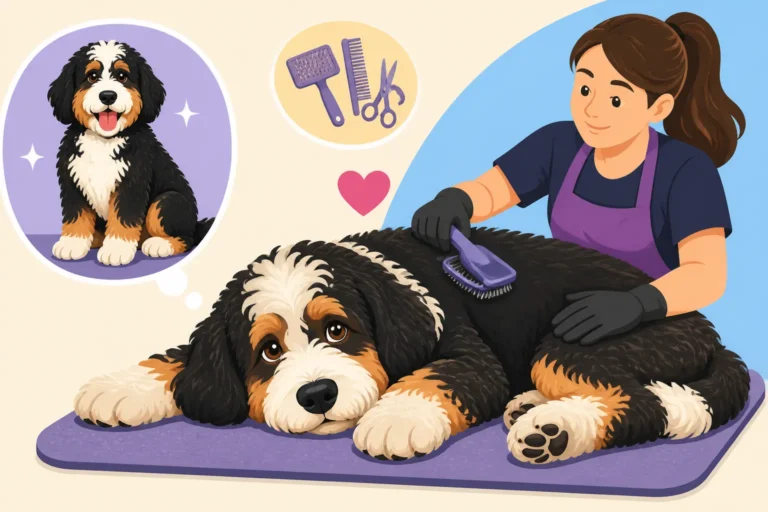
For wavy and curly coats, you’ll want a good quality slicker brush and a sturdy metal comb. The slicker brush helps remove loose hair and detangle the outer coat, while the metal comb is crucial for getting down to the skin and ensuring there are no hidden mats, especially in "hot spots" like armpits, behind the ears, and in the britches. For flat-coated Bernedoodles, you might also find an undercoat rake beneficial, as it can effectively pull out that dense, shedding underlayer. Investing in the right tools makes a huge difference, so make sure you read up on The Brushes a Bernedoodle Owner Actually Needs.
How often should you brush? For wavy and curly coats, aim for daily brushing if possible, or at least every other day. This is particularly critical during the "coat change" phase when your puppy's softer fluff gives way to their denser adult coat, which can be a matting nightmare. For flat coats, a few times a week might suffice for general maintenance, with daily brushing during heavy shedding seasons. It sounds like a lot, but a few minutes each day prevents hours of dematting later on. If you're wondering how much time this actually takes, check out The Volume of Coat a Bernedoodle Owner Brushes Weekly.
Bathing and Drying Techniques
Regular baths are another excellent way to help manage shedding. A good bath helps loosen and wash away dead hair, especially when followed by thorough drying and brushing. However, bathing a Bernedoodle isn't just a quick rinse! Their dense coats can hold a lot of water and take a long time to dry, making them prone to mildew and skin issues if not done properly.
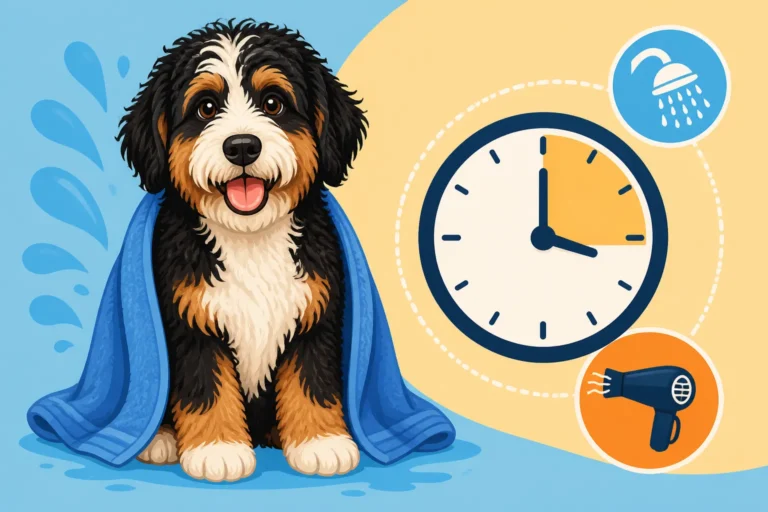
After shampooing and conditioning (using products suitable for dogs, of course!), use a high-velocity force dryer. This isn't just for speed; the powerful air blast helps to separate the coat down to the skin, blowing out loose hair and ensuring every layer is dry. Air drying or towel drying alone simply won't cut it for most Bernedoodle coats, and attempting to brush a damp coat can actually make matting worse. If you're tackling bathing at home, learn the ropes from Bathing and Drying a Ninety Pound Bernedoodle to avoid common pitfalls. Even if you use a professional groomer, regular baths at home between appointments can keep shedding at bay. You can find excellent quality shampoos and conditioners at retailers like Chewy or look for highly-rated force dryers on Amazon.
Nutritional Support for a Healthy Coat
While diet won't magically stop a Bernedoodle from shedding, a high-quality diet plays a significant role in overall coat health. A healthy coat is less likely to be dry, brittle, and prone to excessive breakage. Look for dog foods that list real meat as the first ingredient and contain essential fatty acids.
Omega-3 and Omega-6 fatty acids are particularly beneficial for skin and coat health. Many premium dog foods include these, but you can also supplement with fish oil if recommended by your vet. A lustrous, well-nourished coat will be stronger and shed more naturally, meaning less unhealthy shedding. Brands like Ollie often emphasize fresh, high-quality ingredients that can contribute to a healthier coat. If you’re curious about how these supplements can help your dog's luscious locks, take a look at Whether Omega Oils Help a Bernedoodle's Coat Density. Always discuss any dietary changes or supplements with your veterinarian to ensure they are appropriate for your specific dog.
The Allergy Factor: Beyond Just Shedding
It’s easy to conflate "non-shedding" with "hypoallergenic," especially when you’re desperate to find a dog that won’t trigger sniffles and sneezes. Unfortunately, the reality is a bit more complex, and it’s important to understand the true culprits behind pet allergies if you’re considering a Bernedoodle for this reason.
Dander, Not Just Hair, Triggers Allergies
This is a critical point that many prospective Bernedoodle owners misunderstand. The primary allergens for most people aren't the dog hairs themselves, but rather microscopic proteins found in a dog's dander (dead skin flakes), saliva, and urine. When a dog sheds hair, it releases these tiny particles into the air and around your home, triggering allergic reactions.
Poodles and "low-shedding" Bernedoodles are often called "hypoallergenic" because their hair growth cycle and coat texture tend to trap shed hair and dander, preventing it from becoming airborne as readily. However, every dog produces dander, saliva, and urine. Therefore, no dog is truly 100% hypoallergenic. A Bernedoodle, even one with a super curly coat, will still produce these allergens. For someone with severe allergies, even the minimal shedding of a curly-coated Bernedoodle might be enough to cause a reaction. It's a spectrum, not an on/off switch. If you're specifically hoping for an allergy-friendly dog, it’s worth reading Whether a Bernedoodle Is Hypoallergenic to get a full picture.
Testing and Managing Expectations
Given the unpredictable nature of Bernedoodle coats, relying solely on a breeder's claim of "non-shedding" isn't enough, especially if allergies are a serious concern. Some breeders now offer DNA testing for coat traits, specifically looking for the "shedding gene." A dog with two copies of the non-shedding gene (Furnishings FF or Ff) is more likely to have a coat that sheds minimally and is allergy-friendly. However, even these tests aren't a guarantee because shedding is a complex trait influenced by multiple genes. A low-shedding dog can still carry allergens in their saliva and dander. If your breeder references these types of tests, it's helpful to understand Whether a Coat Test Tells You If a Bernedoodle Will Shed.
The best approach for families with allergies is to spend time with the specific puppy you are considering, if possible. Visit the breeder's home and interact with the puppies and their parents. See if any allergic reactions occur. Remember that puppy coats can be softer and less dense than adult coats, so a reaction might not be immediate or as severe as it could be later. It's about managing expectations and understanding that while a Bernedoodle might reduce allergen exposure, it won't necessarily eliminate it completely. Be realistic and prioritize your family's health and comfort above all else.
Disclaimer
This article is for general informational purposes only and does not constitute professional advice. Laws, prices and regulations vary by location and change over time. Consult a qualified professional for guidance on your specific situation.