Whether a Bernedoodle’s Coat Gets Thicker With Age
Oh, the sheer joy of a Bernedoodle puppy, with that soft, wispy coat that feels like a cloud! Many of us, myself included, fall in love with that adorable fluff, imagining years of easy-breezy brushing. But then, almost overnight, that innocent puppy coat gives way to something far denser, far more demanding. If you're wondering if your Bernedoodle's coat is actually getting thicker with age, and secretly fearing it's not just your imagination, you're absolutely right – it very much does, and this guide is here to walk you through what to expect and how to handle it.
The Journey from Puppy Fluff to Adult Coat
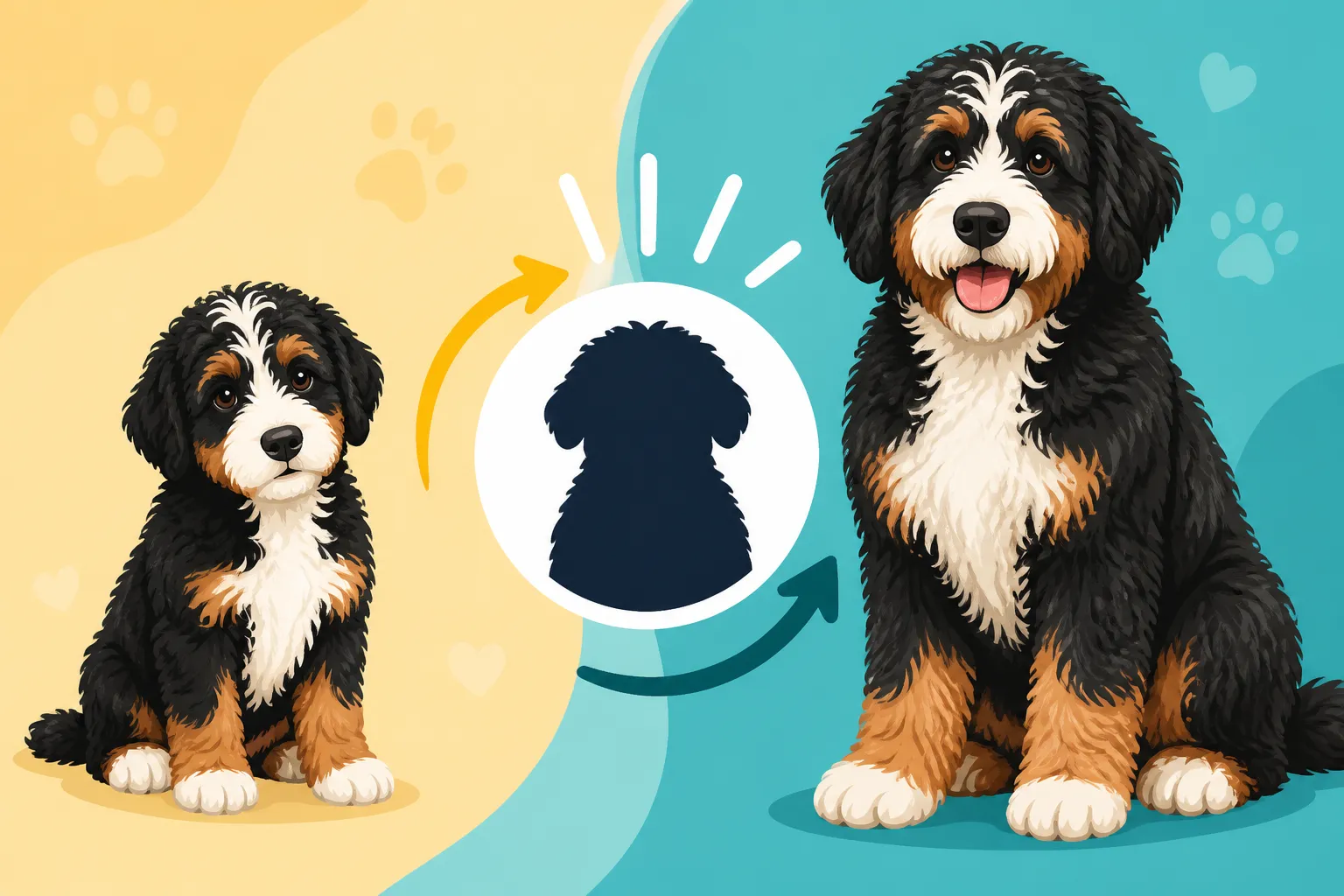
It's a common story: you bring home your Bernedoodle puppy, and their coat is like spun silk, almost effortless to care for. You might brush them occasionally, but mats are rare, and the overall volume feels manageable. This idyllic phase, however, is merely the calm before the fluffy storm, as your puppy transitions into their adult coat, which inevitably brings a significant increase in thickness and density.
The Initial Softness of a Bernedoodle Puppy
When your Bernedoodle is just a tiny tot, typically under six months, their coat is usually quite fine and soft. It’s what we lovingly call "puppy fluff." This coat is generally easy to comb through, doesn't tend to mat aggressively, and might shed very minimally, if at all. It’s light, airy, and gives little indication of the grooming commitment that lies ahead. New owners often experience a false sense of security during this period, thinking that their dog will always be this easy to maintain. They might buy a simple brush and get by with a quick run-through a few times a week. This stage is lovely, but it’s a temporary one that truly sets you up for surprise when the change begins. The texture is usually less coarse than what will come, making it feel less voluminous to the touch even if it already has a good amount of hair.
The Inevitable Coat Change Phase
Prepare yourself, because between roughly 6 to 18 months, your Bernedoodle will undergo what's often referred to as a "coat blow" or "changing of the coat." This is the period where that lovely puppy fluff starts to shed out, and the denser, often curlier or wavier adult coat begins to grow in. The challenge isn't usually shedding in the traditional sense, where hair falls off and collects on your furniture. Instead, the puppy hair gets caught and tangled within the emerging adult coat. This creates a dense, felted layer right against your dog's skin, leading to rapid and severe matting.
It's a frustrating time for many owners who suddenly find their once-manageable dog is a matting machine. You might brush them one day, only to find new mats forming seemingly overnight. This phase is notorious for being the most challenging grooming period in a Bernedoodle's life, demanding daily, thorough brushing to prevent discomfort and costly professional dematting. It's during this time that you really start to feel the true thickness of their maturing coat, as it gains volume and substance. This transformation means the overall density increases, making it feel much heavier and requiring significantly more effort to maintain. You'll quickly understand The Month a Bernedoodle Puppy Starts Matting Daily and why consistency is key.
Unpacking the Bernedoodle's Double-Breed Coat
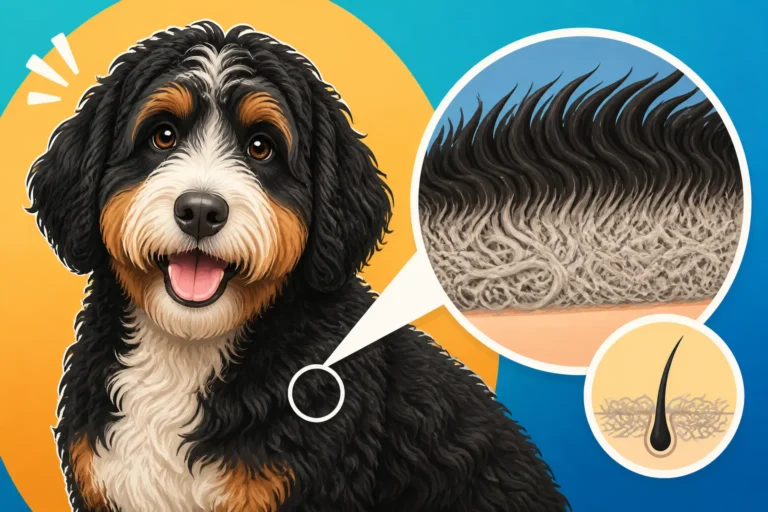
To truly understand why your Bernedoodle's coat thickens so much, we need to look at the genetic tapestry woven from its two parent breeds: the Bernese Mountain Dog and the Poodle. Each contributes unique coat characteristics that, when combined, create the Bernedoodle's signature dense and often challenging fur.
The Bernese Mountain Dog's Influence
The Bernese Mountain Dog comes equipped with a glorious, thick double coat. This isn't just fluffy; it's designed for warmth and protection in the cold, harsh Swiss Alps. They have a softer, dense undercoat that provides insulation, and a longer, somewhat coarser outer coat that repels water and snow. When you run your fingers through a Bernese's coat, you feel its sheer volume and insulating quality.
Even if your Bernedoodle inherits the Poodle's non-shedding trait, it can still inherit the Bernese's density and volume. This means that while the hair might not fall out all over your house, the individual strands are numerous and packed closely together, giving the impression and reality of a much thicker coat. This density is a key factor in why Bernedoodles often struggle with heat and require extensive grooming. It's this Bernese influence that makes owners question Whether the Bernese Half Ruins the Allergy Claim for those hoping for a truly hypoallergenic dog. The very purpose of that Bernese coat was to keep them warm, and that genetic predisposition for density often carries through.
The Poodle's Curly, Non-Shedding Contribution
On the other side of the genetic coin, we have the Poodle. Poodles have a single coat (no undercoat in the traditional sense, though it's incredibly dense) that is typically curly, coarse, and grows continuously without shedding much. This curly texture is what makes Poodles famously low-shedding and often more tolerable for people with allergies.
When Poodle genetics meet Bernese genetics, you get a fascinating blend. The Poodle's influence often dictates the curl or wave and the low-shedding characteristic. However, when you combine the sheer density potential from the Bernese with the continuously growing, curl-retaining hair of the Poodle, you end up with a coat that can become incredibly thick, felted, and prone to matting if not meticulously maintained. It's not just thick because there's more hair; it's thick because that hair is dense, curly, and doesn't release easily, trapping itself and creating a challenging textile against the skin.
Genetic Variability in Coat Type
It's important to remember that not all Bernedoodle coats are created equal. Depending on the generation (F1, F1b, Multigen) and the specific parentage, a Bernedoodle can exhibit a range of coat types:
- Wavy (Fleece Coat): This is often considered the "ideal" Bernedoodle coat. It's soft, wavy, and typically low-shedding. However, even a wavy coat can be incredibly dense and prone to matting, especially during the coat change and if not brushed thoroughly down to the skin. The Wavy Coat Most Bernedoodles Carry
- Curly (Wool Coat): More closely resembling a Poodle's coat, this type is very curly, dense, and virtually non-shedding. While excellent for allergy sufferers, these coats require the most intensive grooming to prevent tight, painful mats that can quickly form, making them feel extremely thick.
- Straight (Hair Coat): Less common, this coat type more closely resembles the Bernese. It tends to shed more and may not have the characteristic Poodle curl. While it might feel less "thick" due to less curl, it can still have significant Bernese-derived density.
Regardless of the specific texture, the general trend for most Bernedoodles is for the coat to become thicker and denser as they mature and their adult coat fully establishes itself. Some might even appear to have an undercoat if they pull more heavily from their Bernese lineage, exacerbating the thickness. This is why it’s useful to understand Whether a Bernedoodle Inherits the Bernese Undercoat and what that means for daily care.
Managing the Magnificent (and Mighty) Thick Coat
So, your Bernedoodle's coat is getting thicker? Welcome to the club! This isn't a problem to be fixed, but a characteristic to be managed. Proper grooming is not just about aesthetics; it's crucial for your dog's comfort, health, and well-being. Neglecting a thickening Bernedoodle coat can lead to painful mats, skin infections, and expensive trips to the groomer for a complete shave-down.
The Right Tools for the Job
Investing in the correct grooming tools is non-negotiable for a Bernedoodle with a thickening coat. Skimping here will only lead to frustration and a matted dog.
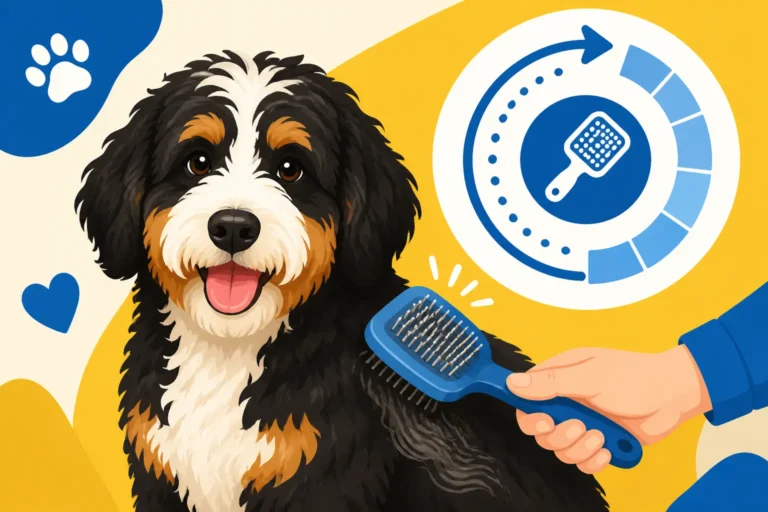
- Slicker Brush: This is your primary weapon against mats. Look for one with fine, angled pins that can penetrate deep into the coat without scratching the skin. You'll use this for general brushing and mat prevention. You can find excellent options on Amazon with thousands of reviews to guide you.
- Metal Comb: A sturdy, wide-toothed metal comb is essential for checking your work after brushing with the slicker. It helps you identify any remaining tangles or mats that the slicker might have missed, especially close to the skin. A good comb will glide through a properly brushed coat.
- Undercoat Rake (or Dematting Rake): While Bernedoodles don't have a true undercoat like a Bernese (unless they pull very heavily from that side), some coats develop a dense, woolly layer that benefits from a rake. These tools are designed to break up tangles and remove dead hair from deep within the coat. Just be gentle, as they can pull if used incorrectly. Knowing The Slicker and Rake a Bernedoodle Needs is vital before you even bring your puppy home.
- Force Dryer: While not a "brush," a high-velocity dog dryer is a game-changer for drying after baths and can actually help prevent mats by blowing out loose hair and separating strands. It drastically reduces drying time and helps achieve that fluff-dried look. Many pet supply sites like Chewy offer a range of these helpful tools.
A Consistent Grooming Schedule is Non-Negotiable
With a thick Bernedoodle coat, consistency isn't just recommended; it's absolutely vital.
- Daily Brushing: Especially during the coat change phase, and for dogs with very curly or dense coats, daily brushing is often necessary. This isn't a quick once-over. It requires thorough "line brushing," where you systematically part the coat and brush in small sections, from the skin out, making sure no tangles remain. How Often a Bernedoodle Should Be Brushed isn't a suggestion, it's a routine.
- Professional Grooming: Most Bernedoodles require professional grooming every 6-8 weeks, sometimes even more frequently for very dense or fast-growing coats. A professional groomer has the tools and expertise to properly bathe, dry, and clip your dog, keeping their coat in top condition. They can also tackle those tricky areas like armpits, behind the ears, and sanitary regions where mats love to hide. It's smart to start getting your puppy used to grooming early on. The Age to Book a Bernedoodle's First Groom can prepare them for a lifetime of comfortable grooming sessions.
- Bathing and Drying: When you do bathe your Bernedoodle at home, ensure you use a good quality shampoo and conditioner. The most critical step, however, is thorough drying. Letting a thick coat air-dry is a recipe for matting. Use towels to get as much water out as possible, then finish with a force dryer or a regular hairdryer on a cool setting, brushing as you go. This helps separate the hair strands and prevent them from clumping as they dry. Learn how to manage Bathing and Drying a Ninety Pound Bernedoodle effectively to prevent problems.
Nutrition and Coat Health
While diet won't thin a naturally thick Bernedoodle coat, it plays a crucial role in its overall health, luster, and manageability. A well-nourished coat is typically stronger, less prone to breakage, and can sometimes be easier to brush.
- High-Quality Diet: Feed a premium dog food appropriate for your Bernedoodle's life stage and size. Look for ingredients that support skin and coat health. A balanced diet provides the building blocks for healthy hair growth. Some owners even explore fresh dog food options like Ollie, which prioritizes whole, nutritious ingredients that can contribute to a healthier skin barrier and a more resilient coat.
- Omega Fatty Acids: Supplements containing Omega-3 and Omega-6 fatty acids (like fish oil) can work wonders for coat quality. They promote a healthy, shiny coat and can reduce dryness and irritation that might contribute to tangles. Talk to your vet about adding these to your dog's diet. It's not about making the coat less thick, but making it healthier and easier to manage. You might find benefits in researching Whether Omega Oils Help a Bernedoodle's Coat Density and how they contribute to skin and hair vitality.
Seasonal Changes and Coat Density
The environment your Bernedoodle lives in, particularly the climate and season, can also subtly influence the feel and perceived thickness of their coat. These changes are a natural response to temperature fluctuations and require corresponding adjustments in your grooming routine.
Winter's Embrace and Summer's Heat
Just like their Bernese ancestors, Bernedoodles are equipped to handle colder temperatures, and their coat can respond to seasonal cues. In winter, especially in cold climates, you might notice your Bernedoodle's coat feeling even denser, as their body naturally thickens its insulation for warmth. This is a survival mechanism, and it adds to the overall volume of hair you're dealing with. They are, after all, bred from a mountain dog.
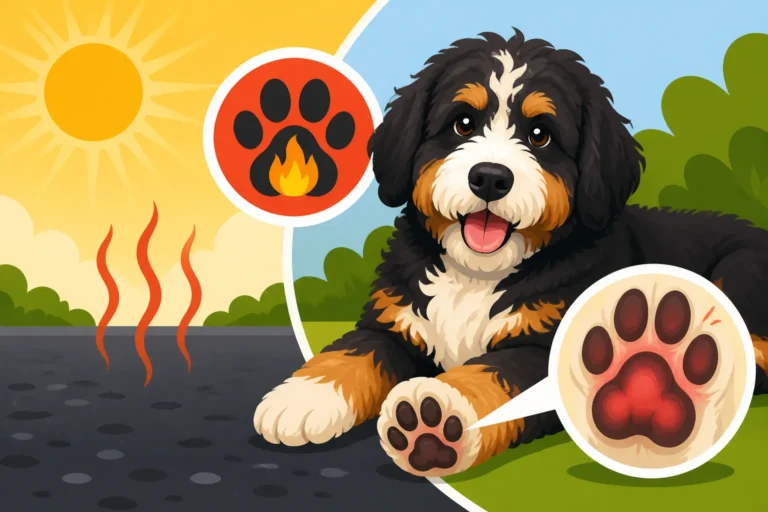
Conversely, the thickness of their coat becomes a challenge in summer. While the coat itself might not thin out significantly, the density can lead to overheating. Their thick, insulating layer traps heat, making them susceptible to heatstroke if not managed carefully. This often leads owners to consider shaving or significant trimming to help their dog stay comfortable. The debate around The Summer Shave Argument on a Bernedoodle is a real one, and it's driven by the practical needs of a thick-coated dog in warmer weather. It's critical to be vigilant for Signs a Bernedoodle Is Overheating during the warmer months, regardless of how you manage their coat length.
When to Consider a Shorter Clip
For many Bernedoodle owners, especially those in warmer climates or with very active dogs, a shorter haircut (often called a "summer cut" or "kennel clip") is not just a stylistic choice but a necessity. This doesn't mean shaving them completely bald, which can lead to sunburn if not careful, and in some cases, can temporarily change coat texture. Instead, it involves clipping the coat down to a uniform, shorter length (e.g., 1-2 inches) that is much easier to maintain, reduces matting potential, and helps your dog stay cooler.
A shorter clip dramatically reduces the manageable volume of the coat, making daily care simpler and allowing for better air circulation against the skin. While the hair follicles will still produce hair at the same density, the reduced length makes it feel less overwhelming and helps prevent the rapid matting associated with a longer, thicker coat. Before making this decision, it’s worth considering Whether a Shaved Bernedoodle Sunburns and how to protect their skin from UV exposure if you do opt for a very short style. Ultimately, managing your Bernedoodle's coat as it thickens with age is a commitment, but one that ensures your furry friend remains happy, healthy, and comfortable year-round.
Disclaimer
This article is for general informational purposes only and does not constitute professional advice. Laws, prices and regulations vary by location and change over time. Consult a qualified professional for guidance on your specific situation.