Whether Swimming Suits a Bernedoodle’s Joints
Many Bernedoodle owners grapple with the delicate balance of providing enough exercise for their energetic companions while also protecting their famously sensitive joints. It's a real worry, especially when you know the breed's predispositions to hip and elbow issues. You want your fluffy friend to have a blast, but not at the cost of future pain or expensive veterinary visits. This comprehensive guide will dive deep into whether swimming is a suitable and beneficial exercise for your Bernedoodle's joints, offering practical advice on how to make it a safe and enjoyable activity.
The Unique Joint Challenges of a Bernedoodle
Bernedoodles, being a crossbreed of Bernese Mountain Dogs and Poodles, inherit a fascinating mix of traits, but unfortunately, they can also inherit a predisposition to certain joint issues from both parent breeds. This isn't just a minor concern; for many owners, it's a primary worry and a significant factor in how they manage their dog's exercise and overall care. Understanding these challenges is the first step to mitigating them.
Inherited Predispositions from Both Sides
Let's be realistic: the Bernese Mountain Dog side brings a known legacy of orthopedic challenges. Hip and Elbow Dysplasia are incredibly common in Bernese, often presenting as debilitating conditions that can lead to chronic pain and reduced mobility. Hips on a Ninety Pound Bernedoodle and Elbow Dysplasia in a Growing Bernedoodle are not just abstract concepts; they are real, painful realities for many dogs and their owners. These conditions are genetic, meaning they are passed down from parents to offspring. Even with careful breeding, the risk is never entirely eliminated in a first-generation cross.
On the Poodle side, while generally considered a healthier breed, they aren't entirely immune to joint problems. Standard Poodles can also suffer from hip dysplasia, although typically less severely than Bernese. Mini and Toy Poodles are more prone to conditions like Luxating Patella, where the kneecap slips out of place. While a Bernedoodle might inherit the vigor of a hybrid, it doesn't mean they escape the genetic lottery entirely. The idea that hybrid vigor automatically eliminates all health concerns is a common misconception; good breeding practices and careful parent selection remain paramount.
Growth Plates and Early Development
A Bernedoodle puppy grows at an astonishing rate, especially a standard-sized one that will eventually reach ninety pounds or more. This rapid growth period, typically up to 12-18 months of age, is when their growth plates are still open and incredibly vulnerable. These soft areas at the ends of long bones are crucial for bone lengthening and solidify into bone as the dog matures. High-impact activities during this critical time can cause irreparable damage. Imagine a tiny crack in a foundation that, over time, leads to a significant structural issue – that's what can happen with repetitive stress on immature joints.
This is why traditional land-based exercises, particularly those involving a lot of jumping, sharp turns, or running on hard surfaces, can be quite risky for a growing Bernedoodle. Activities like intense fetch sessions, agility training with high jumps, or long runs on pavement can place excessive strain on those delicate growth plates and developing joints. Even too much uncontrolled play with other large, boisterous puppies can be a concern. The goal during puppyhood is to foster healthy, controlled movement without the jarring impact that can contribute to future orthopedic problems. This is where the wisdom of adhering to guidelines like The Five Minute Rule on a Bernedoodle Puppy's Walks becomes invaluable, ensuring their young bodies aren't overtaxed.
Why Swimming is a Joint-Friendly Exercise
Given the inherent joint challenges in Bernedoodles, finding an exercise that provides mental stimulation and physical conditioning without undue stress on their developing or aging joints is a holy grail for many owners. Enter swimming, often lauded as one of the best forms of exercise for dogs, particularly those with orthopedic concerns. It offers a unique combination of benefits that few other activities can match.
Buoyancy as a Joint Protector
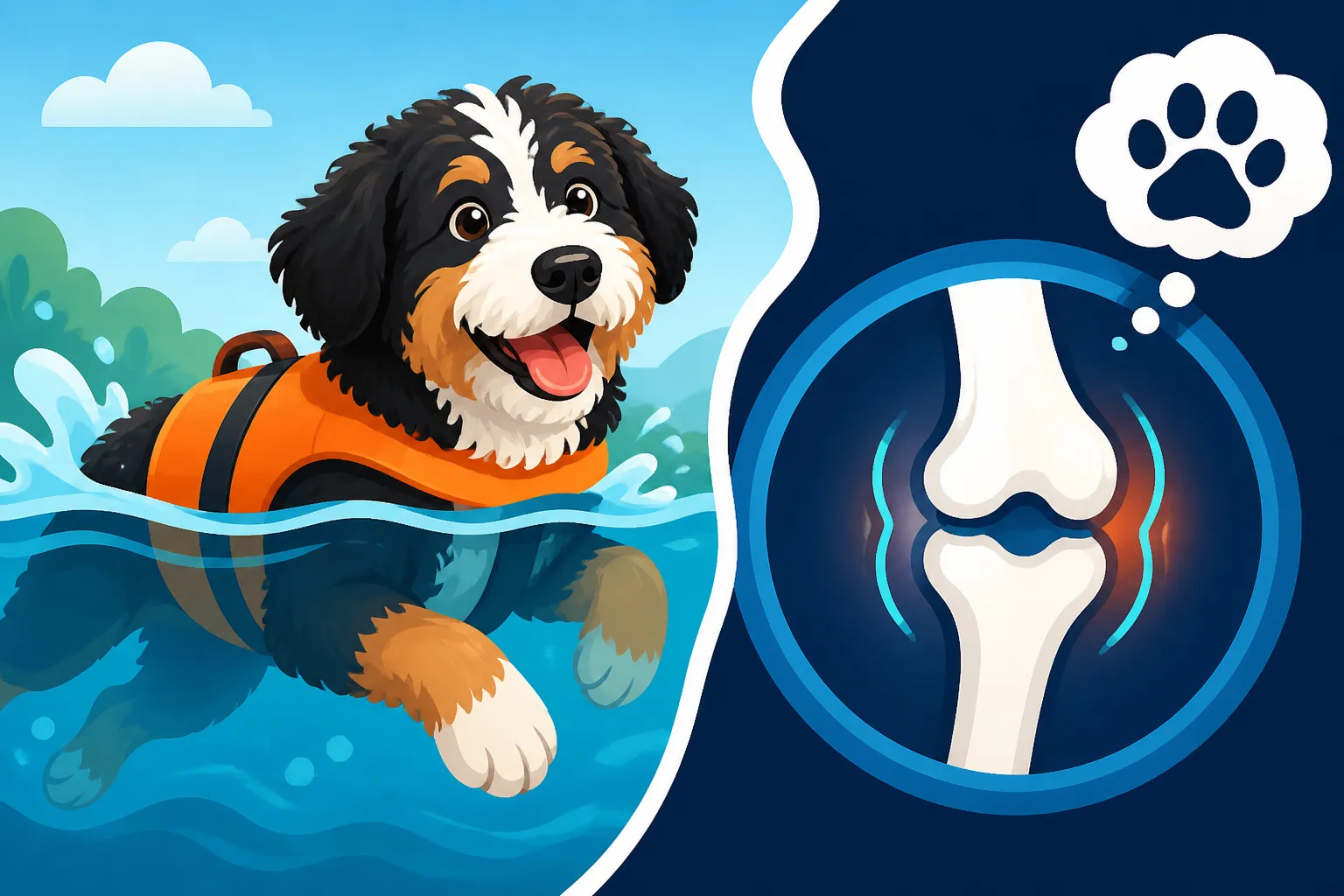
The most significant advantage of swimming lies in the principle of buoyancy. When your Bernedoodle is in the water, the water supports a large portion of their body weight. This dramatically reduces the impact and stress on their joints, spine, and ligaments. Think about how you feel lighter in a swimming pool; it's the same for your dog. A Bernedoodle, which can easily weigh upwards of 70 to 90 pounds, experiences a significant decrease in the gravitational forces acting on their hips, elbows, and knees while swimming.
This makes it an incredibly safe alternative to high-impact activities like running or jumping on hard ground. Instead of pounding pavement, which sends shockwaves up their legs, swimming allows for fluid, non-weight-bearing movement. For dogs that are predisposed to conditions like hip or elbow dysplasia, or for those already showing early signs of arthritis, this reduction in impact is nothing short of revolutionary. It allows them to use their muscles and move their joints through a full range of motion without the painful grinding or jarring that often accompanies land-based exercise. This is a crucial strategy in Keeping a Ninety Pound Bernedoodle Off Its Joints as they mature.
Building Muscle Without Strain
Beyond just being gentle on the joints, swimming is also a fantastic way to build and maintain muscle mass. The resistance of the water provides a full-body workout that engages muscles throughout your Bernedoodle's body – legs, core, shoulders, and back. Unlike land exercises where some muscle groups might be favored over others, swimming encourages a more balanced development of musculature.
Strong muscles act as natural shock absorbers and stabilizers for the joints. For instance, robust hind leg muscles can better support the hips, while strong shoulder and core muscles can help stabilize the spine and elbows. This means that consistent swimming can actually improve joint health by providing better support and reducing overall strain. It's particularly beneficial for rehabilitation after an injury or surgery, allowing dogs to regain strength without risking re-injury. For an older Bernedoodle managing Arthritis in a Bernedoodle at Eight, building lean muscle mass through swimming can significantly improve their comfort and mobility, delaying the progression of joint degeneration.
Introducing Your Bernedoodle to Water Safely
While swimming offers incredible benefits, it's not something you should just throw your Bernedoodle into, especially if they're new to the water. Some dogs take to it like a fish, while others need a gentle, patient introduction. Safety and positive experiences are paramount to ensuring your Bernedoodle becomes a confident and enthusiastic swimmer.
Starting Slow and Making it Positive
The first rule of introducing your Bernedoodle to water is: never force it. A negative first experience can create a lifelong aversion to water, defeating the purpose of offering this wonderful exercise. Instead, aim to make it a fun, low-pressure adventure. Start with shallow water, perhaps a kiddie pool in your backyard, or a calm, gently sloping lake or river bank. Let your Bernedoodle wade in at their own pace, exploring the edges. Toss a favorite floating toy just a few feet away to encourage them.
Heap on the praise and offer high-value treats every time they show curiosity or take a step into the water. This positive reinforcement creates a strong association between water and good things. You might even consider getting in the water with them if you're comfortable, sitting down in the shallow end and letting them come to you. This provides reassurance and can make them feel safer. Remember, some Bernedoodles, particularly those with a strong Bernese influence, might be a bit more reserved or cautious, so patience is key. It's about building confidence, not conquering fear.
Safety Gear and Supervision
Even if your Bernedoodle seems to be a natural swimmer, a life vest is an absolute must-have, especially during their initial introductions and whenever you're in open water or areas with currents. Bernedoodles often have deep chests, which can make swimming tiring and challenging for them over longer periods. A good quality life vest provides extra buoyancy, keeping their head above water and reducing fatigue, allowing them to focus on the joy of swimming rather than struggling to stay afloat. Brands like Outward Hound or Ruffwear offer excellent, durable options that you can often find on Chewy or Amazon. Make sure it fits snugly but comfortably, without impeding movement.
Choosing a safe swimming location is equally important. Look for calm bodies of water, free from strong currents, heavy boat traffic, or sharp objects. Public dog beaches or designated swim areas are often a good bet. Always check for signs of harmful algae blooms, especially in warmer weather, which can be highly toxic. After swimming, make sure your Bernedoodle has access to fresh drinking water to prevent them from ingesting lake or ocean water, which can cause stomach upset. And, of course, constant, vigilant supervision is non-negotiable. Even strong swimmers can get into trouble, and you need to be ready to intervene immediately.
Tailoring Swimming for Different Bernedoodle Needs
Swimming isn't a one-size-fits-all activity. The way you approach it will likely change depending on your Bernedoodle's age, physical condition, and specific joint needs. What's perfect for a puppy might not be ideal for a senior, and vice-versa.
Swimming for Puppies and Growing Dogs
For Bernedoodle puppies and adolescents, swimming is arguably one of the best forms of exercise you can offer. During their critical growth phase, when their growth plates are still open, high-impact activities like excessive running, jumping, or intense play can put undue stress on their developing joints. This is a common concern when considering The Exercise a Bernedoodle Puppy Should Not Do. Swimming, however, allows them to build muscle, develop coordination, and burn off energy without the jarring impact.
Consider a professional canine hydrotherapy center or a private pool for controlled environments where you can carefully supervise short, positive sessions. These facilities often have ramps or shallow entries, making it easier for puppies to get in and out safely. The focus should be on short bursts of activity, perhaps 5-10 minutes, followed by plenty of rest. The goal is gentle conditioning, not endurance training. This sets them up for a lifetime of healthy joint function, helping to prevent issues like Elbow Dysplasia in a Growing Bernedoodle from manifesting as severely as they might otherwise.
Swimming for Adult and Senior Bernedoodles
For adult Bernedoodles, swimming is fantastic for maintaining overall fitness, weight management, and cardiovascular health. It provides a vigorous workout that can help keep them lean and strong, which is crucial for supporting their joints throughout their lives. Regular swimming can contribute significantly to their daily activity requirements, forming a key part of What a Bernedoodle Needs Every Day.
As Bernedoodles age, joint problems like arthritis often become more prevalent. For senior Bernedoodles, swimming transitions from a general fitness tool to a powerful therapeutic exercise. It allows them to move their stiff joints through a full range of motion without bearing their full body weight, reducing pain and increasing flexibility. It's an excellent way to keep an older dog active and engaged, even when land-based walks become too difficult. Many veterinarians recommend hydrotherapy for Managing Arthritis in an Old Bernedoodle, as it can significantly improve their quality of life. The warm water in dedicated hydrotherapy pools can also provide additional comfort and relaxation to aching muscles and joints.
Addressing Specific Joint Concerns
If your Bernedoodle has been diagnosed with specific orthopedic issues, such as hip or elbow dysplasia, or is recovering from surgery like a cruciate repair, swimming, particularly hydrotherapy, can be a vital part of their treatment plan. Under the guidance of a veterinary professional, controlled swimming sessions can help strengthen the supporting muscles around compromised joints. This controlled environment ensures that the dog moves correctly, building strength without exacerbating the injury.
For example, dogs with Hips on a Ninety Pound Bernedoodle can benefit immensely from strengthening their hindquarters through swimming, which helps stabilize the hip joint. It allows them to use their leg muscles in a way that’s impossible on land when gravity and pain are working against them. Post-surgical rehabilitation often includes hydrotherapy as a way to safely begin weight-bearing exercise and restore range of motion before transitioning to more traditional physical therapy. Always consult with your veterinarian before starting any new exercise regimen, especially if your Bernedoodle has existing health issues.
Potential Downsides and Considerations
While swimming is largely beneficial, it's essential to be aware of potential downsides and take precautions to ensure your Bernedoodle's safety and well-being. A thick-coated, drop-eared dog like a Bernedoodle has some unique considerations when it comes to water activities.
Water-Related Health Issues
One of the most common issues for Bernedoodles who love to swim is ear infections. Their adorable, floppy drop ears create a warm, moist environment perfect for bacteria and yeast to thrive, especially after a swim. This is why Ear Infections in a Bernedoodle's Drop Ear are such a frequent complaint among owners. To prevent this, thoroughly clean and dry your Bernedoodle's ears immediately after every swim. You can use a cotton ball or a soft cloth to gently absorb moisture from the outer ear canal, and some vets recommend a specific ear-drying solution.
Another concern is skin irritation from prolonged dampness, especially under their dense coat. If not dried properly, a Bernedoodle's thick fur can trap moisture close to the skin, leading to "hot spots," bacterial skin infections, or yeast overgrowth. This contributes to Skin Problems Under a Bernedoodle's Heavy Coat. Always ensure you rinse your Bernedoodle thoroughly with clean water after swimming, especially after swimming in chlorinated pools or saltwater, to remove any irritants.
Finally, be cautious about the quality of the water your Bernedoodle swims in. Stagnant ponds, lakes with visible algae, or areas with agricultural runoff can harbor harmful bacteria, parasites, or toxic blue-green algae, which can be life-threatening if ingested. Always choose clear, moving water, and if in doubt, keep them out.
Overexertion and Exhaustion
Even though swimming is low-impact, it's still a strenuous workout. Bernedoodles, particularly when they are having fun, might not know their own limits and can easily overexert themselves. It’s crucial to watch for signs of fatigue, such as excessive panting, lagging behind, or struggling to keep their head above water.
Always start with short sessions and gradually increase the duration as their stamina improves. Provide frequent breaks for them to rest on dry land and always have fresh, clean water available for them to drink. Dehydration can be a risk, even while they are surrounded by water, if they are not drinking enough. Don't push them too hard, especially if they are new to swimming or if the water is cold. An exhausted dog in the water is a dangerous situation.
Grooming After Swimming
A Bernedoodle's beautiful coat, while a major selling point, also requires significant attention after swimming. Thorough rinsing with clean, fresh water is essential to remove chlorine, salt, sand, or any other debris that can irritate their skin or mat their fur. After rinsing, the most critical step is thorough drying. A Bernedoodle's coat, especially if it's wavy or curly, can take an incredibly long time to dry completely, even on a warm day.
You'll need a high-velocity force dryer (like those found on Amazon) to get right down to the skin and dry the undercoat. Air drying alone is rarely sufficient and can lead to matting, skin infections, and those pesky hot spots. Pay extra attention to areas like the armpits, ears, and belly. Brushing them thoroughly during and after drying will also help prevent mats from forming. Neglecting this step can lead to severe matting, which can be painful for your dog and lead to expensive trips to the groomer, sometimes even requiring a full shave down. For more tips on keeping that gorgeous coat healthy, check out our guide on Drying a Bernedoodle to the Skin.
Table: Comparing Exercise Benefits for Bernedoodle Joints
| Exercise Type | Joint Impact | Muscle Building | Cardiovascular Benefits | Mental Stimulation | Suitability for Puppies | Suitability for Seniors | Special Considerations |
|---|---|---|---|---|---|---|---|
| Swimming | Very Low | Excellent | Excellent | Moderate | Excellent | Excellent | Ear drying, coat care, water safety, life vest |
| Walking/Hiking | Moderate | Good | Good | Excellent | Moderate (short) | Good | Surface type, leash training, weather |
| Running/Fetch | High | Good | Excellent | Excellent | Poor (high impact) | Poor (high impact) | Surface type, sudden stops/starts, endurance |
| Agility | High (jumping) | Excellent | Excellent | Excellent | Poor (high impact) | Poor | Specialized training, controlled environment |
| Obedience Work | Very Low | Moderate | Low | Excellent | Excellent | Excellent | Focus on mental engagement, consistent training |
Disclaimer
This article is for general informational purposes only and does not constitute professional advice. Laws, prices and regulations vary by location and change over time. Consult a qualified professional for guidance on your specific situation.