Whether an Undercoat Rake Works on a Bernedoodle
If you're a Bernedoodle parent, you know the daily struggle of managing that magnificent, often bewildering coat. Many of us have invested in a whole arsenal of grooming tools, hoping to tackle the shedding and matting that can feel like an endless battle. This guide will dive deep into one specific tool: the undercoat rake, helping you understand if it's truly the right choice for your Bernedoodle's unique fur or if it's best left on the shelf.
Understanding Your Bernedoodle's Unique Coat
The first step in effective grooming is understanding the canvas you're working with – your Bernedoodle's coat. Unlike many purebreds where coat type is predictable, Bernedoodles are a delightful genetic lottery, and their fur can vary wildly even within the same litter. This variability is precisely why generalized grooming advice sometimes falls flat and why a tool like an undercoat rake can be either a minor helper or a major problem.
The Blend of Bernese and Poodle Coats
A Bernedoodle's coat is a fascinating blend of its two parent breeds: the thick, double-coated Bernese Mountain Dog and the curly, single-coated Poodle. What this means for your individual dog can be quite different from your neighbor's Bernedoodle. Some Bernedoodles inherit more of the Bernese side, resulting in a straighter or wavier coat that might have a noticeable undercoat – that soft, dense layer beneath the coarser outer guard hairs. Others lean more towards their Poodle heritage, sporting a curly, non-shedding (or very low-shedding) coat that consists of a single layer of hair. Then there are those who land squarely in the middle, exhibiting that popular loose, wavy "doodle" coat, which can still have varying degrees of density.
It's this genetic soup that makes choosing the right grooming tools so crucial. A tool that works wonders on a classic double-coated breed could wreak havoc on a Poodle-dominant Bernedoodle, and vice versa. Knowing your dog's specific coat texture, density, and whether it truly has an undercoat is paramount to preventing pain, skin irritation, and severe matting. For a closer look at the typical Bernedoodle coat, check out The Wavy Coat Most Bernedoodles Carry.
Identifying What an Undercoat Rake is Designed For
An undercoat rake, often recognizable by its rows of sharp, curved or straight tines set into a handle, is a tool specifically designed to penetrate the topcoat of a double-coated dog and pull out loose, dead undercoat. Think of breeds like German Shepherds, Siberian Huskies, or yes, the Bernese Mountain Dog. These dogs have a harsh outer coat that protects them from the elements, and a soft, insulating undercoat that sheds heavily seasonally. The rake's purpose is to efficiently remove that shedding undercoat, preventing it from matting and reducing the amount of fur shed around your home.
When used correctly on a true double coat, an undercoat rake can be incredibly effective. It helps to keep the dog cooler in warm weather by removing insulating fluff and allows for better air circulation to the skin. It can also stimulate the skin and distribute natural oils, promoting a healthy coat. However, the operative phrase here is "true double coat." Without that distinct separation of layers, an undercoat rake's effectiveness and safety become highly questionable for a Bernedoodle.
The Reality of Undercoat Rakes for Bernedoodles
Now, let's get down to the nitty-gritty of why an undercoat rake might not be the miracle tool you're hoping for with your Bernedoodle. The vast majority of Bernedoodle coats are not structured like a traditional double coat, which means using a tool designed for such a coat can be counterproductive, at best, and damaging, at worst.
When an Undercoat Rake Might Be Useful
There are, of course, exceptions to every rule, and some Bernedoodles do possess a coat type that might benefit from a very cautious application of an undercoat rake. These are typically Bernedoodles, often first-generation (F1) or those with a higher percentage of Bernese Mountain Dog genetics, who have inherited a more significant, albeit sometimes milder, Bernese-like undercoat. Their outer coat might be straighter or slightly wavy, and when you part their fur, you might distinctly see a finer, softer, often lighter colored layer of hair beneath the coarser outer strands. If your Bernedoodle's coat leans heavily towards the Bernese side, you might notice considerable seasonal shedding, similar to a purebred Bernese. Whether a Straight Coated Bernedoodle Sheds Like a Bernese discusses this type of coat.
In these specific instances, a very gentle and infrequent use of an undercoat rake could help remove some of that shedding undercoat, especially during seasonal "blows." However, even then, extreme caution is necessary. The tines of the rake must be gentle, and the technique should involve light strokes, never pulling or raking aggressively. The goal is to slide through easily, only catching truly loose hair. If you feel resistance, or if your dog shows any signs of discomfort, stop immediately. It's a fine line to walk, and for most owners, it's safer to err on the side of caution.
The Risks of Using an Undercoat Rake on Most Bernedoodles
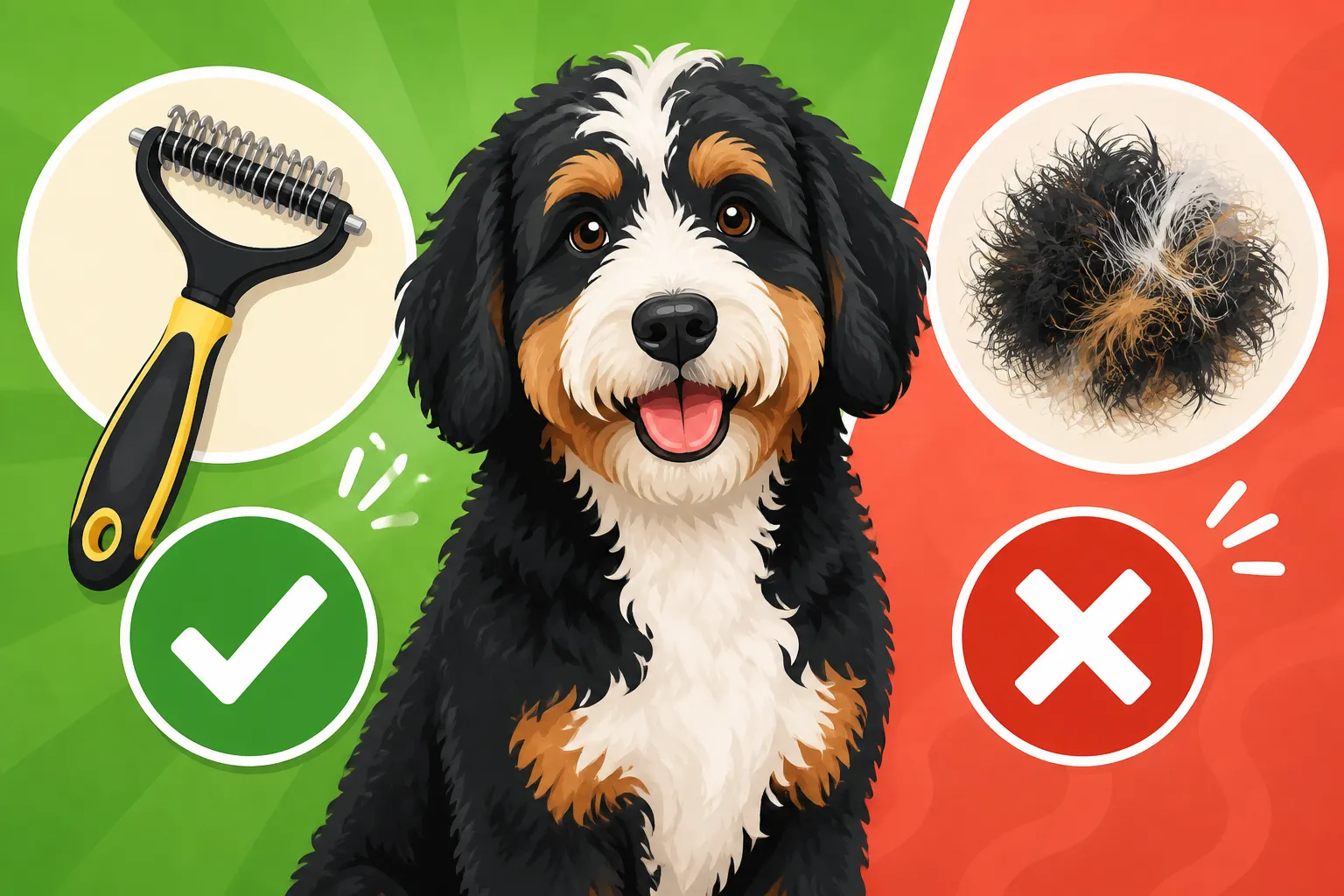
For the vast majority of Bernedoodles, especially those with the highly sought-after wavy or curly Poodle-dominant coats, using an undercoat rake is generally not recommended. Here's why: these coats don't typically have a true, distinct undercoat layer that separates easily from the outer coat. Instead, their fur grows in a continuous, often woolly or fleecy texture, much like a Poodle's. When you try to use an undercoat rake on such a coat, those sharp tines don't just pull out loose undercoat; they snag, tear, and damage the healthy outer hair.
This can lead to a host of problems. Firstly, it's painful for your dog. Imagine having your hair ripped out with a comb. Secondly, it breaks the hair shaft, leading to a duller, coarser coat texture and encouraging more matting. When healthy hair is broken, it can tangle and knot more easily with neighboring strands, creating a cycle of matting that is harder to resolve. Lastly, it can cause skin irritation, razor burn, and even bald patches if used too aggressively or on the wrong coat type. It's a common mistake, born from good intentions, but understanding your Bernedoodle's specific coat is key to avoiding these grooming pitfalls.
Better Tools and Techniques for Bernedoodle Grooming
So, if the undercoat rake isn't typically the answer, what are the right tools and techniques for keeping your Bernedoodle's coat healthy, mat-free, and looking its best? It's all about consistency, the right equipment, and a good understanding of line brushing.
The Essential Tools for a Bernedoodle Coat
Forget the undercoat rake for most Bernedoodles and focus your efforts on these tried-and-true grooming essentials:
-
Slicker Brush: This is your absolute best friend. Look for a slicker brush with flexible pins and a comfortable handle. The pins should be long enough to reach through your Bernedoodle's thick coat all the way to the skin. A good quality slicker brush is designed to separate and detangle the coat gently. Brands like Chris Christensen (often found on Amazon) are popular for a reason, offering high-quality brushes that make a real difference. For more details on brushes, check out The Brushes a Bernedoodle Owner Actually Needs.
- When using a slicker brush, the technique is key. You'll want to employ "line brushing," which means parting the hair in small sections and brushing from the skin outwards, working in rows. This ensures you're not just gliding over the top of the coat, but truly getting down to the root where mats often begin to form. It’s a bit tedious, especially on a large dog, but it's the most effective way to prevent tangles and keep the coat healthy.
-
Metal Comb: After you've gone over an area with the slicker brush, follow up with a long-toothed metal comb. The comb acts as your "mat detector." If the comb glides smoothly through the hair from skin to tip, you've done a good job. If it snags, you've got a mat or tangle that needs further attention with your slicker brush and perhaps some detangling spray. Having both wide and fine-toothed sections on your comb can be very helpful for different areas of the coat.
- This comb check is non-negotiable for Bernedoodle owners. It's easy to feel like you've brushed thoroughly, only to find hidden mats closer to the skin, particularly in high-friction areas like armpits, behind the ears, and around the tail. Consistent combing ensures you catch these before they become severe, painful pelts.
-
Detangling Spray: A good detangling spray can make a world of difference. Before you start brushing, lightly misting the coat can help lubricate the hair, making it easier for the brush to glide through and minimizing breakage. This is especially helpful if you encounter a stubborn tangle. You can find excellent detangling sprays from reputable brands on Chewy or Amazon.
-
Force Dryer: While not strictly a "brush," a good force dryer is invaluable for Bernedoodle grooming. After baths, completely drying your dog down to the skin is crucial to prevent matting. Air drying, even partially, allows the hair to felt together as it dries, creating impossible tangles. A force dryer (a high-velocity, motor-driven dryer designed for pets, not a human hairdryer) blasts water out of the coat and straightens the hair, making brushing much easier and preventing mats. Bathing and Drying a Ninety Pound Bernedoodle provides more insight into this process.
Effective Grooming Practices to Prevent Mats and Manage Shed
Beyond the right tools, it's the routine and technique that truly make the difference in managing a Bernedoodle's coat.
-
Consistent, Thorough Brushing: This cannot be stressed enough. Depending on your Bernedoodle's coat type and length, you should be brushing at least 3-5 times a week, if not daily, using the line brushing method. This prevents small tangles from escalating into full-blown mats. Ignoring brushing for even a few days can lead to a matted mess, especially during the "puppy uglies" phase when their softer puppy coat transitions into a denser adult coat. Learn more about this transition in The Month a Bernedoodle Puppy Starts Matting Daily. The total time you'll spend brushing can be significant, as discussed in The Volume of Coat a Bernedoodle Owner Brushes Weekly.
-
Regular Bathing and Proper Drying: Aim for a bath every 3-6 weeks, or as needed, using a good quality dog shampoo and conditioner. The key is to thoroughly wash, rinse, and condition the coat, then immediately and completely dry it with a force dryer. As mentioned, allowing a Bernedoodle to air dry is an invitation for mats. The force dryer not only dries but also helps straighten the hair, making subsequent brushing much easier and more effective.
-
Professional Grooming Schedule: Even with diligent home grooming, most Bernedoodles benefit immensely from professional grooming every 6-8 weeks. A professional groomer has specialized equipment and expertise to handle Bernedoodle coats, ensuring they are properly clipped, tidied, and any stubborn mats are addressed safely. This regular maintenance by a professional helps keep the coat manageable for you in between appointments.
-
Addressing the Puppy Coat Change: Around 6-12 months of age, Bernedoodle puppies go through a significant coat change, often called the "puppy uglies." Their soft, fine puppy fur gives way to a thicker, denser adult coat. During this period, matting can occur incredibly quickly and severely. You may need to increase your brushing frequency to daily and consider an earlier professional groom to help manage this transition.
-
Managing Shedding (If Applicable): Even "non-shedding" Bernedoodles can shed some hair, and those with more Bernese influence will shed more noticeably. While an undercoat rake is generally not suitable, consistent slicker brushing and combing, combined with regular baths, will remove the majority of loose hair, whether it's an undercoat or just individual shed hairs. For a deeper dive into brushing frequency, see How Often a Bernedoodle Should Be Brushed.
Making the Right Choice for Your Bernedoodle's Coat
Ultimately, the best grooming approach for your Bernedoodle comes down to understanding your individual dog's coat and prioritizing its health and comfort.
Assessing Your Dog's Specific Coat Type
As we've discussed, Bernedoodle coats are incredibly diverse. You might have a dog with a loose, wavy coat that feels like a soft fleece, a tightly curled coat reminiscent of a Poodle, or a straighter, denser coat with a more pronounced Bernese influence. The critical thing is to assess your dog's specific coat type, not rely on generalizations or what worked for a different breed. Gently part the hair in several places – along the back, behind the ears, on the legs, and in the armpits. Look and feel for the texture, density, and presence of distinct layers. If you're uncertain, don't hesitate to consult with a professional groomer who has extensive experience with Bernedoodles and other Doodle breeds. They can help you identify your dog's unique coat characteristics and recommend the most appropriate tools and techniques.
It's tempting to think that all Bernedoodles are the same, but they truly are a spectrum. Some might genuinely have enough Bernese undercoat to warrant a very careful and infrequent use of a specific type of undercoat rake (like a wide-toothed shedding blade, rather than a de-shedding rake with sharp tines). However, this is the exception, not the rule. The curly or wavy coated Bernedoodles, which are the most common, will find such tools more damaging than helpful. The Curly Coat Bernedoodle and Its Upkeep offers specific advice for these coats.
When in Doubt, Opt for Safer Alternatives
If you're ever unsure whether a specific tool, like an undercoat rake, is suitable for your Bernedoodle's coat, the safest bet is always to stick with the tried-and-true essentials: a good quality slicker brush and a sturdy metal comb. These tools are designed to work with all types of hair, from straight to curly, and when used correctly with the line brushing method, they are highly effective at preventing and removing tangles without damaging the coat or irritating the skin. They are universally applicable to Bernedoodle coats, regardless of whether they lean Poodle or Bernese.
Remember, the goal of grooming isn't just to make your Bernedoodle look good; it's to maintain their skin and coat health, ensure their comfort, and strengthen your bond. Using the wrong tool can cause pain, skin problems, and turn grooming into a dreaded experience for both of you. Ignoring knots and mats can lead to serious skin infections and costly trips to the groomer for a complete shave-down. Mats in a Bernedoodle's Armpits and Britches explains why some areas are particularly prone to matting. Severe matting is not just unsightly; it can restrict movement, cause pain when pulling on the skin, and hide underlying skin issues. If your Bernedoodle does become severely matted, it's usually best to take them to a professional groomer who can safely and humanely remove the mats, even if it means shaving down the coat. This is often discussed as a last resort, as highlighted in Whether a Matted Bernedoodle Must Be Shaved Down. Invest in the right tools and a consistent routine, and you'll keep your Bernedoodle happy, healthy, and looking their fluffy best.
Disclaimer
This article is for general informational purposes only and does not constitute professional advice. Laws, prices and regulations vary by location and change over time. Consult a qualified professional for guidance on your specific situation.