Whether a Damp Bernedoodle Coat Brushes Out Easier
The struggle is real for Bernedoodle owners trying to keep that glorious, fluffy coat looking its best. One minute your adorable pup is romping, the next they're a tangle of knots, and you might find yourself wondering if there's some secret trick, like perhaps brushing a damp coat, that everyone else seems to know. This guide dives deep into that very question, offering realistic advice on how to tackle your Bernedoodle's coat, whether it's dry, damp, or somewhere in between.
The Nature of the Bernedoodle Coat and Why It's a Challenge
Let's face it, your Bernedoodle’s coat is a major part of their charm, but it’s also one of the biggest responsibilities you take on. It's not just "hair"; it's a complex blend of genetics that can make grooming a surprisingly intricate dance. Understanding what you're dealing with is the first step toward conquering those mats and keeping your dog comfortable.
Understanding the Double Coat Legacy
The Bernedoodle is a delightful mix of two very different, yet equally impressive, canine coats. On one side, you have the Bernese Mountain Dog, famous for its thick, luscious double coat. This coat is designed for insulation, providing warmth in cold climates with a dense undercoat and a longer, coarser topcoat to protect against the elements. It sheds, often quite a lot, especially seasonally.
Then, you have the Poodle, with its single layer of dense, curly hair that continuously grows and is known for being "non-shedding" (though it still loses hair, it catches in the curls). This Poodle coat gives the Bernedoodle that often sought-after low-shedding quality. However, when these two coats combine, you get a whole spectrum of possibilities, from wavy to curly, sometimes even straight. Most commonly, Bernedoodles sport a wavy or loosely curly coat, which often comes with a dense undercoat that, while not shedding like a Bernese, is incredibly prone to tangling and matting if not meticulously maintained. This genetic inheritance is both a blessing and a curse for owners.
The Dreaded Matting Process
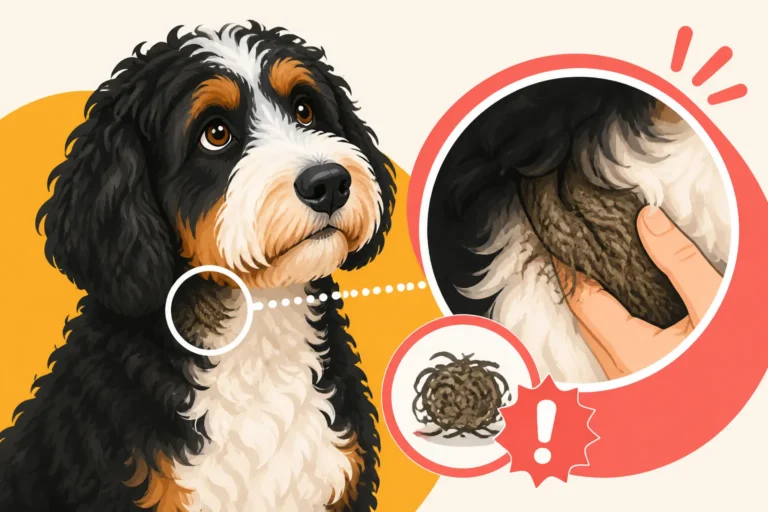
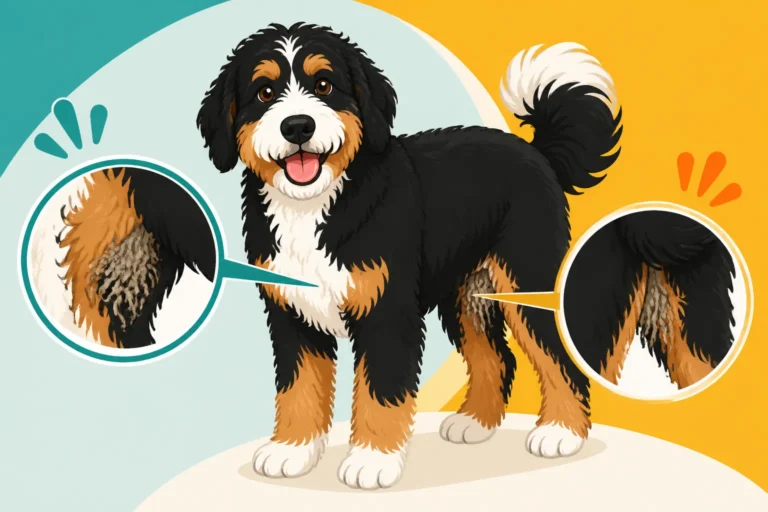
Mats are more than just bad hair days for your Bernedoodle; they are painful, and if left untended, can lead to serious skin issues. Mats form when loose hair gets tangled with live hair, creating dense knots that pull on the skin. They love to hide in friction points: behind the ears, under the armpits, in the groin, and around the collar or harness area. Even a seemingly small mat can quickly grow into a larger, painful pelt.
Attempting to brush out dry mats can be a frustrating and often painful experience for your dog. The friction of the brush on dry hair can create static electricity, actually making tangles worse and causing more hair breakage. It can also pull harshly on the skin, turning a routine grooming session into a battle. Owners often find themselves wondering if there's a gentler way, a technique that might make the hair more pliable and less prone to snapping, which leads many to consider dampening the coat. This is where the debate about brushing a damp Bernedoodle coat truly comes to the forefront. Understanding The Volume of Coat a Bernedoodle Owner Brushes Weekly is key to staying ahead of this common problem.
The Pros and Cons of Brushing a Damp Bernedoodle Coat
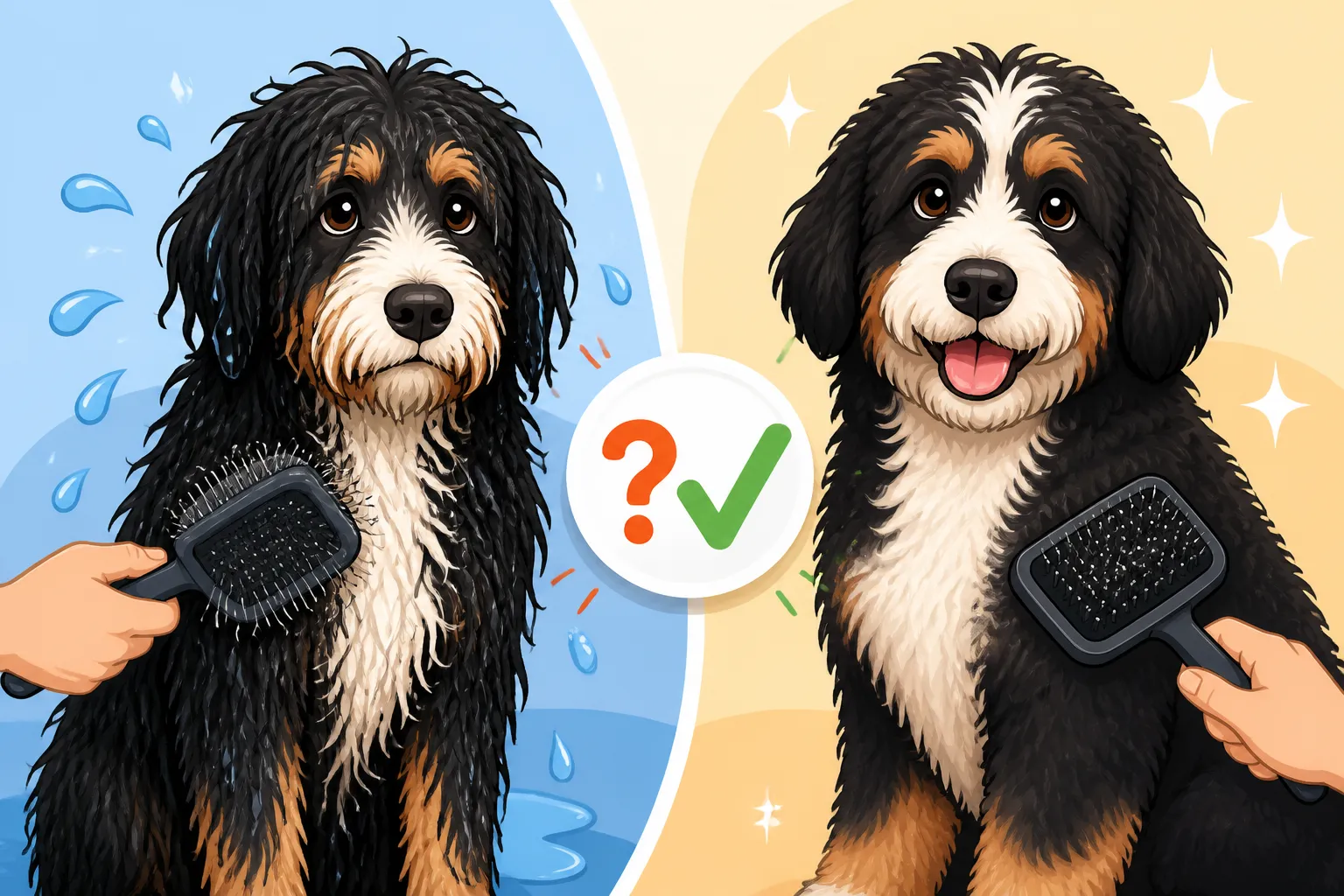
The idea of brushing a damp coat stems from a logical place: hair is often more flexible when wet. Think about how much easier your own hair is to comb through after a shower. However, dogs are not people, and a Bernedoodle's unique coat composition means this approach comes with its own set of specific considerations and potential pitfalls. It’s a fine line between helpful hydration and disastrous dampness.
The Potential Advantages
When done correctly, with a lightly damp coat, there can be some benefits. First, a tiny bit of moisture can indeed help reduce static electricity. Dry hair, especially when brushed, tends to build up static, making the individual hairs fly apart and potentially creating more tangles or making existing ones tighter. A fine mist of water, or even a specialized conditioning spray, can counteract this.
Secondly, if you're using a detangling or conditioning spray, dampness allows for better distribution of the product. The moisture helps the product spread evenly through the coat, making the hair shafts smoother and more slippery. This can, in turn, help the brush glide through superficial tangles and make the grooming process feel less like a wrestling match. For certain coat textures, particularly those that are more poodle-like and curly, a light dampening can help reform the curls, making them easier to separate without excessive pulling. Just ensure you're using a dog-specific product, perhaps one you can find on Chewy, designed not to irritate their skin.
The Significant Drawbacks and Risks
Here’s the critical caveat: there’s a massive difference between a lightly damp coat and a wet one. Brushing a truly wet Bernedoodle coat is one of the biggest grooming mistakes you can make, and it can cause significant damage and discomfort. When a dog's coat is wet, especially a dense double or thick curly coat like a Bernedoodle’s, the hair shafts swell and become more elastic but also more fragile. If you try to brush out mats from a wet coat, you're essentially stretching and tearing the hair rather than separating it. This damages the hair cuticle, leads to breakage, and can worsen matting by compressing existing tangles into tighter, more impenetrable knots. Imagine trying to comb through a tangled ball of yarn that’s soaking wet – it only gets worse.
Furthermore, a wet coat, if not dried properly, creates a breeding ground for bacteria and fungus close to the skin. This can lead to painful hot spots, skin infections, and general irritation. For a Bernedoodle with its thick, dense coat, drying thoroughly can take a long time, and any residual moisture deep in the undercoat can become a major problem. This is why many professional groomers will refuse to brush out a matted dog if it's wet or will insist on shaving it down entirely for the dog's comfort and health. It’s always better to start with a dry, or at most, barely damp coat, focusing on thorough drying afterward if any significant wetting has occurred. Remember, how often a Bernedoodle can be bathed often goes hand-in-hand with how well you can dry them.
The Correct Way to Approach Bernedoodle Grooming (Damp or Dry)
Understanding the nuances of your Bernedoodle's coat is paramount to a successful grooming routine. Whether you opt for a completely dry brush or a slightly dampened approach, the technique and tools you use will make all the difference in keeping their coat healthy and mat-free. This isn't just about making your dog look good; it's about their comfort and preventing painful skin conditions.
Pre-Brushing Prep
Before any brush touches your Bernedoodle's coat, you need to set the stage. This often overlooked step is crucial for preventing damage and making the process more efficient. First, visually inspect your dog for any obvious mats or tangles. Gently feel all over their body, especially in those high-friction areas: behind the ears, under the chin, in the armpits, on the belly, and around their "britches" (the long hair on their hind legs). These are the first places to develop deep, painful mats.
If you find mats, resist the urge to immediately attack them with a brush. Instead, use your fingers to try and gently pull them apart. For stubborn knots, a mat splitter or a seam ripper (used with extreme caution, away from the skin) can help break them up. For larger, tighter mats, it's often safer and less painful to carefully clip them out, even if it leaves a small bald spot. Your dog's comfort comes first. Once the major mats are addressed, you can consider a light mist. For fine, flyaway hair, a touch of cornstarch rubbed into the mat can sometimes help it untangle, as the starch absorbs oils and provides grip, making the hair less slippery.
The Damp Brushing Method When and How
If you decide to go the "damp" route, remember the golden rule: lightly damp, never wet. The best time for light dampening is often right after a bath, when the coat is towel-dried but still has a hint of moisture, before you begin the full drying process with a force dryer. Alternatively, for a dry coat, use a fine mist spray bottle containing either plain water or, even better, a dog-specific detangling or leave-in conditioner. You don't want the coat to be dripping or soaked, just slightly humidified.
Here’s how to do it:
- Section the coat: This is non-negotiable for Bernedoodles. Use hair clips to section off small portions of hair, starting from the bottom of a leg or the belly, and work your way up and out.
- Lightly mist: Take a small section of hair and lightly mist it with your spray. Don't drench it.
- Line brush: Hold the hair firmly at the root with one hand and brush a small layer of hair, starting from the very tip and working your way down to the skin. You should always be able to get your brush or comb all the way through the hair to the skin. This "line brushing" technique ensures you're not just brushing the surface of the coat, which is a common mistake that leads to mats forming underneath. Repeat this process, moving layer by layer through each section of your dog's body.
- Use appropriate tools: Always follow up with a wide-toothed comb to ensure every tangle is removed. If the comb gets stuck, go back to the slicker brush and repeat. This method, whether damp or dry, is your best defense against matting. Many highly rated detangling sprays can be found on Amazon that make this process much smoother.
Essential Tools for Success
You simply cannot groom a Bernedoodle effectively without the right arsenal of tools. Investing in quality equipment will save you a lot of headache and your dog a lot of pain.
Here’s a breakdown of the essentials:
- Slicker Brush: This is your workhorse. A good quality slicker brush with fine, angled wire pins is essential for getting through the dense undercoat and removing loose hair. Opt for a size appropriate for your Bernedoodle, with sturdy pins that won't bend easily.
- Metal Comb: A long, fine-toothed metal comb is critical for checking your work. After brushing each section with the slicker, run the comb through. If the comb glides smoothly from root to tip, you've done a good job. If it catches, go back with the slicker brush. A greyhound comb with both wide and narrow teeth is ideal.
- Pin Brush: While not for de-matting, a pin brush can be useful for fluffing the topcoat or for general maintenance brushing on a tangle-free coat, especially for those longer, flowing areas.
- Mat Splitter or Dematting Rake: For those inevitable tangles that get a bit too tight, these tools can help break them apart without having to resort to scissors. Use them with extreme caution and never try to force them through a mat.
- Force Dryer (High Velocity Dryer): This is arguably the most important tool for a Bernedoodle owner, especially if you plan to bathe your dog at home. A force dryer (not a human hairdryer!) blasts water out of the coat quickly and efficiently, preventing mats from forming as the hair dries. It also helps straighten curly hair, making it easier to brush. Many swear by brands available on Amazon for home use. You can read more about Drying a Bernedoodle to the Skin for a deep dive into this crucial step.
- Quality Shampoo and Conditioner: Dog-specific products that are moisturizing and detangling are a must. Avoid human shampoos, as they can irritate your dog’s skin.
- Detangling Spray/Leave-in Conditioner: These products can make a huge difference, whether used during damp brushing or on a dry coat to add moisture and slickness. A popular choice among doodle owners is often found among the professional grooming supplies on Chewy.
- Grooming Table with Arm (Optional but Recommended): A dedicated grooming table with a noose allows you to keep your dog still and at a comfortable height, saving your back and making the process safer for your dog. For managing a large dog that might fidget, it makes all the difference, especially when you consider Getting a Bernedoodle Used to the Grooming Table.
| Tool | Best Use Case | Why It's Essential for Bernedoodles |
|---|---|---|
| Slicker Brush | Removing tangles, brushing out loose undercoat | Reaches deep into dense coats, prevents surface-only brushing |
| Metal Comb | Checking for hidden mats, finishing touches | Confirms brush has gone through entire coat to the skin |
| Mat Splitter | Carefully breaking up tight knots | Reduces pain and coat damage compared to cutting or pulling |
| Force Dryer | Drying thoroughly after baths, preventing matting | Blasts water, separates hair to ensure complete drying and prevent mats |
| Detangling Spray | Moistening coat for brushing, reducing static | Conditions hair, makes brushing smoother, reduces breakage |
Maintaining a Mat-Free Bernedoodle Coat Long-Term
Consistency is the absolute key when it comes to keeping your Bernedoodle's coat healthy and mat-free. It's not a one-time event; it's an ongoing commitment that, if neglected, can quickly lead to discomfort for your dog and costly, painful professional interventions.
The Daily and Weekly Routine
For most Bernedoodles, especially those with wavy or curly coats, a quick daily brush-through of common problem areas (armpits, behind ears, "britches") is incredibly beneficial. This can take as little as 5-10 minutes and can prevent small tangles from escalating into major mats. On a weekly basis, you should commit to a more thorough grooming session, ideally 1-2 hours, using the line brushing technique discussed earlier. This involves systematically working through every section of your dog's coat with a slicker brush and then a metal comb.
Make these sessions positive experiences by offering plenty of praise and high-value treats (perhaps some healthy options from Ollie). Start grooming puppies early so they become accustomed to the process. Regular brushing not only prevents mats but also distributes natural skin oils, keeps the skin healthy, and gives you a chance to check for any lumps, bumps, or skin irritations that might otherwise go unnoticed under all that fur. Don't underestimate The Weekly Hours a Standard Bernedoodle's Coat Takes – it's a real time investment.
Professional Grooming vs. Home Grooming
Even the most dedicated home groomer will likely benefit from professional grooming appointments. Professional groomers have specialized tools, training, and experience to handle challenging coats. They can give your Bernedoodle a thorough bath, blow-dry them completely with a high-velocity dryer, and give them a tidy haircut that makes home maintenance easier. Depending on your Bernedoodle's coat type and your ability to maintain it at home, professional grooming is typically recommended every 6-8 weeks.
If you struggle with matting, consider more frequent professional visits or ask your groomer for advice on specific techniques or products for your dog's unique coat. They can also perform services like ear cleaning, nail trims, and sanitary trims that can be challenging to do at home. Remember, a good groomer is a partner in your Bernedoodle's well-being, not just a luxury service. They can help you manage Mats in a Bernedoodle's Armpits and Britches before they become a severe problem.
Disclaimer
This article is for general informational purposes only and does not constitute professional advice. Laws, prices and regulations vary by location and change over time. Consult a qualified professional for guidance on your specific situation.