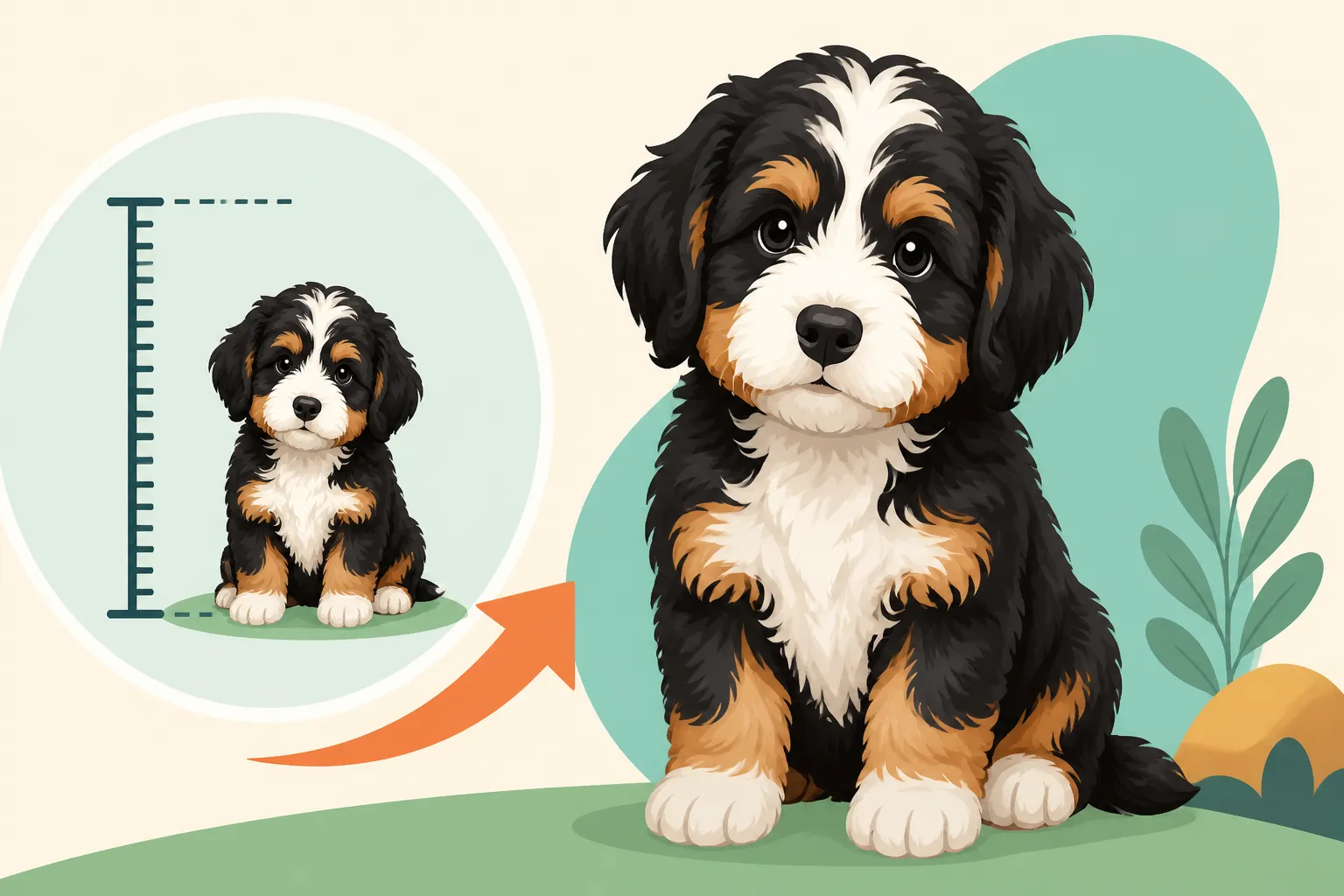
How Small a Tiny Bernedoodle Stays
Oh, the quest for the perfectly sized Bernedoodle! It’s one of the most common questions I hear from folks dreaming of bringing one of these delightful dogs home: just how small can a "Tiny Bernedoodle" actually get? It’s a valid concern, because while the image of a pint-sized companion is appealing, the reality of dog genetics can sometimes throw a curveball, leaving you wondering if your "tiny" friend will still fit on your lap—or if they'll soon be taking over the whole sofa. This guide is all about setting realistic expectations and exploring what truly defines a Tiny Bernedoodle.
Understanding Bernedoodle Sizing Categories
The world of Bernedoodles, like many designer breeds, uses a range of sizing categories to help potential owners understand what to expect. But let's be honest, these labels can sometimes feel more like marketing terms than definitive measurements, leading to a fair bit of confusion. It's not like buying a small, medium, or large t-shirt where the sizes are universally understood.
The Standard, Mini, and Tiny Distinctions
Generally, Bernedoodles are classified into three main size categories: Standard, Mini, and Tiny (sometimes called Micro or Toy). The idea is to give you a ballpark figure for their adult weight and height. A Standard Bernedoodle is the largest, often weighing between 70 to 90 pounds and standing 23-29 inches tall at the shoulder. They're big, lovable lugs, often carrying much of the impressive stature of their Bernese Mountain Dog parent.
Then you have the Mini Bernedoodle, a popular choice for those who love the Bernedoodle temperament but need a more manageable size. These typically fall in the 25 to 49-pound range and stand 18-22 inches tall. They're a fantastic medium-sized dog, still substantial but much easier to manage in a smaller home or for owners who can't handle a massive dog on the leash. You can really see Why a Mini Bernedoodle Costs More Than a Standard when you consider the extra breeding steps and generations it might take to consistently produce this size.
Finally, we arrive at the Tiny Bernedoodle, the focus of our discussion. These are generally marketed as weighing 10 to 24 pounds and standing 12-17 inches tall at the shoulder. The goal here is to breed a Bernedoodle that is genuinely small, making them suitable for apartment living or for owners who prefer a smaller companion. The Poodle side of the equation, specifically the Toy or Miniature Poodle, is what makes these smaller sizes possible, as breeders aim to dial down the size of the Bernese parent's genes through careful selection.
Why "Tiny" Can Still Feel Big
Now, here's where expectations sometimes meet reality. Even within the "Tiny" category, there's a pretty wide spectrum. A 24-pound Bernedoodle, while certainly smaller than a 90-pound Standard, is still a fairly solid dog! They're not a teacup Chihuahua you can tuck into a purse. Their dense, often fluffy coats can also make them appear larger than their actual body mass, giving them a deceptively substantial presence.
I've heard from many first-time Tiny Bernedoodle owners who, expecting a truly diminutive dog, are surprised when their puppy matures into something closer to the upper end of that 24-pound range. It's not a trick, just the natural variation that occurs in even carefully bred designer dogs. Factors like bone structure, coat density, and even the individual puppy's growth rate play a huge role. Think about it: a lanky, finely boned 20-pound dog will look and feel very different from a stockier, heavily coated 20-pound dog, even if their weight is identical. The "tiny" label is definitely relative to the majestic size of a full Bernese Mountain Dog, or even a Standard Bernedoodle. For a broad overview, you might find The Three Bernedoodle Sizes and What Sets Them helpful.
Factors Influencing a Tiny Bernedoodle's Final Size
Predicting the exact adult size of any mixed-breed dog, even one as popular as the Bernedoodle, can be a bit of an art and a science. When you’re aiming for a specific "tiny" size, the stakes feel even higher, and understanding the genetic tapestry behind your pup is crucial.
The Parents' Genetics: Poodle and Bernese Influence
The primary determinant of a Tiny Bernedoodle's size lies squarely in its parentage. Specifically, it's about which type of Poodle is used in the breeding. For a true Tiny Bernedoodle, the Bernese Mountain Dog (often a smaller one, or sometimes even a Mini Bernedoodle female) is typically bred with a Toy or Miniature Poodle. The goal is to maximize the smaller Poodle genes to reduce the overall size inherited from the much larger Bernese.
- F1 Generation: An F1 (first generation) Tiny Bernedoodle is a direct cross between a Bernese Mountain Dog and a Toy/Miniature Poodle. In this generation, you might see the most size variation, as the dominant genes from both sides battle it out. Some might lean more Bernese in size, others more Poodle. This is where Whether a Bernedoodle's Adult Size Can Be Predicted becomes particularly interesting.
- F1b Generation: An F1b (backcross) is often the most consistent for hypoallergenic qualities and, crucially, for size reduction. This is an F1 Bernedoodle bred back to a Poodle (usually a Toy or Miniature). By adding more Poodle genetics, breeders aim to solidify the smaller size. This generation often gives you a more predictable outcome for a truly tiny pup.
- Multigenerational (Multigen): These are Bernedoodles bred to other Bernedoodles over several generations, often focusing on specific traits like size, coat, and temperament. With multiple generations of selective breeding for smaller sizes, a reputable breeder can achieve greater consistency in producing Tiny Bernedoodles.
A responsible breeder should be able to provide you with the weights and heights of both parent dogs, and even grandparents if they're confident in their lines. This transparency is key to understanding the genetic potential of your future puppy. If a breeder is vague or unwilling to share this information, it's a red flag.
Growth Plate Closure and Maturation
Just like children, puppies grow at different rates and stop growing at different times. Larger breeds, like the Bernese Mountain Dog, take longer to reach their full adult size, often not reaching physical maturity until 18-24 months. Smaller breeds, like the Toy Poodle, mature much faster, often reaching their adult height by 6-8 months and filling out by their first birthday.
A Tiny Bernedoodle, leaning more towards the Poodle side for size, will typically reach its adult height much earlier than a Standard Bernedoodle. You can often get a very good idea of their adult height by the time they are 6-8 months old. They may continue to fill out in weight, broaden in the chest, and develop their musculature until they are about a year to 18 months old, but significant height increases after 8 months are less common for a truly tiny variant. This slower filling-out process means that even after they've stopped growing "up," they can still gain a few pounds and develop a more robust appearance.
The "Micro" or "Teacup" Labels
You might encounter terms like "Micro Bernedoodle" or "Teacup Bernedoodle." While these sound even smaller and perhaps more appealing to some, it's important to approach these labels with extreme caution. Often, these are marketing terms used by less reputable breeders to fetch higher prices for exceptionally small dogs. While a true Tiny Bernedoodle is usually bred responsibly, pushing for "micro" sizes can sometimes involve breeding runts or pups with underlying health issues that stunt their growth.
Excessively small dogs, regardless of breed, can be prone to a host of health problems, including fragile bones, hypoglycemia, heart issues, and delicate organs. It's not just about size; it's about overall health and structural soundness. If a breeder uses these terms, dig deeper. Ask about the health testing on their breeding stock, specifically looking for clearances for conditions like Slipping Kneecaps in a Tiny Bernedoodle or severe Dental Disease in a Tiny Bernedoodle, which can be exacerbated in overly tiny dogs. A responsible breeder will prioritize health and temperament over chasing an extreme size.
Realistic Expectations for a Tiny Bernedoodle's Weight and Height
So, you're looking for a small Bernedoodle, but what does that really look like? It's easy to get caught up in adorable puppy pictures and dream of a tiny floof that stays forever small. However, understanding the typical ranges and what questions to ask your breeder is paramount to avoiding disappointment—or surprise!
Typical Weight and Height Ranges
A Tiny Bernedoodle typically aims for an adult weight between 10 and 24 pounds, and a height of 12 to 17 inches at the shoulder. This range is quite broad, and for a good reason: genetics aren't an exact science, especially with a hybrid breed. A 10-pound Bernedoodle is genuinely petite, while a 24-pound one is a sturdy, small-to-medium sized dog. Both fit the "tiny" label, but they offer very different experiences.
Here's a simple breakdown of the Bernedoodle size categories to help put things in perspective:
| Bernedoodle Size Category | Typical Adult Weight (lbs) | Typical Adult Height (inches) | Primary Poodle Parent |
|---|---|---|---|
| Standard | 70 – 90+ | 23 – 29+ | Standard Poodle |
| Mini | 25 – 49 | 18 – 22 | Miniature Poodle |
| Tiny | 10 – 24 | 12 – 17 | Toy or Miniature Poodle |
It's important to note that these are typical ranges. There will always be outliers – a Mini that grows a bit larger, or a Tiny that stays a bit smaller. Your goal is to find a breeder who consistently produces dogs within the desired range through generations of careful selection.
What to Ask Your Breeder About Size Guarantees
When you're serious about a Tiny Bernedoodle, engaging with a reputable breeder is non-negotiable. They are your best resource for understanding your puppy's genetic potential. Don't be afraid to ask direct questions about size predictions.
- Parental Information: Ask for the exact weights and heights of both parents of the litter. If one parent is a Mini Bernedoodle, ask for their parents' sizes too. Seeing the lineage gives you a much clearer picture.
- Previous Litters: A good breeder will have a history of successful litters. Ask to see pictures of adult dogs from previous litters by the same parents or similar pairings, and inquire about their adult weights. This visual evidence can be incredibly reassuring.
- Puppy Growth Charts: Some breeders use puppy growth charts based on historical data from their lines to give a more educated guess about adult weight. While not foolproof, it's another data point.
- Size Guarantees: Understand what, if any, size guarantee the breeder offers. Most reputable breeders will guarantee a range, not an exact weight. They might say, "This litter is expected to produce Tiny Bernedoodles in the 15-25 lb range." Be wary of anyone promising an exact weight down to the pound, as it's simply not possible to guarantee with 100% accuracy.
Remember, a breeder's honesty and transparency are far more valuable than an overly confident, yet unrealistic, prediction. The initial cost for What a Tiny Bernedoodle Sells For can be considerable, so getting as much information as possible upfront is vital.
Living with a "Tiny" But Not "Teacup" Dog
Let's assume you've got a Tiny Bernedoodle on the upper end of the scale, say a healthy 20-24 pounder. This is still a robust, capable dog. They’re usually sturdy enough for family life, can enjoy hikes, and aren't as delicate as the true "teacup" breeds. They typically have a good energy level and a playful demeanor.
However, their size still means certain considerations:
- Interaction with Children: While generally good with kids, supervision is always key, especially with very young children who might not understand how to safely interact with a smaller dog. A careless step or rough play could still injure them. This links to considerations such as Whether a Tiny Bernedoodle Is Fragile.
- Interaction with Larger Dogs: They can certainly play with larger dogs, but again, supervision is important to ensure play remains appropriate and safe for the smaller Bernedoodle.
- Environmental Safety: They might still be able to jump off furniture, which could be risky for their smaller joints. Consider ramps for sofas or beds if this is a concern.
- Portability: They're much easier to travel with than a Standard or Mini. They can often fly in the cabin of an airplane (with airline approval and carrier requirements) and fit comfortably in a car seat or booster designed for dogs.
Ultimately, a Tiny Bernedoodle is a fantastic size for many households, offering the wonderful traits of the breed in a more compact package. Just make sure your expectations align with what's realistically achievable and healthy for the dog.
The Practical Implications of a Tiny Bernedoodle's Size
Beyond just fitting on your lap, the size of your Tiny Bernedoodle influences many aspects of daily life, from how much exercise they need to their grooming routine and even potential health predispositions. It's all part of making sure you're fully prepared for this charming, compact companion.
Exercise and Activity Needs
Don't let the "tiny" label fool you into thinking these dogs are couch potatoes! Bernedoodles, regardless of size, inherit a blend of energy from both their Bernese Mountain Dog and Poodle parents. While a Tiny Bernedoodle won't need the extensive exercise regimen of a 90-pound Standard, they still require regular activity to stay happy and healthy.
Typically, a Tiny Bernedoodle will thrive on two good walks a day, lasting anywhere from 20 to 30 minutes each. Beyond that, they love playtime in a securely fenced yard, puzzle toys that engage their intelligent Poodle brains, and interaction with their family. They often adapt well to apartment living, provided their exercise needs are consistently met. Their smaller stature means they can expend energy more efficiently indoors, too, though a good romp outside is always best. They can also enjoy many dog sports, such as agility or obedience, that might be too physically demanding for a giant Bernedoodle.
Grooming and Care Considerations
One thing that doesn't shrink much with size is that Bernedoodle coat! Whether your Tiny Bernedoodle has a wavy, curly, or even straight coat, it will require consistent care to prevent matting and keep them comfortable. While the sheer volume of hair is less than on a Standard Bernedoodle, the type of hair and its tendency to mat remains.
You'll still need quality grooming tools: a good slicker brush, a metal comb, and potentially a de-matting tool if you hit a snag. Brushing several times a week, if not daily, is crucial, especially in areas prone to matting like behind the ears, armpits, and legs. Professional grooming every 6-8 weeks is highly recommended to maintain their coat, trim their nails, and keep their ears clean. You might find that while the overall grooming time is less than for a huge dog, the dedication required is similar to what you'd read about in The Weekly Hours a Standard Bernedoodle's Coat Takes, just scaled down in duration. For their daily meals, even a tiny dog needs nutritious food, and you can find a great variety of small-breed formulas on sites like Chewy.
Health Concerns Related to Smaller Size
While Bernedoodles are generally robust, bringing down their size to "tiny" can introduce some specific health considerations, many of which are common in smaller dog breeds. It's important to be aware of these so you can work with your vet and breeder to mitigate risks.
- Patellar Luxation (Slipping Kneecaps): This is a common orthopedic issue in small breeds where the kneecap slips out of place. It can cause pain and lameness. Responsible breeders will screen their breeding Poodles for this condition. Slipping Kneecaps in a Tiny Bernedoodle is a valid concern and something to discuss with your breeder.
- Dental Disease: Smaller dogs are often more prone to overcrowding of teeth and developing dental disease earlier in life. Regular dental care, including brushing at home and professional cleanings, is paramount. Dental Disease in a Tiny Bernedoodle can be a significant health and cost factor if not addressed.
- Hypoglycemia: Very small puppies can be prone to low blood sugar, especially if they aren't eating regularly or are stressed. This is less common in adult Tiny Bernedoodles but something to be aware of in young pups.
- Tracheal Collapse: While more common in toy breeds, some Tiny Bernedoodles might be predisposed to this, where the trachea weakens and collapses, causing a honking cough. Using a harness instead of a collar for walks can help reduce pressure on the neck.
By understanding these potential issues and working with a veterinarian who is familiar with small breed health, you can ensure your Tiny Bernedoodle lives a long, healthy, and happy life. Don't forget to regularly check Chewy for healthy treats and dental chews to support their oral health!
Bernedoodle Size Comparison
To recap and help visualize the differences, here’s a quick comparison of the three main Bernedoodle size categories:
| Feature | Standard Bernedoodle | Mini Bernedoodle | Tiny Bernedoodle |
|---|---|---|---|
| Typical Weight | 70 – 90+ lbs | 25 – 49 lbs | 10 – 24 lbs |
| Typical Height | 23 – 29+ inches | 18 – 22 inches | 12 – 17 inches |
| Parent Poodle | Standard Poodle | Miniature Poodle | Toy or Miniature Poodle |
| Temperament | Goofy, gentle giant | Playful, affectionate | Energetic, lap-loving |
| Exercise Needs | Moderate to high | Moderate | Moderate |
| Grooming Needs | High (large volume of coat) | High (medium volume) | High (smaller volume) |
| Space Needs | Larger homes, yard ideal | Adaptable to apartments | Very adaptable to apartments |
| Common Uses | Family dog, therapy work | Family dog, companion | Companion, travel buddy |
Choosing the right size is a deeply personal decision that depends on your living situation, activity level, and expectations. A Tiny Bernedoodle certainly offers a lot to love in a compact, yet still substantial, package.
So, how small does a Tiny Bernedoodle stay? Realistically, you're looking at a dog that will mature anywhere between 10 and 24 pounds, standing 12 to 17 inches tall at the shoulder. While they won't fit in a teacup, they're wonderfully portable and perfectly sized for many households, offering all the charm of their larger cousins without the immense size. Always prioritize a reputable breeder who focuses on health and temperament, and who can provide clear information about the lineage of their pups. Doing your homework now means years of happy companionship with your perfectly sized Bernedoodle.
Disclaimer
This article is for general informational purposes only and does not constitute professional advice. Laws, prices and regulations vary by location and change over time. Consult a qualified professional for guidance on your specific situation.