Whether a Matted Bernedoodle Is Painful to Handle
Oh, the beautiful, fluffy Bernedoodle coat! It’s one of the first things that draws us in, isn't it? But as any Bernedoodle parent quickly learns, that glorious coat comes with a serious commitment, and if we're not diligent, matting can become a painful reality for our beloved pups. This guide is here to shed light on why a matted Bernedoodle isn't just a cosmetic issue but a genuine source of discomfort and potential health problems, and what we can do about it.
The Physical Reality of Mats: Why They Hurt
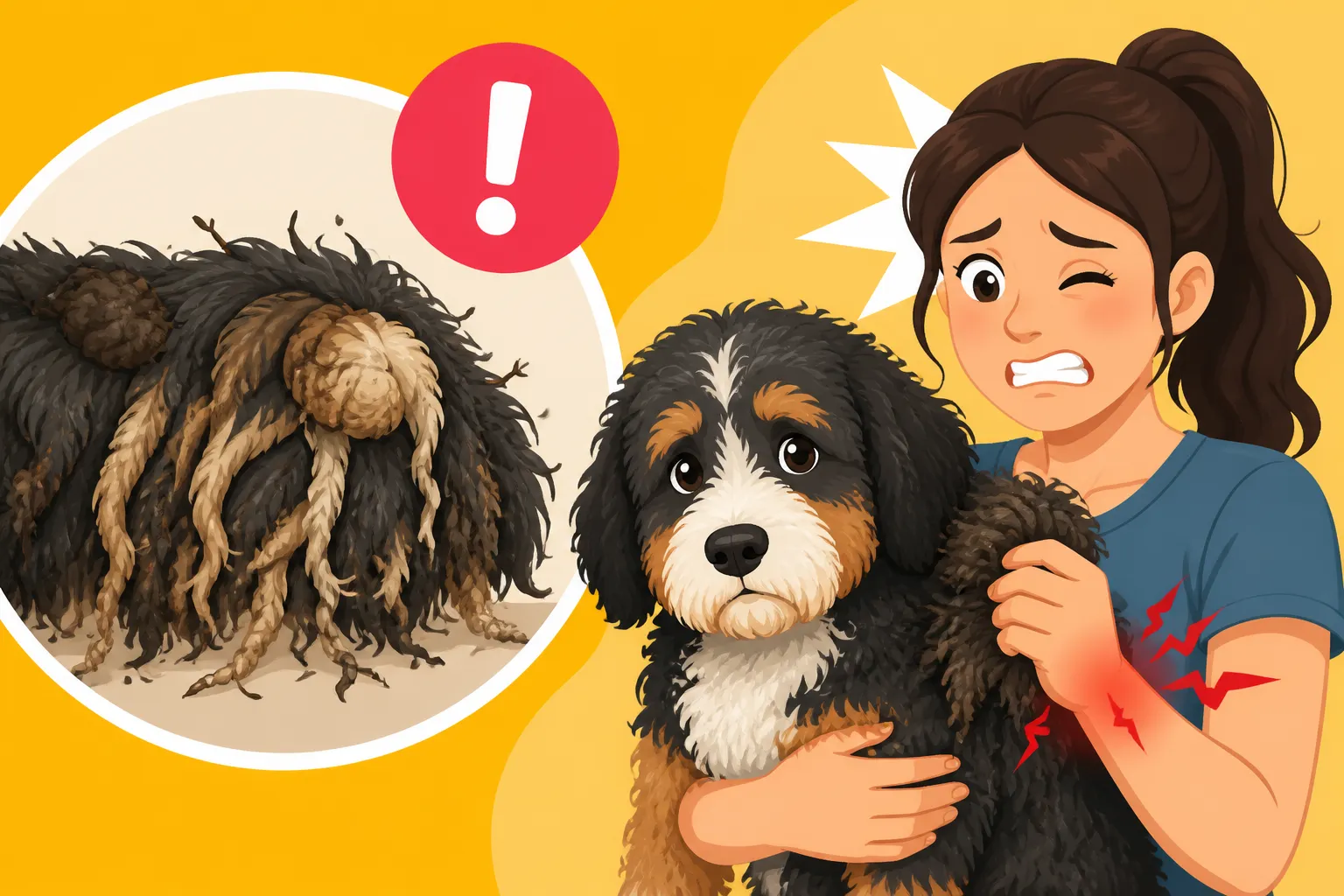
Imagine having a knot in your hair, but instead of one, it's hundreds, all pulling at your scalp simultaneously, getting tighter with every movement. That's essentially what a Bernedoodle experiences with matting, but often far worse. Their coats are a beautiful blend of the Bernese Mountain Dog's thick double coat and the Poodle's dense, curly or wavy single coat, which is a perfect recipe for tangles that quickly escalate into painful mats if not managed daily.
Mats form when loose hair gets trapped within the coat, then binds with surrounding healthy hair, creating a tight, felt-like mass. These masses don't just sit on top of the fur; they pull directly on the skin, causing constant tension and irritation. Every time your Bernedoodle walks, runs, stretches, or even just shifts positions, these mats tug on their sensitive skin. This sensation isn't just annoying; it's a chronic, low-grade pain that can significantly impact their comfort and well-being. Think about a small child constantly tugging at your hair – now imagine that persistent tugging from multiple directions, all over your body, for days or weeks on end. It’s truly heartbreaking to consider. These dense tangles often start small, perhaps The Mat That Forms Where a Bernedoodle's Ear Folds or a little knot under their harness, but they grow quickly.
The longer a mat is left untreated, the tighter it becomes. Moisture, like rain, baths, or even just humidity, can cause mats to shrink and contract, pulling the skin even more. Dirt, debris, and even dried urine or feces can get caught in mats, especially in areas like the britches or around the paws, leading to further irritation and unsanitary conditions. These aren't just minor annoyances; these are areas where severe pain and infection can take hold. Many owners don't realize just how extensive the matting can be until they try to brush it out or, heartbreakingly, when a professional groomer reveals the hidden pelt underneath.
Identifying Signs of Discomfort from Matting
Sometimes, a Bernedoodle can be incredibly stoic, and their pain might not be immediately obvious. However, if you know what to look for, you can often spot the subtle (and sometimes not so subtle) signs that matting is causing your dog distress. It's not just about seeing the matted clumps; it's about observing changes in their behavior and movement.
One of the most common indicators is a reluctance to be touched or groomed, particularly in specific areas. If your Bernedoodle usually loves a good cuddle but suddenly flinches or pulls away when you reach for their ears, armpits, or hindquarters, it's a red flag. They might even growl, snap, or try to bite, not out of aggression, but because they anticipate pain. I've heard countless stories from owners who are heartbroken when their usually sweet dog reacts this way, only to discover a massive mat hidden deep in their coat. These mats, especially in sensitive areas like Mats in a Bernedoodle's Armpits and Britches, can cause intense pain when moved or brushed. You might also notice them guarding certain body parts, holding a limb stiffly, or being hesitant to jump onto furniture or climb stairs, all due to the pulling sensation.
Physical signs can also be present if you look closely. Mats can restrict blood flow and prevent air circulation to the skin, creating a breeding ground for problems. You might see redness, inflammation, or even open sores and scabs underneath the mats. These skin issues are often itchy, leading your dog to scratch, which only makes the matting worse and can introduce bacteria, leading to secondary infections. Sometimes, your Bernedoodle might simply be generally subdued, less playful, or less enthusiastic about walks. If they are normally bouncy and happy, and suddenly seem to be slowing down, it's worth checking their coat thoroughly, as extensive matting can genuinely impact their overall mood and energy levels. While some dogs might just be The Signs a Bernedoodle Is Slowing Down with age, it's important to rule out matting as a significant contributor to discomfort.
The Health Risks Beyond Surface Pain
While the immediate pulling and skin irritation caused by mats are certainly painful, the consequences of untreated matting can be far more severe and lead to serious health issues for your Bernedoodle. It's not just about a bad hair day; it's about a compromised quality of life and potentially expensive vet bills.
One of the most common issues is skin infections. The tight, dense mats trap moisture and dirt against the skin, creating a warm, damp environment perfect for bacteria and yeast to flourish. This can lead to conditions like pyoderma (bacterial skin infection) or yeast infections, which cause intense itching, redness, inflammation, and an unpleasant odor. In severe cases, these infections can spread and become systemic if left untreated. Parasites, such as fleas and ticks, can also become trapped within dense mats, making them incredibly difficult to detect and remove, further exacerbating skin irritation and potentially transmitting diseases. Hot Spots Under a Bernedoodle's Thick Coat are another common problem, often hidden beneath a matted layer, becoming painful, oozing sores that require veterinary attention.
Beyond skin issues, chronic matting can restrict movement and even deform the underlying skin. When mats are severe, forming a "pelt" that covers large areas of the body, they can reduce circulation, cause muscle atrophy from disuse, and in extreme cases, even lead to gangrene in affected limbs or tails. This is particularly true for mats that form in the sensitive areas like paws, around joints, or on the tail. I’ve heard of Bernedoodles developing painful limps because mats behind their elbows or in their armpits made it excruciating to extend their legs. Furthermore, if a Bernedoodle has existing orthopedic issues like Loose Hips in a Growing Standard Bernedoodle or Elbow Dysplasia in a Growing Bernedoodle, matting can make these conditions significantly worse by adding strain and restricting the necessary natural movement that helps manage discomfort. It’s a cascading problem where one issue can quickly lead to many others.
Preventing Mats and Compassionate Handling
The best approach to dealing with matted fur on a Bernedoodle is prevention, hands down. Their magnificent coats require consistent, diligent care, but with the right tools and routine, you can keep your furry friend comfortable and mat-free. It’s a commitment, but one that pays off in a happy, healthy Bernedoodle.
Firstly, you need the right arsenal of grooming tools. A good quality slicker brush, a metal comb with both wide and fine teeth, and a de-matting rake are essential. You can find a fantastic array of reliable grooming tools on platforms like Amazon, making it easy to equip yourself. The key is to brush frequently—ideally daily, or at least every other day—and to "line brush," meaning you brush in sections, all the way down to the skin, rather than just skimming the top of the coat. Line Brushing a Bernedoodle to the Skin is crucial because mats often start at the base of the hair, near the skin, and then grow outwards. If you only brush the top layer, you're missing the crucial undercoat where mats truly take hold. For areas prone to matting, like behind the ears, armpits, and under the collar (especially if they wear a heavy duty harness), pay extra attention.
If you encounter a small mat, try to work it out gently with your fingers, then use the wide-toothed comb, followed by the slicker brush. Always hold the hair at the base near the skin to minimize pulling. For anything more severe, or if your Bernedoodle is showing signs of pain or resistance, it's time for professional help. A professional groomer has specialized tools and techniques to remove mats safely, and critically, knows when shaving is the kindest option. Trying to cut out large, tight mats at home can be incredibly dangerous, risking serious injury to your dog's skin. Groomers understand that sometimes Whether a Matted Bernedoodle Must Be Shaved Down is the only humane option, providing immediate relief from pain.
Building a positive association with grooming from puppyhood is also incredibly important. Programs like BAXTER & Bella often emphasize cooperative care, teaching your dog to willingly participate in grooming sessions through positive reinforcement. This can make a world of difference when it comes to handling sensitive areas or tackling minor tangles without distress. Even an older Bernedoodle can learn to tolerate grooming better with patience and positive reinforcement, making future maintenance much easier and less painful for everyone involved. Regular professional grooming appointments, typically every 6-8 weeks, are non-negotiable for a Bernedoodle with this coat type, as A Year of Grooming Bills on a Standard Bernedoodle will quickly prove.
Matting Severity and Recommended Action
| Matting Severity | Description | Recommended Action | Potential Pain Level |
|---|---|---|---|
| Minor Tangles | Small knots, easily found and brushed out, not pulling skin. | Daily line brushing with slicker brush and comb. Use detangler spray. | Low |
| Moderate Matting | Several small, tight mats or a few larger ones, pulling skin slightly. | Careful, patient de-matting at home with fingers and comb, holding skin. If resistant, professional groomer. | Moderate |
| Severe Matting | Large, dense, felted mats, or "pelt" covering significant areas, tight on skin. | Immediate professional grooming. Often requires shaving down to the skin to relieve pain. Attempting at home is dangerous. | High |
| Pelted/Extreme | Coat entirely matted, like a shell, severely restricting movement, causing sores. | Urgent veterinary attention for sedation/pain management, followed by complete shave by professional groomer. | Extreme |
Disclaimer
This article is for general informational purposes only and does not constitute professional advice. Laws, prices and regulations vary by location and change over time. Consult a qualified professional for guidance on your specific situation.