Bernedoodle or Newfypoo
Choosing between a Bernedoodle and a Newfypoo can feel like choosing between two versions of the same big, fluffy family dog. Both may inherit a Poodle’s coat and quick learning, but their size, shedding, exercise needs, and day-to-day care can differ substantially. This guide explains what to compare before you decide, including the realities that puppy photos often leave out.
Bernedoodle and Newfypoo differences
What each cross may inherit
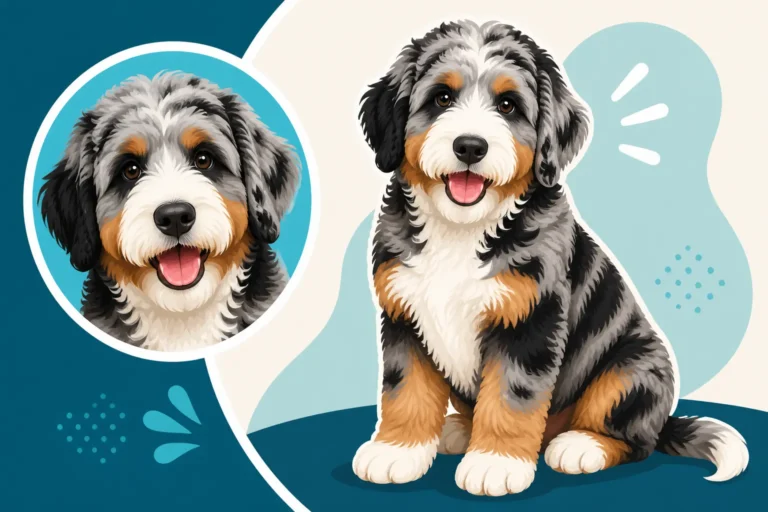
A Bernedoodle is a cross between a Bernese Mountain Dog and a Poodle. A Newfypoo, sometimes called a Newfiedoodle, is a cross between a Newfoundland and a Poodle. In both cases, the Poodle parent may contribute intelligence and a curlier coat, while the other parent brings its own size, coat, and temperament traits. The result is not reliably predictable from the cross’s name alone.
Bernese Mountain Dogs are often described as affectionate and people-oriented, while Newfoundlands are known for a patient, gentle nature. But individual dogs vary, and a puppy can take after either parent more strongly. The Bernese influence is explored further in What the Bernese Contributes to a Bernedoodle, while What the Poodle Contributes to a Bernedoodle helps explain why coat and behavior can differ even among dogs in the same litter.
Neither cross has a single, universally followed size or coat standard. A breeder’s labels and adult-size estimates are useful starting points, not guarantees. Ask about the actual size and temperament of both parents, the health testing behind the pairing, and the traits seen in previous litters. If you’re comparing other family-dog options too, Bernedoodle or Bernese for a Family can help clarify what changes when the Poodle cross is not part of the picture.
Size, strength, and the space they take up
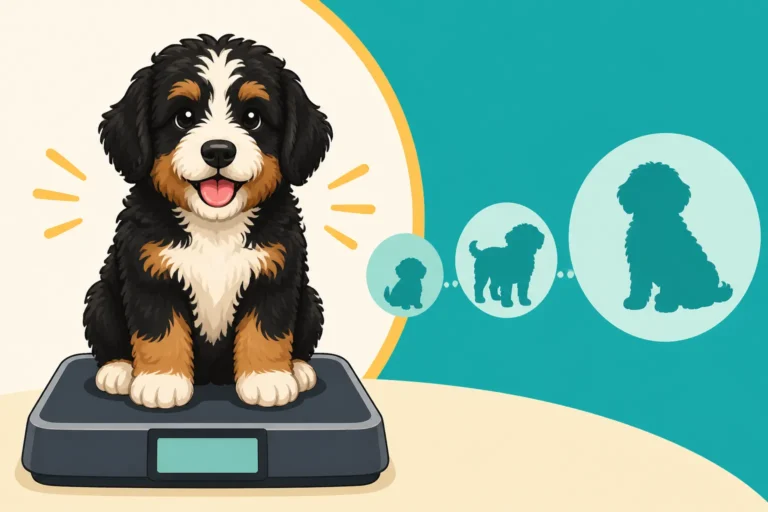
Bernedoodles range from smaller dogs bred with Miniature or Toy Poodles to large dogs bred with Standard Poodles. Newfypoos are also variable, but the Newfoundland parent is a giant breed, so a Newfypoo may grow into a particularly large, heavy dog. A puppy that looks manageable in a breeder’s arms can become difficult to lift into a car or help onto a slippery floor.
That practical difference matters more than the number on a scale. Consider whether you can safely handle a dog who needs help getting into the vehicle, has to be guided around stairs, or takes up most of the sofa. A very large dog can also be a challenge in a narrow hallway, a small vehicle, or a home where children and visitors move around quickly. For Bernedoodles, The Three Bernedoodle Sizes and What Sets Them and Which Bernedoodle Size Suits Which Household explain why size should be treated as a household fit, not just a puppy-shopping preference.
| Comparison point | Bernedoodle | Newfypoo |
|---|---|---|
| Parent breeds | Bernese Mountain Dog and Poodle | Newfoundland and Poodle |
| Likely size considerations | Varies widely with Poodle parent and breeding line | Often very large, with potential for substantial weight and strength |
| Coat and shedding | Can range from straighter and shedding to curlier; no coat type guarantees low shedding | Also varies; a dense or wavy coat may need frequent maintenance |
| Common care planning | Brushing, grooming, exercise, and joint-conscious handling | Brushing, grooming, exercise, drool management, and space for a giant dog |
| Best first question | Which size and coat traits are present in these parents? | Can my home and routine comfortably accommodate a giant dog? |
Treat this as a planning guide rather than a promise about any individual puppy. The actual parents, their health, and the puppy’s inherited traits matter more than a general breed label.
Coat, grooming, and the mess at home
Shedding is not a simple yes-or-no question
Both crosses may be marketed as low-shedding or allergy-friendly, but neither label guarantees a particular coat or an allergy-free experience. A Bernedoodle can inherit a straighter coat that sheds more, or a wavier or curlier coat that holds loose hair but mats more easily. Newfypoos can also vary, and the Newfoundland parent’s dense coat makes it especially important to ask what coat traits are present in that particular pairing.
A curlier coat is not automatically easier. It may leave less loose hair around the house, but trapped hair can tangle close to the skin. A dense coat can mat behind the ears, under the collar, in the armpits, and where the legs meet the body. If someone in your home has allergies, spend time around adult dogs from the same lines before committing; a puppy’s coat may change as it matures. The guide Whether a Bernedoodle Sheds Less Than a Bernese offers more context on why the Bernedoodle coat should not be treated as a guaranteed shedding fix.
Grooming is a routine, not an occasional appointment
Expect to brush regularly and keep up with professional grooming if you want to maintain a longer coat. The amount of work depends on coat texture, length, outdoor activity, and how comfortable the dog is with brushing. Missing a few sessions can turn small tangles into tight mats, and mat removal can be uncomfortable. Grooming needs are not just cosmetic: mats can pull at the skin and make it harder to notice irritation.
A Newfypoo’s potential size can make home bathing and drying especially demanding. A dog who is comfortable in a bathtub as a puppy may become difficult to manage once fully grown. Before choosing either cross, ask a local groomer whether they regularly work with large doodle mixes, what kind of coat care they recommend, and how the dog should be prepared for appointments. For more on the practical commitment, see Whether a Bernedoodle Is Worth the Grooming.
It also helps to teach handling early. Practice short, calm sessions touching the paws, ears, muzzle, and tail, and reward the dog for standing or lying quietly. If you need brushes, combs, or other basic supplies, a retailer such as Chewy may be one place to check, but choose tools suited to the dog’s coat and ask a groomer to demonstrate how to use them. A brush that works well on one coat can be ineffective or uncomfortable on another.
Temperament, exercise, and everyday life
Affectionate does not always mean easygoing
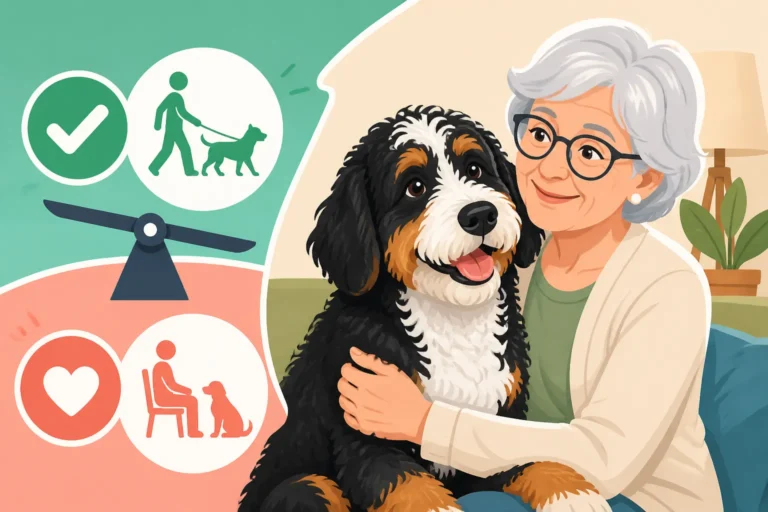
Bernedoodles and Newfypoos may both be social, attached to their families, and eager to be nearby. That can be lovely when you want a companion who joins family life, but it can be difficult if the dog is left alone for long stretches without preparation. A large dog that leans, jumps, or barrels through a doorway can also be a lot to manage, even when the behavior comes from excitement rather than aggression.
Neither cross should be assumed to be calm indoors just because one of its parent breeds has a relaxed reputation. Puppies and adolescents need training, appropriate outlets, and consistent boundaries. Teach loose-leash walking and polite greetings while the dog is still small enough to manage. Whether a Bernedoodle Is Calm Indoors is useful background for setting realistic expectations about how much personality and energy can vary.
Socialization should mean calm, positive exposure to ordinary life, not overwhelming a puppy with crowds or forcing interactions. Let the dog observe people, traffic, visitors, and other dogs at a comfortable distance. If the puppy seems cautious, give it room to retreat and reward curiosity. A confident, well-socialized dog is not created by making it meet everyone; it is built through safe experiences and patient training.
Exercise and weather need individual planning
Both dogs need regular activity, but a long walk is not the only way to meet a dog’s needs. Sniffing, training games, food puzzles, and relaxed time outdoors can provide useful stimulation. Build exercise gradually, especially while a large puppy is growing, and ask a veterinarian for guidance on activity that suits the dog’s age and body. Avoid assuming that a large dog needs strenuous exercise simply because it is large.
Coat density and body size also make heat management important. On warm days, choose cooler parts of the day, bring water, provide shade, and watch for unusually heavy panting, weakness, or reluctance to continue. A thick coat should be discussed with a qualified groomer rather than shaved impulsively; clipping does not replace shade, airflow, and sensible scheduling.
Think through the boring logistics as carefully as the fun ones. Can the dog fit comfortably in your car? Is there enough room for a large bed and a safe resting place? Can you manage muddy paws and wet coats after a rainy walk? For a Bernedoodle, Which Bernedoodle Size Fits an Apartment provides another perspective on matching a dog’s size and needs to a home. With either cross, the routine matters more than having a big yard if you can provide consistent care, training, and exercise.
Choosing the right cross for your household
Match the dog to your real routine
Start with the life you have, not the one you imagine having after bringing home a puppy. If your home is busy, consider how a large dog will move through shared spaces, meet visitors, and settle while people work or eat. If you work away from home, plan for gradual alone-time training and reliable care rather than expecting a young dog to adapt immediately. Whether a Bernedoodle Suits a Household That Works can help you think through that schedule for a Bernedoodle; the same honest assessment is useful when considering a Newfypoo.
Budget for the ongoing care categories, not just the initial adoption or purchase cost. Food portions, grooming, equipment, training, routine veterinary care, and emergency planning all matter. Large dogs may need stronger walking equipment and more room in the car, while coats that mat easily can require regular professional upkeep. If you use online shopping to restock bulky food or everyday supplies, Chewy is one option to compare with local stores for availability and delivery convenience. Check that any food is appropriate for the dog’s age, size, and health needs with your veterinarian.
Before choosing a puppy, meet adult dogs from the breeder’s lines if possible. Ask how the adults behave around strangers, children, other pets, grooming, and ordinary household noise. Request health-testing records for both parent dogs and ask what health concerns occur in their family lines. A thoughtful breeder should be willing to discuss the limits of predicting adult size, coat, and temperament rather than promising that every puppy will be non-shedding, calm, or a particular weight.
Questions to ask before you commit
A clear conversation with a breeder can reveal whether your expectations and the dog’s likely needs match. Ask which Poodle variety was used, the adult sizes of both parents, and how the breeder estimates puppy size. Ask what coat types have appeared in related litters and what grooming routine the breeder recommends. For a Newfypoo, specifically discuss the possibility of giant adult size, strength, and drooling; for a Bernedoodle, clarify which size category the breeder uses and how variable previous puppies have been.
Also ask about health testing, veterinary care, socialization, and what support is available if the dog’s adult traits differ from your expectations. Avoid choosing based only on color, a cute puppy photograph, or a promise that the dog will be easy to groom. A reliable plan includes a veterinarian, a groomer comfortable with large dogs, and training support if you encounter behavior challenges. If you’re still comparing Bernedoodles with other crosses, Bernedoodle or Sheepadoodle for a Quieter House may help you frame the questions you want to answer.
Chewy or another pet-supply retailer can help with routine items once you know what your dog actually needs, but shopping convenience cannot make a poor household fit work. Make the decision around adult size, coat care, time alone, training, and the people who will share responsibility. The better match is not necessarily the fluffiest puppy or the cross with the most appealing reputation; it is the dog whose likely needs your household can meet consistently.
Disclaimer
This article is for general informational purposes only and does not constitute professional advice. Laws, prices and regulations vary by location and change over time. Consult a qualified professional for guidance on your specific situation.