Whether a Bernedoodle Suits a Cold Climate
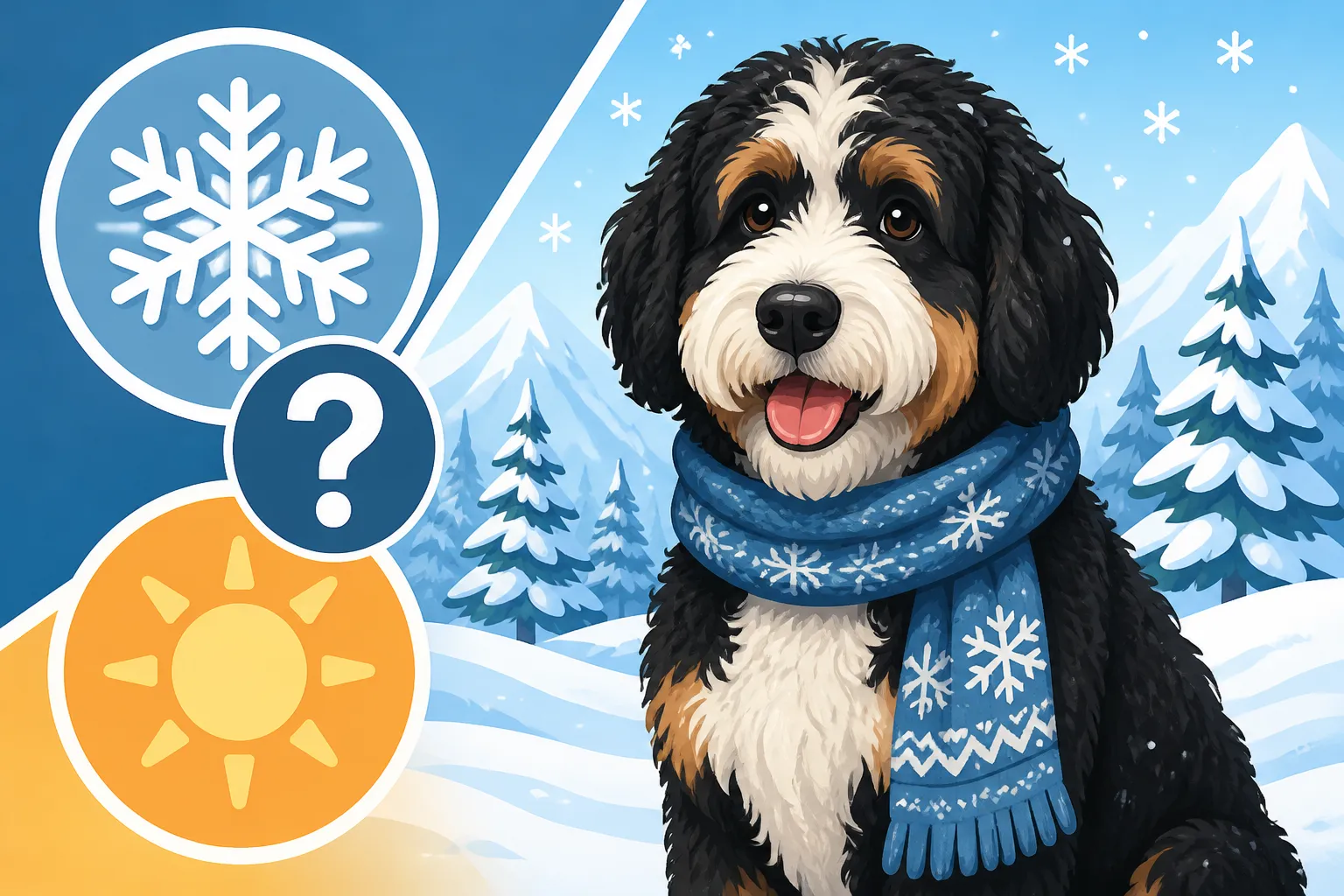
A Bernedoodle can enjoy life in a cold climate, but the breed mix is not a guarantee of all-weather comfort. Some inherit dense, insulating coats; others have thinner or curlier coats that offer less protection than their appearance suggests. This guide explains what affects cold tolerance and how to make winter walks, snow play, and time outdoors safer and more comfortable.
How well does a Bernedoodle handle cold weather
The Bernese Mountain Dog influence helps, but does not tell the whole story
Bernese Mountain Dogs were developed for work in a cold, mountainous region, and that heritage can contribute a substantial coat and a liking for brisk weather. Poodles, the other parent breed, also have coats that can offer some protection. But Bernedoodles are a cross, and their coat, body size, and comfort in winter can vary from dog to dog. A Bernedoodle may seem eager to charge through fresh snow without necessarily being comfortable in every cold-weather situation.
The mix of traits can make it tempting to assume that a Bernedoodle is built for winter. In practice, a dog’s coat type, coat length, grooming, age, health, and time spent acclimating to the weather all matter. A clipped-short dog, a young puppy, and an older dog with stiff joints may each need more protection than a healthy adult with a thick, dry coat. The family’s local conditions matter too: damp wind, icy sidewalks, and slushy streets can be harder to manage than a dry, calm day with snow on the ground.
So, think of cold tolerance as an individual trait rather than a promise attached to the breed name. If you’re also weighing how climate affects the breed in the other direction, Whether a Bernedoodle Suits a Warm Climate looks at the challenges of heat.
Coat type is more useful than a general breed label
Bernedoodles can have straight, wavy, or curly coats, and coat texture alone does not tell you exactly how much undercoat or insulation your dog has. A fluffy-looking coat may not be as weatherproof as it appears, especially if it is clipped short, wet, or tangled. A longer coat may provide more coverage, but it can also collect snow and ice or become matted when damp.
The coat a puppy will have as an adult can be difficult to judge early on. As it matures, coat density and texture can change, and routine grooming affects how effectively it protects the dog. For a closer look at how coat traits vary across the mix, read The Coat a Bernedoodle Gets From Two Heavy Coated Parents and Whether a Bernedoodle Inherits the Bernese Undercoat.
One practical point is easy to miss: a thick coat does not mean a Bernedoodle should stay outside indefinitely. Coat insulation can be reduced by wetness, matting, and clipping, and a dog can become chilled even if it looks plush. Pay attention to how your own dog behaves rather than relying on appearance or breed reputation.
What affects a Bernedoodle’s winter comfort
Size, age, health, and grooming all matter
A large adult Bernedoodle may retain body heat differently from a tiny dog, but size does not make any dog immune to cold. Smaller dogs can lose heat more quickly, while large dogs may have other concerns, such as joint discomfort on icy ground or difficulty getting into a car after a long walk. Puppies and senior dogs are often less able to regulate their comfort or communicate discomfort clearly. Dogs with medical conditions, low body weight, or limited mobility may need extra caution and advice from their veterinarian.
Grooming changes the equation. A short clip may leave less protection from wind and cold, while an unbrushed or matted coat can trap moisture close to the skin and make drying difficult. Regular brushing helps keep the coat in better condition, but avoid assuming that simply leaving it very long is the safest winter plan. A coat that drags through wet snow can become heavy and uncomfortable. Ask your groomer for a practical length that suits your dog’s coat and your local weather, and make sure you can dry the coat thoroughly after outings.
A winter jacket can help some Bernedoodles, particularly those with short clips, little undercoat, or a tendency to shiver. It should fit without restricting movement or rubbing under the front legs. If you’re considering a coat, check the fit while your dog is standing and walking, not just while trying it on indoors. Whether a Bernedoodle Needs a Coat in Winter covers how to think through that choice.
Weather conditions can matter more than the number on a forecast
Cold is not just a temperature reading. Wind, dampness, duration outdoors, and whether your dog can move freely all affect comfort. A short bathroom trip on a chilly morning is different from an extended walk in freezing rain. Snow can be fun for one dog and unsettling for another, especially if it is deep, crusted, or packed with ice.
Watch for changes in behavior. A dog that slows down, repeatedly lifts its paws, seeks shelter, shivers, or tries to turn toward home may be telling you the outing is no longer comfortable. Don’t insist on finishing a planned route just because your dog seemed happy at the start. Head indoors, dry the dog, and warm them gradually. If signs are severe or do not improve after getting out of the cold, contact a veterinarian promptly.
An acclimated dog may be more comfortable on routine winter walks than one suddenly taken from a warm home into harsh weather. Even so, acclimation is not a reason to ignore distress. Keep outings flexible, and shorten them when the weather or your dog’s condition calls for it.
Winter care for paws, coat, and time outdoors
Protect paws from ice, salt, and packed snow
Snow and ice can collect between a Bernedoodle’s toes, especially when there is longer feathering around the paws. Those icy clumps can tug at hair and make walking painful. After a walk, check between the toes and pads; use lukewarm water to loosen stuck snow rather than pulling hard at the hair or using hot water. Dry the paws carefully, including between the toes.
Road salt and other de-icing products can irritate paw pads, and dogs may lick residue from their feet after coming inside. When sidewalks or parking areas have been treated, consider routes with less salt, dog boots if your Bernedoodle accepts them, or a rinse and thorough drying afterward. Paw balm may help protect dry pads, but it does not replace checking for cracks, redness, or irritation. For more detail, see Ice Balls in a Bernedoodle's Feathering and Whether Road Salt Hurts a Bernedoodle's Feet.
If you’re shopping for boots or paw-care products, retailers such as Chewy carry options, but the useful part is choosing a product that fits your dog and is appropriate for its intended use. Boots that slip, twist, or cause an awkward gait are unlikely to help. Introduce them indoors in short, positive sessions before relying on them outside.
Dry the dog thoroughly and keep outdoor time supervised
When a Bernedoodle comes in wet, dry the coat rather than letting it air-dry for hours. Pay particular attention to the belly, legs, paws, and areas where the coat is dense. Dampness trapped against the skin can leave a dog uncomfortable, and brushing a wet or tangled coat can create more difficulty. If your dog tolerates a dryer, use a dog-safe setting and keep it moving; never use high heat close to the skin.
A covered, sheltered place can be useful for quick outdoor breaks, but a Bernedoodle should not be left outside for long stretches just because the breed has Bernese Mountain Dog ancestry. Outdoor time should be supervised, with access to a dry, warm place to come inside. The risks of leaving a dog outdoors are not limited to cold alone: a dog can become wet, stuck, injured, or unable to get back to shelter. Whether a Bernedoodle Should Live Outdoors discusses why indoor living and human supervision matter.
For car trips, bring a towel and plan where your dog can settle comfortably once you reach your destination. A wet dog in a cold vehicle may become chilled, and a dog left unattended in a parked car can face changing conditions even when the weather initially seems manageable. Car Travel With a Standard Bernedoodle offers more on making vehicle travel work with a large dog. Chewy can also be a place to compare travel blankets or other supplies, but fit, ease of cleaning, and safe restraint are more important than buying a long list of winter gear.
A practical cold-weather routine for your Bernedoodle
Use your dog’s behavior to set the length of an outing
Start with shorter walks when a cold spell begins, then adjust based on your dog’s comfort. Take a familiar route close to home so you can turn back easily. Keep an eye on pace and body language throughout the walk; a Bernedoodle that is pulling eagerly at the beginning may still become uncomfortable later. Bring a towel for the return trip if snow or slush is likely.
At home, check paws and coat before your dog settles in. Remove snow gently, rinse off salt when needed, and dry damp areas. If your dog has a longer coat, take time to check the legs and underside for small tangles or packed snow. A quick inspection after each outing is usually easier than dealing with a tight mat or irritated paw later.
You can also make winter breaks more comfortable without turning them into a production. Keep a towel by the door, clear a small area where your dog can dry off, and make sure the route to the yard is not dangerously slick. If the dog is reluctant to go outside, consider whether weather conditions, footing, or a health issue may be contributing rather than assuming stubbornness.
Know when to bring your dog in and ask for help
Shivering, repeated paw lifting, reluctance to move, unusual whining, or trying to burrow into you are reasons to head inside. Once indoors, dry your dog and let them warm up in a comfortable space. Avoid rubbing cold or painful areas vigorously. If your dog seems weak, confused, unusually lethargic, or continues to show signs of distress after coming inside, seek veterinary advice rather than waiting to see whether a nap fixes it.
Cold-related discomfort can be harder to spot in a dog that is excited outdoors or tends to push through an activity to stay with its person. Make a habit of checking in before your dog does. That is especially helpful for puppies, seniors, dogs with health concerns, and dogs whose coat has recently been clipped.
There is no single winter routine that suits every Bernedoodle. A healthy adult with a dense coat may be comfortable on a snowy walk, while another dog of the same mix may need a jacket and a much shorter outing. Use the dog in front of you as your guide: protect paws, keep the coat dry and manageable, supervise outdoor time, and adjust plans when your Bernedoodle shows that the cold has stopped being fun. If you’re considering a coat or paw-care items, Chewy is one place to browse, but a good fit and your dog’s response matter more than the brand or appearance of the gear.
Disclaimer
This article is for general informational purposes only and does not constitute professional advice. Laws, prices and regulations vary by location and change over time. Consult a qualified professional for guidance on your specific situation.