The Clip a Bernedoodle Owner Should Ask For in July
July is here, and for many Bernedoodle owners, it brings a familiar dread: how on earth do you keep your big, fluffy companion comfortable when the temperatures start soaring? That beautiful, thick coat that was so cozy in winter suddenly feels like a heavy wool blanket, and you're torn between wanting to shave them down and worrying about ruining their fur or exposing their skin. This guide is here to walk you through the best types of clips to ask your groomer for in July, ensuring your Bernedoodle stays cool, comfortable, and healthy through the hottest part of the year.
Understanding Your Bernedoodle's Summer Struggle
Let's be real, Bernedoodles are not built for tropical climates. They're a hybrid of two breeds, the Bernese Mountain Dog and the Poodle, both of which come with serious coats that are fantastic for cold weather but can become a real oven when the sun beats down.
Why Bernedoodles Get So Hot
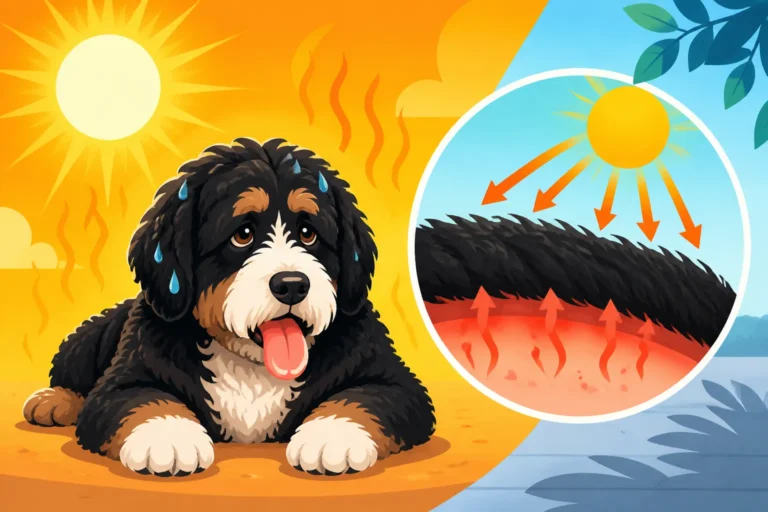
It's all about that coat, or rather, coats plural! The Bernese side brings a dense double coat – a soft, insulating undercoat and a longer, coarser outer coat. The Poodle side, while often seen as "hypoallergenic," contributes a single, but incredibly dense and curly, coat. When you mix these two, you get a beautiful, often wavy or curly, coat that can easily trap heat and air close to your dog's body. It's like wearing a heavy down jacket in summer; it just doesn't work.
Think about it: that thick fur, especially if it's longer than a couple of inches, creates a barrier that prevents cooler air from reaching their skin and traps body heat. If your Bernedoodle also happens to have a darker coat, like a black tri-color, they absorb even more radiant heat directly from the sun, making them feel hotter faster. It’s a double whammy for these gorgeous dogs, and it’s why understanding Why a Black Tri Bernedoodle Overheats is so crucial.
Beyond Just Feeling Warm: The Risks of Overheating
It’s not just about your dog being a bit warm; overheating in dogs, especially those prone to it like Bernedoodles, can quickly become a life-threatening emergency. We're talking about conditions like heat exhaustion and heatstroke. When a dog overheats, their internal body temperature rises to dangerous levels, leading to organ damage, neurological issues, and even death.
You might notice excessive panting, drooling, lethargy, or even a change in their gum color (they might look bright red). Some dogs might stagger, vomit, or collapse. These are all serious red flags that your Bernedoodle is struggling to regulate their body temperature and needs immediate intervention. Knowing Signs a Bernedoodle Is Overheating is critical for any owner, as early recognition can save their life. We want to avoid these scenarios entirely by proactive measures, and that includes smart grooming choices.
Debunking Summer Grooming Myths: To Shave or Not to Shave?
When the mercury climbs, many Bernedoodle owners face the dilemma: should I shave my dog? There’s a lot of conflicting advice out there, and it’s easy to get confused.
The "Don't Shave to the Skin" Argument
You've probably heard this one: "Don't shave your double-coated dog! Their coat provides insulation against the heat and protects them from sunburn." There's a kernel of truth here, particularly for true double-coated breeds like Huskies or Samoyeds, where shaving can sometimes mess with their natural coat cycle and lead to uneven regrowth, a condition often called "clipper alopecia." Their unique coat structure is indeed designed to regulate temperature by trapping air, both warm and cool.
For Bernedoodles, it's a bit more nuanced because they're a mix. While they do have that Bernese double coat influence, the Poodle's single coat adds a different dynamic. The main concerns with shaving too short often include:
- Sunburn Risk: A very short clip leaves their skin exposed to harmful UV rays, just like human skin.
- Damage to the Coat: Some believe shaving can damage the hair follicles, leading to a coarser, patchy, or permanently altered coat texture.
- Loss of Natural Insulation: The idea that the coat, even a thick one, creates an insulating layer against heat can be misleading in extremely hot and humid conditions where air circulation is minimal.
It's a valid concern, and we certainly don't want to cause more problems than we solve. However, for many Bernedoodles, especially those with particularly dense or curly coats, maintaining a long, fluffy coat in summer can be a significant welfare issue.
When a Short Clip Is the Answer
Despite the warnings, a thoughtfully executed shorter clip can absolutely be beneficial, and even essential, for many Bernedoodles in the summer months. Here’s why:
- Matted Coats: This is a big one. If your Bernedoodle's coat is severely matted, especially down to the skin, there's often no other humane option than to shave them short. Mats pull on the skin, causing pain and discomfort, and they trap heat and moisture, creating a breeding ground for skin infections. Trying to demat a severely matted coat can be incredibly painful for the dog and often impossible without causing trauma. In these cases, it's not just about comfort, it's about health and kindness. You can learn more about this challenging situation by reading Whether a Matted Bernedoodle Must Be Shaved Down.
- Extreme Heat and Humidity: In regions with prolonged periods of high heat and humidity, a dense coat simply becomes a liability. A shorter clip allows for much greater air circulation to the skin, helping the dog cool down more efficiently through evaporative cooling and by allowing heat to dissipate from their body surface.
- Active Lifestyles: If your Bernedoodle loves to swim, hike, or play outdoors frequently, a shorter coat is far more practical. It dries faster, collects fewer burrs and debris, and is easier to clean, reducing the chances of skin issues and matting.
- Allergy Management: For owners with mild allergies, keeping the coat shorter can sometimes help reduce dander and hair around the house, making allergy management a bit easier.
The key is not necessarily a "shave-to-the-skin" approach, but a proper short clip that significantly reduces the volume and length of the coat while still offering some minimal protection. It’s about finding that sweet spot between functional comfort and minimal risk.
The "Summer Cut" You Should Ask For: A Practical Guide
So, what exactly should you ask your groomer for when you walk in with your fluffy Bernedoodle in the scorching July heat? Forget vague terms like "just a little shorter." Being specific is crucial for getting the results you want and keeping your dog comfortable.
The Ideal Length: The Practical "Kennel Clip" or "Sport Clip"
When it comes to Bernedoodles and summer, the "kennel clip" or "sport clip" is often the most practical and comfortable choice. This isn't a shaved-down look, but rather a consistent, relatively short length over the body that drastically reduces the bulk of the coat.
Instead of shaving right down to the skin, a good groomer will use a longer guard comb attachment on their clippers. You might hear numbers like a 5/8" or 3/4" comb attachment. This leaves a uniform length of hair – usually between half an inch to an inch – over most of the dog's body. It's short enough to allow excellent airflow and prevent matting, but long enough to still offer some UV protection and maintain a soft, plush feel.
Here’s what this typically looks like:
- Body: The main torso, back, and sides are clipped to a uniform, short length. This is where most of the heat gets trapped, so getting this section significantly shorter makes a huge difference.
- Legs: The legs are often kept slightly longer, sometimes scissored to match the body length for a clean look, or left a bit fuller if you prefer that teddy bear appearance, but still tidy and not long enough to drag or mat easily.
- Face and Tail: These areas are usually left a bit fuller to maintain that adorable Bernedoodle charm. However, the groomer should still trim around the eyes to ensure good vision and prevent irritation, and tidy up the beard to prevent food and water from clinging excessively. The tail is often shaped to a natural, plume-like appearance, but again, kept from becoming bushy or matted.
The beauty of this clip is its practicality. It significantly reduces the amount of fur to insulate against heat, makes grooming at home much easier, and still looks neat and adorable. Discussing specific blade lengths or comb attachment sizes with your groomer is key. They'll know exactly what those numbers mean and how it translates to your dog's coat type.
Key Areas for Specific Attention
While the overall body length is important, there are a few "hot zones" on your Bernedoodle that deserve extra attention during their summer clip. Focusing on these areas can make a world of difference in their comfort.
- Belly and Armpits: These are prime areas where heat can get trapped, and where the fur tends to mat easily due to friction and moisture. Ask your groomer to go a little shorter in these spots. A shorter clip on the belly allows your Bernedoodle to make better contact with cool floors when they lie down, helping to dissipate heat. Shorter fur in the armpits reduces friction and improves airflow.
- Pads of the Feet: This is crucial for two reasons: cooling and traction. Dogs sweat through their paw pads, and excessive fur can trap heat and inhibit this natural cooling mechanism. Long hair between the pads also reduces traction, making them more prone to slipping, especially on smooth surfaces or when wet. A good groomer will always trim the hair flush with the paw pads. This small detail can have a big impact on your dog’s comfort and mobility. Learn more about the importance of this specific trim in Trimming Between a Bernedoodle's Pads.
- Sanitary Trim: This should be standard in any groom, but it's even more vital in summer. Keeping the fur around their hindquarters short and clean prevents fecal matter from clinging, which can lead to discomfort, matting, and skin irritation. Hygiene is paramount when it's hot and humid.
- Face and Ears: While you might love a fluffy Bernedoodle face, in summer, excessive hair around the eyes can obstruct vision and trap sweat and debris. A tidy trim that keeps hair out of their eyes is a must. For their ears, especially drop ears like the Bernedoodle's, airflow is already limited, making them prone to infections. While you shouldn't ask for the ear leather itself to be shaved, asking your groomer to thin out the hair on the underside of the ear flap can sometimes help with air circulation. Regularly cleaning your Bernedoodle's ears is also essential, especially if they swim. For more on preventing those pesky ear issues, check out Ear Infections in a Bernedoodle's Drop Ear.
Communicating with Your Groomer for the Best July Clip
Getting the right summer clip for your Bernedoodle isn't just about knowing what to ask for; it's about effective communication with your groomer. They are the professionals, but you are the expert on your dog's lifestyle and needs.
Be Specific, Not Vague
Saying "just a summer cut" can mean vastly different things to different groomers. What one person considers a "summer cut," another might consider a shave-down, and yet another might just do a light trim. This is where precision pays off.
- Use Blade Lengths or Guard Comb Numbers: If you're comfortable, ask your groomer what blade lengths or guard comb attachments they typically use for a "kennel clip" or "sport clip" on a Bernedoodle. For instance, you could say, "I'd like a sport clip, aiming for about 3/4 inch of hair on the body, using a comb attachment." If you're unsure, ask them to show you examples or describe the typical lengths.
- Bring Pictures: A picture is worth a thousand words! Find photos of Bernedoodles with summer clips you like. This gives your groomer a visual reference point that removes ambiguity.
- Describe Your Dog's Lifestyle: This is hugely important. Tell your groomer:
- "We spend a lot of time outdoors, and he loves to swim."
- "She's mostly an indoor dog, but I want her to be comfortable."
- "He gets matted easily under his harness."
- "I need a low-maintenance clip because I struggle to brush him daily."
Your groomer can tailor the clip based on these practical considerations.
- Discuss Maintenance Expectations: Be honest about how often you can brush and groom at home. A shorter clip requires less frequent brushing, but it still needs some attention to stay mat-free and healthy. This conversation helps manage expectations for both sides.
Remember, a good groomer wants you and your dog to be happy and comfortable. Don't be afraid to ask questions, voice your concerns, and clarify what you're looking for. The cost of a Bernedoodle groom can be substantial, so you want to make sure you're getting exactly what you pay for and what your dog needs. For budgeting, it's good to keep in mind What a Bernedoodle Groom Costs Every Six Weeks.
Regular Maintenance Between Professional Grooms
Even the best summer clip isn't a magical solution that eliminates all grooming needs. Your Bernedoodle will still need regular attention between professional grooming appointments to maintain their comfort and prevent issues.
- Consistent Brushing: Even with a shorter coat, daily or every-other-day brushing is still necessary, especially for Bernedoodles with wavier or curlier coats. Mats can form surprisingly quickly, particularly behind the ears, in the armpits, and in the "britches" area (around the hind legs). A slicker brush followed by a metal comb will help you get down to the skin and ensure no hidden tangles are forming. You can find excellent brushing tools on platforms like Amazon or Chewy. For a complete breakdown of essential tools, check out The Brushes a Bernedoodle Owner Actually Needs.
- Spot Checks: Make it a habit to quickly check your Bernedoodle for any new mats or irritations daily. Pay close attention to areas prone to matting or moisture accumulation: behind the ears, under the chin, in the armpits, groin, and between the toes.
- Bathing: Regular baths, perhaps every 2-4 weeks depending on how dirty your dog gets, will help keep their skin and coat healthy. Always make sure to thoroughly brush before bathing to avoid setting any existing mats, and always dry them completely to the skin afterwards to prevent new ones from forming.
- Ear Cleaning: With drop ears, moisture and wax can accumulate, leading to infections. Clean your Bernedoodle's ears weekly with a vet-approved ear cleaner, especially after swimming.
- Paw Pad Trims: Even if their body is short, the hair between their paw pads grows quickly. Keep this trimmed regularly (every 2-3 weeks) using blunt-nosed scissors or small clippers to maintain traction and prevent debris accumulation.
Staying on top of this home maintenance is crucial. It not only keeps your Bernedoodle looking good but, more importantly, keeps them feeling good, preventing uncomfortable mats and skin issues that can escalate in summer heat and humidity.
Post-Groom Care and Summer Safety for Your Clipped Bernedoodle
Once your Bernedoodle has their fresh new summer clip, your responsibilities don't end there. In fact, a shorter coat requires specific considerations to ensure their ongoing health and comfort.
Protecting Their Skin After a Shorter Clip
With less fur acting as a natural barrier, your Bernedoodle's skin becomes more vulnerable to the elements. This is especially true for dogs with lighter colored coats or pinker skin.
- Sunburn Risk: Just like humans, dogs can get sunburned, and a severe burn can lead to pain, blistering, and even increase their risk of skin cancer over time. Areas most prone to sunburn include the top of the nose, ear tips, and any areas where the fur is thinnest or shortest. If you've opted for a very short clip, you absolutely need to be vigilant about sun protection.
- Dog-Specific Sunscreen: Consider using a dog-specific sunscreen on exposed or lightly furred areas if your Bernedoodle will be spending extended time outdoors. Never use human sunscreen, as many contain ingredients that are toxic to dogs if ingested. Talk to your vet about appropriate brands. You can often find these at reputable pet stores or on sites like Chewy.
- Limit Midday Sun Exposure: The simplest and most effective solution is to limit your Bernedoodle's exposure to direct sunlight during the peak hours of 10 AM to 4 PM. Seek shade or keep them indoors during the hottest parts of the day. A light, breathable dog shirt can also offer a physical barrier against the sun's rays for sensitive skin. Understanding Whether a Shaved Bernedoodle Sunburns is a vital piece of information for any owner opting for a short summer clip.
Hydration and Cooling Strategies
Even with a short summer clip, your Bernedoodle will still need help staying cool in the heat. Their thick build and inherent predisposition to overheating mean you need to be proactive with cooling strategies.
- Constant Access to Fresh Water: This is non-negotiable. Always ensure your Bernedoodle has access to clean, cool water. Consider placing multiple water bowls around the house and yard. If you're out and about, bring a portable water bottle and bowl.
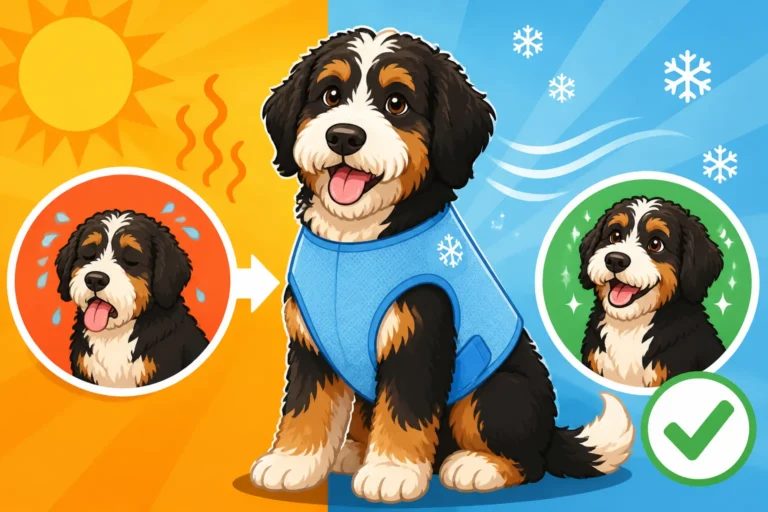
- Cooling Mats and Vests: These products can be incredibly effective. Cooling mats, often filled with gel that activates under pressure, provide a cool spot for your dog to lie on. Cooling vests, soaked in water, provide evaporative cooling as they dry. You can find a wide variety of these options on Amazon or Chewy.
- Kiddie Pools and Sprinklers: Many Bernedoodles love water! A shallow kiddie pool in the yard can be a fantastic way for them to cool off and play. Even a gentle sprinkler can provide relief on a hot day.
- Frozen Treats: Homemade frozen treats, like Kongs filled with plain yogurt or broth and frozen, or even simple ice cubes, can be a welcome cool-down. Some fresh dog food brands like Ollie offer nutrient-rich options that can be safely frozen as refreshing treats.
- Timing Walks: Stick to early mornings and late evenings for walks and outdoor exercise when temperatures are much lower. Avoid walking on hot pavement, which can burn their paw pads. A simple rule of thumb: if you can't comfortably hold your hand on the pavement for five seconds, it's too hot for your dog's paws. For more detailed advice on this, refer to Whether a Bernedoodle Should Be Walked in Summer.
- Indoor Comfort: If you live in a hot climate, air conditioning is often a necessity for a Bernedoodle. Ensure your home stays cool and comfortable for them. Remember, your Bernedoodle needs daily care, and in summer, that care heavily revolves around keeping them from overheating. You can explore a broader spectrum of their daily needs in What a Bernedoodle Needs Every Day. Always prioritize their comfort, especially since heat is a known challenge for the breed. If you notice any signs of overheating, immediately move your dog to a cooler environment and try to gently cool them down. For comprehensive steps, revisit Cooling a Bernedoodle Down Safely.
Here's a quick comparison of popular Bernedoodle clip lengths for summer:
| Clip Name/Length | Description | Pros | Cons | Best For |
|---|---|---|---|---|
| "Naked" or Shave-Down (10 blade) | Clipped very close to the skin (1/16" or less), often used for severely matted dogs. | Maximum cooling, eliminates matting, very low maintenance. | High sunburn risk, can permanently alter coat texture, less "Bernedoodle" look, no protection from bugs. | Severely matted dogs where other options aren't humane; dogs in extreme, oppressive heat for short periods with limited sun exposure; dogs with chronic skin issues needing topical treatment. |
| Kennel/Sport Clip (1/2" – 1") | Uniform short length over the body, usually using a comb attachment (e.g., 5/8" or 3/4"). | Great airflow, easy to maintain, reduced matting, still offers some UV protection, maintains a "doodle" look. | Still requires regular brushing (though less frequent), slight risk of sunburn if extremely fair-skinned. | Most Bernedoodles in hot climates, active dogs, owners wanting a balance between comfort and aesthetics, those who want a practical, low-maintenance daily routine. |
| Teddy Bear Clip (1.5" – 2.5") | Body kept longer, usually scissored or clipped with longer comb attachments, for a fluffy, "teddy bear" look. | Retains fluffy look, good for moderate heat, offers more natural UV protection. | Requires very diligent daily brushing to prevent matting, can still be too warm in high heat/humidity, higher grooming cost/time. | Dogs in milder summer climates, owners committed to daily extensive brushing, dogs that spend most of their time in air conditioning. |
| Full Coat Trim (Minimal off) | Just a trim, tidying up length and feathering, often hand-scissored. | Preserves full natural coat, maximum aesthetic appeal. | Least effective for cooling, highest matting risk, requires constant and thorough daily grooming, not suitable for hot climates. | Dogs in very cool climates, show dogs (if applicable), or dogs that are primarily indoor pets in air-conditioned environments, with owners who commit to daily, thorough line brushing. Not recommended for July in most places. |
Disclaimer
This article is for general informational purposes only and does not constitute professional advice. Laws, prices and regulations vary by location and change over time. Consult a qualified professional for guidance on your specific situation.