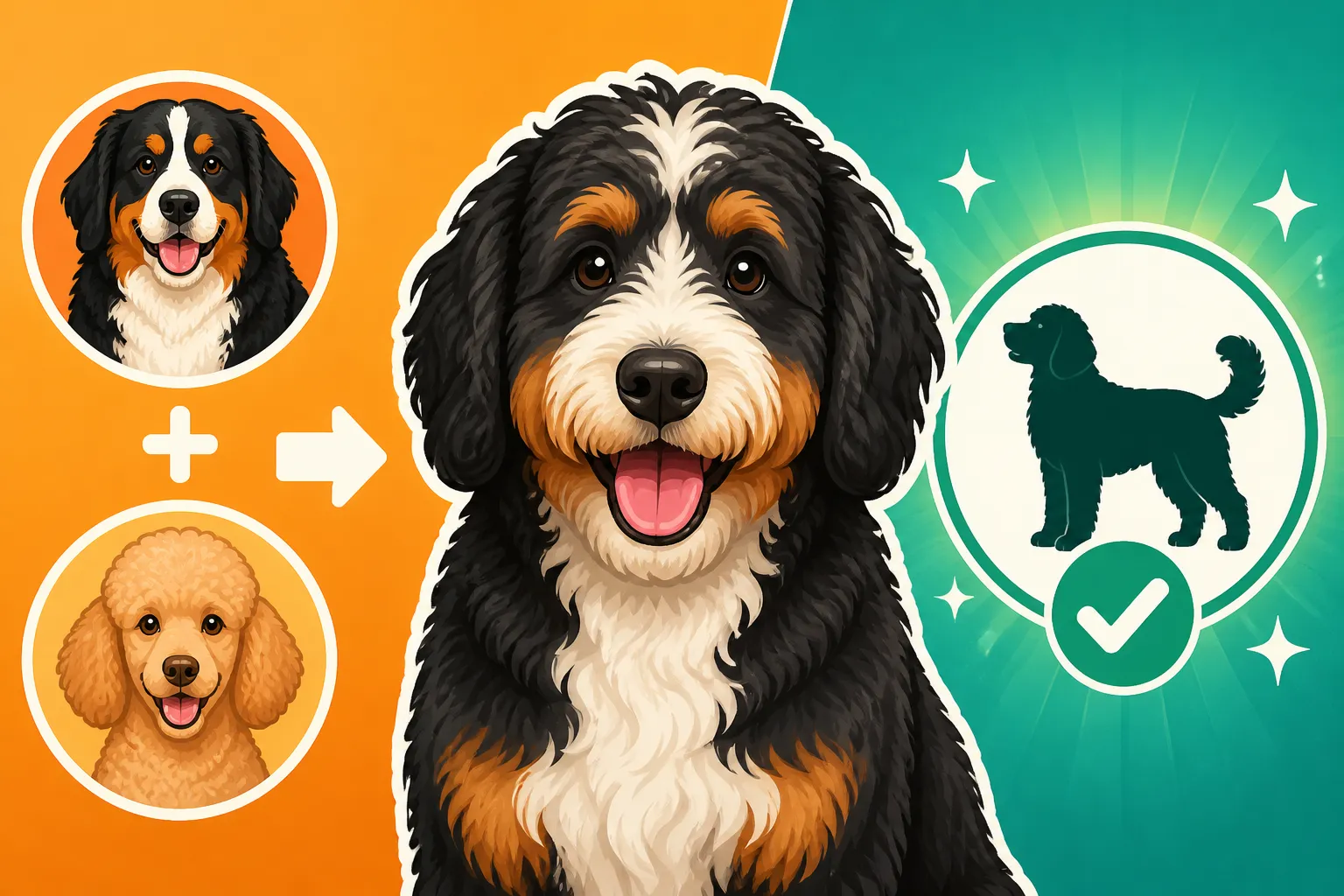
Whether the Bernedoodle Achieved What It Was Bred For
When we fall head over heels for a Bernedoodle, often what draws us in is the promise of a dog that combines the best traits of its parent breeds. We hear whispers of a longer lifespan, a non-shedding coat, and a fantastic temperament that's both smart and mellow. But the big question that looms for so many prospective owners, and even those who already share their lives with these wonderful dogs, is whether the Bernedoodle truly delivered on the initial hopes and goals its original breeders set out to achieve. This guide delves deep into those founding aspirations and examines the reality of what this beloved crossbreed has become.
The Initial Hope: A Longer, Healthier Lifespan
One of the most compelling reasons for creating the Bernedoodle was a heartfelt desire to address some of the significant health challenges faced by the Bernese Mountain Dog, particularly their notoriously short lifespan. It's no secret that saying goodbye to a beloved pet far too soon is one of the hardest parts of dog ownership, and for Bernese families, this grief often comes much earlier than with many other breeds.
Addressing the Bernese Mountain Dog's Lifespan Challenges
If you've spent any time researching Bernese Mountain Dogs, you've likely encountered the sobering statistics. Their average lifespan is often cited as being in the range of 7-8 years, which is heartbreakingly short for such magnificent creatures. A significant contributor to this reduced lifespan is a high incidence of certain cancers, like histiocytic sarcoma and lymphoma. For those who adore the gentle giants, this reality is a constant source of worry and a key driver in seeking out alternatives or crosses.
Imagine falling deeply in love with a dog, knowing that your time together might be cut short, perhaps just as they're truly settling into their adult personality. This fear motivates many to look for a breed that retains the Bernese's affectionate nature but without the same genetic predispositions to early illness. Breeders, too, recognized this pain point and sought a way to bring health improvements to the cherished Bernese lines.
The Promise of Hybrid Vigor
Enter the Poodle. Known for its generally robust health and a longer average lifespan, the Poodle was a natural choice to cross with the Bernese. The concept behind this pairing is often referred to as "hybrid vigor" or heterosis. In simple terms, it's the idea that by breeding two genetically distinct purebred dogs, you can sometimes reduce the incidence of breed-specific genetic diseases that become concentrated within purebred lines due to a limited gene pool. The hope was that the offspring, the Bernedoodle, would inherit a wider range of healthy genes from both parents, thereby becoming healthier and living longer lives than a purebred Bernese.
This wasn't just a random pairing; it was a deliberate attempt to infuse new genetic material and potentially dilute some of the recessive genes responsible for certain ailments. The idea was to create a dog that embodied the best qualities of both, and a significant part of that "best" was health and longevity. It offered a glimmer of hope to families who desperately wanted a loyal, gentle giant but couldn't bear the thought of another early goodbye.
The Reality: A Modest, But Not Guaranteed, Improvement
So, did it work? Has the Bernedoodle truly achieved a significantly longer, healthier life? The answer is nuanced. Anecdotally, many Bernedoodle owners will tell you their dogs live well into their double-digit years, often beyond the Bernese average. The commonly cited lifespan for a Bernedoodle tends to be The Twelve to Fifteen Years a Bernedoodle Is Sold On. This certainly seems to suggest an improvement compared to their Bernese parent.
However, it's crucial to understand that "hybrid vigor" isn't a magic bullet. While some individuals may experience remarkable longevity, not every Bernedoodle will hit the 15-year mark, and they are certainly not immune to health issues. They still carry the genetic legacy of both parent breeds, meaning they can inherit conditions from either side. For instance, while the hope was for reduced cancer risk, many still wonder Whether the Bernedoodle Cross Actually Reduced Cancer or if Whether a Bernedoodle Really Lives Fifteen Years is more marketing than reality. Reputable breeders work diligently to screen their parent dogs for common genetic ailments like hip and elbow dysplasia, Degenerative Myelopathy Both Bernedoodle Parents Can Carry, and Von Willebrand's Disease in a Bernedoodle, but no screening is foolproof, and new genetic surprises can always emerge. The overall picture suggests a modest improvement in average lifespan, but it's not a guarantee against all health concerns.
The Quest for the "Non-Shedding" Companion
Another driving force behind the Bernedoodle's creation was the widespread desire for a large, affectionate family dog that wouldn't leave a furry trail wherever it went. The Bernese Mountain Dog, while gorgeous, is a heavy shedder, especially with its dense undercoat. The Poodle, on the other hand, is renowned for its low-shedding, often hypoallergenic coat. This combination held immense appeal for those with allergies or simply those who prefer less dog hair around the house.
The Poodle's Contribution to the Coat
The Poodle's coat is single-layered and curly, growing continuously like human hair, rather than shedding in seasonal cycles like a Bernese. This is due to specific genes that control hair growth and shedding. When a Poodle is bred with another dog, particularly in a first-generation cross (F1 Bernedoodle), there's a good chance that the Poodle's dominant non-shedding genes will be passed on. This results in the wavy or curly coat that many Bernedoodles are known for, significantly reducing the amount of loose hair found in the home compared to a purebred Bernese.
For families struggling with pet allergies, this was a beacon of hope. The idea of having a dog as sweet and substantial as a Bernese, but without the sneezing and sniffling, was a dream come true. The Poodle's genetic influence on the coat was a key part of the Bernedoodle's appeal and was undoubtedly one of the primary goals of the cross.
Bernese Influence and Coat Variability
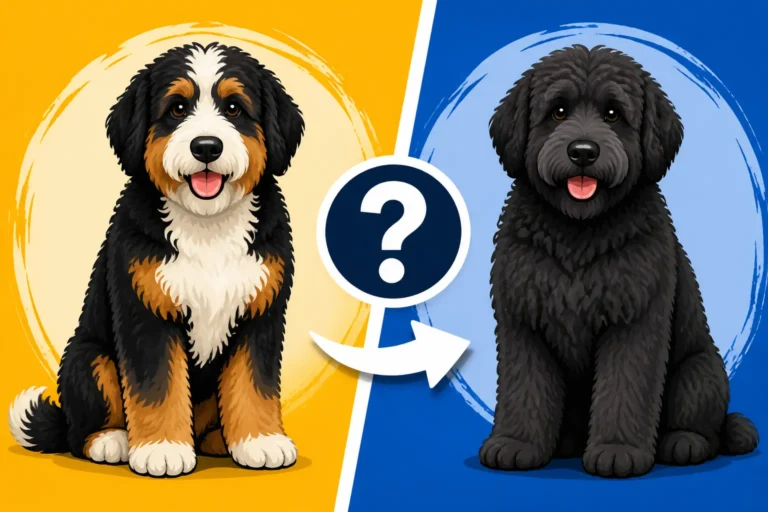
However, not every Bernedoodle ends up with that classic low-shedding Poodle coat. Genetics are a funny thing, and the Bernese contribution is still very much in play. First-generation (F1) Bernedoodles can exhibit a wide range of coat types, from the coveted tight curl that is almost non-shedding, to a looser wave, and sometimes even a straighter, flatter coat that sheds considerably more, much like a Bernese. This variability can be a real surprise for new owners who were expecting a truly non-shedding dog.
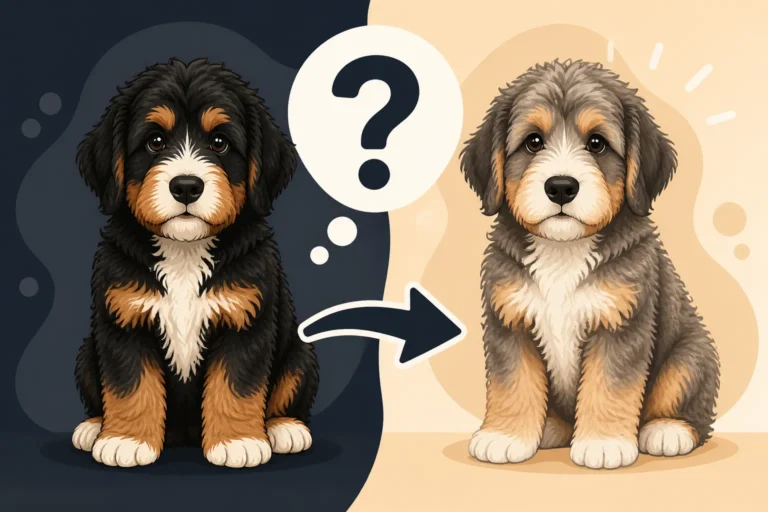
We've all seen pictures of those perfectly curly Bernedoodles, but sometimes reality hits different. You might get a pup with The Wavy Coat Most Bernedoodles Carry, which still requires significant grooming, or even one with The Straight Coated Bernedoodle That Sheds, which, while beautiful, certainly wasn't the "non-shedding" goal. Later generations, like F1b (a Bernedoodle bred back to a Poodle), are often an attempt to increase the likelihood of a curlier, lower-shedding coat. But even then, there are no absolute guarantees, and coat tests can help predict, but not perfectly guarantee, shedding levels. It's a reminder that while the intention was there, nature has its own plans.
Managing Coat Expectations and Grooming Reality
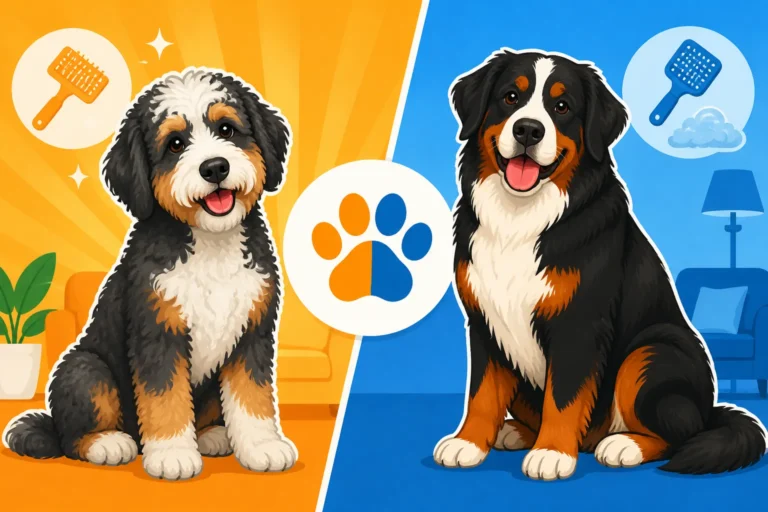
The term "non-shedding" itself can be a bit misleading. While many Bernedoodles shed significantly less than a Bernese, they are rarely truly "non-shedding" in the same way a Sphynx cat is hairless. Instead, their hair, especially the curly and wavy types, tends to catch shed hairs within the coat, rather than releasing them into the environment. This means regular, thorough brushing is absolutely essential to prevent matting. Without it, the coat can quickly become a tangled mess, leading to discomfort for the dog and expensive trips to the groomer.
Many owners underestimate the grooming commitment. What was hoped to be a low-maintenance coat often turns into a high-maintenance one, requiring daily brushing and professional grooming every 6-8 weeks. So, while the amount of hair floating around the house might be reduced, the effort required to maintain the coat is often substantial. It's a trade-off that many are willing to make for their beloved companion, but it's vital to go in with eyes wide open to the reality that Whether Any Bernedoodle Is Truly Non Shedding is a common misconception.
Blending Temperaments: The Ideal Family Dog
Beyond health and coat, a core objective of the Bernedoodle was to create a companion with an ideal temperament – a dog that combined the laid-back, affectionate nature of the Bernese Mountain Dog with the intelligence and trainability of the Poodle. The vision was a dog that would be devoted, gentle with children, and smart enough to be easily trained, making it a perfect family pet.
The Best of Both Worlds: Bernese Affection and Poodle Intelligence
The Bernese Mountain Dog is famous for its sweet, loyal, and somewhat goofy demeanor. They are often described as "velcro dogs" who adore their families and thrive on companionship. They are generally patient and good-natured, making them wonderful with children. On the other side, the Poodle is renowned for its sharp intelligence, agility, and eagerness to please. Poodles are quick learners, capable of excelling in various dog sports and obedience.
The hope was that the Bernedoodle would inherit this fantastic combination: the calm, loving disposition of the Bernese, making them wonderful snugglers and family guardians, paired with the quick wit and responsiveness of the Poodle, making them easy to train and a joy to interact with. Imagine a dog that understands commands quickly, but also wants nothing more than to curl up at your feet. That was the ideal. This blend is often highlighted by breeders as one of the key successes of the cross.
Inheriting Traits: Variability and the Need for Training
While many Bernedoodles do indeed embody this wonderful blend, it's important to remember that temperament, like coat and health, can be variable. Genetics aren't a guarantee; they provide a predisposition. Some Bernedoodles lean more heavily towards their Bernese side, exhibiting a more relaxed, sometimes slightly stubborn, approach to training. Others might inherit more of the Poodle's energy and quick-wittedness, sometimes even developing the mischievous streak Poodles can possess.
You might find your Bernedoodle has The Stubborn Streak Under a Bernedoodle's Poodle Brain, requiring patience and consistent positive reinforcement. Early socialization is absolutely paramount for a Bernedoodle puppy, especially considering the potential for shyness from the Bernese side. Engaging in activities like Socializing a Bernedoodle Before Twelve Weeks can help ensure they grow into confident, well-adjusted adults. Even with the best genetic lottery, consistent training, clear boundaries, and plenty of mental and physical stimulation are vital to shaping any dog's personality.
Common Behavioral Realities
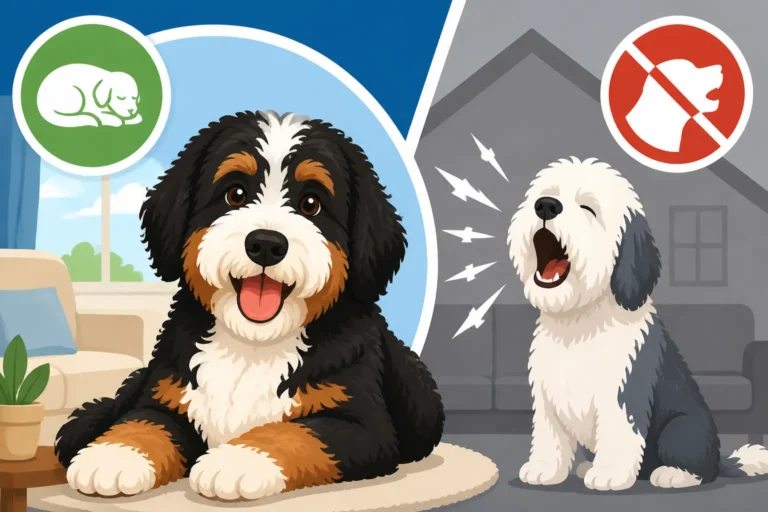
In reality, Bernedoodles are generally known for being affectionate, intelligent, and relatively easy to train, especially with positive reinforcement. They thrive on being part of the family and can develop separation anxiety if left alone for long periods. They are often described as playful and goofy, retaining that puppy-like joy well into adulthood. They are usually great with children and other pets, provided they are properly socialized from a young age. What the Bernese Contributes to a Bernedoodle is often a steady, gentle nature, while What the Poodle Contributes to a Bernedoodle is an inquisitive mind and a desire to engage.
However, their large size (for standard Bernedoodles) means that good leash manners and not jumping on guests are crucial. Without proper training, a ninety-pound dog pulling on the leash or jumping up can be a real handful. While the core temperament goals were largely met in many individuals, the owner's commitment to training and socialization remains the biggest factor in whether a Bernedoodle lives up to its full potential as an ideal family dog.
The Evolution of a Crossbreed: Beyond the Original Vision
The Bernedoodle started with a clear vision: a healthier, lower-shedding, well-tempered companion. As with any popular crossbreed, its evolution has gone beyond that initial spark, with various generations and breeding practices emerging to refine certain traits.
The Proliferation of Bernedoodle Generations
When the Bernedoodle first emerged, it was primarily an F1 cross (Bernese Mountain Dog x Poodle). This first generation offered a wide range of coat types and temperaments. To achieve more consistent results, particularly regarding the low-shedding coat, breeders began introducing F1b Bernedoodles (F1 Bernedoodle x Poodle). This backcross significantly increases the Poodle's genetic contribution, often resulting in a curlier coat and a higher likelihood of non-shedding.
Beyond F1 and F1b, you now see F2, F2b, and even Multigen Bernedoodles, each attempting to further stabilize desirable traits. This ongoing process of generational breeding reflects the continued effort to achieve the original goals more consistently, particularly for coat type, and sometimes to refine size or specific temperament qualities. It shows that the initial success spurred further development within the cross.
The Importance of Responsible Breeding
While the Bernedoodle's initial goals were noble and generally well-received, the rapid rise in popularity of "designer dogs" has unfortunately attracted some less scrupulous breeders. This means that whether a particular Bernedoodle has truly achieved what it was bred for often comes down to the individual breeder's practices. A responsible breeder will prioritize health, temperament, and ethical breeding. They will conduct extensive health testing on parent dogs, provide clear documentation of genetic clearances, and ensure puppies are well-socialized.
Conversely, breeders who cut corners, do not perform health testing, or prioritize color and appearance over health and temperament can produce Bernedoodles that fall far short of the breed's potential. Therefore, a significant part of whether the Bernedoodle "achieved" its goals rests on the choices made by those breeding them. Always look for a breeder who provides The Five Clearances a Bernedoodle Breeder Should Have and is transparent about their practices. Reputable breeders are key to upholding the initial vision for this crossbreed.
Has It "Achieved" Its Goals? A Nuanced Answer
So, after all this, has the Bernedoodle achieved what it was bred for? In many ways, yes, but not without caveats and not with 100% consistency across the board.
Lifespan & Health: There's good evidence that the Bernedoodle, on average, enjoys a longer lifespan than its Bernese parent. The hybrid vigor appears to have offered some protective benefits, especially against some of the more prevalent cancers in the Bernese. However, they are still susceptible to a range of genetic conditions from both parent breeds, and responsible health testing is critical. It's an improvement, but not a complete eradication of health concerns.
Coat: For many, the low-shedding coat goal has been met, especially in F1b and later generations. This has provided a wonderful option for families with mild allergies. However, the variability in F1 coats means that not every Bernedoodle will be low-shedding, and all Bernedoodle coats, regardless of type, demand significant grooming. The "non-shedding" promise often translates into a high-grooming reality. Finding good quality grooming products, perhaps from a trusted retailer like Chewy, is often a necessity for these dogs.
Temperament: The blend of Bernese affection and Poodle intelligence has largely been a success. Bernedoodles are widely celebrated for their gentle, loyal, intelligent, and often goofy personalities, making them fantastic family companions. However, the full expression of these traits requires consistent training and socialization from puppyhood, just like any other dog. They can still lean towards either parent's temperament, making each individual a unique blend.
In conclusion, the Bernedoodle has largely achieved its founding goals by creating a companion that often lives longer, sheds less, and possesses a wonderful temperament. It’s a testament to the thoughtful intention behind the original cross. But like all living beings, Bernedoodles are individuals, and their success in fulfilling these goals is also a partnership with committed and responsible owners.
| Goal | Bernese Mountain Dog Reality | Poodle Contribution | Bernedoodle Reality | Achievement Level |
|---|---|---|---|---|
| Increased Lifespan/Health | Short (7-8 years), high cancer risk | Longer (12-15 years), generally robust | Modest increase (10-12+ years average), still susceptible to some conditions. | Partial to Good |
| Low-Shedding Coat | Heavy Shedder, dense undercoat | Low-shedding, curly, continuous growth | Variable (straight to curly); many are low-shedding but require extensive grooming to prevent mats. Some still shed. | Partial, with grooming commitment |
| Ideal Temperament | Affectionate, loyal, sometimes stubborn | Intelligent, active, eager to please | Affectionate, intelligent, goofy, generally good-natured; requires consistent training and socialization; can lean either way. | Largely Achieved |
Disclaimer
This article is for general informational purposes only and does not constitute professional advice. Laws, prices and regulations vary by location and change over time. Consult a qualified professional for guidance on your specific situation.