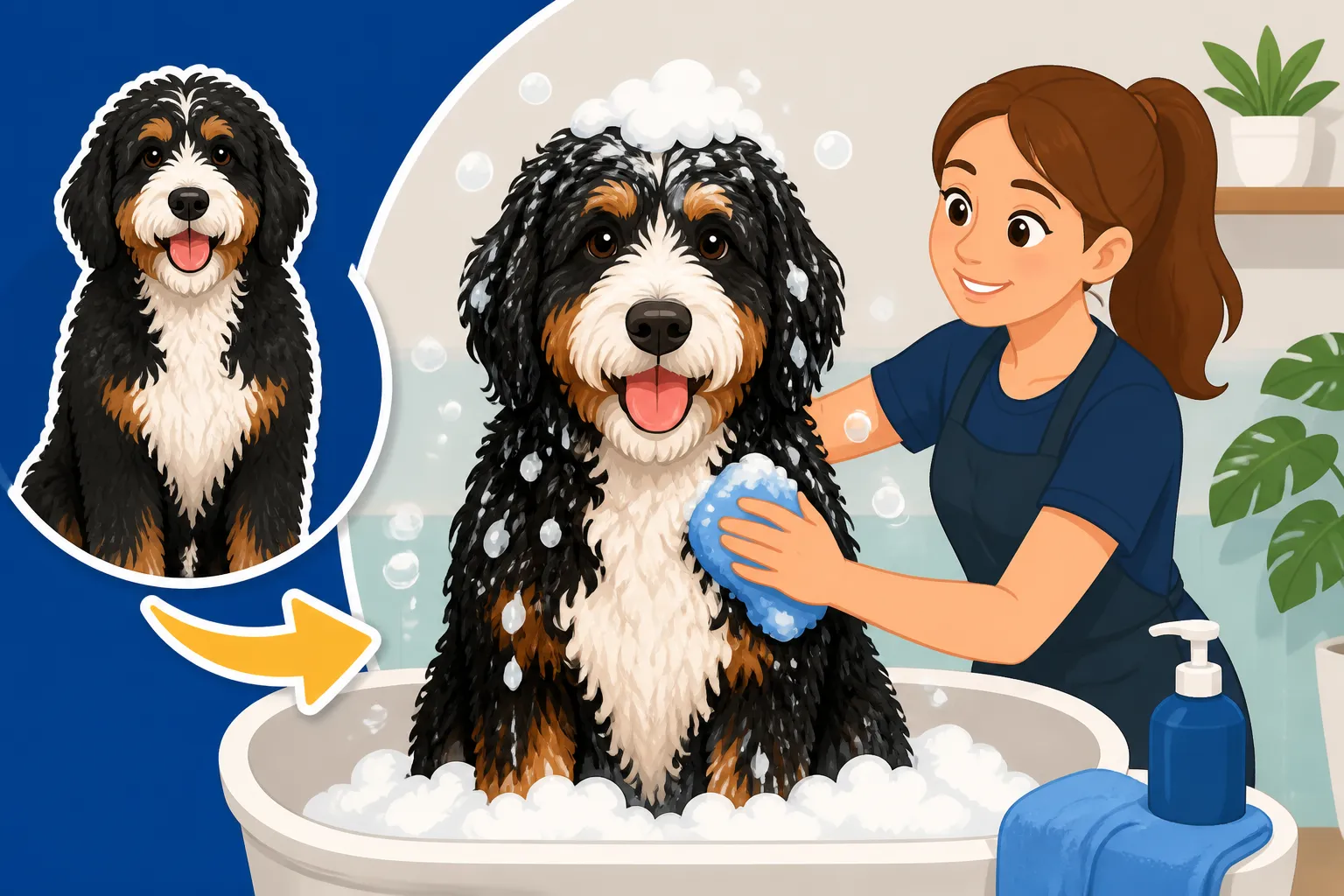
Washing a Ninety Pound Bernedoodle at Home
Bringing a ninety-pound Bernedoodle into your bathroom for a bath can feel less like a chore and more like preparing for a wrestling match with a fluffy, water-resistant bear. Many of us have been there, ending up soaked to the bone, with more shampoo on the walls than on the dog, and a Bernedoodle that still smells faintly of whatever mud puddle it found last week. This guide is here to walk you through the epic journey of washing your large Bernedoodle at home, ensuring both you and your furry friend come out of it looking (and smelling) much better.
Pre-Bath Preparation: The Key to Not Drowning (Literally and Figuratively)
Before you even think about turning on the water, you need to set the stage. Skipping this crucial step is a surefire way to multiply your workload and your stress levels. Trust me, a little foresight goes a very long way when dealing with a dog of this size and coat density.
Brushing Out Every Single Mat (No Exceptions!)
This is the golden rule of Bernedoodle bathing, and it absolutely cannot be overstated. Your Bernedoodle's luxurious, thick coat, especially if it's on the curlier or wavier side, is a magnet for mats. These mats, when wet, tighten like concrete, becoming nearly impossible to brush out without causing your dog significant pain and making proper drying utterly impossible. Imagine trying to untangle wet spaghetti that's been knotted together – that's what you're up against if you don't brush thoroughly before the bath.
Start by working in small sections, using a good quality slicker brush and a metal comb. The comb is your secret weapon for finding those hidden mats, particularly behind the ears, in the armpits, and on the "britches" (the fur on their hind legs). Gentle but firm strokes are key. If you hit a snag, don't just yank. Use a detangling spray designed for dogs, allow it to soak in for a moment, and then carefully tease the mat apart with your fingers or the wider teeth of your comb. You'll thank yourself later when the water cascades easily through their coat, rather than pooling on top of a matted mess. It might take some time, especially if your Bernedoodle is due for a good groom, but this step is non-negotiable for a successful home bath. Remember, Bernedoodle owners know that managing The Volume of Coat a Bernedoodle Owner Brushes Weekly is an ongoing commitment, and pre-bath is prime time for this effort.
Gathering Your Supplies (Everything Within Arm's Reach)
Once the brushing marathon is complete, it's time to gather your arsenal. You don't want to be scrambling for a towel or the shampoo once your Bernedoodle is standing, dripping, in the tub. Think of it as preparing for a surgery – every tool needs to be laid out and ready.
Here’s a checklist of essentials:
- Dog-Specific Shampoo and Conditioner: Never use human shampoo on your dog, as their skin pH is different and it can cause irritation. Look for gentle, moisturizing formulas, perhaps with oatmeal for sensitive skin, readily available from online retailers like Chewy or Amazon.
- Plenty of Towels: And by "plenty," I mean at least three large, absorbent bath towels, perhaps even a dedicated "dog towel" set that you don't mind getting slobbery. You'll need them for initial drying and for wiping up inevitable splashes.
- Force Dryer (High-Velocity Dryer): This isn't just a luxury; it's a necessity for Bernedoodles. Their dense coats will take hours to air dry, leading to matting, skin irritation, and that dreaded "wet dog" smell. A force dryer dramatically reduces drying time and helps blast out loose undercoat. You can find excellent options on Amazon.
- Non-Slip Mat: Crucial for safety in the tub or shower. A slippery surface can be terrifying for a large dog and lead to injuries for both of you.
- Cotton Balls: To gently place in your Bernedoodle's ears to prevent water from entering the ear canal, which can lead to uncomfortable Ear Infections in a Bernedoodle's Drop Ear.
- A Cup or Pitcher: For rinsing, especially if you don't have a detachable shower sprayer.
- Treats: Lots of high-value treats to reward good behavior and make the experience more positive.
Having everything meticulously arranged before your Bernedoodle even steps foot in the bathing area will make the entire process smoother and less chaotic.
Choosing the Right Location (And Protecting Your Bathroom)
Where you bathe your ninety-pound Bernedoodle can make or break the experience. A standard bathtub might work, but it comes with its own set of challenges. A walk-in shower is often easier due to more space, but watch out for splashing. If weather permits and you have an outdoor setup, that can be ideal for containing the mess.
Standard Bathtub:
The biggest hurdle here is getting a large, possibly reluctant, dog into the tub, and then keeping them there. A non-slip mat is paramount to prevent slips and slides. Consider tying a leash securely (but not too tightly) to the faucet or a grab bar to prevent them from attempting a great escape. Be prepared for a significant amount of splashing, as even the calmest Bernedoodle can send water flying when they shake. Old towels draped over the walls and floor can help minimize the clean-up afterward.
Walk-In Shower:
This often provides more room for both you and your dog, making maneuvering easier. A hand-held shower sprayer is a massive advantage for thoroughly wetting and rinsing their dense coat. Again, a non-slip mat is a must. The primary concern here is usually water containment. If your shower doesn't have a door or has a low lip, you might find your entire bathroom floor turning into a small lake. Shower curtains or a large splash guard can help.
Outdoor Wash Station:
If you live in a climate with warm weather, an outdoor setup can be a game-changer. A kiddie pool, a garden hose with a spray nozzle (ensure the water temperature is comfortable – not too cold!), and a secure tie-out can make for a less stressful, and certainly less messy, experience for your home. The biggest advantage is that you don't have to worry about splashing or wet floors inside. However, ensure your dog is comfortable with the outdoor environment and that you have all your supplies easily accessible.
Regardless of your chosen location, always prioritize your Bernedoodle's safety and comfort. A nervous dog is more likely to struggle, making the bath harder for everyone.
| Feature / Location | Standard Bathtub | Walk-In Shower | Outdoor Wash Station |
|---|---|---|---|
| Space for Dog | Limited, can feel cramped | Good, more room to turn | Excellent, open air |
| Space for Owner | Awkward, leaning over edges | Moderate, depends on shower size | Good, freedom of movement |
| Water Source | Faucet, limited sprayer options | Detachable sprayer ideal | Garden hose, flexible |
| Mess Containment | High splash risk, wet floor likely | Moderate splash risk, depending on doors | Minimal indoor mess, outdoor spray |
| Temperature Control | Excellent | Excellent | Dependent on ambient weather & hose |
| Safety Concerns | Slipping, jumping out of tub | Slipping, water on floor | Slipping, exposure to elements |
| Best For | Smaller Bernedoodles, cold weather | Large Bernedoodles, year-round | Large Bernedoodles, warm weather |
The Washing Process: Making a Big Splash (Carefully!)
Now that you've prepped and planned, it's time for the main event. Getting a large Bernedoodle thoroughly wet and then thoroughly clean requires patience, a good technique, and a healthy dose of determination.
Wetting Down That Dense Double Coat (It Takes Longer Than You Think)
Bernedoodles, inheriting The Coat a Bernedoodle Gets From Two Heavy Coated Parents, possess a magnificent, dense double coat that is surprisingly water-resistant. This means just a quick spray won't cut it. You need to saturate that coat all the way down to the skin, and it will take a lot longer than you anticipate.
Start with lukewarm water – never hot, and not too cold – and begin wetting your Bernedoodle from their paws, slowly working your way up their legs, body, and tail. Use a strong, steady stream from a shower sprayer if you have one. If not, a cup or pitcher will do, but be prepared for a longer process. The water tends to bead on the surface of their coat, so you'll need to really work it in with your hands, pressing it down to ensure every strand, and more importantly, the skin beneath, is completely drenched. Don't be surprised if it feels like you've been pouring water for five minutes and they still have dry patches. This deep wetting is critical for the shampoo to penetrate and do its job effectively.
Shampooing Thoroughly (And Rinsing Even More Thoroughly)
Once your Bernedoodle is thoroughly wet (or as wet as you can get them!), it's time for the shampoo. For best results, consider diluting your dog shampoo with water in a separate bottle or cup. This makes it easier to distribute evenly through their dense coat and helps create a better lather.
Apply the diluted shampoo, starting from the neck and working your way down to the tail, focusing on areas that get particularly dirty: their paws, belly, and under their ears. Gently massage the shampoo deeply into their coat, ensuring it reaches the skin. You'll want to feel the suds all the way through their fur. Pay extra attention to their legs and paws, which are often the dirtiest.
Now comes the part that often gets rushed, but is arguably the most important: rinsing. Residual shampoo left in the coat can lead to skin irritation, dryness, and can actually attract more dirt. You need to rinse, and then rinse again, and then probably one more time for good measure. Use the shower sprayer or pitcher to systematically rinse every part of your Bernedoodle's body. Squeeze the water out of their coat in sections and check for any slippery, soapy residue. Continue rinsing until the water runs completely clear and their coat feels clean, not slick. It will feel like an endless task, especially with such a thick coat, but thorough rinsing is vital for their skin health and the longevity of their fresh smell. If you are using conditioner, follow the same meticulous rinsing process afterwards.
Handling the Head and Face (Keeping Water Out of Sensitive Areas)
Washing your Bernedoodle's face requires a delicate touch. The goal is to clean without getting water or soap in their eyes, nose, or ears. This can be tricky, as many dogs are naturally wary of water near their face.
Before you begin the wash, gently place cotton balls into your Bernedoodle's ears. This simple step helps create a barrier against water entering the ear canal, which can lead to uncomfortable infections. When washing their head, use a damp washcloth with a tiny bit of diluted shampoo instead of pouring water directly. Carefully wipe around their muzzle, forehead, and chin, being extra cautious around their eyes. Many Bernedoodles have long facial hair, often referred to as a "beard," which collects food and dirt. Clean this area thoroughly.
For rinsing the face, use the damp washcloth again, or a very gentle, low-pressure stream from a sprayer, cupping your hand over their eyes and ears to deflect water. Always tilt their head slightly downwards so water runs off their face rather than into their eyes or up their nose. Speak in a calm, reassuring voice throughout this process, as it can be the most stressful part of the bath for many dogs. Patience and gentleness are key here. After the bath, remember to remove the cotton balls and gently wipe the outer ear flaps dry.
The Drying Marathon: From Sopping Wet to Fluffy and Fresh
After the washing, comes the drying. And with a ninety-pound Bernedoodle, this is less a sprint and more an ultra-marathon. This stage is crucial for preventing mats and ensuring your dog is truly clean and comfortable.
Towel Drying (The First Line of Defense)
Once your Bernedoodle is thoroughly rinsed, their first instinct will be to shake off all that excess water, usually directly onto you! Be prepared with several large, absorbent towels. The goal of towel drying isn't to get them completely dry, but to remove as much surface water as possible before moving on to the force dryer.
Gently squeeze and blot the water out of their coat. Avoid vigorous rubbing, as this can tangle their wet fur and create new mats, undoing all the hard work you did during pre-bath brushing. Instead, pat their coat firmly, absorbing the water. Start with their back and sides, then move to their legs and belly. You'll likely go through a couple of towels just for this initial step. If your Bernedoodle is prone to the "wet dog shake," try to anticipate it and throw a towel over them as they begin to shake, minimizing the spread of water.
The Mighty Force Dryer (Your Best Friend for a Bernedoodle)
As mentioned, a force dryer is not optional for a large, thick-coated Bernedoodle; it's essential. Air drying a Bernedoodle can take many, many hours, creating an environment ripe for matting, mildew growth (leading to that dreaded funky smell), and skin issues. Investing in a good quality force dryer, often found on platforms like Amazon, will save you immense time and effort, and is crucial for your Bernedoodle's coat and skin health.
Introduce the force dryer slowly, especially if your dog is new to it. The noise can be intimidating. Start on a low setting, directing the air away from their face, and offer plenty of treats and praise. As they get more comfortable, you can increase the power. Work in sections, starting from the back and moving forward. The goal is to blast the air right down to the skin, pushing the water out of the coat. Keep the nozzle moving constantly to prevent skin irritation from concentrated heat (even on cool settings). Many models have different nozzles; a flat, wide nozzle is often effective for larger body areas, while a narrower one can help target denser spots. Achieving Drying a Bernedoodle to the Skin is vital for their health and comfort.
Brushing During Drying (Preventing New Mats and Promoting Fluff)
This is where the magic happens, turning a damp, somewhat shaggy dog into a fluffy, pristine Bernedoodle. As you use the force dryer, continuously brush your dog's coat with a slicker brush and a metal comb. The warm air helps to straighten the hair, and brushing as it dries prevents new tangles from forming.
Start from the bottom layers of hair and work your way up, ensuring each section is dry before moving on. This technique is often called "line brushing" because you're brushing line by line, lifting the top hair and drying the hair underneath. This ensures no damp spots are missed and helps to thoroughly fluff out the coat. Pay extra attention to those mat-prone areas like the ears, armpits, and britches. This combined effort of drying and brushing simultaneously is how you achieve that salon-quality, tangle-free finish. Without a force dryer and this consistent brushing, drying How Long a Bernedoodle Takes to Dry Through can feel impossible.
Post-Bath Pampering and Final Checks
You've made it through the washing and drying marathon! But before you declare victory, there are a few final touches to ensure your Bernedoodle is truly clean and comfortable.
- Paw Pads: Check the hair between their paw pads. Long hair here can collect dirt, ice, or debris, and make it harder for your dog to grip surfaces. Use blunt-nosed scissors or small clippers to carefully trim Trimming Between a Bernedoodle's Pads flush with the pad.
- Nail Trim: A bath often softens the nails, making it a perfect time for a nail trim if needed.
- Ear Check: Double-check their ears. Ensure all cotton balls are removed, and gently wipe the inside of their ear flaps with a clean, dry cloth. Ensure they are completely dry to prevent any moisture-related issues.
- Treats and Praise! Your Bernedoodle has endured quite an ordeal, even if they were a perfect angel. Shower them with praise and their favorite high-value treats. Make the end of the bath a super positive experience so they associate it with good things, not just stress. This positive reinforcement is key for future home grooming sessions.
Washing a ninety-pound Bernedoodle at home is undeniably a big job, but with the right preparation, tools, and a patient attitude, it's a completely achievable and rewarding one. There's nothing quite like the feeling of cuddling a freshly bathed, fluffy Bernedoodle, knowing you did it yourself.
Disclaimer
This article is for general informational purposes only and does not constitute professional advice. Laws, prices and regulations vary by location and change over time. Consult a qualified professional for guidance on your specific situation.