Whether a Bernedoodle’s Coat Lightens as It Ages
It’s a common moment for Bernedoodle owners: you’re admiring your furry companion, perhaps while giving them a good scratch behind the ears, and you notice something – their once vibrant, deep black or rich brown coat seems just a touch lighter, a little softer around the edges. Many of us wonder if our Bernedoodle’s coat will truly lighten or "fade" as they get older, and what exactly causes these shifts in color. This guide will dive deep into the fascinating world of Bernedoodle coat genetics and environmental factors, exploring why these beautiful dogs often experience changes in their stunning color over time.
The Genetics Behind Bernedoodle Coat Color and Fading
The Bernedoodle is a hybrid, a wonderful mix of the stoic Bernese Mountain Dog and the intelligent Poodle. When it comes to coat color, these two parent breeds bring very different genetic influences to the table, creating a diverse palette and, sometimes, unpredictable changes as your pup matures. It's not just about what color they are at eight weeks; it's about the genes ticking away underneath, ready to reveal themselves over months and even years.
Understanding the Poodle Influence on Fading
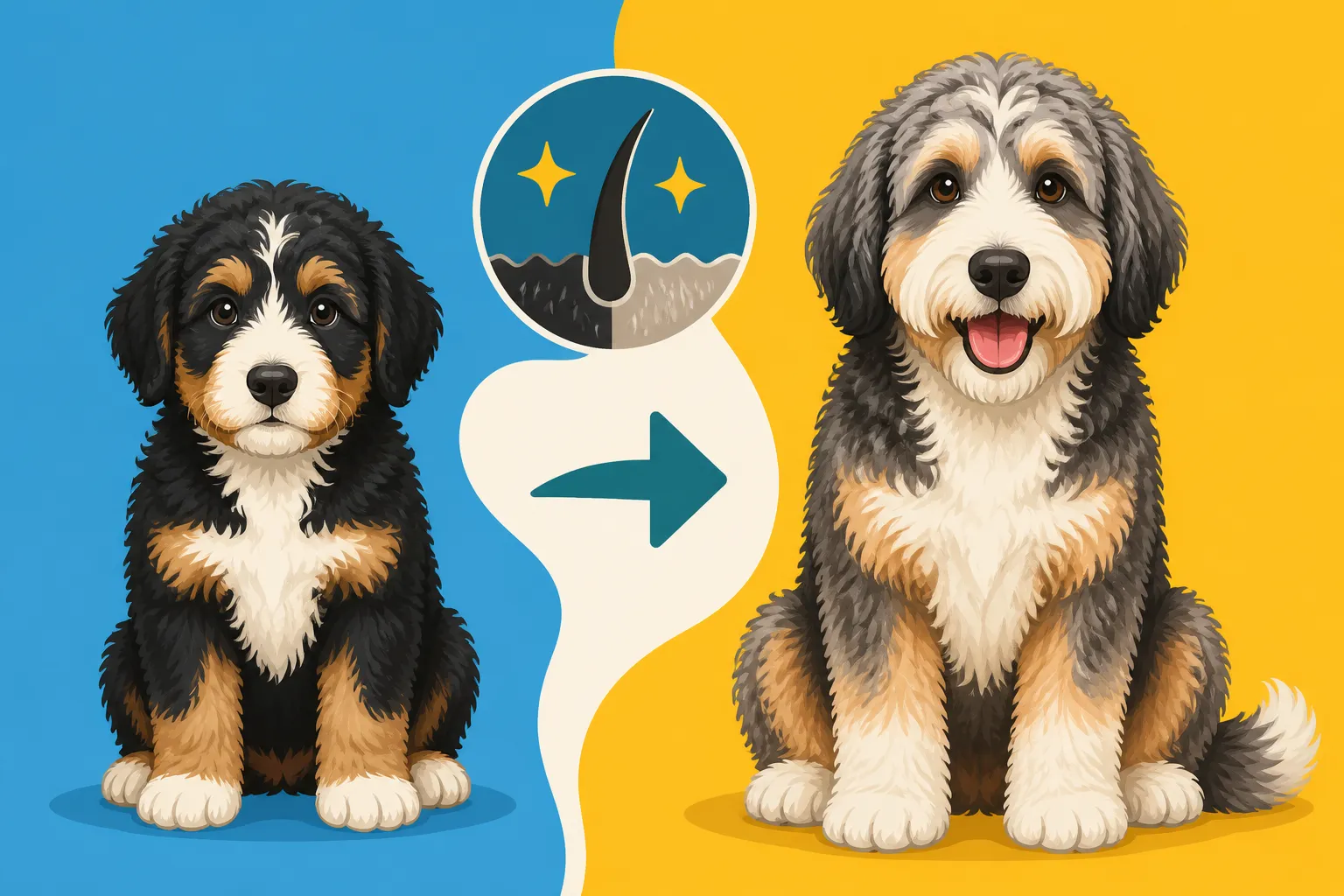
Ah, the Poodle! While celebrated for its non-shedding, hypoallergenic qualities, the Poodle also carries what breeders often refer to as "fading genes." Specifically, the G locus (progressive graying gene) is quite common in Poodles. This gene causes the coat color to lighten or "clear" over time, sometimes quite dramatically. A Poodle born jet black might, by the age of two or three, become a striking silver or even a bluish-gray. Similarly, a rich brown can turn into a cafe au lait, and red can soften to apricot.
When a Bernedoodle inherits these fading genes from its Poodle parent, it means that even if they're born with a gorgeous, deep black or chocolate coat, there's a strong possibility that color will soften and lighten over their lifetime. It’s not necessarily a sign of poor health or bad breeding; it's simply a genetic trait. You might notice your black Bernedoodle's coat developing silver strands, or their chocolate patches turning a lighter, milky brown. This process usually begins subtly and progresses gradually, often becoming more noticeable around the two to three-year mark, but it can continue throughout their life. It's why two Bernedoodle puppies from the same litter might look identical at eight weeks, but have very different shades of black or brown by the time they are adults. This genetic contribution is a significant part of Whether a Bernedoodle's Coat Gets Thicker With Age as well, influencing the overall appearance.
The Bernese Mountain Dog's Stable Coat Contribution
In stark contrast to the Poodle, the Bernese Mountain Dog generally has a very stable coat color. Their characteristic tri-color markings—jet black, rust (tan), and clear white—are typically quite consistent throughout their lives. You don't usually see a Bernese's black turning silver or their rust fading to cream. Their genetics are geared towards maintaining strong, clear, and unwavering pigment.
The beauty of the Bernedoodle is this genetic interplay. While the Poodle's fading genes are at play, the Bernese influence often attempts to anchor that color. This can result in a wide spectrum of outcomes. Some Bernedoodles will experience significant fading, almost taking on the Poodle's clearing characteristic. Others, particularly those with a stronger Bernese genetic lean in their coat, might retain their rich, dark colors for much longer, only developing the typical age-related graying that all dogs eventually show. It's a delightful genetic lottery, and part of the reason why no two Bernedoodles are exactly alike in their color evolution. It's also why understanding Whether a Coat Test Tells You If a Bernedoodle Will Shed can be helpful, as coat tests can sometimes reveal genetic markers for fading, even if they're more commonly used for shedding.
Common Coat Color Changes Observed in Aging Bernedoodles
As your Bernedoodle matures, their coat might undergo a few different transformations. These aren't always "fading" in the pure genetic sense, but rather a combination of genetic clearing, environmental factors, and the natural aging process. Understanding the nuances can help you appreciate the beautiful evolution of your dog's appearance.
Softening of Black and Brown Hues
One of the most common and noticeable changes in a Bernedoodle's coat is the softening of their black and brown hues. A puppy with a deep, inky black coat might, by adulthood, present with a charcoal or even a dark steel-gray shade. This isn't just a trick of the light; it's the progressive graying gene, often inherited from the Poodle side, slowly doing its work. The intensity of the black pigment reduces, giving the coat a softer, less stark appearance.
Similarly, Bernedoodles with rich chocolate or brown markings might see these areas lighten to a beautiful milk chocolate, café au lait, or even a sandy beige over time. This can be especially pronounced in areas that see more sun exposure or friction, like the back or shoulders. It’s a very natural process and can give your Bernedoodle a truly unique, multi-tonal look. This shift is distinct from the white markings, which typically remain vibrant, contributing to what makes The Wavy Coat Most Bernedoodles Carry so distinct in its patterns.
The Appearance of "Grizzling" and White Hairs
Beyond genetic fading, all dogs, including Bernedoodles, will experience natural age-related graying, often called "grizzling." This process is less about the base color lightening and more about individual hairs turning white. You’ll typically first notice this around your Bernedoodle's muzzle, eyebrows, and sometimes their paws. It’s the canine equivalent of us humans getting gray hairs, and it's a heartwarming sign of a life well-lived.
This grizzling can sometimes be mistaken for the Poodle's genetic fading, but there's a key difference. Genetic fading affects the entire pigment of the hair shaft, making the color itself lighter. Age-related grizzling introduces truly white hairs among the colored ones, creating a salt-and-pepper effect. It's common to see a black Bernedoodle with a beautiful silver muzzle that contrasts sharply with its still-darker body. This is a normal part of aging and is often one of the first visible signs that your energetic pup is transitioning into a wise and dignified senior companion. It's a testament to the longevity we hope for, as discussed in Caring for a Bernedoodle Past Eight.
| Feature | Genetic Fading (Poodle Influence) | Age-Related Grizzling (General Canine Aging) |
|---|---|---|
| Primary Cause | Progressive graying gene (G locus) inherited from Poodle parent | Natural physiological aging process |
| Appearance | Black -> charcoal/silver/blue; Brown -> cafe au lait/beige | Individual hairs turn pure white |
| Areas Affected | Can affect entire coat, more noticeable on darker pigments | Typically starts around muzzle, eyebrows, paws, then spreads |
| Onset | Often starts subtly between 1-3 years of age, progresses gradually | Usually starts around 5-7 years, but can vary |
| Impact on Pigment | Reduces intensity of actual color pigment | Introduces colorless (white) hairs |
| Predictability | Variable, depends on specific genes inherited | Almost universal in aging dogs |
Factors That Can Influence Coat Appearance Beyond Genetics
While genetics play a huge role in whether your Bernedoodle's coat lightens, they aren't the only player on the field. Environmental factors and your dog's overall health and nutrition can also subtly—or not so subtly—impact the vibrancy and shade of their beautiful coat. Think of it as supporting actors in the grand drama of coat color.
Sun Exposure and Environmental Factors
Just like human hair can lighten in the sun, a Bernedoodle's coat, especially darker ones, can experience a phenomenon known as "sun bleaching" or "redding." Prolonged exposure to ultraviolet (UV) rays can break down the melanin (pigment) in the hair shaft, causing black coats to develop a reddish or rusty tint, and browns to become duller or more faded. It's not true genetic fading, but rather a superficial lightening caused by the elements. If your Bernedoodle loves to spend hours basking in the sun in the backyard or joins you on long walks, you might notice this effect.
To help protect their coat from excessive sun, consider timing walks for cooler, less intense parts of the day, particularly during summer months. While you can't put sunscreen on their entire coat, minimizing prolonged, direct sun exposure can help maintain coat vibrancy. Think about if Whether a Bernedoodle Should Be Walked in Summer is truly safe. Regular grooming also plays a part, as removing older, sun-damaged hair can make way for new, richly pigmented growth.
Nutrition, Health, and Coat Quality
The old adage "you are what you eat" holds true for our canine companions, especially when it comes to their skin and coat health. A well-balanced diet rich in essential nutrients is crucial for maintaining a vibrant, healthy coat. Deficiencies, particularly in certain vitamins, minerals, and fatty acids, can lead to a dull, brittle, or even discolored coat. For example, a lack of copper can sometimes be linked to a loss of pigment intensity in dark-coated dogs.
Omega-3 and Omega-6 fatty acids are particularly vital for skin and coat health, promoting shine, strength, and elasticity. Many high-quality dog foods, available at places like Chewy, are formulated with these in mind. Some owners also choose to supplement their dog's diet with fish oil, which can be easily added to their meals. Brands like Ollie, known for their fresh, human-grade ingredients, often emphasize the importance of these nutrients for overall health, including coat quality. If your Bernedoodle's coat suddenly seems dull or unusually light, and it’s not just age, a conversation with your vet about their diet and potential supplements might be in order. A good diet supports everything, even preventing mats, as discussed in Mats in a Bernedoodle's Armpits and Britches.
Managing and Appreciating Your Bernedoodle's Evolving Coat
The journey of your Bernedoodle's coat color is a dynamic one. It’s part of what makes them so unique and fascinating! While some changes are simply unavoidable genetic expressions, there are definitely things you can do to support their coat health and embrace whatever beautiful shades they develop over the years.
Grooming Practices to Maintain Coat Health
Regular, consistent grooming is your best friend when it comes to maintaining your Bernedoodle's coat, no matter its color. Brushing helps to distribute natural oils, remove loose hairs, and prevent matting, which can hide the true color and texture of the coat. For a Bernedoodle's thick, often wavy or curly coat, tools like a good slicker brush and a metal comb are indispensable. You can find excellent options on Amazon. The Volume of Coat a Bernedoodle Owner Brushes Weekly is significant, so making grooming a routine is vital.
Beyond brushing, proper bathing with a high-quality shampoo and conditioner helps keep the coat clean, moisturized, and free from dirt and residues that can dull its appearance. Be sure to rinse thoroughly to avoid leaving any product buildup. Some conditioning sprays can also help protect the coat from environmental damage. Remember that even if the color is softening, a healthy, well-maintained coat will always look its best. This also contributes to their overall well-being, touching upon broader topics like What a Bernedoodle Needs Every Day.
Embracing the Natural Changes
Ultimately, some degree of coat lightening or graying is a completely natural part of a Bernedoodle's life, whether it's genetic fading from their Poodle heritage or the distinguished grizzle of old age. It's important to remember that these changes don't diminish your dog's beauty, health, or personality. In fact, many owners find the evolving shades of their Bernedoodle's coat quite charming, adding character and depth to their appearance.
Instead of trying to fight nature, embrace the unique journey of your Bernedoodle's coat. A silvered muzzle, a softening black, or a warmer brown are all badges of a life lived and loved. Focus on providing them with excellent nutrition, regular veterinary care, and plenty of love, ensuring their health and happiness are paramount. After all, the joy they bring to your life far outweighs any changes in their exterior, even if you were hoping for that deep, consistent black coat forever. The most important thing is a happy, healthy Bernedoodle, regardless of whether their Whether a Mini Bernedoodle Outlives a Standard or if their coat changes color.
Disclaimer
This article is for general informational purposes only and does not constitute professional advice. Laws, prices and regulations vary by location and change over time. Consult a qualified professional for guidance on your specific situation.