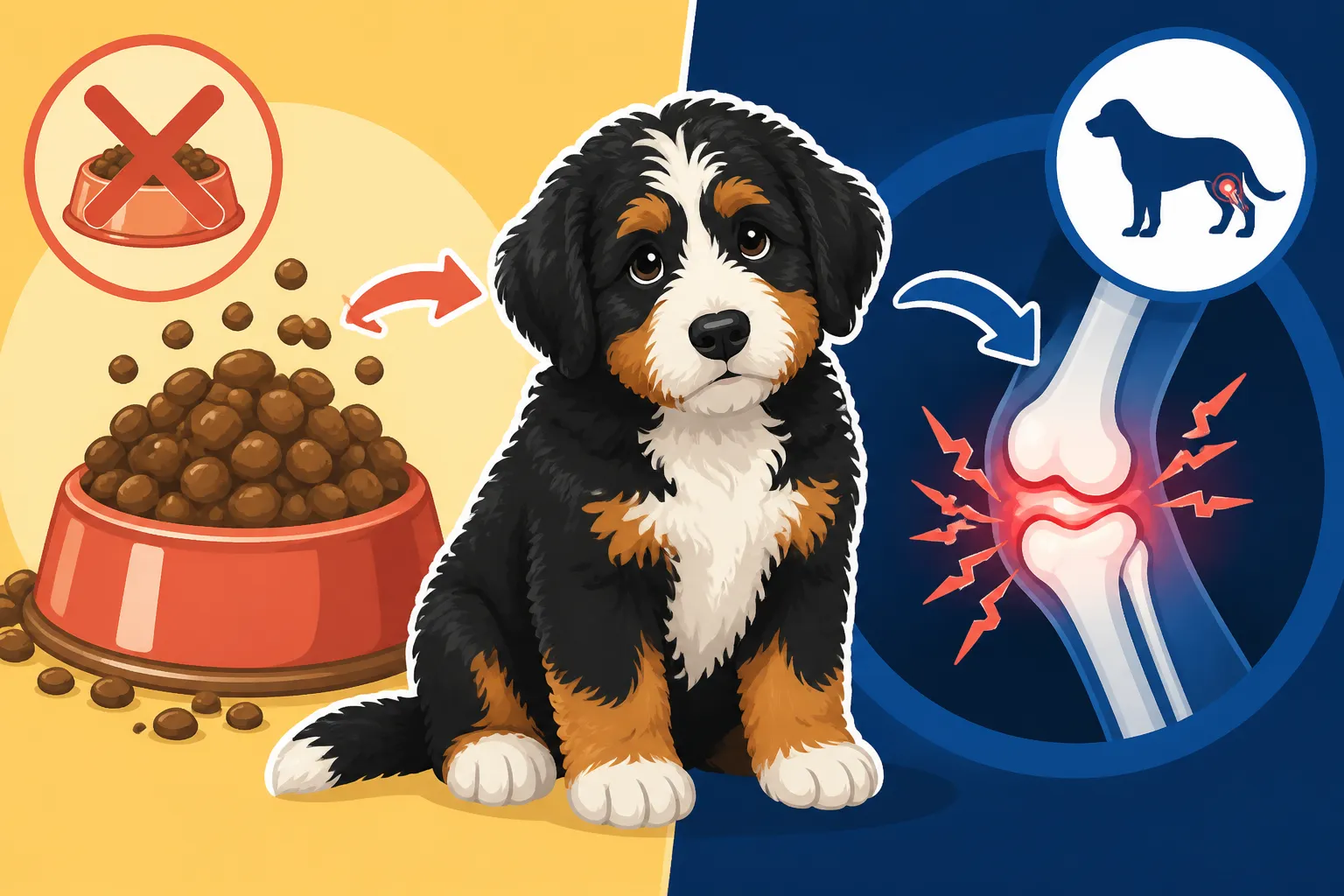
Whether Overfeeding a Bernedoodle Puppy Damages Its Joints
It’s a common concern for new Bernedoodle puppy parents: you want your fluffy companion to grow big and strong, but you also hear whispers about feeding too much. The worry is real – you want to do everything right for your pup, especially when it comes to their long-term health. This guide is here to untangle the truth about whether overfeeding a Bernedoodle puppy damages its joints and provide actionable advice to ensure healthy, steady growth.
The Critical Link Between Nutrition and Joint Development in Large Breed Puppies
When you bring home a Bernedoodle puppy, you're looking at a dog that's going to grow a lot, and fast! That rapid growth, especially with their Bernese Mountain Dog lineage, means their developing bodies are incredibly sensitive to diet. We often think of "large breed" puppy food as simply having bigger kibble, but it's much more nuanced than that. The real magic is in the carefully controlled calorie and calcium levels designed to support slow, steady growth rather than a sudden, explosive surge in size.
Imagine a growing teenager who shoots up several inches in a single summer. Their bones and muscles often struggle to keep up, leading to growing pains. Now imagine that on a dog whose skeleton is designed to bear upwards of 70-90 pounds, sometimes even more. Their growth plates – the areas of cartilage at the ends of long bones where new bone is produced – are delicate and vulnerable. If a Bernedoodle puppy grows too quickly due to an overabundance of calories, these growth plates can be stressed and develop abnormally. The cartilage can suffer, and the developing joints might not form correctly, paving the way for serious orthopedic issues down the line. It's why so many breeders and vets advocate for Growing a Standard Bernedoodle Slowly on Purpose.
This isn't about keeping your puppy small; it's about giving their skeleton and connective tissues the time they need to mature properly and robustly. Rushing their growth, even with the best intentions, can overload their immature joints, leading to inflammation, pain, and long-term structural problems that could impact their entire life.
Understanding the Risks: What Overfeeding Really Means for Your Bernedoodle's Joints
Overfeeding a Bernedoodle puppy isn't just about giving them too much food in their bowl; it's about supplying more calories than their developing body needs to grow at an appropriate, measured pace. This excess energy, whether from too large portions or food that's too rich, can have profound negative impacts on their joint health, often exacerbating any genetic predispositions they might carry.
Think about the sheer size and weight a Standard Bernedoodle is destined to become. Their joints, particularly their hips and elbows, are going to bear a significant load throughout their lives. When a puppy gains weight too rapidly, the extra pounds put undue stress on these still-developing joints. This pressure can cause abnormalities in how the bones fit together, leading to conditions like Hips on a Ninety Pound Bernedoodle or Elbow Dysplasia in a Growing Bernedoodle. These aren't just minor aches; they are painful, chronic conditions that can require extensive medical management, physical therapy, or even costly surgeries later in life.
Beyond raw calorie intake, the balance of specific nutrients, particularly calcium and phosphorus, is crucial. While it might seem logical that more calcium equals stronger bones, for growing large breed puppies, too much calcium can be just as detrimental as too little. Excess calcium can interfere with bone remodeling and lead to skeletal abnormalities, disrupting the delicate process of bone growth. This is exactly Why Calcium Levels Matter for a Growing Bernedoodle. It’s a complex dance of genetics, nutrition, and environment, and getting the feeding wrong can unfortunately tip the scales toward joint problems. The goal isn't just growth, but healthy growth – a lean, steady progression that allows all the body's systems to develop in harmony.
Practical Steps for Healthy Growth: Feeding Your Bernedoodle Puppy Right
Ensuring your Bernedoodle puppy grows at a healthy, joint-friendly pace is one of the most important things you can do as a dedicated owner. It's all about mindful nutrition and consistent monitoring.
Choosing the Right Food and Portions
The foundation of healthy growth starts with the food itself. Always opt for a high-quality large breed puppy formula. These foods are specifically designed with lower fat, protein, and calcium levels compared to all-life-stage or small breed puppy foods, which promotes that slower, more controlled growth we discussed. Look for brands that have undergone feeding trials and meet AAFCO nutritional guidelines. When you're browsing for options, sites like Chewy offer a wide selection of large breed specific kibble, making it easier to find suitable choices.
Once you have the right food, portion control is paramount. Don't just scoop blindly or follow the bag's recommendations without question, as these are often just general guidelines. Your breeder or veterinarian can provide a much more tailored feeding schedule based on your puppy's individual growth rate, activity level, and anticipated adult size. Generally, Bernedoodle puppies benefit from How Many Meals a Bernedoodle Puppy Needs Daily – typically 3-4 meals a day initially, gradually reducing to two as they get older. For example, a four-month-old Bernedoodle will need a specific amount of calories, so understanding How Much Food a Bernedoodle Puppy Needs at Four Months is crucial. The goal is a lean physique, not a pudgy one.
Monitoring Your Puppy's Body Condition
Your eyes and hands are your best tools for assessing your puppy's growth. You want to see and feel a discernible waist when looking down at your Bernedoodle from above. You should also be able to easily feel their ribs without seeing them protruding. If you have to press firmly to feel the ribs, your puppy is likely carrying too much weight. A good veterinarian will also assess your puppy's body condition score at each check-up, offering objective feedback on their growth trajectory. Don’t hesitate to ask them for their expert opinion.
Here’s a quick guide to help you assess your Bernedoodle puppy's body condition:
| Indicator | Healthy Growth (Lean) | Overfeeding (Too Heavy) |
|---|---|---|
| Ribs | Easily felt, like knuckles on your fist. | Hard to feel without pressing, like palm of your hand. |
| Waist | Clearly visible tuck from chest to hips when viewed from above. | Minimal to no waist tuck. |
| Abdomen | Slightly tucked up from ribs to hind legs. | Flat or bulging. |
| Energy Level | Playful, energetic, recovers quickly. | May seem sluggish, tire easily. |
| Growth Rate | Steady, consistent, not sudden spurts. | Rapid weight gain, often exceeding growth charts. |
Balancing Exercise with Diet
While diet is critical for joint health, appropriate exercise also plays a vital role. Too much strenuous activity, especially high-impact activities like jumping or long runs on hard surfaces, can also harm developing joints. A good rule of thumb for puppies is the "five-minute rule": five minutes of structured exercise per month of age, twice a day. So, a four-month-old puppy would get twenty minutes of walking, twice a day. This ensures their muscles develop to support their skeleton without overstressing immature joints. This is crucial for avoiding issues like Torn Cruciates in a Heavy Bernedoodle. Remember, things like The Five Minute Rule on a Bernedoodle Puppy's Walks are guidelines to protect those growing bones.
Common Misconceptions and What to Watch For
There's a lot of information, and sometimes misinformation, floating around about feeding puppies. Separating fact from fiction can make a big difference in your Bernedoodle's joint health.
Debunking the "Bigger is Better" Myth
One pervasive misconception is that a bigger, heavier puppy is automatically a healthier or more robust adult. This couldn't be further from the truth, especially for large breeds like Bernedoodles. While you certainly want your Bernedoodle to reach its genetic potential in size, forcing that growth too quickly can be counterproductive and damaging. A lean, lanky puppy is generally a better indicator of healthy, appropriate growth than a chunky one. The goal is to build a strong skeletal foundation, not to pack on pounds prematurely. An adult Bernedoodle that has been overweight as a puppy may face a higher risk of Whether an Overweight Bernedoodle Loses Years in their overall lifespan due to joint issues and other health complications.
Scheduled Meals vs. Free Feeding
For Bernedoodle puppies, scheduled meal times are almost always preferable to free feeding (leaving food out all day). Free feeding makes it difficult to monitor exactly how much your puppy is eating, and it can encourage overconsumption, particularly if your pup is a zealous eater. Scheduled meals allow for precise portion control and help you identify any changes in appetite, which can be an early indicator of health issues. It also establishes a routine that can be beneficial for housetraining and overall behavior.
The Role of Joint Supplements
Many well-meaning owners wonder if adding joint supplements early on can prevent problems. While supplements like glucosamine and chondroitin have their place for adult dogs with existing joint issues or as a prophylactic in older dogs, they are generally not recommended for growing puppies that are on a high-quality large breed puppy food. These specialized puppy foods are already formulated with the correct balance of nutrients to support joint development. Adding extra supplements can actually throw off this delicate balance, potentially causing more harm than good, especially if they interfere with calcium and phosphorus ratios. Always consult your veterinarian before adding any supplements to your puppy's diet.
Recognizing Early Warning Signs
Even with the best care, it's essential to be vigilant for any signs that your Bernedoodle puppy's joints might be struggling. Early detection can make a significant difference in management and outcome. Be on the lookout for:
- Limping or favouring a limb: This can be subtle at first, perhaps after a play session.
- Reluctance to play or exercise: A normally energetic puppy might seem subdued or unwilling to engage.
- Difficulty rising or lying down: They might struggle or groan with these movements.
- A "bunny hop" gait: When running, both back legs might move together like a bunny's, rather than independently. This is a classic sign often associated with hip issues, so if you see The Bunny Hop Gait in a Young Bernedoodle, consult your vet.
- Stiffness: Especially noticeable after rest or in the morning.
- Pain response: Yelping or pulling away when touched around their hips or elbows.
These signs, even if intermittent, warrant a visit to your veterinarian. Early intervention can sometimes slow the progression of conditions like Signs a Bernedoodle Puppy's Elbows Hurt and improve your puppy's comfort and long-term prognosis. You can even find specialized diets and joint support options on platforms like Amazon if your vet recommends them later in life, or explore tailored meal plans from services like Ollie that can be adjusted as your dog ages and their nutritional needs evolve. Knowing What Changes in a Bernedoodle After Eight can help you prepare for later care needs.
Ultimately, preventing joint damage in your Bernedoodle puppy comes down to a careful, informed approach to their diet and exercise during those critical early months. By prioritizing slow, steady growth, you're investing in a lifetime of happy, healthy romping for your beloved companion, potentially avoiding issues like The Chest That Puts a Standard Bernedoodle at Bloat Risk later on, which also requires careful feeding considerations.
Disclaimer
This article is for general informational purposes only and does not constitute professional advice. Laws, prices and regulations vary by location and change over time. Consult a qualified professional for guidance on your specific situation.