Whether a Bernedoodle Suits an Older Owner
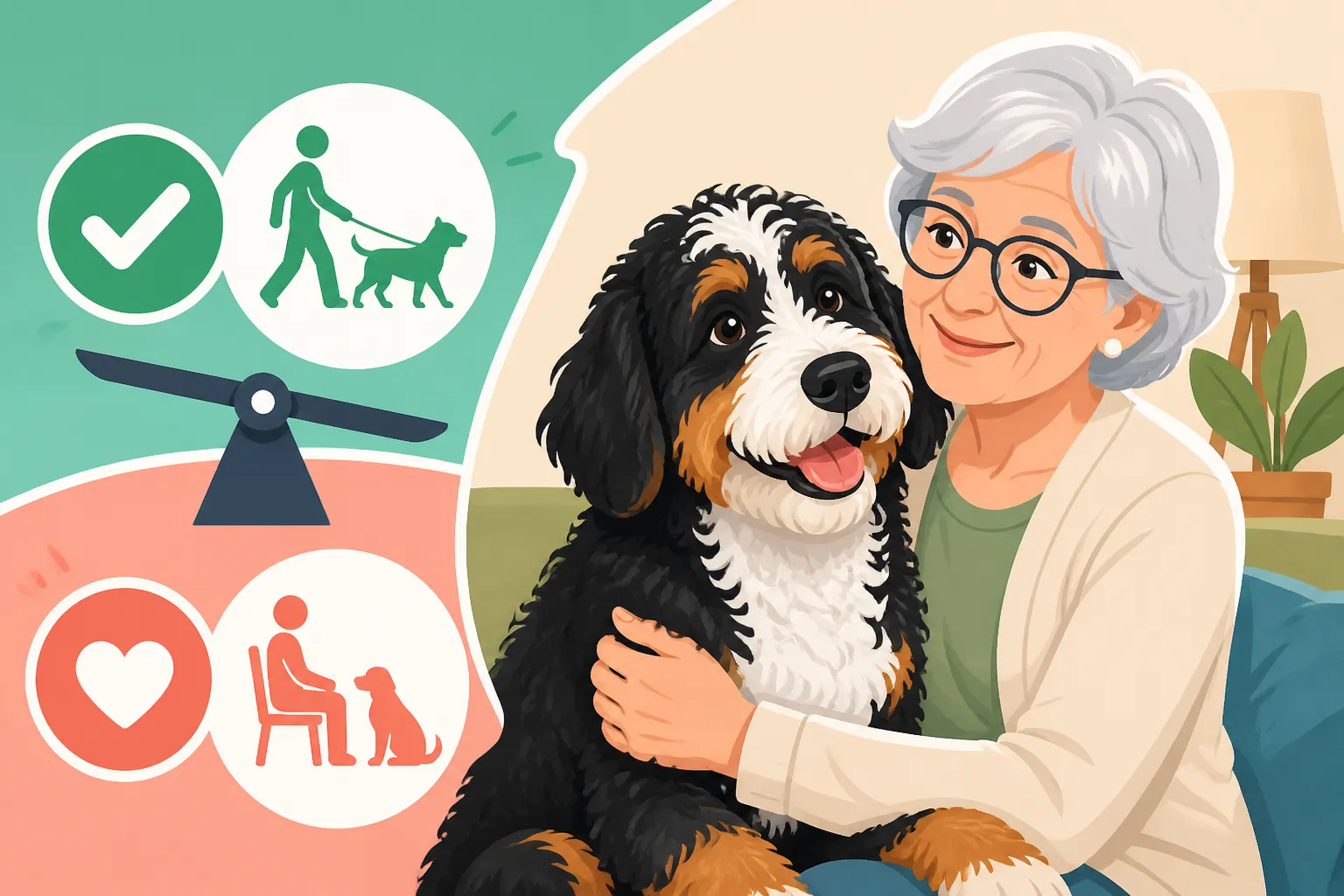
A Bernedoodle can be a lovely companion for an older owner, but the decision is less about age than about the dog’s size, energy, grooming needs, and the help available when life gets busy. A puppy that grows into a strong, heavy dog may be harder to manage than expected. This guide helps you weigh the everyday demands and choose a Bernedoodle that fits your real routine.
What matters more than age
Your mobility and the dog’s adult size
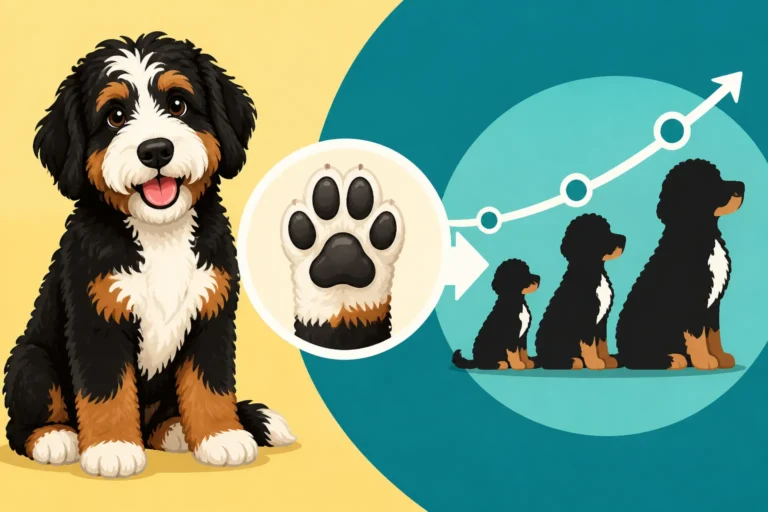
Bernedoodles range from small dogs to very large ones, and labels such as “mini” do not guarantee an exact adult weight. A Standard Bernedoodle may be difficult to steady if it pulls suddenly, jumps up, or needs help into a car. Even a friendly dog can knock someone off balance without meaning to.
Think about the ordinary parts of your day, not only the pleasant ones. Could you hold the leash if the dog lunged toward a squirrel? Could you get the dog into a vehicle if it were injured? Is there a route near your home without steep stairs, icy pavement, or long stretches without a place to rest? These questions are especially important if you have balance concerns, arthritis, or limited grip strength.
Size is only one factor. A smaller Bernedoodle may still be energetic or strong on leash, while a larger adult may be calm and easy to guide. Ask about the parents’ size and temperaments, and meet adult dogs from the breeder or rescue when possible. For a closer look at how the size categories differ, see The Three Bernedoodle Sizes and What Sets Them and Which Bernedoodle Size Suits Which Household.
Your daily rhythm and support network
Bernedoodles need companionship, regular opportunities to go outside, and some form of daily activity. That does not necessarily mean long hikes. A steady neighborhood walk, short training sessions, sniffing games, and relaxed time together can make a satisfying routine. The right amount of activity depends on the individual dog’s age, health, and temperament.
It helps to be honest about the days when your routine changes. If you become ill, have an appointment that runs long, or simply need a quiet day, who can take the dog out? A nearby family member, trusted neighbor, dog walker, or boarding option can make ownership more manageable. If no backup is available, the practical strain may be greater than the companionship benefit.
Consider where you live, too. An apartment can work if bathroom breaks and walks are convenient, but stairs may become a problem for a heavy dog or for an owner with limited mobility. A fenced yard can make quick outdoor breaks easier, but it does not replace walks, interaction, or training. For more on matching a dog to your household, read Whether a Bernedoodle Suits an Older Owner is this article topic itself no. Need links different. Include Whether a Bernedoodle Suits a Household That Works and Whether a Bernedoodle Needs a Fenced Yard. Link syntax specified single square bracket only, not markdown link. They want titles wrap bracket. Use exact. Good.
The daily care that can catch owners off guard
Grooming can be a physical and scheduling commitment
A Bernedoodle’s coat may be wavy, curly, or straighter, and the care it needs varies. Many coats need frequent brushing down to the skin to prevent mats, especially around the ears, armpits, collar, and legs. Brushing only the visible surface can leave tight tangles underneath, where they may pull at the skin and become uncomfortable.
Grooming also involves more than brushing. Baths, thorough drying, nail care, ear checks, and professional trims all take time. A large dog can be difficult to lift into a tub or keep standing for an extended appointment. If you would rather not manage the coat at home, plan for regular professional grooming and arrange transportation if needed. A local groomer should be willing to discuss the dog’s temperament, coat condition, and the practical setup before you commit.
If ordering routine supplies online makes errands easier, Chewy may be one option for basics such as brushes, dog shampoo, or waste bags. The important part is choosing tools that suit the dog’s coat and learning how to use them gently. For a clearer sense of the routine, see The Volume of Coat a Bernedoodle Owner Brushes Weekly and The Brushes a Bernedoodle Owner Actually Needs.
Training and leash handling deserve early attention
A Bernedoodle puppy may be small enough to manage at first and then grow quickly into a dog with considerable strength. Loose-leash walking, settling politely around visitors, and responding to recall are not optional niceties; they make everyday life safer and less stressful. Practice in short, positive sessions from the beginning, before the dog’s size makes pulling harder to control.
Puppies also need patience during house-training, chewing, mouthing, and adolescent boundary-testing. If you do not want to train alone, a reward-based class or qualified trainer can help you build skills and confidence. It is better to arrange support early than to wait until a dog is already dragging you down the pavement.
If you are considering an adult Bernedoodle, ask about known leash manners and how the dog behaves around people, other dogs, and household activity. An adult’s personality is more visible than a puppy’s, though an adjustment period is still normal. The topics Teaching a Bernedoodle to Walk Beside You and The Age a Bernedoodle Stops Acting Like a Puppy offer useful context for the training and maturity curve.
Choosing the right Bernedoodle for your circumstances
Puppy, adult dog, or rescue
A puppy gives you the chance to shape routines from the start, but it also requires close supervision, repeated bathroom trips, and consistent training. If you have limited energy or mobility, those first months can be demanding. Consider who will handle early-morning outings, vet visits, grooming practice, and the puppy’s exercise when you are tired or unwell.
An adult dog may be a better fit if you want a clearer picture of its mature size and general behavior. You can ask whether it walks comfortably on leash, tolerates brushing, and can settle at home. A rescue dog may arrive with an incomplete history or skills that need rebuilding, so ask the rescue organization what support it provides and how the dog has been assessed.
Neither option is automatically easier. A calm adult with manageable grooming needs may suit one person well; a confident puppy may suit another owner with reliable help. If adoption interests you, What a Rescue Wants to Know Before Placing a Bernedoodle can help you understand the matching process. Meeting the dog in person is valuable, and several calm visits may tell you more than a brief introduction.
Questions to ask before committing
Take time to ask practical questions, and do not let excitement about a particular coat color or puppy photo rush the decision. A responsible breeder or rescue should welcome questions about size, health, temperament, and the dog’s care needs.
| Consideration | Questions to ask yourself | What to find out |
|---|---|---|
| Size and strength | Can I safely manage this dog on leash? | Expected adult size, parent size, leash behavior |
| Grooming | Can I brush regularly or arrange professional help? | Coat type, brushing routine, grooming tolerance |
| Exercise | Can I provide daily outings in different weather? | Energy level, walking habits, heat sensitivity |
| Backup care | Who can help if I am sick or away? | Family support, walkers, transport, boarding |
| Training | Can I manage puppy training or get assistance? | Current skills, socialization, trainer options |
| Long-term changes | Could the dog’s needs still fit if my health changes? | Access, financial planning, backup caregiver |
For breeder questions, ask to see appropriate health information for both parents and clarify what the breeder means by an expected size range. For an adult dog, request an honest account of any behavior or care challenges. A second opinion from a veterinarian can help you understand health considerations for a specific dog, especially if you have concerns about lifting, stairs, or future care.
If you need recurring supplies delivered, Chewy may help reduce some shopping trips, but delivery does not solve every ownership task. Grooming appointments, veterinary visits, exercise, and hands-on care still need a workable plan. You might also keep a small supply of food and essentials at home so a missed errand does not disrupt the dog’s routine.
Making ownership comfortable for both of you
Set up the home and routine before the dog arrives
Make the route from the dog’s sleeping area to the door as straightforward as possible. Secure rugs on slippery floors, keep leashes and waste bags near the exit, and choose a resting place that does not require the dog to jump onto furniture. For a large dog, a ramp into the car may be useful, but teach the dog to use it gradually rather than relying on it only when you are in a hurry.
Build care tasks into a predictable routine. For example, a short morning outing, a relaxed sniff walk later in the day, and a few minutes of brushing after dinner may feel more manageable than trying to fit everything into one long session. If grooming is difficult on a particular day, breaking it into smaller, calm sessions can help. Chewy can be a convenient place to find ordinary care items, but choose products based on your dog’s needs rather than buying a large kit before you know what works.
Plan for changing needs over time
A dog that is easy to walk as a young adult may need shorter outings or more help as it ages. The same is true for its owner. Think through how you would manage if either of you developed a mobility limitation. Could someone else take over walks? Is there a way to arrange transport to veterinary visits? Can you afford regular grooming and occasional extra help?
This planning is not pessimistic; it is part of giving a dog a stable home. It may point you toward a smaller or older dog, a dog with lower exercise needs, or a different breed altogether. If you are unsure, spend time with adult Bernedoodles in settings that resemble daily life rather than relying only on a breeder’s description. A calm visit, a short leash walk, or a conversation with an owner can reveal what the routine actually feels like.
A Bernedoodle can suit an older owner who enjoys the companionship and can arrange the physical care, training, grooming, and backup support the individual dog needs. The best match is not the youngest puppy or the most appealing coat. It is the dog whose size, temperament, and care demands fit the life you can realistically provide, now and as circumstances change.
Disclaimer
This article is for general informational purposes only and does not constitute professional advice. Laws, prices and regulations vary by location and change over time. Consult a qualified professional for guidance on your specific situation.