The SOD1 Test Both Bernedoodle Parents Need
One of the most heart-wrenching realities for any dog owner is facing a devastating illness that slowly robs their beloved companion of their mobility and joy. For Bernedoodle families, Degenerative Myelopathy (DM) is a concern that casts a long shadow, a progressive neurological condition that can turn an active, happy dog into one struggling to stand. This guide is dedicated to shedding light on the crucial SOD1 genetic test, explaining why it's not just recommended, but absolutely essential for both Bernedoodle parents to undergo, offering a vital layer of protection for future generations.
Understanding Degenerative Myelopathy in Bernedoodles
It's truly awful to witness a dog, once so full of life and boundless energy, slowly lose the ability to use their back legs. This is the cruel reality of Degenerative Myelopathy, a disease that affects the spinal cord and can have a profound impact on a Bernedoodle's quality of life. As responsible owners and potential puppy parents, understanding this condition is the first step in prevention.
What Degenerative Myelopathy Is
Degenerative Myelopathy, or DM, is a progressive disease of the spinal cord in older dogs, somewhat akin to Amyotrophic Lateral Sclerosis (ALS) in humans. It begins subtly, often with a slight loss of coordination in the hind limbs, almost like a clumsy stumble. Imagine your big, goofy Bernedoodle, usually so sure-footed, suddenly dragging a back paw or swaying a little too much when standing still. It's easy to dismiss these early signs as just old age or perhaps a touch of arthritis, especially since the disease typically manifests in dogs between 8 and 14 years old. But as DM progresses, the weakness worsens, leading to difficulty walking, stumbling, and eventually, the inability to stand or move the hindquarters at all. The heartbreaking part is that while the body fails, the dog's mind remains sharp and aware, making it an incredibly distressing experience for both the dog and their family.
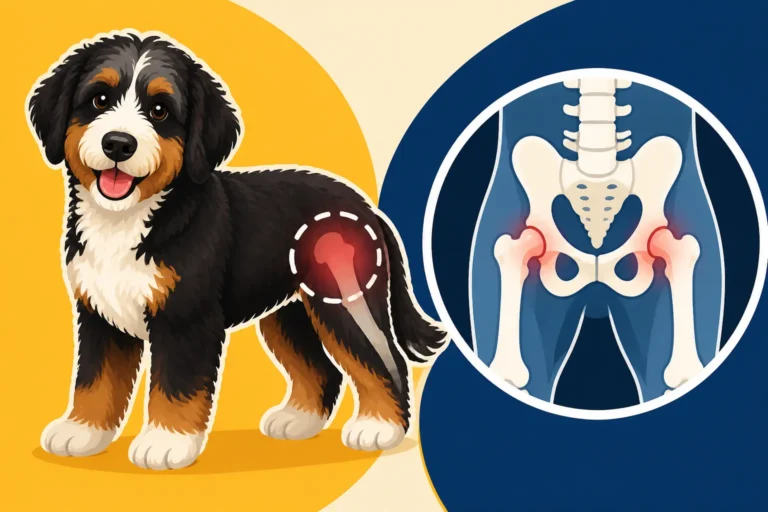
Many owners initially suspect hip dysplasia or another orthopedic issue because the symptoms overlap. This is why it's so important for veterinarians to consider DM, especially in breeds known to carry the gene. The disease targets the white matter of the spinal cord, responsible for transmitting movement commands from the brain to the limbs. Over time, this degradation disrupts communication, leading to the characteristic muscle weakness and eventual paralysis. It's a slow, relentless progression, and while it doesn't cause pain itself, the loss of independence and mobility can be incredibly frustrating and debilitating for an otherwise healthy and mentally active dog.
The Genetic Basis of DM: The SOD1 Gene
The good news, if there is any to be found with such a tough disease, is that DM is primarily a genetic condition. It's linked to a specific mutation in the Superoxide Dismutase 1 (SOD1) gene. This gene is responsible for producing an enzyme that plays a crucial role in protecting cells from oxidative damage. When there's a mutation in the SOD1 gene, this protective function can be compromised, leading to the degeneration of nerve cells in the spinal cord. What's particularly relevant for Bernedoodle owners is that both parent breeds, the Bernese Mountain Dog and the Poodle, can carry this genetic mutation.
This is where the "designer dog" aspect of the Bernedoodle becomes a double-edged sword. While the crossbreed benefits from the genetic diversity often referred to as "hybrid vigor," it also means that your Bernedoodle can inherit health predispositions from either side of its family tree. If a Bernese Mountain Dog carries the SOD1 mutation and a Poodle also carries it, and they are bred together, their Bernedoodle puppies could inherit two copies of the mutated gene, putting them at a very high risk of developing DM. Understanding that this gene lurks in both parental lines underscores the critical need for comprehensive genetic testing. It's not enough to assume that a Poodle is "clear" because Poodles are generally robust, or that a Bernese has been screened for other Bernese-specific issues. The SOD1 test specifically looks for this mutation, ensuring that prospective Bernedoodle parents are not unknowingly passing on this devastating potential to their offspring.
Why Both Bernedoodle Parents Need SOD1 Testing
When you're bringing a new puppy into your home, you're not just getting a cute, fluffy ball of mischief; you're welcoming a new family member who will hopefully be with you for many happy years. The last thing any owner wants is to face a preventable genetic disease. This is precisely why the SOD1 test for Degenerative Myelopathy is non-negotiable for both Bernedoodle parents. It’s all about understanding the genetic lottery and stacking the odds in favor of healthy puppies.
The Autosomal Recessive Inheritance Pattern
The inheritance pattern for DM is what we call autosomal recessive. This might sound like a mouthful of scientific jargon, but it's really quite simple when you break it down. It means that a dog needs to inherit two copies of the mutated SOD1 gene—one from its mother and one from its father—to be considered "at-risk" of developing Degenerative Myelopathy. If a dog inherits only one copy of the mutated gene (from just one parent), it is considered a "carrier."
Now, here's the crucial part: a carrier dog will almost never show any symptoms of DM themselves. They live perfectly healthy, normal lives, wagging their tails and chasing squirrels just like any other Bernedoodle. But, and this is a big "but," they carry that single mutated gene and can pass it on to their offspring. Think of it like a deck of cards. Each parent has two cards for the SOD1 gene. If one parent has a "bad" card (the mutated gene) and the other has a "good" card, they're a carrier. If both parents have a "bad" card, they're at-risk. The puppies then get one card from each parent. If a puppy gets two "bad" cards, that puppy is at-risk for DM. This seemingly benign carrier status is why it's so incredibly important that both parents are tested, because if two healthy-looking carrier dogs are bred together, there's a 25% chance each puppy in that litter could inherit two copies of the mutated gene and be at-risk for DM. That's a quarter of the litter facing a devastating future.
Preventing Heartbreak: Avoiding At-Risk Puppies
Imagine the joy of bringing home your adorable Bernedoodle puppy, full of life and boundless potential. You spend years nurturing them, watching them grow, forming an unbreakable bond. Then, in their senior years, perhaps around the time they hit "The Birthday a Standard Bernedoodle Counts as Senior" or a bit later, you start noticing subtle changes in their gait. Perhaps they drag a back paw slightly, or they struggle to get up after a nap. These are the insidious early signs of DM, and if your dog is genetically at-risk, it heralds a future of progressive mobility loss. This is the heartbreak that responsible SOD1 testing aims to prevent.
Ethical breeders understand this profoundly. Their responsibility extends beyond creating cute puppies; it's about producing healthy, thriving companions for life. By testing both prospective parents, a breeder can make informed decisions, ensuring that no two carriers are ever bred together. This completely eliminates the possibility of producing an at-risk puppy, offering immense peace of mind to future owners. The emotional toll of watching your beloved dog slowly lose the ability to walk, play, and even stand is immense. Beyond the emotional aspect, the financial burden of managing a dog with DM, from mobility aids like ramps and harnesses to physical therapy and potential home modifications (and of course, quality pet insurance providers like Healthy Paws can help tremendously with unexpected vet bills), can be significant. Ensuring both Bernedoodle parents are clear or are appropriately paired to avoid at-risk offspring is a fundamental step in promoting the long-term health and happiness of these wonderful dogs and the families who love them. It ensures that the legacy of a Bernedoodle is one of joy and companionship, not preventable suffering.
Deciphering SOD1 Test Results and What They Mean
Getting your Bernedoodle's SOD1 test results back can feel a little like waiting for a report card. You know it's important, but what do those letters and numbers actually mean? Understanding these results is paramount for both breeders making pairing decisions and owners wanting to understand their dog's genetic health.
Clear, Carrier, and At-Risk Explained
Genetic tests for conditions like Degenerative Myelopathy typically categorize dogs into three distinct statuses based on their SOD1 gene copies. Let's break them down:
- Clear/Normal (N/N): This is the gold standard, the result every breeder hopes for in a breeding dog. An N/N dog has inherited two normal copies of the SOD1 gene, one from each parent. This means they are not affected by DM, and crucially, they cannot pass on the mutated gene to their offspring. If you see a breeder proudly displaying "DM N/N" for both parents, you're looking at a responsible pairing that will only produce DM-clear puppies. They will never develop DM due to this specific SOD1 mutation.
- Carrier (N/DM or N/A): A carrier dog has inherited one normal copy of the SOD1 gene and one mutated copy. As mentioned earlier, carrier dogs are generally considered healthy and will usually not develop DM themselves. The exception can be a very small percentage of carrier dogs that do develop late-onset DM, but this is rare. The primary significance of a carrier status lies in breeding. A carrier dog will pass on the mutated gene to approximately 50% of its offspring. If a carrier is bred to a clear dog, all puppies will either be clear or carriers. No at-risk puppies will be produced. However, if a carrier is unknowingly bred to another carrier, that's when you run into trouble. Understanding "Whether a Bernedoodle Carrier Ever Shows Signs" is often a relief for owners of carrier dogs, but it doesn't diminish the importance of ethical breeding.
- At-Risk (DM/DM or A/A): This status means the dog has inherited two copies of the mutated SOD1 gene, one from each parent. These dogs have a very high probability of developing Degenerative Myelopathy during their lifetime. It's important to remember that "at-risk" doesn't mean "guaranteed to get it tomorrow," but it does indicate a significant genetic predisposition. The onset and progression can vary, but the likelihood is high. No responsible breeder should ever breed an at-risk dog. Knowing "What an At Risk SOD1 Result Means for a Bernedoodle" is critical for future planning and care. This result is the one that breeders work diligently to avoid in their litters through careful genetic screening of the parents.
Interpreting Results for Breeding Pairs
Once you understand what each result means for an individual dog, the next step is to understand how these results interact when two dogs are bred. This is where the power of genetic testing truly shines for ethical breeding practices. Here’s a simple table to illustrate the possible outcomes:
| Parent 1 Status | Parent 2 Status | Possible Offspring Statuses | Risk of At-Risk Puppies |
|---|---|---|---|
| Clear (N/N) | Clear (N/N) | 100% Clear (N/N) | 0% |
| Clear (N/N) | Carrier (N/DM) | 50% Clear (N/N), 50% Carrier (N/DM) | 0% |
| Clear (N/N) | At-Risk (DM/DM) | 100% Carrier (N/DM) | 0% |
| Carrier (N/DM) | Carrier (N/DM) | 25% Clear (N/N), 50% Carrier (N/DM), 25% At-Risk (DM/DM) | 25% |
| Carrier (N/DM) | At-Risk (DM/DM) | 50% Carrier (N/DM), 50% At-Risk (DM/DM) | 50% |
| At-Risk (DM/DM) | At-Risk (DM/DM) | 100% At-Risk (DM/DM) | 100% |
As you can see from the table, the ideal pairings for breeders are "Clear x Clear" to produce 100% clear puppies, or "Clear x Carrier." In the "Clear x Carrier" scenario, while some puppies will be carriers, none will be at-risk, and these carrier puppies can go on to live full, healthy lives, or be carefully bred to clear mates themselves. This strategy allows breeders to maintain genetic diversity while responsibly managing the DM gene within their lines.
Any pairing that involves two carriers, a carrier and an at-risk dog, or two at-risk dogs, is considered irresponsible and unethical because it carries a significant risk of producing puppies that will develop DM. A truly responsible Bernedoodle breeder will test their dogs and use this information to make informed decisions, never breeding two dogs together if there's a chance of producing at-risk puppies. They might keep a carrier dog in their breeding program, but only if they are diligent about pairing them exclusively with clear mates. This commitment to genetic health safeguards the future of the breed and prevents immense suffering for both dogs and their human families.
The Testing Process: What to Expect
If you're considering a Bernedoodle puppy, or perhaps you're a breeder wanting to ensure the health of your lines, understanding the SOD1 testing process is invaluable. Thankfully, it's a straightforward and non-invasive procedure.
How SOD1 Testing is Performed
Getting a SOD1 test for your dog is incredibly simple and doesn't involve any stressful veterinary visits just for the test itself. The most common method involves a simple cheek swab. You or your veterinarian will gently rub a specialized cotton swab along the inside of your dog's cheek, collecting cells that contain their DNA. This usually takes less than a minute and is completely painless for the dog. Think of it like brushing your teeth, but less intrusive. Some testing labs may also accept a blood sample, which can often be drawn during a routine veterinary check-up or when other tests are being run.
Once the sample is collected, it's sent off to a specialized genetic testing laboratory. Several reputable labs offer this test, including companies like Embark, Paw Print Genetics, and Canine Health Check, among others. These labs analyze the DNA in the sample specifically for the SOD1 gene mutation. The turnaround time for results can vary, but typically you can expect to receive them within a few weeks. The ease and simplicity of this test make it an accessible and essential tool for any responsible Bernedoodle breeder or owner. It's a small investment of time and money that can prevent a lifetime of heartache.
When to Test and What to Ask Your Breeder
For breeders, the answer to "when to test" is unequivocal: before breeding. This genetic screening should be a fundamental part of a reputable breeder's health testing protocol, alongside other important clearances for hips, elbows, eyes, and heart. It's not something to be done after puppies are on the ground or, worse, after a problem arises. Pre-breeding testing allows breeders to make informed pairing decisions, ensuring they never breed two dogs that could produce at-risk puppies.
As a prospective puppy owner, this translates into a crucial set of questions you must ask your breeder. Don't be shy!
- "Have both parent dogs been tested for SOD1 Degenerative Myelopathy?" This is your primary question.
- "Can I see the official results for both the sire and the dam?" A reputable breeder will be transparent and eager to share these documents. Look for results from a recognized genetic testing laboratory. Some breeders even register their dogs' health clearances with public databases like the Orthopedic Foundation for Animals (OFA), which provides an extra layer of verification. Don't just accept a verbal "they're clear" statement; ask for the proof.
- "What were the specific results (Clear, Carrier, or At-Risk) for each parent, and how did you choose this pairing based on those results?" A breeder should be able to clearly explain their breeding decisions in relation to the SOD1 test and how they ensure no at-risk puppies are produced. For instance, if one parent is a carrier, they should only be bred to a clear partner.
If a breeder hasn't tested, gives vague answers, or claims it's "not necessary" for Bernedoodles, consider that a major red flag. This indicates a lack of commitment to the health of their puppies and the well-being of their future families. Choosing a puppy from an untested litter means you're rolling the dice on a potentially devastating disease. Remember, asking about "The Five Clearances a Bernedoodle Breeder Should Have" should always include genetic tests like SOD1. Ultimately, it's important to understand "Whether an Untested Bernedoodle Litter Is Worth Buying" – and the answer, for many, is a resounding no, especially when preventable genetic diseases are at stake.
Living with a Bernedoodle Who is a Carrier or At-Risk
Discovering your Bernedoodle is a carrier or, more rarely, at-risk for Degenerative Myelopathy can stir up a lot of emotions. It's natural to feel worried, but it's important to understand what these results truly mean for your individual dog and how you can best support them throughout their life.
Managing a Carrier Bernedoodle's Life
If your Bernedoodle tests as a carrier (N/DM) for the SOD1 mutation, the most important thing to remember is that they are generally healthy and will likely live a full, normal life without developing DM symptoms. This news can be a huge relief for owners who might initially jump to the worst conclusions. Your carrier Bernedoodle doesn't need any special diet, exercise restrictions, or medication specifically because of their carrier status. They are just as goofy, loving, and active as any other Bernedoodle.
The primary implication of a carrier status is for breeding purposes. If you were considering breeding your Bernedoodle, then knowing they are a carrier means you have a critical responsibility. They should only be bred with a dog that has tested "Clear" (N/N) for SOD1. This ensures that while some of their puppies might also be carriers, none will be "at-risk" of developing the disease themselves. For most pet owners, who have no intention of breeding, a carrier result simply means an interesting piece of genetic information about their beloved companion, with no impact on their daily life or health. Understanding "Whether a Bernedoodle Carrier Ever Shows Signs" can bring immense peace of mind, allowing you to simply enjoy your dog for who they are: a happy, healthy Bernedoodle.
Supporting an At-Risk Bernedoodle
While it's much rarer to encounter an at-risk (DM/DM) Bernedoodle from a responsible breeder, if you find yourself with an at-risk dog, it's understandable to feel overwhelmed. It's true that at-risk dogs have a very high likelihood of developing DM, but it's crucial to understand a few things: firstly, "at-risk" does not mean "guaranteed", and secondly, symptoms typically don't appear until later in life, usually after 8 years old. This means you still have many wonderful, healthy years ahead with your dog.
The best approach for an at-risk Bernedoodle focuses on general good health and proactive monitoring. Keep them at a healthy weight to reduce strain on their joints, feed a high-quality diet, and ensure they get appropriate, consistent exercise to maintain muscle mass and overall fitness. While no specific intervention can prevent DM from developing, a strong, healthy body can sometimes help manage symptoms better if and when they appear. Be vigilant for subtle changes in their gait or mobility, such as stumbling, dragging a back foot, or difficulty rising. These can be the early indicators that "The Age Degenerative Myelopathy Appears in a Bernedoodle" is starting for your dog, or "Whether a Bernedoodle Dragging a Back Foot Has DM" is becoming a reality.
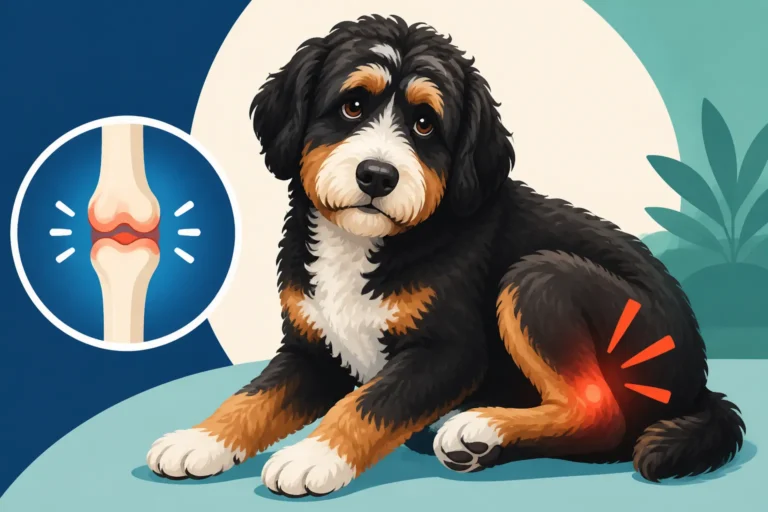
If symptoms do begin, consult your veterinarian immediately. They can help you differentiate DM from other conditions like hip dysplasia or arthritis (referencing "Telling DM From Hip Disease in a Bernedoodle") and discuss supportive care options. This might include physical therapy, acupuncture, hydrotherapy, or even special harnesses, slings, and "Wheelchairs and Carts for a Bernedoodle With DM" to help maintain mobility as the disease progresses. While there is currently no cure for DM, there are many ways to keep an affected Bernedoodle comfortable and enhance their quality of life. Knowing "Whether a Bernedoodle With DM Can Be Kept Comfortable" becomes a key focus, and resources, including potentially your pet insurance like Healthy Paws, can help with the costs associated with these supportive treatments, allowing you to provide the best possible care for your cherished companion.
Disclaimer
This article is for general informational purposes only and does not constitute professional advice. Laws, prices and regulations vary by location and change over time. Consult a qualified professional for guidance on your specific situation.