The Places a Ninety Pound Bernedoodle Mats First
Oh, the sheer joy of a Bernedoodle! Their sweet, goofy personalities, their cuddly nature, and that magnificent, fluffy coat. But let's be real, that beautiful coat comes with a significant challenge: matting. If you own a ninety-pound Bernedoodle, you know the frustration of finding those stubborn tangles, often in the trickiest spots. This guide is all about pinpointing exactly where those mats tend to crop up first on your big, lovable fluffball and how you can tackle them before they become a nightmare.
Understanding the Bernedoodle Coat and Why It Mats So Easily
It’s easy to look at a Bernedoodle’s glorious coat and just see fluff, but underneath that charm lies a complex genetic tapestry that makes it a mat magnet. Understanding why your Bernedoodle’s hair behaves the way it does is the first step in winning the battle against tangles. It’s not just about brushing; it’s about appreciating the unique characteristics of their fur.
The Double Whammy of Bernese and Poodle Genetics
Imagine taking the dense, insulating undercoat of a majestic Bernese Mountain Dog and swirling it with the continuously growing, curly, single-layer hair of a Poodle. That's essentially what you get in a Bernedoodle – a coat that often combines the worst matting characteristics of both breeds, though usually with less shedding than a purebred Bernese. The Bernese side contributes a tendency towards thick, often softer hairs that love to clump together, especially if there's any undercoat present in the mix. The Poodle side brings that signature curl, which, while reducing shedding for many, is a master at twisting around itself and trapping any loose hairs it encounters. This combination results in a beautiful but high-maintenance coat that demands consistent attention. It’s this unique blend that contributes to The Coat a Bernedoodle Gets From Two Heavy Coated Parents.
Adding to this challenge is the infamous "coat change" phase that many Bernedoodle puppies go through. This usually happens between 6 and 18 months of age, though it can vary. During this time, their soft, fluffy puppy coat transitions to a denser, adult coat. The old puppy hair gets trapped within the emerging adult hair, creating an absolute matting free-for-all. It feels like overnight your perfectly brushed puppy transforms into a tangle monster, and no matter how much you brush, more mats appear. This period is often when owners first truly grasp The Volume of Coat a Bernedoodle Owner Brushes Weekly and realize the commitment involved. Understanding The Month a Bernedoodle Puppy Starts Matting Daily and How Many Months a Bernedoodle's Coat Change Runs can help you prepare for this challenging phase.
Factors That Accelerate Matting in a Large Bernedoodle
While the genetics are the root cause, various everyday factors act as accelerators, turning minor tangles into full-blown mats, especially on a large, active dog. Friction is a huge culprit. Think about where your ninety-pound Bernedoodle rubs against things throughout the day – harnesses, collars, furniture, even other pets. Every rub creates tiny knots that, if not brushed out promptly, tighten into mats. Moisture is another big one; a wet coat, whether from rain, a bath, or a swim, will mat faster than a dry one, particularly if not dried thoroughly and brushed out as it dries.
Then there's dirt and debris. Those glorious outdoor adventures that your big Bernedoodle loves so much? They come with a price. Mud, burrs, twigs, and even just dust can get deeply embedded in the coat, forming anchors for mats. Static electricity, especially in dry indoor environments, can also contribute by making hairs cling and tangle together. And of course, the most obvious factor is simply a lack of consistent, thorough grooming. With a dog of this size, it's not just about a quick once-over; it requires a dedicated brushing session that reaches every layer of that expansive coat.
The sheer volume and density of hair on a ninety-pound Bernedoodle mean there's simply more material to tangle. A small Bernedoodle might develop a few mats, but a standard-sized one can have vast areas become matted in what feels like moments. Their larger bodies also have more surface area prone to friction, and they often engage in more vigorous play or outdoor activities, further increasing their matting risk. It's a constant battle, but an informed owner is a better equipped owner.
The Absolute Worst Offenders: Where Mats Start Their Reign of Terror
When you bring home a Bernedoodle, you quickly learn that some areas of their body are simply mat magnets. These aren't random occurrences; they're predictable hotspots where friction, moisture, and neglect combine to create the most stubborn tangles. For a ninety-pound Bernedoodle, these problem areas are amplified by their size and the sheer amount of coat. Knowing these zones is crucial for proactive grooming.
Behind the Ears and Under the Collar
If you’ve ever owned a fluffy dog, you know this pain point well. The area right behind your Bernedoodle's ears is almost guaranteed to be one of the first places mats develop. Why? Firstly, the hair here is often finer and softer than on other parts of the body, making it more prone to tangling. Secondly, there’s constant friction. Every time your Bernedoodle shakes their head, scratches an itch, or rubs against furniture, those hairs are rubbing together. Add to that the fact that this spot is often overlooked during brushing, either because it’s out of sight or because it's a sensitive area your dog might not love having brushed.
Similarly, the area directly under your Bernedoodle’s collar or harness is a notorious matting zone. The constant rubbing of the collar against the fur creates friction that quickly turns loose hairs into tight knots. If the collar gets wet, say from drinking water or a splash, and isn't dried thoroughly, the moisture exacerbates the problem. For a large Bernedoodle, the weight of the collar itself, combined with the often-thicker fur around the neck, means these mats can become incredibly dense and uncomfortable very quickly. Imagine a ninety-pound dog pulling on a leash; that harness or collar is constantly shifting and rubbing, setting the stage for significant matting.
These areas are critical to check daily. A quick lift of the collar and a gentle run of your fingers behind the ears can catch tiny tangles before they escalate. It's a small habit that can save you a lot of heartache and your dog a lot of discomfort down the line. Missing these spots, even for a day or two, can lead to painful, skin-tight mats that are incredibly difficult to remove without professional help or resorting to shaving.
Armpits and Groin (The "Hidden" Hotspots)
These are arguably the most sneaky and uncomfortable matting spots for your large Bernedoodle. The armpits and groin areas are high-friction zones due to the constant movement of the legs against the body. Every step your Bernedoodle takes, every stretch, every roll on the floor – it all contributes to friction in these delicate areas. The hair here is also typically softer and thinner, much like behind the ears, making it exceptionally prone to knotting. Because these areas are less visible and often sensitive, they are frequently overlooked during routine brushing, allowing mats to form and tighten close to the skin.
For a ninety-pound Bernedoodle, the sheer bulk of their body means more pressure and rubbing in these areas. When they lie down, especially on their side, their weight can press the fur in their armpits or groin against the floor, creating ideal conditions for matting. If these mats are left untended, they can become incredibly painful, restricting your dog's movement and causing skin irritation, redness, and even open sores because the skin underneath can't breathe. It's like having a tight, irritating wad of hair constantly pulling at their skin.
Checking these areas requires your Bernedoodle to be comfortable being handled, so start early with positive reinforcement for touching their sensitive spots. Gently lift each leg to expose the armpit, and carefully part the fur in the groin area to check for tangles. A dedicated brush or comb through these spots, even if it's just a few strokes, can prevent immense discomfort for your dog and save you from the arduous task of trying to de-mat these sensitive regions later.
The "Britches" and Tail Base
The "britches" – that fluffy, voluminous hair around your Bernedoodle's hindquarters and thighs – are another primary matting area, especially on a big dog. This dense fur is constantly moving and rubbing as your Bernedoodle walks, sits, and plays. When a ninety-pound Bernedoodle plops down on a hard surface, the friction against their britches can quickly create tangles. This area also sees a lot of action during bathroom breaks; moisture, urine, or fecal matter can get trapped in the long hair, leading to quick mat formation and hygiene issues.
The base of the tail, where it attaches to the body, is also highly susceptible. The tail is in constant motion, wagging and swishing, which creates friction where the tail meets the body hair. If your Bernedoodle sits or lies down with their tail tucked, it further compresses the hair at the base, encouraging mats to form. The hair here is often quite thick and dense, making it easy for small tangles to quickly escalate into larger, painful mats that pull on the skin.
Regular grooming of these areas is essential, not just for comfort but for hygiene. Keeping the hair around the anus trimmed short (a "sanitary trim") can help prevent fecal matter from getting trapped, which not only causes matting but also can lead to skin irritation and infection. For the rest of the britches and tail base, thorough line brushing is key to getting down to the skin and preventing mats from forming deep within the dense fur. Don't just skim the surface; really get in there with your comb to ensure all loose hair is removed.
Other Common, But No Less Annoying, Matting Zones
While the previously mentioned areas are often the first to mat and cause the most grief, a large Bernedoodle’s entire body is essentially a canvas for tangles if not diligently maintained. These other spots might not develop mats as rapidly or as severely as the armpits or behind the ears, but they still require attention to keep your ninety-pound companion comfortable and mat-free.
Legs, Paws, and Between the Toes
Your Bernedoodle’s legs and paws are constantly on the move, picking up all sorts of debris from the environment. The longer hair on their legs, known as "feathering," and the delicate tufts between their paw pads are particularly vulnerable. Mud, leaves, small twigs, and even grass seeds can get tangled in this hair, forming tight mats very quickly. When this fur gets wet – from dew on the grass, rain, or a splash in a puddle – and isn't dried and brushed out thoroughly, it dries into hard, painful clumps. These mats can pull on the skin, making walking uncomfortable, and can even hide foreign objects that might irritate or injure the paw pads.
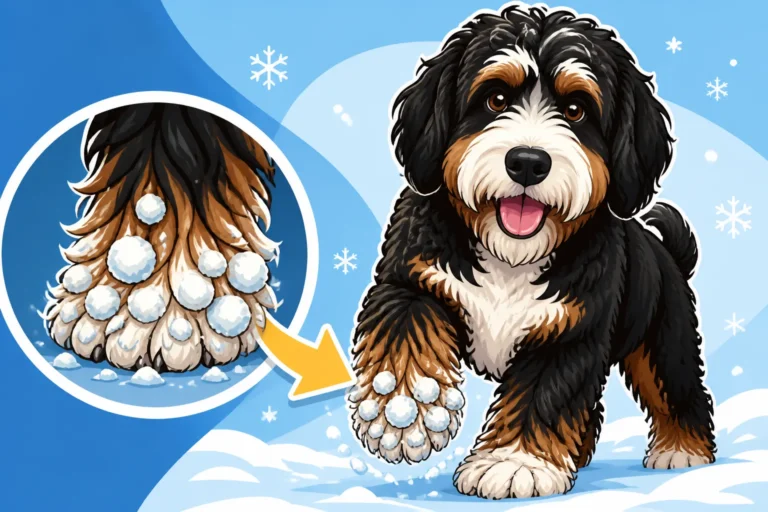
The hair between the paw pads is especially tricky. It can grow quite long, collecting dirt, small stones, and snowballs in winter, which can then mat together tightly. These mats make it difficult for your Bernedoodle to get traction on smooth floors and can cause pain with every step. Regularly Trimming Between a Bernedoodle's Pads is essential maintenance that many owners overlook. It not only prevents matting but also improves your dog's footing and comfort.
After every outdoor adventure, especially if it was wet or muddy, take a few moments to inspect and gently comb out your Bernedoodle’s legs and paws. Pay close attention to the area around their dewclaws, which can also be a hidden matting spot. A damp cloth can help clean off mud before it dries, making brushing easier. Incorporating paw checks into your daily routine can prevent many painful mats and keep your large Bernedoodle's feet happy and healthy.
The Belly and Chest Area
The underside of your ninety-pound Bernedoodle, specifically their belly and chest, also presents challenges for matting. This area often has softer, finer hair and is subjected to friction whenever your dog lies down, rolls around, or sits. If your Bernedoodle loves to sprawl out on rough carpets or even hard floors, that constant pressure and rubbing can quickly felt the hair together. Furthermore, if your dog wears a coat or vest, particularly in colder weather or for cooling in summer, the edges of the garment can rub against the fur on their chest and belly, creating prime conditions for mats.
Think about a big Bernedoodle who enjoys rolling in the grass or snow. Not only do they pick up debris, but the sheer act of rolling creates friction across their chest and belly. If their coat is damp from a swim or rain, and they then lie down to dry, the wet fur can quickly clump and tighten into mats. Because this area is often out of sight, it can be easy to miss these developing tangles until they become substantial.
When brushing, make sure to gently roll your Bernedoodle onto their back or side so you can properly access their belly and chest. Use a slicker brush and then follow up with a comb, working in small sections, to ensure you get all the way down to the skin. This area might be sensitive for some dogs, so always use a gentle touch and reward their cooperation. Consistent attention to these spots can prevent large, painful mats from forming, which can be particularly uncomfortable given their location.
The Neck Ruff and Topline
While often less severe than the mats found under collars, the general neck ruff and the topline along your Bernedoodle's back can also develop tangles, especially on a ninety-pound dog with a dense coat. The neck ruff, in particular, often has thicker, more luxurious hair that can easily get matted, even without a collar, due to natural movement and friction when your dog shakes its head or rubs against things. If you have a harness that sits high on their chest and neck, that too can cause friction.
The topline, stretching from their shoulders down to their tail, isn't typically the first place mats form, but if daily brushing is neglected, this large expanse of fur can become a matted mess. When a large Bernedoodle sleeps or rolls, the pressure on their back can press the hairs together. Furthermore, if the coat gets wet and air-dries without being thoroughly brushed out, the hair can clump, especially if there's any shedding undercoat present. This is particularly true if your Bernedoodle enjoys wrestling with other dogs; the friction from their play can quickly intertwine hairs.
Maintaining the neck ruff and topline involves consistent, thorough line brushing. For the neck, carefully separate the hair and brush in sections, ensuring you reach the skin beneath the dense outer coat. For the topline, work systematically across their back, parting the hair and brushing from root to tip. These areas might seem less prone to mats than others, but their sheer size means that when mats do form, they can cover a significant portion of your Bernedoodle's body, making grooming a much larger task.
Your Arsenal Against Mats: Prevention and Early Intervention
Preventing mats is always easier than removing them, especially when you’re dealing with the expansive, dense coat of a ninety-pound Bernedoodle. It's about establishing a consistent routine, using the right tools, and approaching grooming with patience and care. Think of it as a partnership with your dog, making the process as positive as possible.
Daily Line Brushing: Non-Negotiable for a Big Bernedoodle
For a Bernedoodle of any size, but especially a large one, daily line brushing is not just a recommendation—it’s a necessity. Line brushing is a technique where you brush the coat in sections, starting from the bottom and working your way up, ensuring you get all the way down to the skin. You essentially create a "line" of brushed hair, then move up a bit and brush another line, overlapping as you go. This method ensures that you're not just skimming the surface of your dog's coat, which is a common mistake that leads to mats forming underneath the top layer of hair. Line Brushing a Bernedoodle to the Skin is the only way to truly prevent mats from taking hold.
To effectively line brush a ninety-pound Bernedoodle, you'll need the right tools. A high-quality slicker brush with firm but flexible pins is essential for detangling and removing loose hair. Following up with a long-toothed metal comb is crucial to ensure you've worked through any tangles down to the skin. If the comb glides through smoothly, you've done a good job. If it snags, you need to go back with the slicker brush to that area. These are critical components of The Brushes a Bernedoodle Owner Actually Needs.
Establishing a routine for daily brushing will save you countless hours of de-matting and prevent immense discomfort for your Bernedoodle. Even 15-20 minutes a day can make a world of difference. Start with positive reinforcement, offering treats and praise, especially when they are puppies, to make grooming a pleasant experience. A well-brushed Bernedoodle is a happy Bernedoodle, and a happy owner!
Strategic Grooming Practices and Tools
Beyond daily brushing, a few strategic grooming practices can further bolster your defenses against matting. Investing in a good quality detangling spray is a game-changer. These sprays help lubricate the hair, making it easier for brushes and combs to glide through tangles without pulling, and can be particularly helpful for tackling those stubborn armpit or ear mats. Brands like Cowboy Magic or Chris Christensen often have highly-rated detangling products that Bernedoodle owners swear by, and you can usually find these on platforms like Chewy or Amazon.
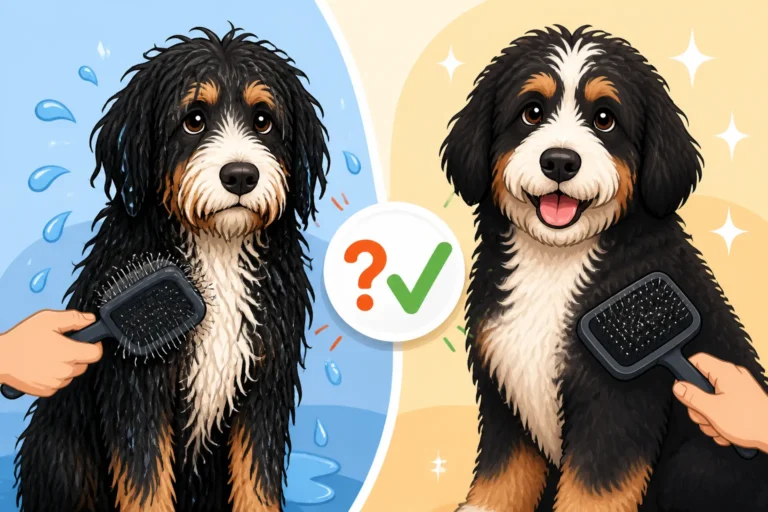
Proper bathing and drying techniques are also paramount. You should never bathe a matted Bernedoodle, as water will only tighten and worsen the mats, turning them into solid pelts. Always brush thoroughly before bathing. When you do bathe, use a good quality dog shampoo and conditioner, rinsing thoroughly. The drying process is just as important, if not more so, than the wash. You absolutely must dry your Bernedoodle completely to the skin, while simultaneously brushing the coat out. A high-velocity force dryer, like those found on Amazon, can be incredibly effective for this, blowing out loose undercoat and separating curls as the hair dries, preventing tangles. This is why many consider Whether a Force Dryer Is Worth Buying for a Bernedoodle to be a resounding yes. Without a force dryer, it can take hours to properly dry a large Bernedoodle, and air-drying is simply not an option if you want to prevent matting. Learning Drying a Bernedoodle to the Skin is a critical skill.
For those who feel overwhelmed by the sheer volume of coat, regular professional grooming appointments are non-negotiable. Aim for every 6-8 weeks, or even more frequently for puppies going through coat change. A professional groomer has the tools, expertise, and often the dedicated grooming table and force dryer needed to handle a ninety-pound Bernedoodle's coat effectively. They can perform sanitary trims, thin out dense areas, and ensure your dog remains mat-free between visits, making your at-home maintenance much more manageable.
Addressing Specific Problem Areas with Care
Knowing your Bernedoodle's particular matting hotspots allows for targeted, careful attention. For behind the ears and under the collar, make it a habit to lift the collar and gently comb those areas every day. For the armpits and groin, use a smaller, finer comb, and always support the skin while you brush to minimize pulling. These areas are sensitive, so a light touch and frequent praise are essential.
The britches and tail base require a thorough, section-by-section brush-out. For the paw and leg feathering, check after every walk, especially in inclement weather. A quick wipe down with a towel and a gentle brush can prevent mud and debris from drying into painful clumps. If you're using a harness, ensure it fits properly to minimize friction, and remove it when your dog is relaxing at home to give the fur a break.
Consistency is key. Even if your Bernedoodle isn't visibly dirty or matted, those invisible micro-tangles are always forming. By giving these prone areas a few extra passes with the brush daily, you're investing in your dog's comfort and saving yourself from the headache of future de-matting sessions. Remember, prevention isn't just about brushing; it's about being observant and proactive.
When Prevention Fails: Dealing with Existing Mats Safely
Despite your best efforts, sometimes mats happen. A skipped brushing session, an unexpected romp in the woods, or a particularly intense coat change can lead to knots that are beyond simple brushing. When this happens, knowing how to safely address existing mats is crucial for your Bernedoodle’s comfort and health. It’s important to know when to handle it yourself and, perhaps more importantly, when to call in a professional.
Assessing the Severity and When to Call a Pro
Not all mats are created equal. A small, loose tangle caught early might be easily brushed out at home. However, a dense, felted mat that is tight against the skin is a completely different beast. To assess severity, try to get your fingers underneath the mat. If you can't easily separate the mat from the skin, or if the mat covers a large area, feels hard, or is pulling the skin taut, it's time to call a professional groomer or your veterinarian. Attempting to cut out severe mats at home with scissors is incredibly risky. The skin often gets pulled up into the mat, and it's all too easy to accidentally cut your dog, leading to painful injuries and costly vet visits.
Professionals have specialized tools like clippers with different blade lengths and mat splitters that can work safely through mats without damaging the skin. They also have the experience and knowledge to handle a distressed or uncomfortable dog during the de-matting process. Be prepared for the groomer to recommend a full shave-down if the matting is extensive and close to the skin. This isn't a punitive measure; it's the kindest and safest way to remove painful matting and allow the skin to heal and the coat to regrow fresh. What a Matted Bernedoodle Costs to Shave can be surprising, but it's an investment in your dog's immediate relief and long-term health.
Never feel guilty about taking your Bernedoodle to a groomer for severe matting. Their priority is your dog's welfare. They understand that sometimes life happens, and they are there to help. An experienced groomer will approach the situation calmly and work to make the process as stress-free as possible for your ninety-pound companion.
Step-by-Step for Small, Manageable Mats
For small, isolated mats that you can still get your fingers under, you might be able to tackle them at home with the right approach. First, gather your tools: a mat splitter or dematter, a slicker brush, a metal comb, and a good detangling spray (products from Chewy or Amazon can be very helpful here). Find a quiet, comfortable space where your Bernedoodle can relax, perhaps on a non-slip surface if they are standing, and have plenty of high-value treats ready.
Start by liberally spraying the mat with detangling spray, making sure it penetrates into the mat, not just the surface. Allow it to sit for a minute or two to work its magic. Then, using your fingers, try to gently pull apart the edges of the mat. Hold the fur at the base of the mat firmly against the skin to minimize pulling and discomfort for your dog. If the mat is stubborn, use a mat splitter tool to carefully slice through the mat lengthwise, breaking it into smaller sections. Never pull or rip at the mat.
Once the mat is broken into smaller sections, use the very tips of your slicker brush to gently tease out the tangles, working from the outer edges of the mat inwards, bit by bit. Follow up with your metal comb to ensure all tangles are gone. Always comb through the brushed area to confirm you've reached the skin. Remember, patience is absolutely key here. If your Bernedoodle shows any signs of pain or discomfort, take a break or reconsider calling a professional.
The Risks of Neglecting Mats
The consequences of neglecting matting on a ninety-pound Bernedoodle extend far beyond just an untidy appearance. Mats are not just cosmetic issues; they are serious health concerns. When mats are left in place, they continue to tighten and pull on the skin, causing constant pain and discomfort for your dog. This can restrict their movement, making it difficult for them to walk, run, or even lie down comfortably.
Beneath severe mats, the skin cannot breathe, creating a warm, moist environment that is a breeding ground for bacteria and yeast. This can lead to painful skin infections, hot spots, and other dermatological issues. These conditions can be incredibly itchy and painful, leading your dog to scratch or chew at the area, further irritating the skin and potentially causing open wounds. Hot Spots Under a Bernedoodle's Thick Coat are common outcomes of neglected matting. In extreme cases, a mat can even cut off circulation to an area of skin or trap parasites like fleas and ticks, making them incredibly difficult to detect and remove. These conditions can necessitate costly veterinary interventions and prolonged recovery periods.
Neglecting mats also makes future grooming sessions incredibly difficult and stressful for your Bernedoodle. A dog that has experienced painful de-matting will naturally become averse to brushing and handling, making your job as an owner even harder. It's a vicious cycle that is best avoided through diligent and consistent preventative care. Understanding Whether a Matted Bernedoodle Develops Skin Infections underscores the importance of addressing mats immediately.
| Matting Hotspot | Why It Mats Easily | Prevention Strategy | Tools for Home Prevention | When to Call a Pro |
|---|---|---|---|---|
| Behind Ears | Fine hair, constant friction, often overlooked | Daily gentle combing, lift ear flaps to expose area | Fine-toothed comb, small slicker brush | If mat is tight, large, or dog is sensitive |
| Under Collar/Harness | Constant rubbing, moisture retention, thick fur | Remove collar/harness when indoors, brush thoroughly daily, ensure proper fit, dry completely if wet | Slicker brush, metal comb | If mat forms a solid ring around neck or is pulling skin |
| Armpits & Groin | High friction from movement, soft hair, sensitive areas | Lift legs daily to expose areas, gentle but thorough brushing in small sections, support skin | Small slicker brush, metal comb, detangling spray | Mat is tight against skin, causes pain, or dog won't allow access |
| Britches & Tail Base | Dense fur, sitting friction, exposure to waste/moisture | Daily line brushing, regular sanitary trims, dry thoroughly after bathroom breaks | Large slicker brush, wide-toothed comb, trimming shears | Mat is large, embedded with debris, or causing hygiene issues |
| Legs & Paws | Collects debris, moisture, constant movement | Check after walks, wipe clean, brush feathering, trim paw pad hair regularly | Slicker brush, paw trimmer, wide-toothed comb | Mats are solid, painful, or causing limping |
| Belly & Chest | Lying down friction, soft hair, sometimes overlooked | Gently roll dog to access, brush thoroughly, ensure coats/vests fit well and don't rub | Medium slicker brush, metal comb | Large, flat mats adhering to the skin |
| Neck Ruff & Topline | Dense fur, general movement, potential harness friction | Systematic line brushing, thorough drying after baths | Large slicker brush, wide-toothed comb | Extensive, felted areas over a large portion of the back |
Disclaimer
This article is for general informational purposes only and does not constitute professional advice. Laws, prices and regulations vary by location and change over time. Consult a qualified professional for guidance on your specific situation.