Whether a Bernedoodle Inherits the Bernese Undercoat
One of the biggest questions that swirls around bringing a Bernedoodle into your family, often right after "how big will they get?" or "what color will they be?", is undoubtedly about their coat. You've heard about the Bernese Mountain Dog's majestic, thick, beautiful double coat, and you've likely heard whispers of the Poodle's famously non-shedding, curly locks. So, when these two combine, what do you actually end up with? Do you get the best of both worlds, a magical creature that looks like a Bernese but doesn't shed like one, or are you in for a hairy surprise with a Bernedoodle that still inherits that dense Bernese undercoat? This guide is here to unravel the truth about Bernedoodle coats, shedding, and what you can realistically expect.
Understanding the Bernese Mountain Dog Coat
Let's start with the Bernese Mountain Dog, one of the Bernedoodle's magnificent parent breeds. Their coat is undeniably stunning – thick, luxurious, and instantly recognizable. But that beauty comes with a responsibility, and a fair bit of hair.
The Double Coat Explained
A Bernese Mountain Dog boasts what's known as a double coat. Imagine wearing two sweaters: one thin, silky layer close to your skin, and then a thick, woolly one over it. That's essentially what your Bernese has. The outer layer, called the guard coat, consists of longer, coarser hairs. These are designed to be water-resistant, protecting the dog from rain, snow, and general grime. They're like the dog's all-weather jacket.
Beneath this outer layer lies the true workhorse: the undercoat. This is a dense, soft, downy layer of fur that acts as an incredible insulator. In winter, it keeps them toasty warm, perfectly suited to their Swiss mountain origins. In summer, it helps regulate their body temperature, acting as a barrier against heat. It's a marvel of natural engineering, but it's also the source of much shedding for Bernese owners. This undercoat is what truly defines a heavy-shedding breed.
Seasonal Shedding and "Blowing Coat"
Because of this sophisticated double coat, Bernese Mountain Dogs are known for being significant shedders, especially during seasonal changes. They don't just "shed a little"; they blow their coat. This usually happens twice a year, typically in spring as they ditch their winter insulation for lighter summer wear, and again in the fall to prepare for winter. During these periods, the amount of loose hair can be staggering.
If you've ever owned a double-coated breed, you know the drill: hair tumbleweeds rolling across the floor, fur clinging to every piece of furniture and clothing, and the endless vacuuming. It's not for the faint of heart, and it's certainly a commitment. Owners of purebred Bernese spend a lot of time brushing, often with specific tools like an undercoat rake, just to keep ahead of the fluffy deluge. This intense shedding is one of the primary reasons people seek out a Bernedoodle, hoping to mitigate this aspect.
The Poodle's Coat Contribution
Now, let's look at the other side of the genetic coin: the Poodle. This breed is practically famous for its coat, not just for its elegance in the show ring, but for its unique qualities that make it so appealing to allergy sufferers and those seeking a low-shedding companion.
The Single Layer, Continuously Growing Coat
Unlike the Bernese, Poodles have a single-layer coat. There's no distinct undercoat; instead, their hair is dense, curly, and grows continuously, much like human hair. This is the key to their low-shedding reputation. When a Poodle's hair naturally sheds, it doesn't fall out onto your floor or furniture. Instead, the loose hairs get trapped within the surrounding curls.
This means that while Poodles do shed individual hairs, the vast majority stay intertwined within their coat. This characteristic is a boon for keeping your home cleaner and is why they're often recommended for people with mild pet allergies. However, it also means that those trapped hairs, if not brushed out regularly, will quickly form mats, turning their beautiful curls into dense, painful felt. So, while shedding is minimal, grooming is absolutely essential and constant.
Hypoallergenic Claims and Reality
The term "hypoallergenic" gets thrown around a lot when discussing Poodles and Poodle crosses like the Bernedoodle. It's important to understand what this actually means. No dog is 100% hypoallergenic, as all dogs produce dander, saliva, and urine proteins that trigger allergies. However, Poodles are considered low-allergen or allergy-friendly because their coat type reduces the amount of dander and shed hair released into the environment. The allergens are still present, but they are contained within the coat rather than being dispersed widely.
This Poodle trait is what hopeful Bernedoodle owners cling to, envisioning a dog with the Bernese aesthetic but the Poodle's allergy-friendly coat. It's a wonderful idea, and for many Bernedoodles, it's a reality. But the genetics are a fascinating, often unpredictable, mix. Understanding that Poodles themselves still require significant grooming to manage their continuously growing hair is crucial for any prospective Bernedoodle parent.
The Bernedoodle Coat: A Genetic Lottery
Here's where things get really interesting, and sometimes a little confusing. The Bernedoodle's coat is a direct result of the genetic blend from both parents, and it can manifest in a few different ways. The idea that a Bernedoodle inherits the Bernese undercoat in its entirety, causing the same level of shedding, is usually a simplification. What it often inherits are traits that influence density and shedding.
F1, F1b, and Beyond: Generations and Predictability
The generation of your Bernedoodle plays a huge role in its coat type, and consequently, its shedding potential.
-
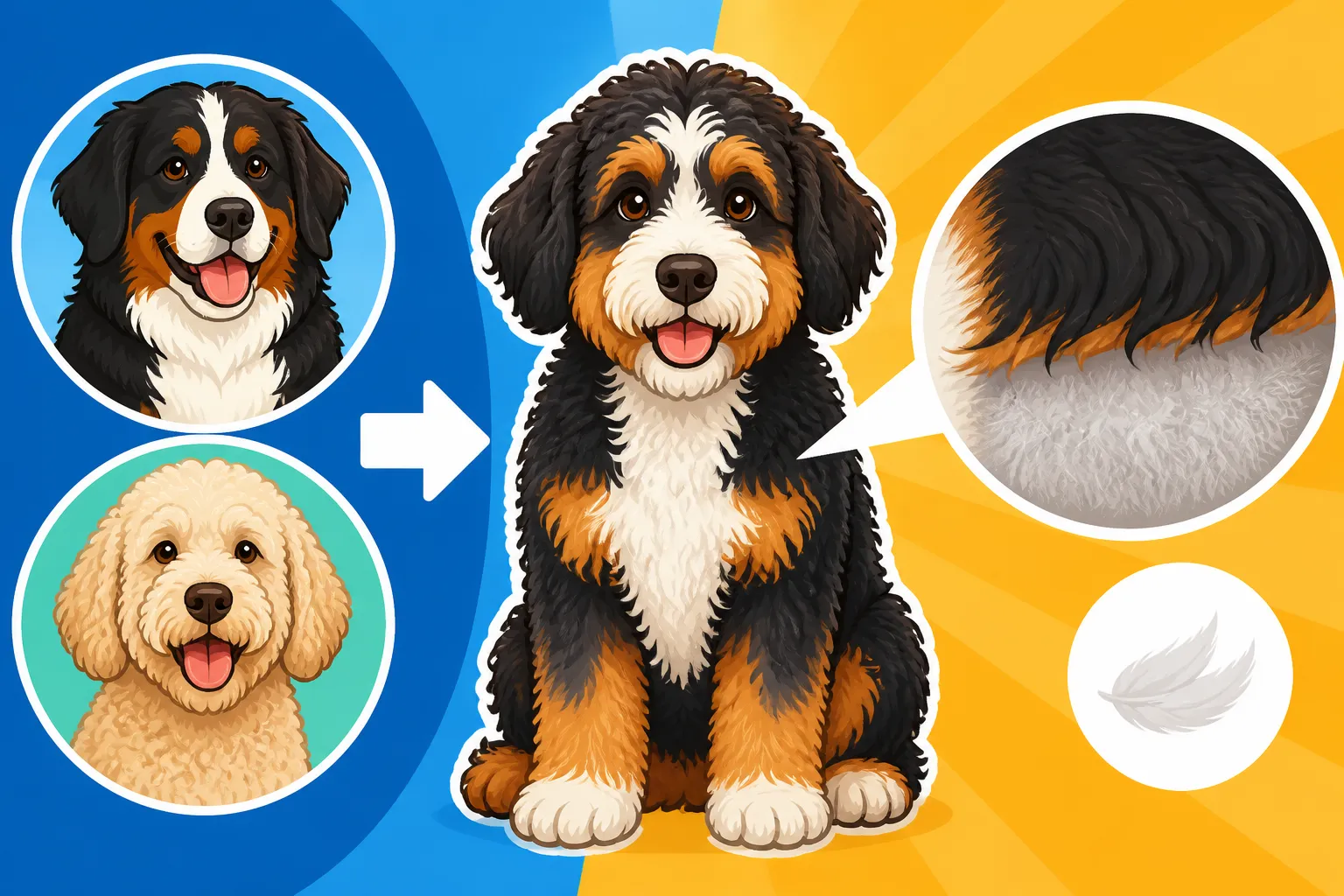
F1 Bernedoodle (50% Bernese, 50% Poodle): This is the first-generation cross. With an F1, you're essentially getting a 50/50 genetic mix. This means there's a toss-up for coat traits. Some F1s will lean more towards the Poodle's curly, low-shedding coat, while others might inherit more of the Bernese's straighter, denser, and shed-prone coat. Many F1s will end up with a lovely wavy coat, which is the most common Bernedoodle look, and typically sheds minimally. However, it's not a guarantee. You might find an F1 The Straight Coated Bernedoodle That Sheds like a Bernese.
-
F1b Bernedoodle (75% Poodle, 25% Bernese): This generation is bred by crossing an F1 Bernedoodle back to a purebred Poodle. The "b" stands for backcross. This increases the Poodle genetics, making an F1b much more likely to have a curlier, non-shedding, and allergy-friendly coat. If shedding is your primary concern, an F1b is generally a safer bet. They are significantly less likely to carry the heavy Bernese undercoat traits.
-
F2, F2b, and Multigen Bernedoodles: As you move into F2 (F1 Bernedoodle x F1 Bernedoodle) or later generations (multigen), predictability can vary. A responsible breeder will use genetic testing to ensure desired coat traits, aiming to produce dogs that consistently have the wavy or curly, low-shedding coats. However, without careful selection and testing, the F2 generation can be even more variable than F1s, potentially throwing back to a Bernese-like coat. Whether a Multigen Bernedoodle Keeps the Lifespan Gain is a common question, and coat characteristics are just as important for these later generations.
The presence of the "furnishings" gene (often referred to as the RSPO2 gene) is critical. This gene determines if a dog has facial hair (beard, eyebrows) and a coat that grows continuously. Poodles have it, Bernese don't. A Bernedoodle without the furnishings gene will typically have a flatter, more Bernese-like face and coat, and will shed more. A good breeder will test for this, along with the shedding gene (SD locus). Whether a Coat Test Tells You If a Bernedoodle Will Shed is an excellent question to ask your breeder.
Recognizing Bernedoodle Coat Types
While not a true "undercoat" like the Bernese, the Bernedoodle's coat density and shedding properties can vary wildly. Generally, you'll see three main coat types in Bernedoodles:
-
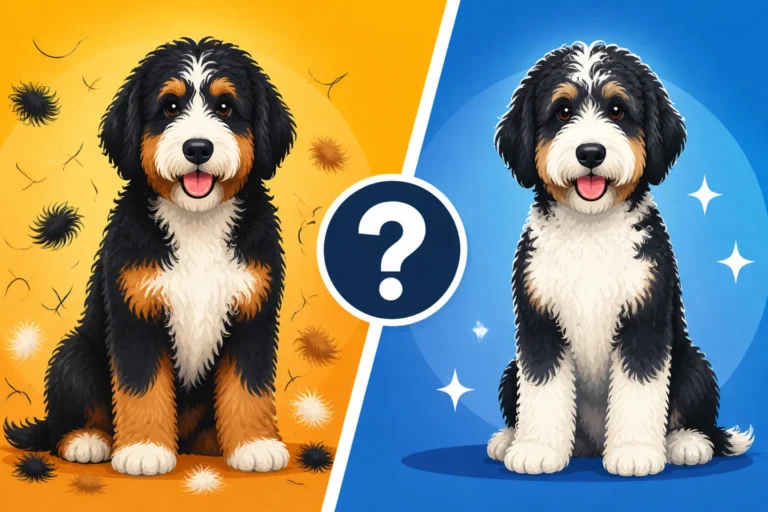
Wavy Coat: This is arguably the most common and sought-after Bernedoodle coat, often called the "fleece" coat. It's soft, often has loose curls or waves, and typically sheds very minimally. These dogs usually inherit enough Poodle genetics to reduce shedding significantly, but still retain some of the plushness from the Bernese side. This coat type still requires regular grooming to prevent matting, as shed hairs get caught in the waves. The Wavy Coat Most Bernedoodles Carry is beautiful, but don't be fooled into thinking it's maintenance-free.
-
Curly Coat: Very similar to a Poodle's coat, these Bernedoodles have tight, spiraling curls. They are generally the least shedding and the most allergy-friendly. If you're looking for a dog that won't leave a trail of hair, a curly-coated Bernedoodle is your best bet. However, this coat requires the most intensive grooming to prevent severe matting. The Curly Coat Bernedoodle and Its Upkeep can be a full-time job.
-
Straight (or Flat) Coat: This is the coat type that most closely resembles the Bernese Mountain Dog, and it is the most likely to shed. While it might not be the exact dense double coat of a pure Bernese, dogs with this coat will have much higher shedding levels than their wavy or curly counterparts. They often lack the furnishings gene, resulting in a sleeker face and less 'doodle' look. If you get a straight-coated Bernedoodle, prepare for shedding similar to a Bernese, though perhaps not quite as extreme as a full coat blow. This happens when the Bernese genes for coat texture and shedding are more dominant.
The concept of inheriting the "undercoat" is a bit misleading. Rather than a distinct, separate undercoat layer, a Bernedoodle that leans heavily on its Bernese genetics will have a denser, thicker coat that sheds more, simply because it carries more of the shedding characteristics of the Bernese. It's more about the overall quality and density of the hair and its shedding cycle, rather than a separate, identifiable undercoat.
Practical Implications for Shedding and Grooming
The reality is, even a low-shedding Bernedoodle still needs significant grooming. The difference is where the shed hair goes. In a Bernese, it falls out. In a Poodle or a non-shedding Bernedoodle, it stays trapped in the coat. This means a low-shedding dog isn't a low-maintenance dog; it's just low-mess in terms of ambient hair.
Every Bernedoodle, regardless of coat type, requires regular brushing to prevent matting. For wavy and especially curly coats, daily or every-other-day brushing is often necessary. If you skip this, those trapped shed hairs will quickly tangle and form painful mats close to the skin. These mats can pull, cause skin irritation, and even hide skin infections. A matted Bernedoodle will often need to be shaved down by a professional groomer, which is not only expensive but can be distressing for the dog. The Month a Bernedoodle Puppy Starts Matting Daily can surprise new owners, as their fluffy puppy coat transitions to the denser adult coat.
| Coat Type | Shedding Level | Grooming Frequency (Brushing) | Typical Appearance | Allergy-Friendly Potential |
|---|---|---|---|---|
| Bernese M. Dog | High | Weekly (daily during blow) | Thick double coat, straight/wavy, fluffy undercoat | Low |
| Poodle | Very Low | Daily/Every other day | Tight curls, continuously growing, single layer | High |
| Bernedoodle (Curly) | Very Low | Daily | Tight curls, Poodle-like, dense | High |
| Bernedoodle (Wavy) | Low | Every other day/Every 2-3 days | Loose curls, waves, fluffy but less dense than Bernese | Moderate to High |
| Bernedoodle (Straight/Flat) | Moderate to High | Every 2-3 days | Straighter, more Bernese-like, can be dense | Low to Moderate |
Managing Expectations and Coat Care
Given the genetic variability, how do you navigate the Bernedoodle coat landscape? It comes down to realistic expectations and proactive care.
Grooming for Different Bernedoodle Coats
Whether your Bernedoodle has a curly, wavy, or even a straight coat, grooming is non-negotiable. It's part of the package deal for these beautiful dogs.
-
Curly Coats: These need the most diligent care. Daily brushing with a slicker brush and a metal comb is crucial to get down to the skin and prevent mats. Many owners find professional grooming every 6-8 weeks essential to keep the coat in good condition. You'll want to invest in good quality brushes, detangling sprays, and maybe even a high-velocity dryer if you plan to bathe them at home. The Slicker and Rake a Bernedoodle Needs will become your best friend. Brands like Amazon offer a wide array of grooming tools, from pin brushes to powerful pet dryers, making it easy to find what you need.
-
Wavy Coats: Often referred to as "fleece" coats, these are typically easier than curly coats but still demand attention. Brushing every 2-3 days with a slicker brush and comb, ensuring you get through all the hair layers, is usually sufficient. Professional grooming every 8-10 weeks helps maintain length and tidiness. Even with minimal shedding, these coats can mat quickly, especially in high-friction areas like armpits, behind the ears, and in the "britches" area around their hind legs. Mats in a Bernedoodle's Armpits and Britches are a common headache.
-
Straight Coats: If your Bernedoodle inherits a straighter, more Bernese-like coat, you'll still need regular brushing to manage shedding and prevent tangles. A good de-shedding tool or undercoat rake, in addition to a slicker brush, will be useful. While these coats might not mat as easily as curly ones, they will shed more, so regular brushing helps remove loose hair before it ends up on your furniture.
Regardless of coat type, learning how to line brush effectively is paramount. This technique involves parting the hair and brushing in small sections down to the skin, ensuring no tangles are missed. The Volume of Coat a Bernedoodle Owner Brushes Weekly can be substantial, so dedicate time to this routine.
What to Ask a Breeder About Coat Type
If you have specific preferences regarding shedding or potential allergies, it is absolutely vital to discuss coat genetics with any potential breeder. A reputable breeder will understand your concerns and be transparent about their breeding practices.
Here are key questions to ask:
- Do you genetically test your breeding dogs for coat traits? Specifically ask if they test for the furnishings (RSPO2) and shedding (SD locus) genes. This is the best way to predict a puppy's adult coat.
- What generation is this litter? Knowing if it's an F1, F1b, or multigen will give you a good indication of the expected coat variability.
- Can I see pictures of previous litters' adult coats? This helps you see the range of coats they've produced.
- What are the coat types of the parent dogs? A curlier Poodle parent and a wavy F1 Bernedoodle parent are more likely to produce low-shedding puppies than a straight-coated F1 Bernedoodle bred to another Poodle, for example.
- Do you offer any guarantees regarding shedding or allergies? While no one can guarantee 100% non-shedding, breeders often have policies around coat type.
A responsible breeder will openly share this information and educate you. They should also publish The Five Clearances a Bernedoodle Breeder Should Have, which includes genetic health testing beyond just coat traits. This transparency is key to finding a well-bred puppy with a predictable coat.
Living with a Bernedoodle That Sheds
Despite all the planning and genetic testing, sometimes a Bernedoodle simply sheds more than anticipated. It's a crossbreed, and genetics can be quirky. If you find yourself with a Bernedoodle that sheds, don't despair!
First, adjust your grooming routine. You'll likely need to brush more frequently, perhaps daily with a good slicker brush and de-shedding tool, especially during seasonal changes. Regular professional grooming can also help by reducing loose hair and maintaining a manageable length. Your groomer can use tools and techniques to help strip out dead undercoat if your Bernedoodle truly has a denser, shed-prone coat.
For managing hair in the home, invest in a powerful vacuum cleaner designed for pet hair. Lint rollers will become your constant companion. Consider washable slipcovers for furniture and designate specific dog-friendly zones in your home. While it might not be the "non-shedding dream" you envisioned, with the right tools and routine, living with a shedding Bernedoodle is completely manageable. Brands like Chewy and Amazon offer excellent selections of pet-specific vacuums, grooming tools, and other supplies to help keep your home as fur-free as possible. And while diet doesn't stop shedding, a high-quality food can support skin and coat health, potentially reducing excessive breakage. Services like Ollie offer fresh, customized meal plans that might contribute to a healthier coat.
Ultimately, whether a Bernedoodle inherits the Bernese undercoat isn't a simple yes or no. They don't typically get the exact same distinct double layer, but they can inherit the tendency for a denser, more shedding-prone coat if the Bernese genetics are more dominant in that regard. Understanding the nuances of coat genetics, working with a reputable breeder, and being prepared for consistent grooming are your best strategies for a happy, healthy Bernedoodle, no matter what kind of gorgeous coat they end up wearing. Whether Any Bernedoodle Is Truly Non Shedding is a question that requires a nuanced answer, and often, it's about managing expectations.
Disclaimer
This article is for general informational purposes only and does not constitute professional advice. Laws, prices and regulations vary by location and change over time. Consult a qualified professional for guidance on your specific situation.