The Coat a Bernedoodle Gets From Two Heavy Coated Parents
One of the biggest joys, and sometimes the biggest challenge, of welcoming a Bernedoodle into your life is understanding and managing that magnificent coat. Many prospective owners fall in love with the fluffy, teddy bear look, but don't quite grasp the full extent of the grooming commitment that comes with it. You might think, "Well, it's half Poodle, so it won't shed, right?" Or perhaps, "It's a Bernese, so it'll have that soft, thick fur." The truth is often a blend of both, and sometimes a surprise entirely. This comprehensive guide will walk you through everything you need to know about the Bernedoodle's unique coat, from its genetic origins to daily care, so you can keep your furry friend looking and feeling their best.
Understanding the Bernedoodle's Genetic Coat Lottery
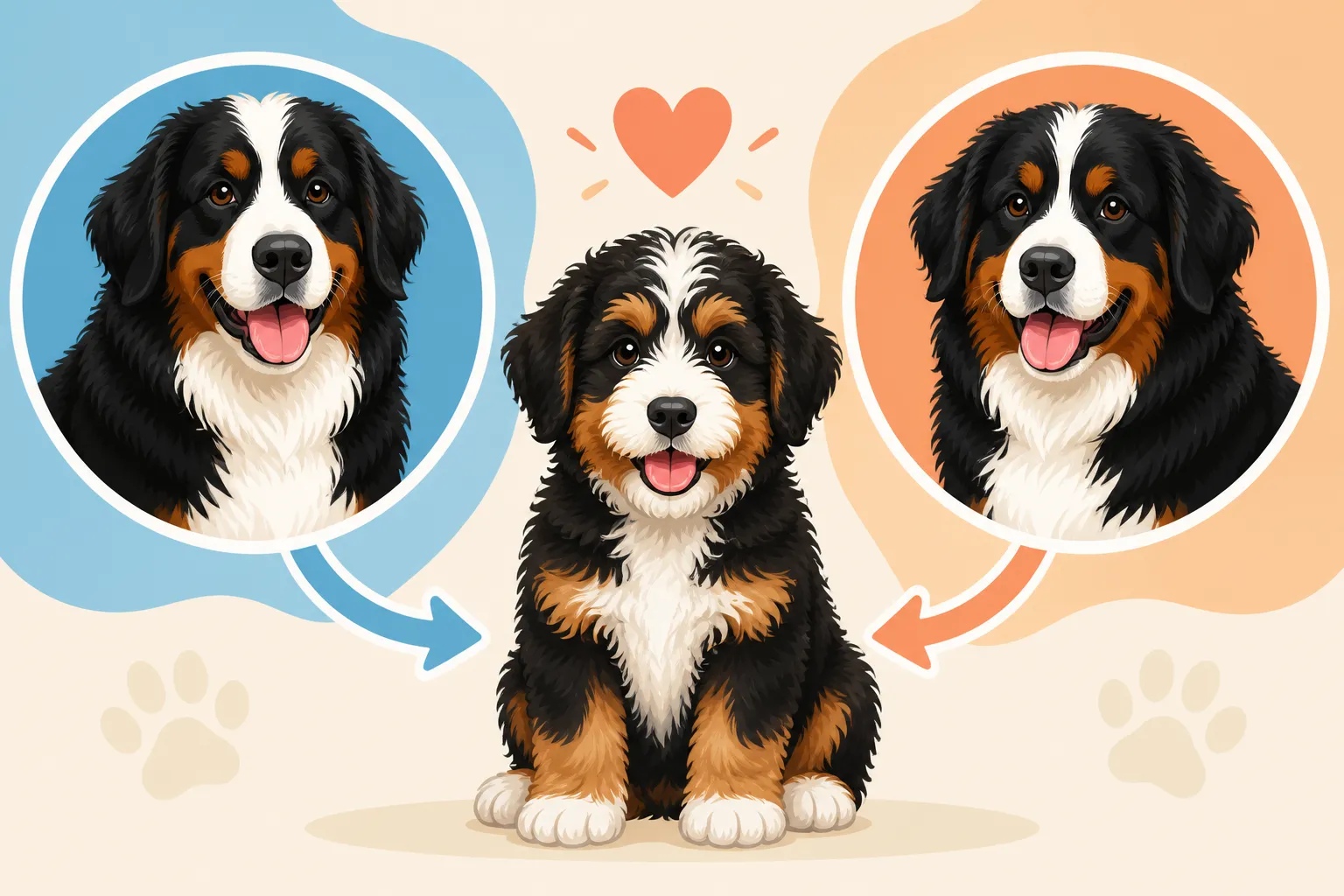
When you bring a Bernedoodle home, you're essentially getting a beautifully curated genetic experiment. The coat your puppy develops is a direct result of the genes passed down from its Bernese Mountain Dog and Poodle parents, and understanding these ancestral coats is the first step to knowing what to expect. It's a fascinating blend, but one that can lead to quite a bit of variation even within the same litter.
The Bernese Mountain Dog's Plush Double Coat
Let's start with the Bernese Mountain Dog. These majestic dogs are famous for their stunning, thick double coats. They have a longer outer coat that's typically straight or slightly wavy, and a dense, woolly undercoat that provides incredible insulation against cold Swiss winters. This combination makes them incredibly soft and huggable, but it also means they are serious shredders.
Anyone who has owned a purebred Bernese will tell you stories of hair tumbleweeds and needing to vacuum almost daily, especially during seasonal "blows" where they shed their undercoat. The texture is generally soft, but it's designed for protection and warmth. This is the foundation of one half of your Bernedoodle's genetic makeup, bringing with it the potential for density and, yes, shedding.
The Poodle's Curly, Non-Shedding Marvel
On the other side of the family tree, we have the Poodle. Known for their intelligence and elegant appearance, Poodles possess a very different coat entirely. Their fur is dense, curly, and single-layered, meaning they don't have that thick undercoat. This distinct type of coat continuously grows, much like human hair, and instead of shedding individual hairs across your furniture, the loose hair tends to get caught within the curls themselves.
This characteristic is what gives the Poodle its "hypoallergenic" reputation – though no dog is truly hypoallergenic, Poodles significantly reduce the amount of dander and loose hair released into the environment. However, this non-shedding trait comes with a caveat: if those loose hairs aren't brushed out regularly, they quickly tangle and mat. The Poodle's coat requires consistent grooming to stay healthy and mat-free, a trait that the Bernedoodle often inherits.
The F1 Bernedoodle: The First Generation Blend
The first-generation Bernedoodle, often called an F1, is a direct cross between a purebred Bernese Mountain Dog and a purebred Poodle. This is where the "genetic lottery" truly begins to show its hand. Because it's a 50/50 mix, an F1 Bernedoodle's coat can be highly variable. Some might lean more towards the Poodle's curly, low-shedding texture, while others might inherit more of the Bernese's straight, thicker, and higher-shedding coat.
You might see puppies in the same litter exhibiting wildly different coat types. This variability is why it's so important for prospective owners to ask breeders about the parents' coat types and to understand that even with the best intentions, predicting an F1 puppy's adult coat can be challenging. It's a beautiful blend, but one where the traits are still finding their balance, making each F1 Bernedoodle a unique surprise in its own right.
Deciphering Bernedoodle Coat Types and Their Realities
While the genetic blend can create a spectrum of coats, most Bernedoodles fall into a few general categories. Understanding these types is crucial for setting your expectations regarding grooming, shedding, and overall care. It's not just about aesthetics; it's about practical day-to-day living with your dog.
The Coveted Wavy or "Fleece" Coat
The wavy, or "fleece," coat is perhaps the most sought-after and iconic Bernedoodle look. This coat type strikes a wonderful balance, often combining the softness and luxurious feel of the Bernese with the lower-shedding qualities of the Poodle. It's characterized by soft, loose waves that drape beautifully. Owners often describe it as feeling like a plush fleece blanket.
While it is generally considered low to moderate shedding, it's not entirely non-shedding. You will still find some hair, but usually far less than a purebred Bernese. The trade-off for this gorgeous texture is a significant grooming commitment. The waves, while beautiful, are incredibly prone to matting if not brushed regularly and thoroughly. These coats demand consistent attention to prevent tangles from becoming painful mats.
The Curly Poodle-Like Coat
At the other end of the spectrum is the curly, Poodle-like coat. This coat is dense, tightly curled, and typically the least shedding of all Bernedoodle coats. If you're seeking a Bernedoodle for allergy-friendly reasons, this is often the coat type breeders aim for, especially in F1b (Bernedoodle bred back to a Poodle) or later generations. The curls effectively trap any loose hair, preventing it from floating around your home.
However, "least shedding" does not mean "least grooming." In fact, this coat type often requires the most intensive and frequent grooming. The tight curls can mat extremely quickly, sometimes seemingly overnight, particularly in areas of friction like armpits, behind the ears, and around harnesses. Owners of curly-coated Bernedoodles often find themselves brushing daily and needing professional grooming appointments every 6-8 weeks to keep their dog comfortable and mat-free.
The Less Common Straight or "Flat" Coat
The straight or "flat" coat is the least common Bernedoodle coat type, and it tends to be inherited when the Bernedoodle puppy gets more of the Bernese gene for straight hair. This coat closely resembles that of a Bernese Mountain Dog, featuring a straighter outer layer and a thick undercoat. While still soft and beautiful, it will shed considerably more than the wavy or curly coats.
For those seeking the low-shedding qualities of a Doodle, a straight-coated Bernedoodle can be a surprise, as they will shed quite a bit, often similar to a Bernese. Grooming requirements for a straight coat still involve regular brushing to manage shedding and prevent tangles in the longer feathering, but it may be less prone to the severe matting seen in the wavy or curly types. If you're looking for a low-shedding companion, it's crucial to confirm coat types with your breeder and understand the implications of a straight coat before bringing a puppy home.
The Shedding Myth: What to Expect from a Bernedoodle's Coat
The term "hypoallergenic" gets thrown around a lot in the Doodle world, often leading to misunderstandings and disappointment. It's vital to approach the topic of shedding and allergies with a realistic mindset when considering a Bernedoodle. While they are often a good choice for allergy sufferers, they are not a magical cure-all.
The Reality of "Hypoallergenic" Claims
Let's clear this up right away: no dog is 100% hypoallergenic. The term "hypoallergenic" simply means "less allergenic." Allergies to dogs are typically triggered by dander (microscopic flakes of skin), saliva, and urine, not just the hair itself. Breeds like Poodles are considered less allergenic because their continuously growing, curly coats trap shed hair and dander, reducing its distribution into the environment.
Bernedoodles, being a crossbreed, inherit traits from both parents. While many Bernedoodles, especially those with curlier coats, will shed significantly less than a Bernese Mountain Dog, they will likely still shed some amount of dander and hair. If you have severe allergies, spending time with an adult Bernedoodle of the specific coat type you're considering is highly recommended before committing. You might find you react less to a curly Bernedoodle than a wavy one, for example. It's truly a personal experience.
Factors Influencing Shedding Levels
The amount a Bernedoodle sheds is influenced by a few key factors:
- Coat Type: As discussed, curly coats shed the least, wavy coats shed moderately, and straight coats shed the most. This is the biggest predictor.
- Generation (F1, F1b, Multigen):
- F1 Bernedoodles (50% Bernese, 50% Poodle): Highly variable. Some will be low-shedding, some moderate, and some high-shedding, depending on which genes are dominant.
- F1b Bernedoodles (75% Poodle, 25% Bernese): Generally bred to be backcrossed to a Poodle to increase the Poodle genetics. These often have curlier coats and are usually the lowest-shedding option, making them a popular choice for those with allergies.
- Multigen Bernedoodles: These can vary depending on the exact percentages of Poodle and Bernese in their lineage, but reputable breeders often aim to maintain low-shedding qualities through careful selection.
- Individual Variation: Even within the same litter, puppies can have different shedding levels. Some might inherit a stronger Poodle gene for coat texture, while others lean more Bernese. It's part of the charming unpredictability of a crossbreed.
You might also notice seasonal shedding, where even low-shedding Bernedoodles might "blow their coat" a bit more in spring or fall, releasing a little more loose hair. This is often an echo of their Bernese heritage, as their bodies adjust to temperature changes.
Managing Shedding in a Bernedoodle
Regardless of your Bernedoodle's specific coat type, consistent management is key to keeping shedding to a minimum and maintaining a healthy coat. For any Bernedoodle, whether they shed a little or a lot, routine care is paramount.
First and foremost, regular brushing is your most powerful tool. For wavy and curly coats, brushing helps to remove trapped hair and prevent mats. For straight coats, it helps to pull out loose hair before it ends up on your furniture. Using the right tools, such as a good quality slicker brush and a metal comb, will make a significant difference. You might find yourself brushing daily for curlier coats or a few times a week for waviers ones.
Beyond brushing, regular bathing and professional grooming are crucial. A clean coat is a healthier coat, and professional groomers have the tools and expertise to thoroughly de-shed (for straighter coats) or demat (for curlier coats) your Bernedoodle. They can also provide clips that manage coat length, which can reduce the visual impact of shedding. Consider discussing options with your groomer about clips that suit your dog's coat type and your lifestyle.
Finally, a high-quality diet rich in omega fatty acids can contribute to overall skin and coat health, potentially reducing excessive shedding caused by dryness or poor nutrition. Brands like Ollie, known for fresh, human-grade food, can support a healthy skin barrier and a shiny coat from the inside out. Remember, managing shedding is an ongoing process, not a one-time fix.
The Demanding Grooming Routine of a Bernedoodle
If there’s one thing every Bernedoodle owner will tell you, it’s that their coat is high maintenance. This isn't a wash-and-wear kind of dog, especially if you want to avoid painful matting and expensive professional dematting fees. The thick, often wavy or curly coat, inherited from two heavy-coated parents, requires consistent and dedicated attention.
Daily Brushing: Your Non-Negotiable Commitment
For most Bernedoodles, especially those with wavy or curly coats, daily brushing isn't just recommended; it's practically a requirement. This isn't a quick once-over; it's a thorough session. Without it, the fine undercoat hairs and any shed hairs quickly intertwine with the coarser outer coat, forming mats that can be incredibly painful for your dog and a nightmare to remove. Think of it like brushing a very thick head of human hair that never stops growing and constantly sheds.
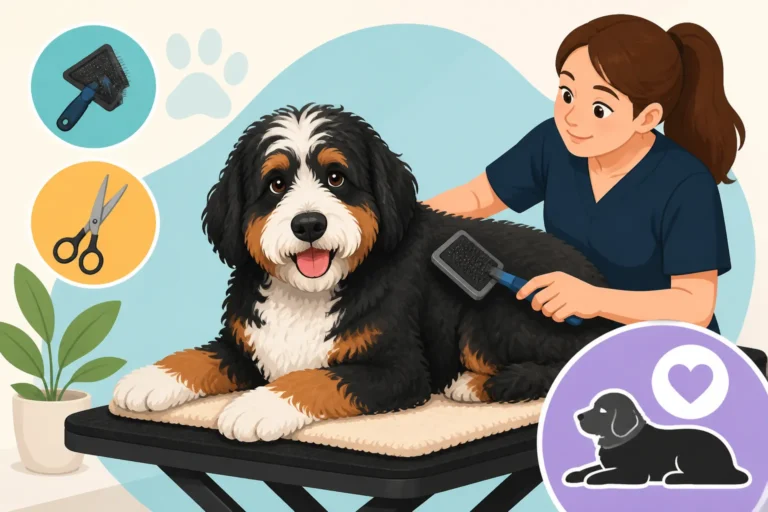
You'll need a good quality slicker brush and a metal comb. The technique is called "line brushing," where you section off the coat, brush down to the skin, and then comb through to ensure no tangles remain. Pay special attention to areas prone to matting: behind the ears, armpits, flanks, tail, and where harnesses or collars rub. If you can't comb through easily, you haven't brushed thoroughly enough. This commitment can easily take The Volume of Coat a Bernedoodle Owner Brushes Weekly up to several hours each week, broken down into daily sessions. Missing a day or two can mean the difference between an easy brush-out and struggling with starting knots.
Professional Grooming: More Than Just a Trim
Even with diligent home brushing, professional grooming is an absolute must for a Bernedoodle. Think of your home care as maintenance between major tune-ups. A professional groomer has the specialized tools, powerful dryers, and expertise to thoroughly clean, dry, and trim your Bernedoodle's dense coat in a way that's difficult to replicate at home. They can spot hidden mats, clean ears, trim nails, and give your dog a fresh, comfortable cut.
Most Bernedoodles require professional grooming every 6-8 weeks. The specific frequency can depend on your dog's coat type (curlier coats may need it more often) and how long you prefer to keep their hair. Expect the cost of a full groom for a standard Bernedoodle to be substantial, often falling into the range of The Seventy to Hundred Fifty Dollar Bernedoodle Groom or even higher, depending on your location, the groomer's experience, and the condition of your dog's coat. A neglected or matted coat will incur additional dematting fees, which can sometimes double the price of a regular groom. This consistent expense is a significant part of Bernedoodle ownership that many new owners underestimate.
Tackling Mats: The Bernedoodle Owner's Foe
Mats are the bane of every Bernedoodle owner's existence. They are not just unsightly; they can be incredibly painful, pulling on your dog's skin, restricting movement, and leading to skin infections if moisture gets trapped underneath. A small tangle can quickly become a large, felted mat if left unchecked. These furry knots are most common in areas of high friction and delicate hair.
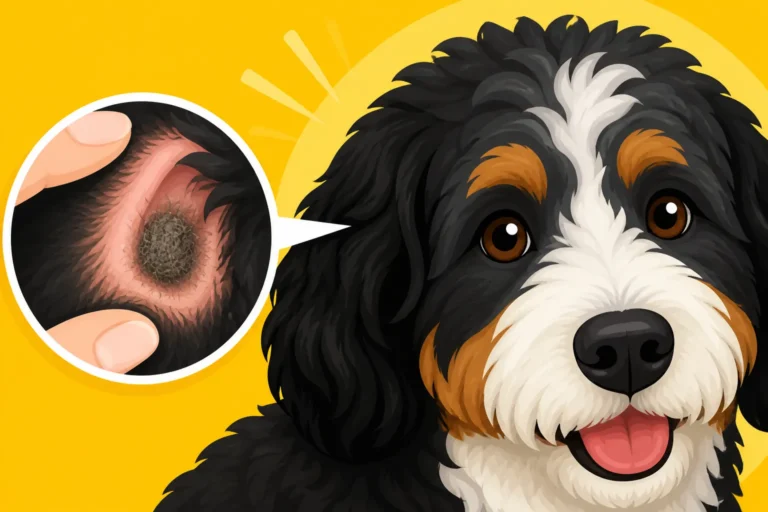
Typical hotspots for matting include The Mat That Forms Where a Bernedoodle's Ear Folds, a notorious spot due to the movement of the ear and the finer hair there. You'll also frequently find mats forming in the Mats in a Bernedoodle's Armpits and Britches, under the collar, and on the legs. The key to tackling mats is prevention through diligent daily brushing. If you do find a small mat, try to gently work it out with your fingers, followed by a metal comb. A detangling spray can help lubricate the hair. For larger or tighter mats, a mat splitter or dematting tool can be used, but extreme caution is advised to avoid cutting your dog's skin. If a mat is too large or too close to the skin, it's always best to seek professional help from a groomer, as they may need to carefully shave it out. Never try to cut out mats with scissors unless you are absolutely confident and skilled, as it's very easy to accidentally cut your dog's skin.
Essential Tools and Products for Bernedoodle Coat Care
Having the right tools is half the battle when it comes to maintaining a Bernedoodle's coat. Skimping on quality here will only lead to frustration, pain for your dog, and potentially higher grooming bills down the line. Investing in good equipment upfront will save you time and money in the long run.
Brushes, Combs, and Dematting Tools
This is your core arsenal for daily and weekly grooming. You absolutely need a few key items:
- Slicker Brush: This is your primary tool for daily brushing. Look for a large, high-quality slicker brush with firm but flexible pins. It's designed to go through the dense coat and remove loose hair and minor tangles. Brush in sections, ensuring you reach all the way to the skin. A good slicker brush is indispensable for any Bernedoodle owner. You can find excellent options on sites like Amazon or Chewy.
- Metal Comb: A sturdy metal comb with both wide and fine teeth is essential for checking your work after brushing. After using the slicker, comb through the coat to ensure there are no hidden tangles. If the comb glides through easily, you're doing a great job! If it snags, go back with the slicker brush. The Slicker and Rake a Bernedoodle Needs often refers to these two fundamental tools.
- Undercoat Rake (optional, for specific coat types): For Bernedoodles with more of the Bernese-like undercoat or those who shed more, an undercoat rake can be beneficial. It helps to pull out the loose, dead undercoat without damaging the topcoat. Use this carefully, as over-raking can irritate the skin.
- Mat Splitter/Dematting Tool (use with caution): These tools have sharp blades designed to cut through mats. They are incredibly useful for tackling stubborn knots, but they must be used with extreme care. Always pull the mat away from the skin before using the tool, and never use scissors near the skin unless you are a professional.
Shampoos, Conditioners, and Detangling Sprays
Just like with human hair, quality washing products make a big difference for your Bernedoodle's coat health and manageability.
- Dog-Specific Shampoo: Choose a shampoo formulated for dogs, preferably one that is moisturizing and sulfate-free. Look for ingredients like oatmeal, aloe vera, or natural oils that can soothe the skin and nourish the coat. Avoid human shampoos, as they can be too harsh and disrupt your dog's skin pH.
- Conditioner: A good conditioner is crucial for Bernedoodles, as it helps to moisturize the coat, reduce static, and make brushing easier. Apply after shampooing, ensuring it's thoroughly rinsed out. Some owners opt for a leave-in conditioner for extra softness and tangle prevention.
- Detangling Spray: These sprays are a lifesaver for making brushing easier, especially for wavy or curly coats prone to matting. A light mist over the coat before brushing can help lubricate the hair, allowing the brush and comb to glide through more smoothly, reducing breakage and discomfort for your dog. A quick search on Amazon will show many highly-rated options.
Drying Equipment: The Overlooked Necessity
After bathing, proper drying is just as important as washing, especially for a Bernedoodle's dense coat. Leaving a Bernedoodle's coat damp can lead to skin issues like hot spots and makes matting much worse.
- High-Velocity Force Dryer: This is hands-down the most crucial piece of drying equipment. A force dryer (often just called a "blaster") literally "forces" the water out of the coat with a powerful, non-heated air stream. It dramatically speeds up drying time, "blows out" loose hair, and helps to straighten curls for easier brushing. Trying to towel-dry a Bernedoodle to the skin is almost impossible. A good force dryer will dry your dog thoroughly, preventing mildewy smells and skin problems, and preparing the coat perfectly for brushing. It’s an investment, but a truly worthwhile one for a Bernedoodle owner who baths at home. Without it, getting Drying a Bernedoodle to the Skin is a Herculean task.
- Absorbent Towels: While a force dryer does most of the heavy lifting, high-quality, absorbent towels are great for the initial pat-down to remove excess water before the force dryer comes out. Microfiber towels designed for pets work wonders.
- Drying Crate (optional): Some owners with larger Bernedoodles might use a grooming arm and loop to keep their dog standing for drying, or if they have a second crate, allow them to air dry partially in a forced air drying crate (specialized for this purpose) before finishing with a force dryer. However, completely drying a Bernedoodle typically requires active use of a force dryer and brush.
Seasonal Coat Changes and Adaptations
A Bernedoodle's coat isn't static; it evolves through different stages and seasons, each requiring specific attention. Understanding these changes will help you adapt your grooming routine and keep your furry friend comfortable year-round.
The Puppy Coat Transition
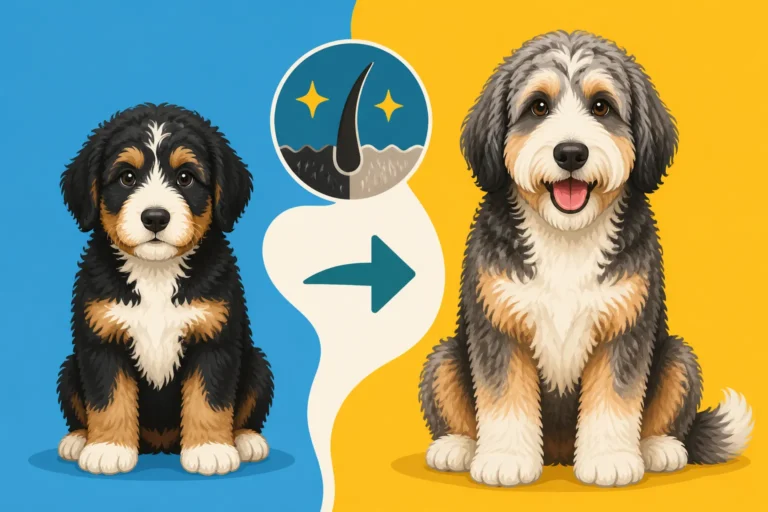
Perhaps one of the most challenging periods for Bernedoodle owners is the "puppy uglies" or the puppy coat transition. This typically occurs between 6 and 18 months of age, though it can vary. During this time, your Bernedoodle's soft, fluffy puppy fur starts to be replaced by its coarser, denser adult coat. The problem is, the puppy fur doesn't just fall out neatly; it intermingles with the new adult coat.
This creates a perfect storm for matting. The different textures and lengths of hair cling to each other like Velcro. What might have been an easy 15-minute brush-out a few weeks prior can suddenly turn into an hour-long battle against tangles. When a Bernedoodle's Puppy Fluff Becomes an Adult Coat it marks a period where daily, meticulous line brushing becomes non-negotiable. Many Bernedoodles end up with their first full shave-down during this phase because owners underestimate the matting potential. Be prepared to increase your brushing frequency and perhaps even book an extra professional grooming session to navigate this tricky transition successfully.
Summer Challenges and Clipping Decisions
Bernedoodles, with their thick coats inherited from two breeds built for colder climates, often struggle significantly with heat. This is especially true for those with dense, dark coats. They simply don't have the same cooling mechanisms as breeds with thinner, single coats. The dense fur acts like a personal blanket, which is great in winter but a liability in summer.
Many owners contemplate a "summer shave" for their Bernedoodle. The Summer Shave Argument on a Bernedoodle is complex. On one hand, a shorter clip can certainly make your dog feel cooler by removing insulation and allowing air to circulate closer to the skin. On the other hand, some argue that shaving too short can expose the skin to sunburn and disrupt the natural protective qualities of the coat, which also provides some insulation from heat. Ultimately, a balanced approach is often best: a shorter, practical clip (often a few inches in length, rather than shaved to the skin) can offer immense relief. It's important to remember that Whether a Shaved Bernedoodle Handles Heat Better often depends on the length of the clip; extremely short shaves can leave them vulnerable. Regardless of clipping, always provide plenty of shade, fresh water, and avoid exercise during the hottest parts of the day.
Winter Care for a Thick Bernedoodle Coat
While Bernedoodles are generally well-equipped for cold weather thanks to their Bernese heritage, winter still brings its own set of coat care challenges. Their thick, dense fur can easily pick up snow, ice, and debris, leading to discomfort and potential matting.
One common issue is the formation of Ice Balls in a Bernedoodle's Feathering. Snow and ice can cling to the longer hair on their legs, belly, and tail, forming hard, painful balls that pull on the skin. To prevent this, consider trimming the feathering shorter in these areas or using a protective dog suit that covers the legs and belly. Paw balm can also help prevent snow and ice from sticking to their paw pads. After walks, always thoroughly check your Bernedoodle for ice balls and carefully remove them, preferably by melting them with warm water or gently brushing them out, rather than pulling. Cold weather also means more mud, salt, and grime, so be prepared for more frequent paw cleaning and potentially more baths to keep their coat clean and healthy through the colder months.
Common Coat-Related Issues and How to Address Them
Beyond routine grooming, Bernedoodle owners often encounter specific coat and skin issues that require prompt attention. Because of their dense, double-layered coats, problems can sometimes hide or escalate quickly if not addressed. Being vigilant is key.
Skin Irritations Under the Dense Coat
The thick, dense coat of a Bernedoodle can unfortunately create an environment ripe for skin irritations. Trapped moisture, dirt, allergens, or even parasites can go unnoticed, leading to hot spots, yeast infections, or other dermatological problems. Hot Spots Under a Bernedoodle's Thick Coat are particularly common; these are acute moist dermatitis lesions that can appear suddenly, often due to excessive licking, scratching, or chewing in response to an irritation. The dense fur traps moisture and heat, allowing bacteria to multiply rapidly.
Prevention involves consistent grooming to keep the coat clean and dry, especially after baths or swimming. Regular brushing also increases air circulation to the skin. If a hot spot appears, you'll need to carefully trim the hair around it to allow air to reach the lesion, gently clean it with an antiseptic wash, and consult your vet for further treatment, which may include topical medications or antibiotics. Similarly, yeast infections, often recognized by a yeasty smell and greasy skin, can flourish in damp, warm areas under the coat, especially in skin folds or between paw pads. Keeping your Bernedoodle's coat meticulously clean and dry is the best defense against these frustrating skin issues.
Dry Skin and Dull Coat Concerns
Despite their naturally lustrous appearance, Bernedoodles can suffer from dry, flaky skin and a dull coat. This isn't just an aesthetic problem; it can indicate underlying health issues or inadequate care. Dry skin can lead to itching, discomfort, and even secondary infections if your dog scratches excessively. A dull, brittle coat lacks shine and can break easily, making it more prone to matting.
One of the primary culprits can be an unsuitable diet. Feeding a high-quality dog food, rich in omega-3 and omega-6 fatty acids, is crucial. Brands like Ollie, with their focus on fresh, nutrient-dense ingredients, can support skin and coat health from the inside out. Supplements such as fish oil or flaxseed oil can also be highly beneficial. In fact, Whether Omega Oils Help a Bernedoodle's Coat Density is a common question, and the answer is a resounding yes – they contribute to a healthier skin barrier and a more vibrant, supple coat. Additionally, over-bathing with harsh shampoos or not thoroughly rinsing out conditioner can strip natural oils, leading to dryness. Ensure you're using dog-specific, moisturizing shampoos and conditioners and rinsing thoroughly. Environmental factors, like dry indoor air, can also contribute; humidifiers can sometimes help.
Ear Infections and Eye Stains
A Bernedoodle's adorable floppy ears, a trait inherited from both parent breeds, create a warm, dark, and often moist environment that is a perfect breeding ground for bacteria and yeast. This makes Ear Infections in a Bernedoodle's Drop Ear a very common concern. Without proper air circulation, moisture and wax build up, leading to discomfort, itching, and foul odors.
To prevent ear infections, regular ear cleaning is essential. Use a veterinarian-approved ear cleaner and gently wipe the visible parts of the ear canal. If your Bernedoodle has a lot of hair growing inside the ear canal, some owners or groomers opt to pluck or trim this hair to improve airflow, but always discuss this with your vet first. Be proactive if you notice head shaking, scratching at the ears, or a discharge. Similarly, many Bernedoodles, especially those with lighter-colored faces, can develop tear stains around their eyes. Whether a Bernedoodle's Eyes Water Under Its Fringe is often due to hair irritating the eye, leading to excessive tearing. Keeping the hair around the eyes trimmed short and regularly wiping the area with a damp cloth or pet-safe tear stain remover can help prevent staining and irritation.
The Impact of Diet on Coat Health
You know the old saying, "You are what you eat"? Well, the same goes for your Bernedoodle! The food you put into their bowl directly impacts their overall health, and their coat is often one of the first indicators of nutritional well-being. A dull, dry, or flaky coat can often signal deficiencies or a need for dietary adjustments.
Quality Nutrition for a Lustrous Coat
A healthy, lustrous Bernedoodle coat starts from within. Feeding a high-quality, balanced diet provides the essential building blocks for healthy skin and hair. This means choosing a dog food with a good source of animal protein as the first ingredient, as protein is fundamental for hair growth. Look for foods that are complete and balanced, meeting the nutritional standards set by organizations like AAFCO. Avoid foods with excessive fillers, artificial colors, or by-products as the main protein source.
A diet rich in real, whole ingredients helps support strong hair follicles and a healthy skin barrier. If your Bernedoodle isn't getting adequate nutrition, their coat might appear brittle, sparse, or lack its characteristic shine. Think of it as investing in their internal health to see the benefits externally. A quality diet also helps maintain a strong immune system, which is vital for fending off skin infections and maintaining overall coat vitality.
Essential Fatty Acids and Supplements
One of the most important components of a diet for a healthy coat is essential fatty acids, particularly Omega-3 and Omega-6. These fats are crucial for maintaining skin hydration, reducing inflammation, and promoting a shiny, soft coat. Many high-quality dog foods will include these, often from sources like fish oil, flaxseed, or chicken fat.
If your dog's diet doesn't provide enough, or if they have specific skin and coat concerns, supplementing with fish oil (like salmon or sardine oil) can make a noticeable difference. You might wonder Whether Omega Oils Help a Bernedoodle's Coat Density; they absolutely do, by nourishing the skin and hair follicles, leading to a denser, healthier, and more resilient coat. Always consult your veterinarian before adding any supplements to your dog's diet to ensure proper dosage and suitability for their individual needs. Chewy and Amazon offer a wide range of reputable omega-3 supplements specifically formulated for dogs.
Hydration and Its Role in Coat Vitality
Often overlooked, but critically important for coat health, is proper hydration. Just like humans, dogs need to drink plenty of fresh water to keep their bodies functioning optimally, and this includes their skin and coat. Dehydration can lead to dry, flaky skin and a dull, brittle coat that's more prone to breakage and matting.
Ensure your Bernedoodle always has access to fresh, clean water. Refill their water bowl frequently and clean it daily to prevent bacterial growth. If your dog isn't a big drinker, consider adding a little bit of low-sodium broth to their water or incorporating wet food into their diet to boost their moisture intake. Adequate hydration contributes to the elasticity of the skin and the overall suppleness and shine of the coat. It's a simple, yet foundational, aspect of maintaining that beautiful Bernedoodle fluff.
Comparison of Bernedoodle Coat Types
To summarize the key differences in Bernedoodle coat types and help you set realistic expectations for grooming and shedding, here's a handy comparison table:
| Coat Type | Description | Shedding Level | Grooming Frequency | Matting Tendency | Common Generations |
|---|---|---|---|---|---|
| Wavy | Soft, loose waves, often called "fleece" | Low to Moderate | Daily/Every other | High | F1, F1b, Multigen |
| Curly | Dense, tight curls, similar to a Poodle | Very Low | Daily | Very High | F1b, Multigen |
| Straight | Flat, straight, or slightly wavy, like a Bernese | Moderate to High | 2-3 times/week | Low to Moderate | F1, less common in F1b |
Disclaimer
This article is for general informational purposes only and does not constitute professional advice. Laws, prices and regulations vary by location and change over time. Consult a qualified professional for guidance on your specific situation.